Fall (Oct–Dec) 2025 Quarter COTMs + Cooking From: MAANGCHI

Welcome to the reporting and discussion thread for MAANGCHI.

We’ll be cooking from Maangchi’s two books and online sources. (Cookbook titles link to recipe lists at Eat Your Books.)

Maangcchi’s Real Korean Cooking

Maangchi’s Big Book of Korean Cooking

Maangchi’s website

To report on a recipe, put the name of the recipe in ALL CAPS and include a link, or if working from a cookbook, include which book and the page number, if it’s available to you. If you are the first to post about a recipe, please reply to this post. If someone has already posted about the recipe, reply to their post so all the posts about each recipe are linked for easy reference.

To respect the author’s copyright, please don’t post photos or verbatim copies of recipes. Links to recipes online are welcome, and you may post ingredients and summarize instructions in your own words.

Find links to all past COTMs at the archive page

3 Likes

Borrowed the two Maangchi books from the library, and it’s interesting that for some dishes where recipes are also on the blog, the proportions of seasonings are different.

For eg; Soy butter pan-grilled chicken – the book version uses less garlic and no ginger relative to the blog.

I’m guessing it’s one of those intuitive sometimes-I-add-this-sometime-I-don’t for everyday recipes, or maybe the book was dampened seasoning-wise for a broader audience.

2 Likes

I made a double recipe of this KIMCHI JIGAE (stew/soup) tonight for our dinner from one of her online recipes https://www.maangchi.com/recipe/kimchi-jjigae My daughter and I both make it quite frequently, its very satisfying and , the leftovers heat up well and if you have some pork belly in the freezer and invest in a handful of pantry ingredients, its a quick thing to cook . Costco has good, relatively cheap kimchi in 3 lb jars. A korean store will have sachet packets of the broth components (sardines, seaweed etc) so you do not have to assemble all of them or strain the broth, and the pepper flakes and pepper paste are items to keep in fridge or freezer. Its good for a gluten free or keto lifestyle, tho we usually have a little brown rice with it.

4 Likes

JAPCHAE — SWEET POTATO STARCH NOODLES WITH VEGETABLES [AND MEAT] — Maangchi’s Big Book of Korean Cooking, p. 323

I’ve made this streamlined version of japchae before, via Alexandra Cooks, and I love how straightforward and quick (other than soaking the noodles) it is, made all in one pot, a 5-quart enameled cast iron Dutch oven in my case. Basically, you layer the vegetables, noodles, and seasoning sauce, tossing the onions, carrots, scallions, and mushrooms with oil and water in the bottom of the pot, pop the lid on and cook for 10 minutes, then toss everything together with some toasted sesame oil, et voilà.

I made a few subs based on what was on hand. I didn’t use the optional rehydrated wood ears, and used a bag of frozen sliced shiitakes from Trader Joe’s for the fresh mushrooms. Since I had let it thaw in the fridge overnight, I just left the exuded liquid and used in place of the 1/4 cup water. In place of the spinach, I used around three-quarter of a bag of TJ’s Cruciferous Crunch (shredded kale, Brussels sprouts, broccoli, and cabbage). And since I had a packet of seasoned baked tofu to use up, I threw it in instead of doing the marinated and separately sautéed beef, pork, or chicken in the recipe. My only other alteration was to add a spoonful of gochuchang to the sauce.

This makes a satisfying one-dish meal served freshly cooked, and since it’s also good at room temp, leftovers are perfect lunch food.

5 Likes

You have jogged my memory; I remember making this too! It was a hit here as well.

I remember making (and have repeated) this dish from Growing Up in a Korean Kitchen. It was a COTM (March 2015!) over at Chowhound. Very involved recipe, choppings and marinatings all afternoon but delicious. So I did try this (yes, streamlined) Maangchi recipe the other week (though did not report) and it was great, every bit as good, we enjoyed, I printed up it for sure.

2 Likes

Good idea on the veg additions – I have been thinking for 2 weeks how to simplify japchae prep because I’m craving it, but the chopping tends to be a deterrent when I’m making it just for myself!

The mushrooms were a great hack — both for saving the labor and compared to fresh shiitakes, price-wise.

1 Like

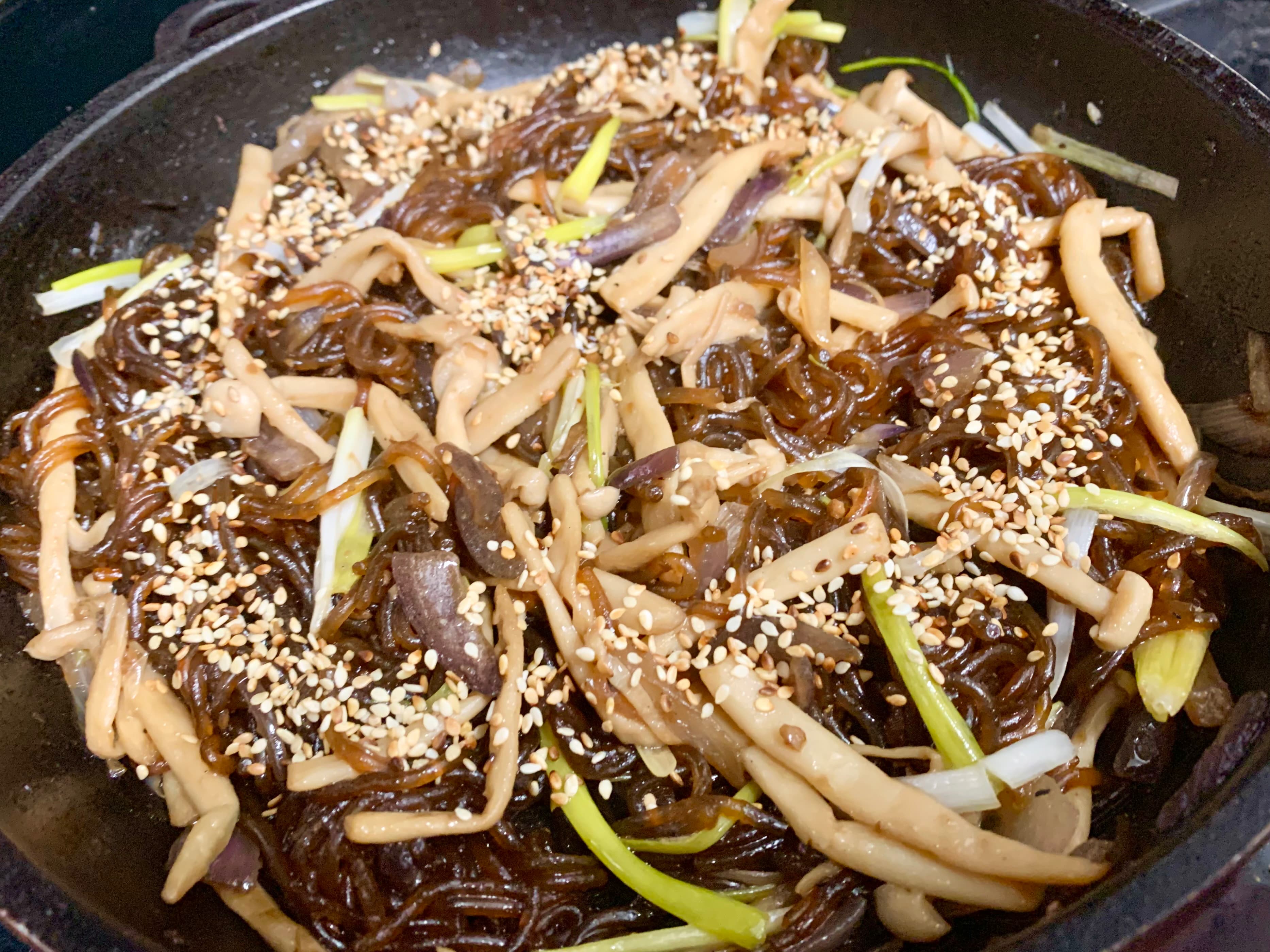
(MUSHROOM) JAPCHAE

I used used a mix of the regular recipe and the easy one – in that I soaked the noodles instead of blanching them, but I did saute the vegetables individually, because I was using fresh mushrooms, and I wanted to prep them on their own.

I am a big fan of the pre-soaking technique for pasta (that was written up by the Ideas in Food people ages ago), but it’s tricky with the sweet potato noodles, because they clumped up a bit. Will test it again next time, maybe with the fully layered version.

I used multiple types of mushrooms in lieu of the usual mix of vegetables, plus red onion and scallions. Forgot the carrots I had meant to include. Forgot the sesame seeds at first but luckily I remembered those before serving :smiley:

https://www.maangchi.com/recipe/japchae

https://www.maangchi.com/recipe/easy-japchae

3 Likes

Interesting about the noodles clumping. I have that issue with bean thread noodles, but have not encountered it with dangmyeon.

Doesn’t happen when I blanch them vs just soak. Will try again though.

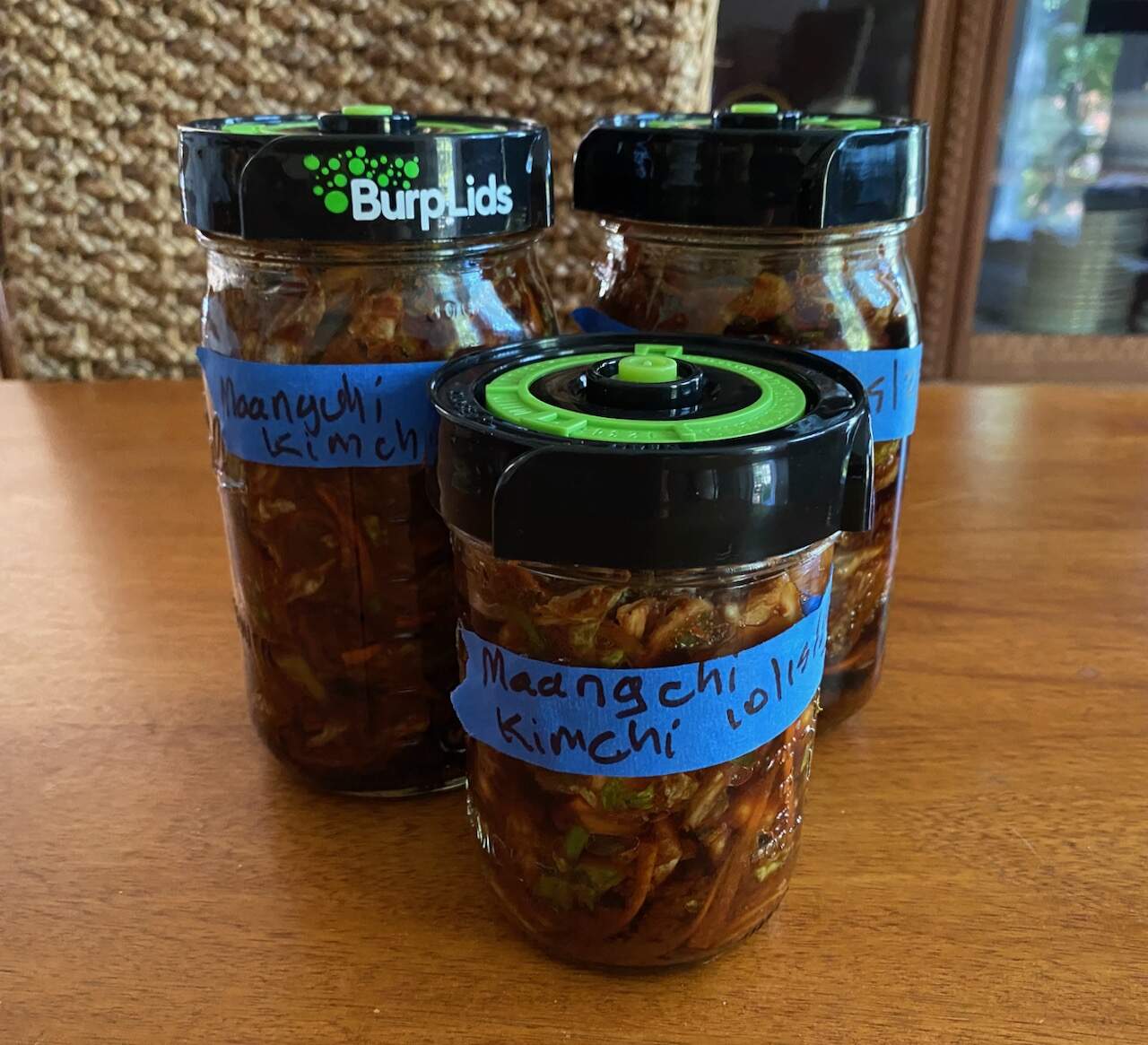
VEGETARIAN KIMCHI - Maangchi’s Big Book of Korean Cooking, p. 118

I have never sought out vegan recipes for kimchi, because usually the only thing keeping a recipe from being vegan is fish sauce, and vegan fish sauce is a thing you can make or buy. My go-to recipe has been the one from Edward Lee in Smoke & Pickles. This recipe looks to be based of the bite-size kimchi recipe on p. 120. I always cut my cabbage smaller then the wedges some recipes recommend, because I ferment in quart jars and it packs better that way. So I was glad to see this recipe already geared for a finer cut.

The process was familiar. Cut up some cabbage and salt it, let stand for a couple hours. Meanwhile, make what Edward Lee calls the “guts”. Kind of a roux-like mixture of sweet rice flour, stock, and sugar, that is heated to thicken, then blended with a little more stock, sugar, and salt, plus garlic, ginger, and onion to make a paste. To this paste, you add the gochugaru and some garlic chives and matchsticks of daikon and carrot. The cabbage, which by this point has been drained and rinsed, is then mixed in. The kimchi is then packed into jars. The recipe says you can serve it right away (no, don’t) or let it ferment. She suggests 1-2 days at room temperature or 2 weeks in the fridge. Because I like my kimchi, shall we say, well-fermented, I went a tad heavy on the salt, and left it at room temp for 10 days, before moving it to the fridge.

When I finally dove in, the kimchi was nice and tangy. I used some to make the tomato and kimchi pasta salad in Hetty Lui McKinnon’s new book, Linger. It was great in that, and on its own. Comparing to the Edward Lee recipe that has been my favorite for several years now, this one had much less of the “guts” rice flour paste. The paste had similar amounts of onion, etc, but less rice flour. I think that is an improvement, and it was a less goopy kimchi. Going forward I will probably adapt this recipe to use a vegan fish sauce. I kind of missed that element, although the kimchi is delicious without it. All in all, a winner for my first recipe from this book.
4 Likes

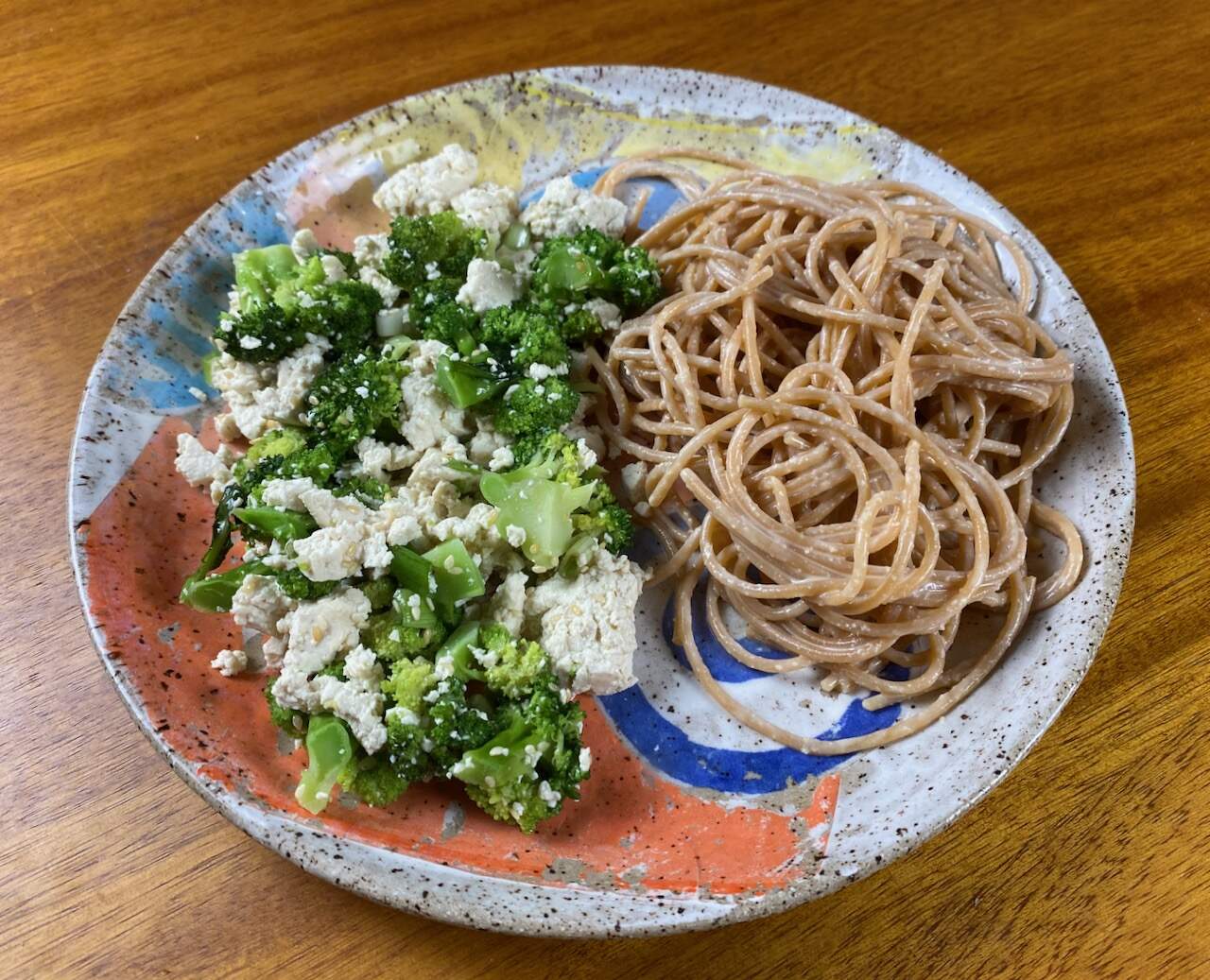
BROCCOLI WITH TOFU - Maangchi’s Big Book of Korean Cooking, p. 206

This is a very simple recipe, which I still did not follow exactly. In the recipe, you are supposed to boil tofu, then remove from the water and boil broccoli in the same pot. I’m not a fan of boiling things that I don’t have to - there is the energy used to heat a pot of water, then the loss of vitamins and minerals to said water. This dish seemed like a perfect application for the microwave.

So I started by microwaving the tofu. I don’t recall how long, but until it was hot and had given off a good amount of liquid. I really like what microwaving tofu does for the texture and even the flavor. Then I microwaved the broccoli, probably for 4 minutes, maybe 5, depending upon how much there was. From there, I mostly followed the recipe. Crumble the tofu by hand and add it to the broccoli, along with salt, minced garlic, scallion, sesame oil, and toasted sesame seeds. You need a good bit of salt for this. I salted the tofu first on its own and let it sit for a bit. Basically dry brining it. Then salted the dish as a whole and let it sit some more.

This good, not a wow. It’s a more subtle dish than I usually go for. I might make it again, as part of a larger meal, because it’s quick and easy. It doesn’t really stand on its own. I made some quick sesame noodles to round out this meal.

5 Likes

Looks good!

I’ve eaten this as banchan at Korean restaurants, which makes sense given the mild flavors like most muchim / side dishes.

I wonder if using soft or silken tofu would allow skipping the boiling step to soften it.

She has a recipe on the website, not sure if it’s the same proportions as in the book:

https://www.maangchi.com/recipe/broccoli-dubu-muchim

1 Like

The online recipe has the same proportions except for the garlic. The book only calls for one clove. I don’t recall how much I used because it has been a month since I made it.

1 Like