Welcome to the reporting and discussion thread for JOSE ANDRES QUARTER, where we’ll be cooking from his extensive cookbook collection, as well as recipes published and excerpted online. You’ll find a list of his cookbooks below, with links to their recipe indexes on the Eat Your Books site, to give you an idea of their contents and components (as well as to help with search terms).
To report on a recipe:
a) If you are the first to report on a recipe, please use the blue Reply button at the bottom of the thread. If someone has already reported on the recipe, please reply to their post (this keeps reports linked and makes it easy to keep track of things).
b) Type the recipe title in ALL CAPS, and indicate what book it’s from and the page (if available), or add a link if you found it online.
c) Tell us about your experience with the recipe, including any tweaks or changes and how it worked out.
To respect the author’s copyright, please don’t post recipes verbatim. Summaries, paraphrases, and links are all okay.
If you belong to a public library that offers Hoopla for on-demand ebooks, it has Tapas, Made in Spain, Zaytinya, Vegetables Unleashed, and Change the Recipe available.
I found this Jose Andres recipe here Tres Leches Cake Recipe.
Not much to look at, but very good. (He garnished with fresh pineapple.) Excellent moist tres leches texture, not mushy, cut nice and clean, firm and neat. Much beating was required! A little dark rum, no vanilla. I made a half recipe in a loaf pan 5 1/2" x 9". I think that it is the least sweet tres leche I’ve had, but no complaints, I’d do this for company.
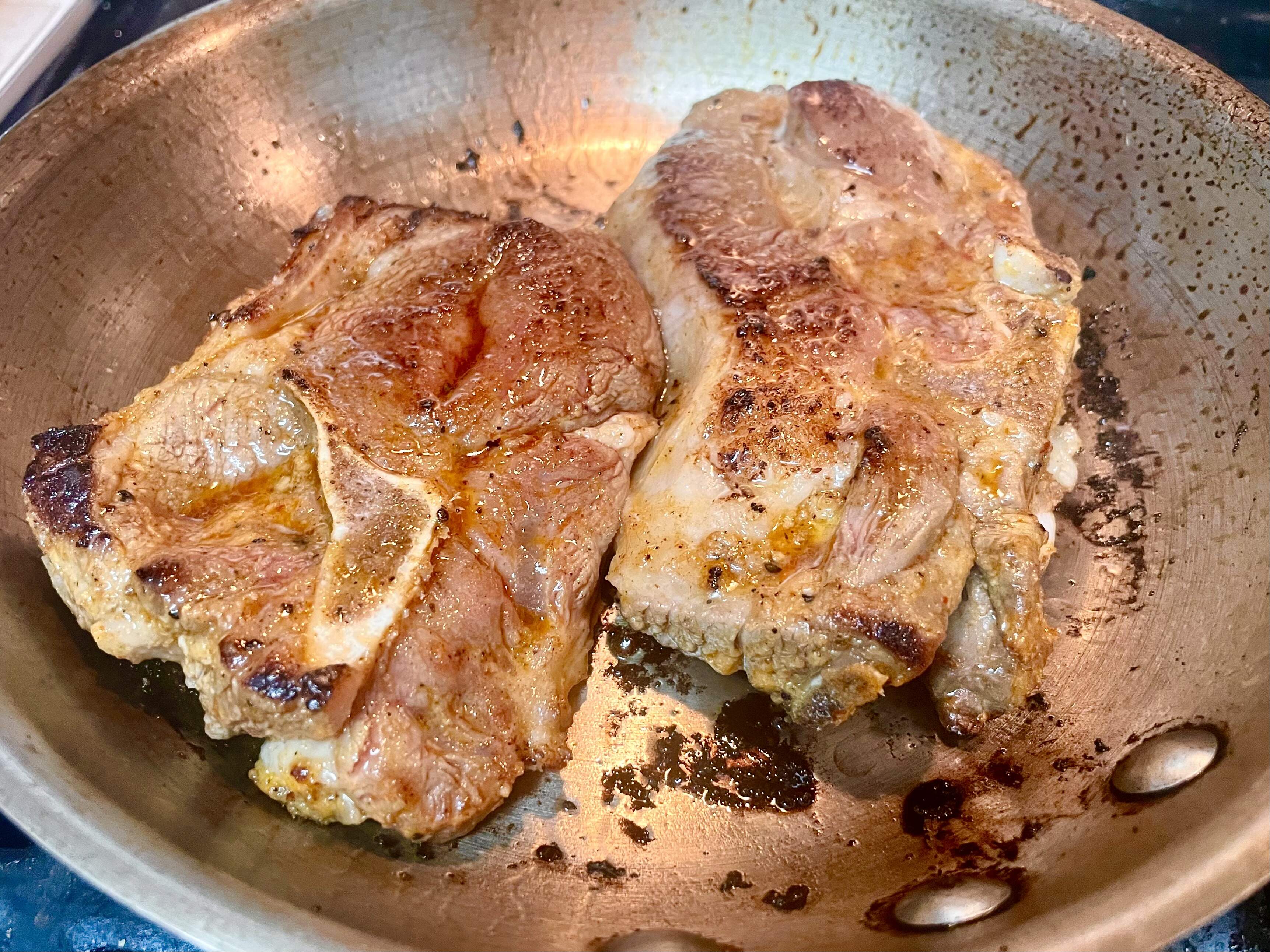
This is a simple preparation except for the addition of harissa-style chilli crisp.
Instead of making the harissa chilli crisp (garlic oil, spices, sesame seeds, and crisp fried onions), I seasoned the lamb chops with harissa, and also topped them with pan juices enhanced with more harissa and butter. I crumbled crisp fried shallots on top (forgot the sesame seeds).
The harissa topping is a winner, which is not surprising given harissa is great with lamb, but the crunch of the onions (and missing sesame) was a nice textural addition.
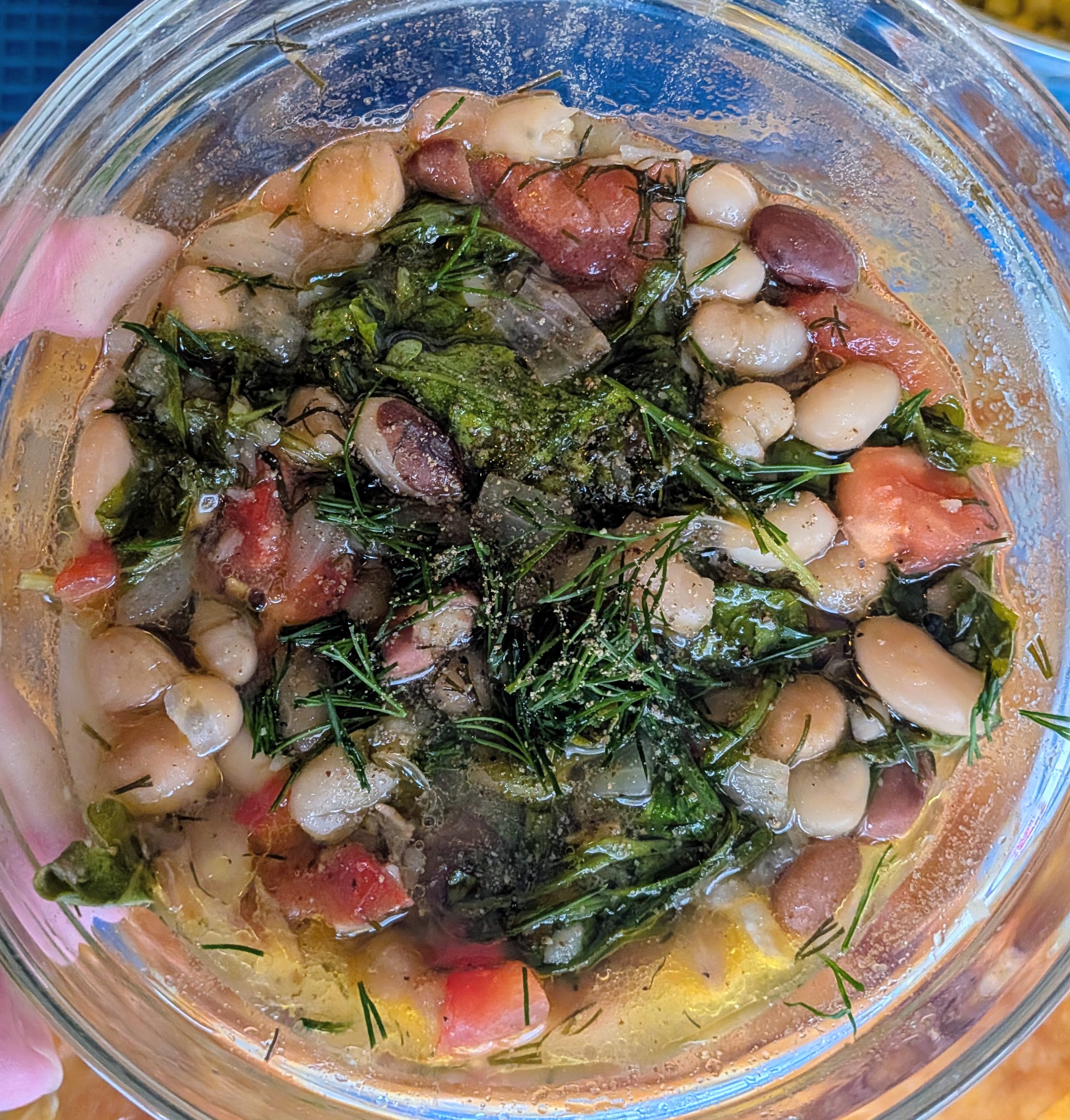
The Piyaz recipe, using Dried Gigantes, is on Page 162 of Zaytinya. I am making a variation of this without the kale, since kale isn’t tolerated by one of my DCs.
I think I’ll make half of today’s batch with arugula added in a few minutes before serving.
I’m using mixed dried beans, so really it’s the prep, and a launching point today.
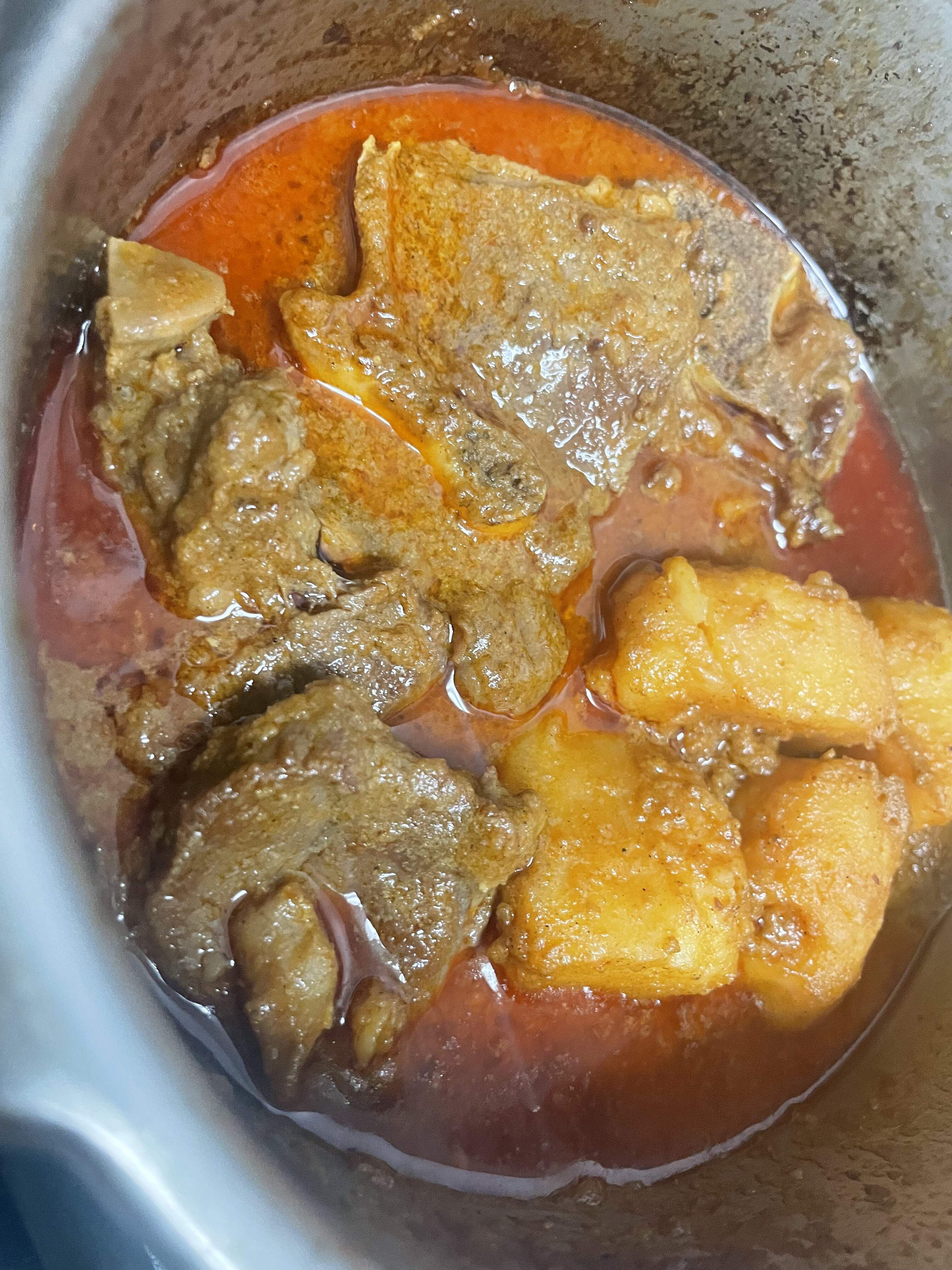
LAMB MASSAMAN CURRY / WORLD CENTRAL KITCHEN COOKBOOK
Aside from the food, this is a lovely book with heartwarming stories of people actively doing in the world in the midst of natural or man-made disasters.
This is a better-than-average Massaman curry because it employs aromatics and spices in addition to a purchased curry paste, rather than relying on the curry paste alone.
I used a blend of rendang paste, red curry paste, and panang curry paste instead of massaman, shoulder lamb chops, and coconut cream, and cooked everything in the pressure cooker to speed up tenderizing the meat.
This was delicious with rice, and rounded out with sautéed greens and crunchy okra.
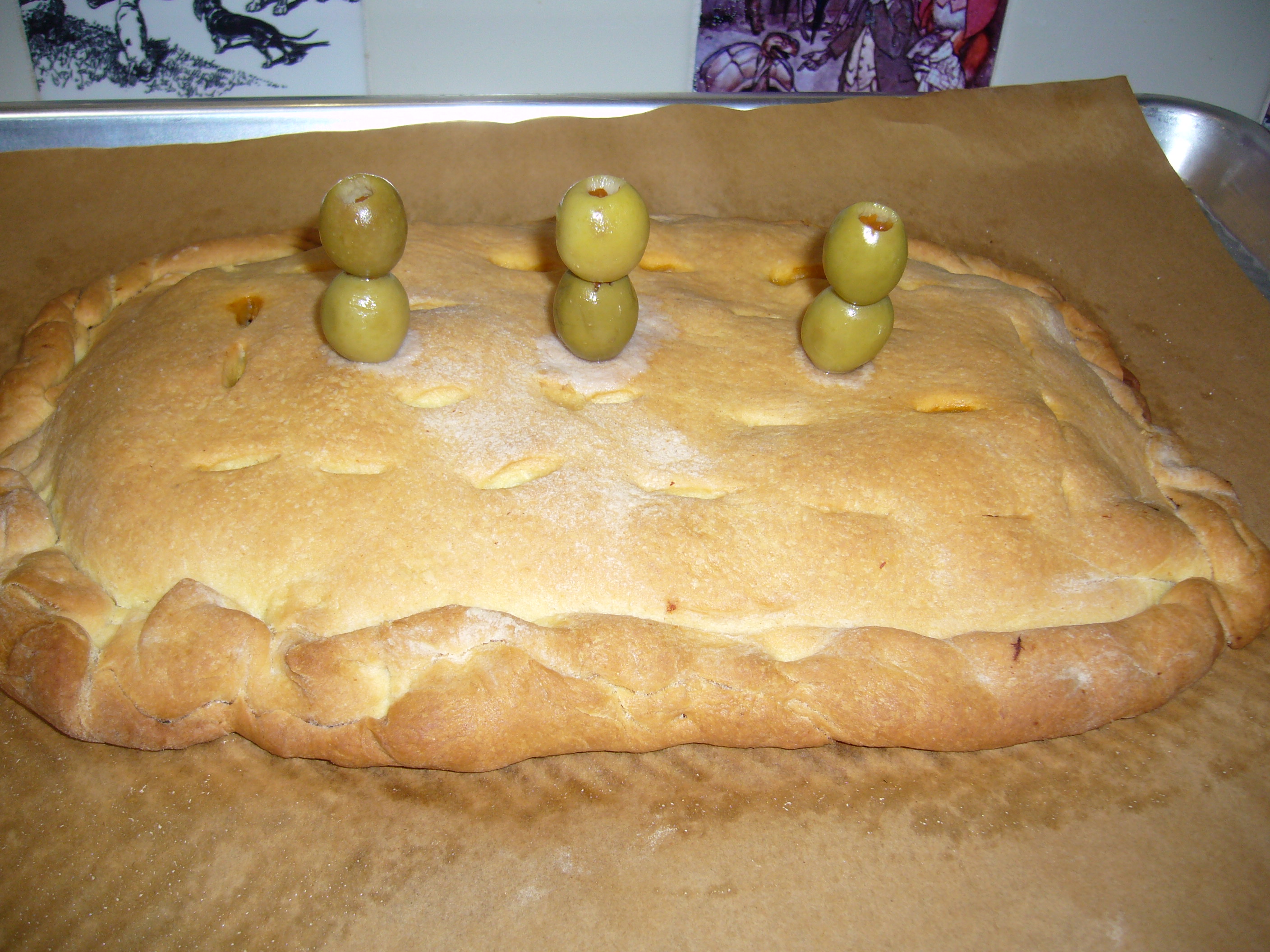
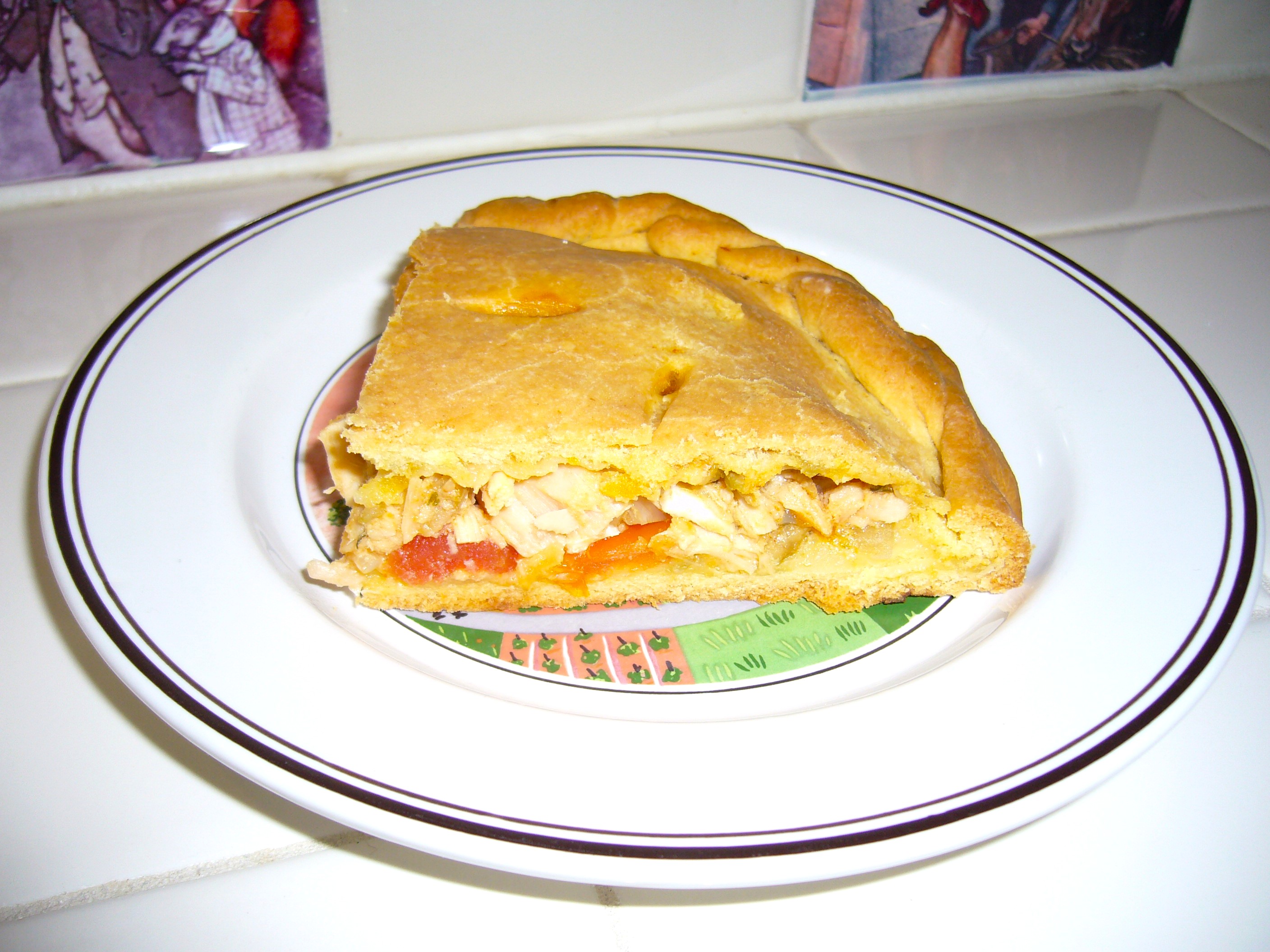
JOSE A. filled puff pastry packets with this tuna and olive, egg and onion mixture. I used his recipe for the filling, but mine are enclosed in an olive oil pastry crust from a long ago COTM Chowhound book called “The New Spanish Table”.
Not crazy for these, too much smoked paprika? But certainly good enough to offer anybody who likes a golden savory pastry filled with dinner! Alarmingly skilled balancing act garnish skill baby skill
I am using the marinade from Chicken Dürüm in Zaytinya, page 252, to marinate 4 bone-in chicken thighs. I will roast the thighs whole, rather than follow the method in the recipe, which uses a baking sheet to broil the boneless chicken, to replicate shawarma.
The marinade calls for olive oil, lemon, vinegar,.garlic, salt, Aleppo pepper, parsley, cumin, sumac, white pepper, black pepper and nutmeg.
Here is an online adaptation:
The Andres recipe includes grilled or broiled bell peppers, Toum (p 148), raw tomato and romaine lettuce in their wrap, which is wrapped in Lavash (p 68)
The José Andres Shish Taouk Marinade is quite different from the Dürüm Marinade. It is made with cumin, caraway and harissa. The Toum recipe is included
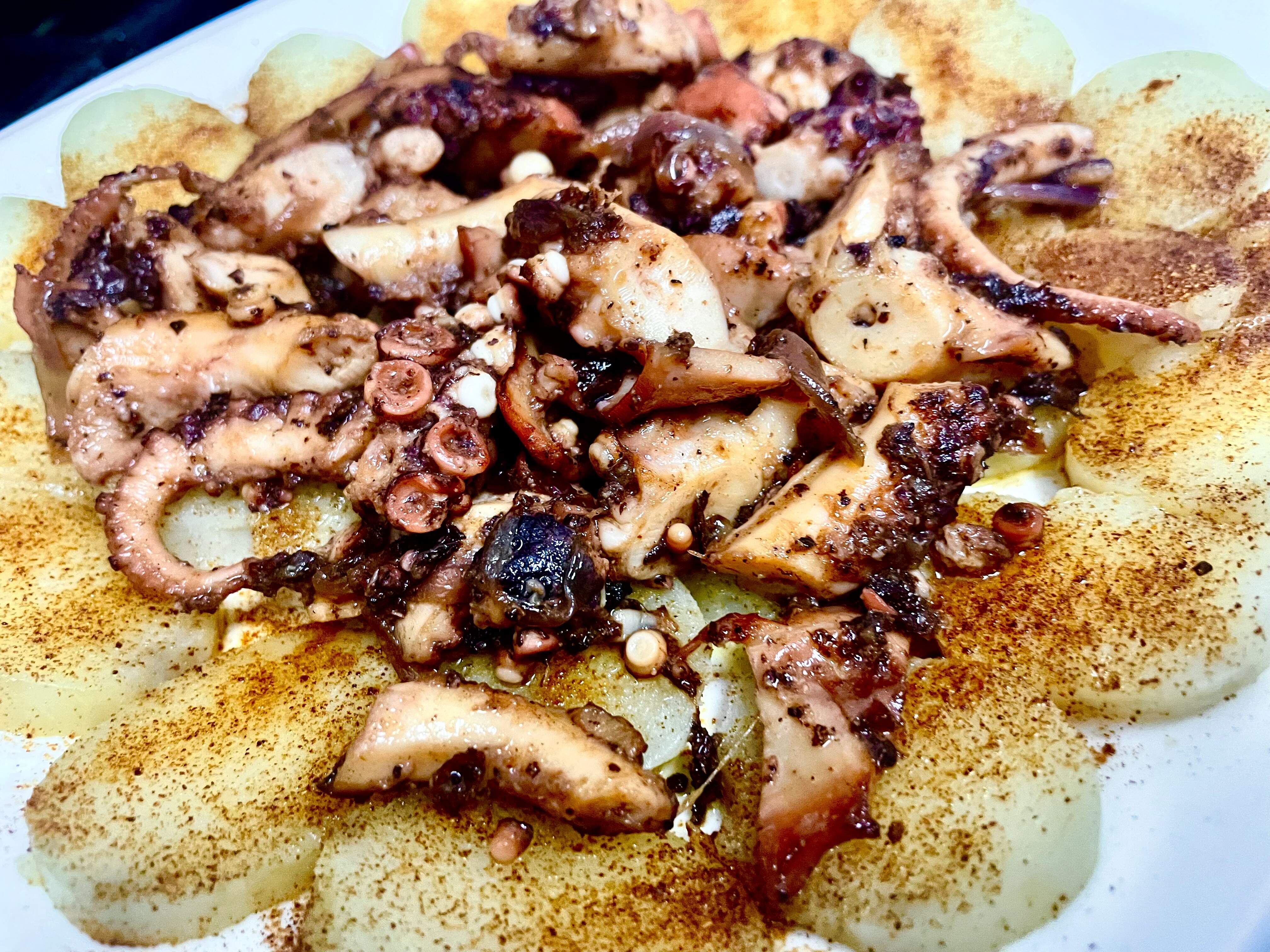
I love this simple preparation of boiled (and sometimes grilled) octopus and potatoes enhanced only with olive oil and a bit of pimenton / smoked paprika.
I pressure cooked the frozen octopus to speed it up, and “grilled” it stovetop. Though it’s also good without the grilling step.
I ate the same dish a few days later at a Basque restaurant, and they had tenderized the octopus much more than I’ve encountered before, so I may push it a bit further next time.
I used bone-in thighs, as a chicken main rather than a wrap sandwich.
The chicken tastes a lot like Turkish restaurant Dürüm. I will make it again.
I also made an adaptation of LEMON POTATOES from Zaytinya, p 280. These call for olive oil, oregano, cumin, chicken stock, and preserved lemon, as well as fresh lemon. I don’t have preserved lemon on hand and I don’t like it too much. I also didn’t use chicken stock, so what I made wasn’t too close to the original recipe.
I went with the cumin, oregano, olive oil, and fresh lemon. They were fine.
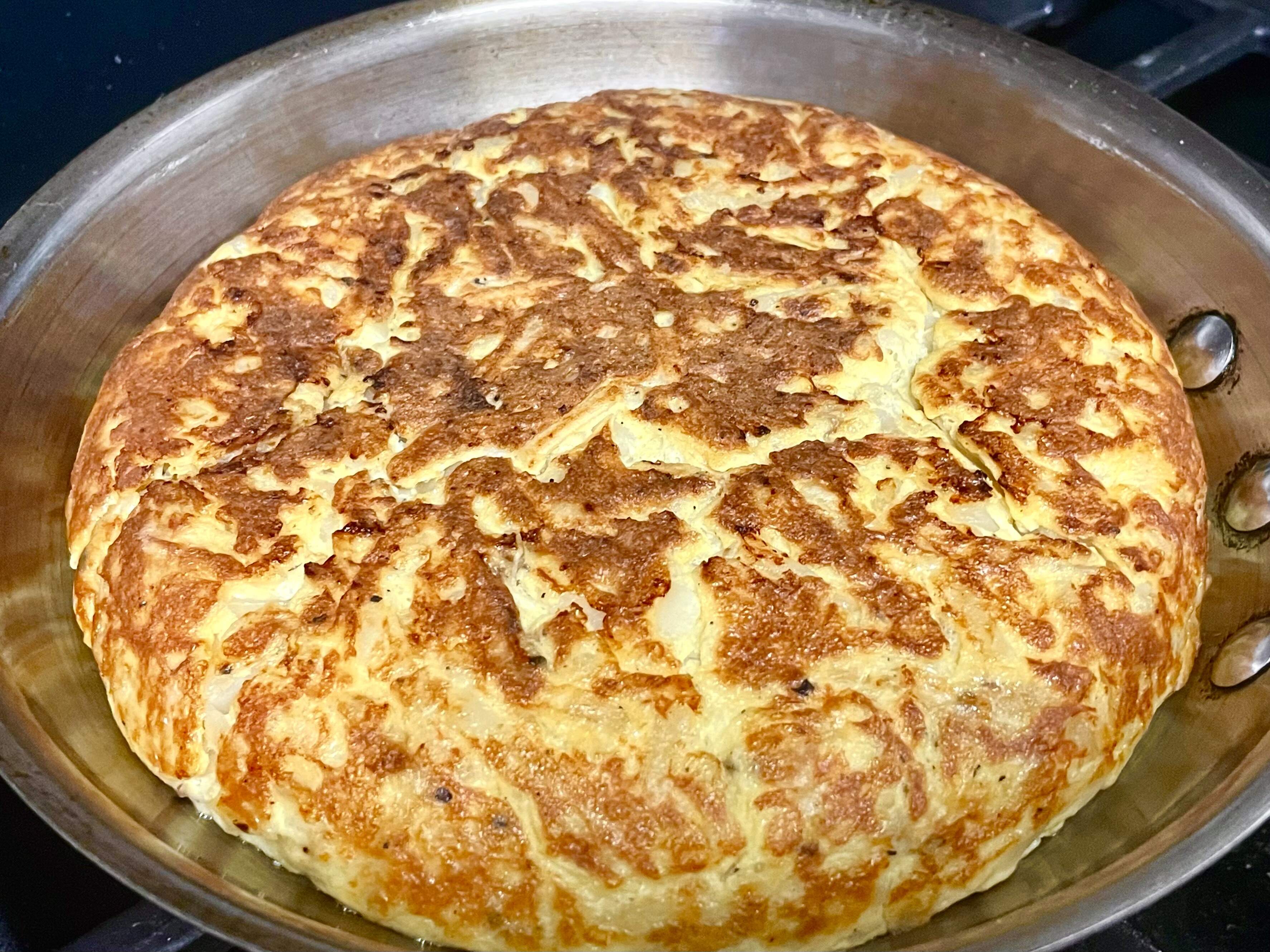
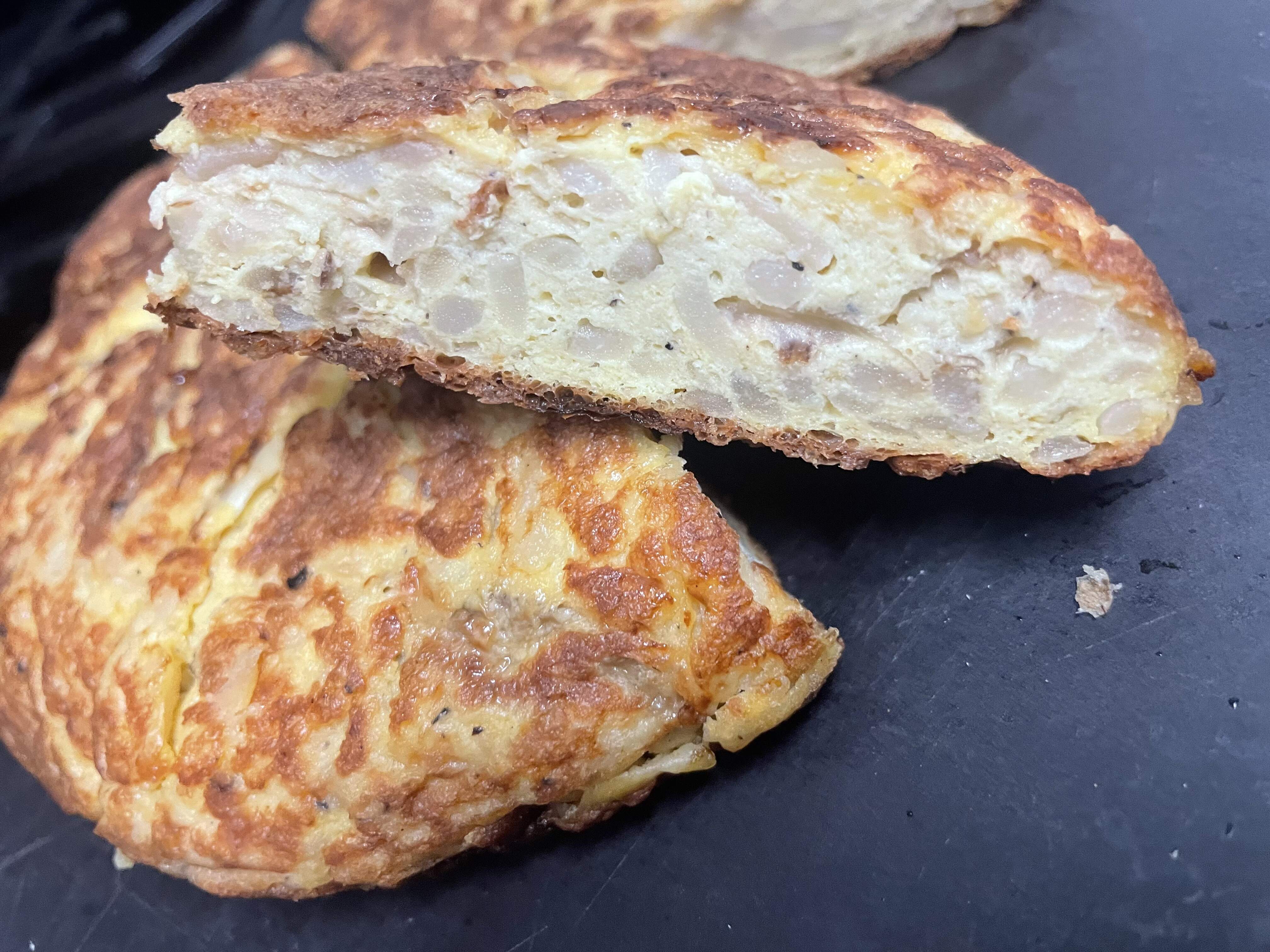
What’s not to love in a potato omelette? The proportion here is 1 lb potatoes to 6 eggs. I used 4 eggs to fit my pan, and scaled down the potato accordingly.
There are several variations on tortillas available across his books, using mushrooms, asparagus, even tuna.
I used frozen grated potatoes instead of dicing or slicing them. I also find it easier to flip the tortilla by sliding the cooked side onto a plate – instead of flipping it onto the plate uncooked side down (much messier). And I like it just set, not runny in the middle (like all my omelettes).
Need to make alioli to accompany this before I eat the whole thing as is.
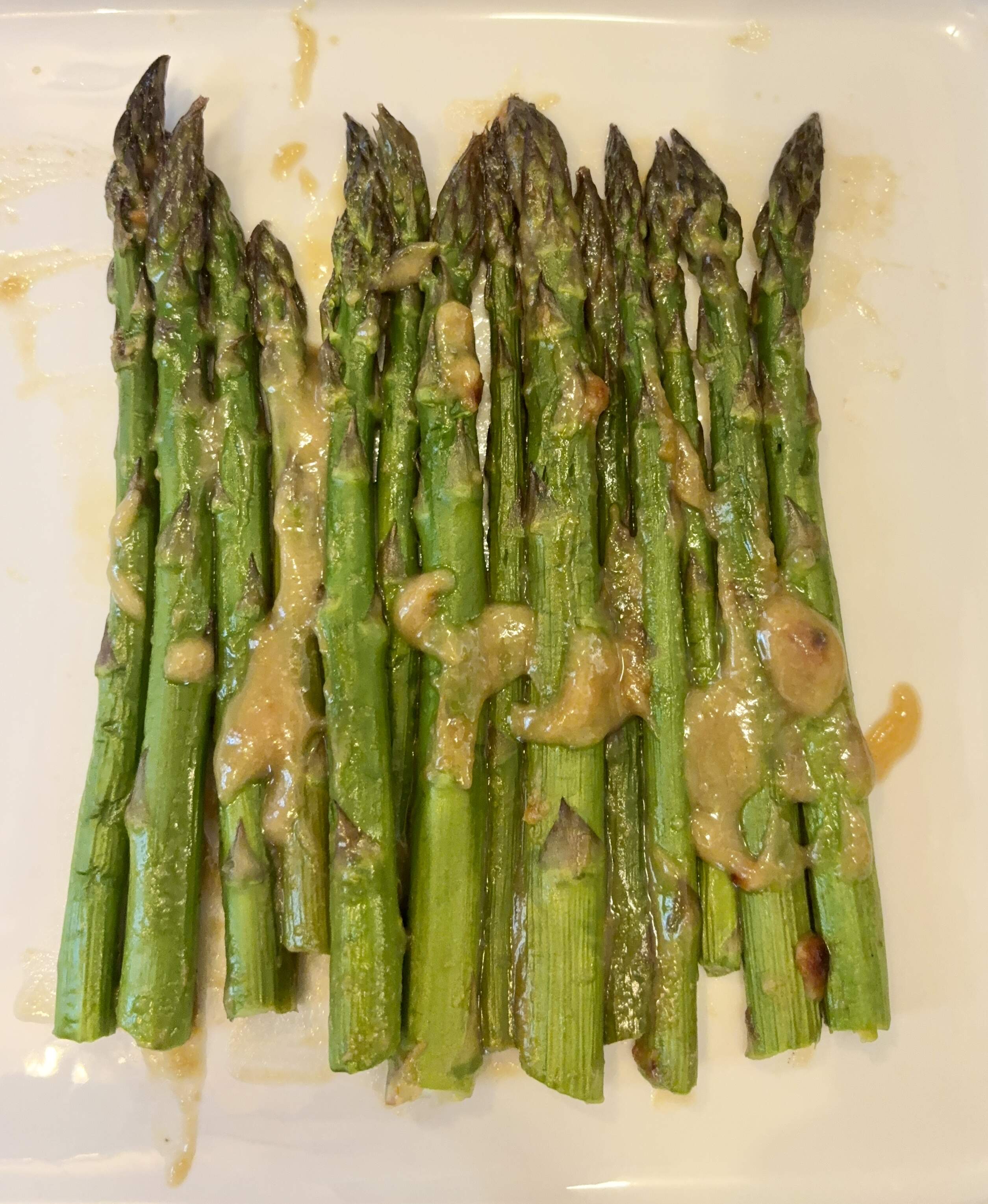
Asparagus is fresh and great at the local farmers’ markets right now, so I’m eating as much as I can while it’s in season. For this simple prep, Andres was inspired by Nobu’s miso cod. I think the recipe as written, with 2 T. sugar for one bunch of asparagus, reads as really sweet even taking into account the saltiness of miso. I made a couple of changes to the miso mixture: probably closer to 3 T. white miso than 1/4 cup, which would be 4; instead of 1/4 cup hot water, I used 2 T. mirin and 2 T. hot water, and instead of the aforementioned 2 T. sugar, I used about 2 tsp. maple syrup (picking up on the suggestion in the note at the end, though that suggests adding honey or maple syrup in addition to all the sugar). My miso mixture wasn’t “bubbling” by the time the asparagus was done, and I didn’t want it to get overdone. I broiled it in my countertop oven, and it’s possible my wall oven’s broiler would handle this better.
This was quite tasty, and to my palate pretty well balanced with the mirin and maple syrup in place of all the sugar. I’d like to see how does with either my larger oven’s broiler setting, or even just roasting in a hot oven with convection on.