Well, ack-shually, this was supposed to be a xmas present to myself, and my sis was supposed to contribute $50 (back when my fam still participated in that silliness), which she never did.
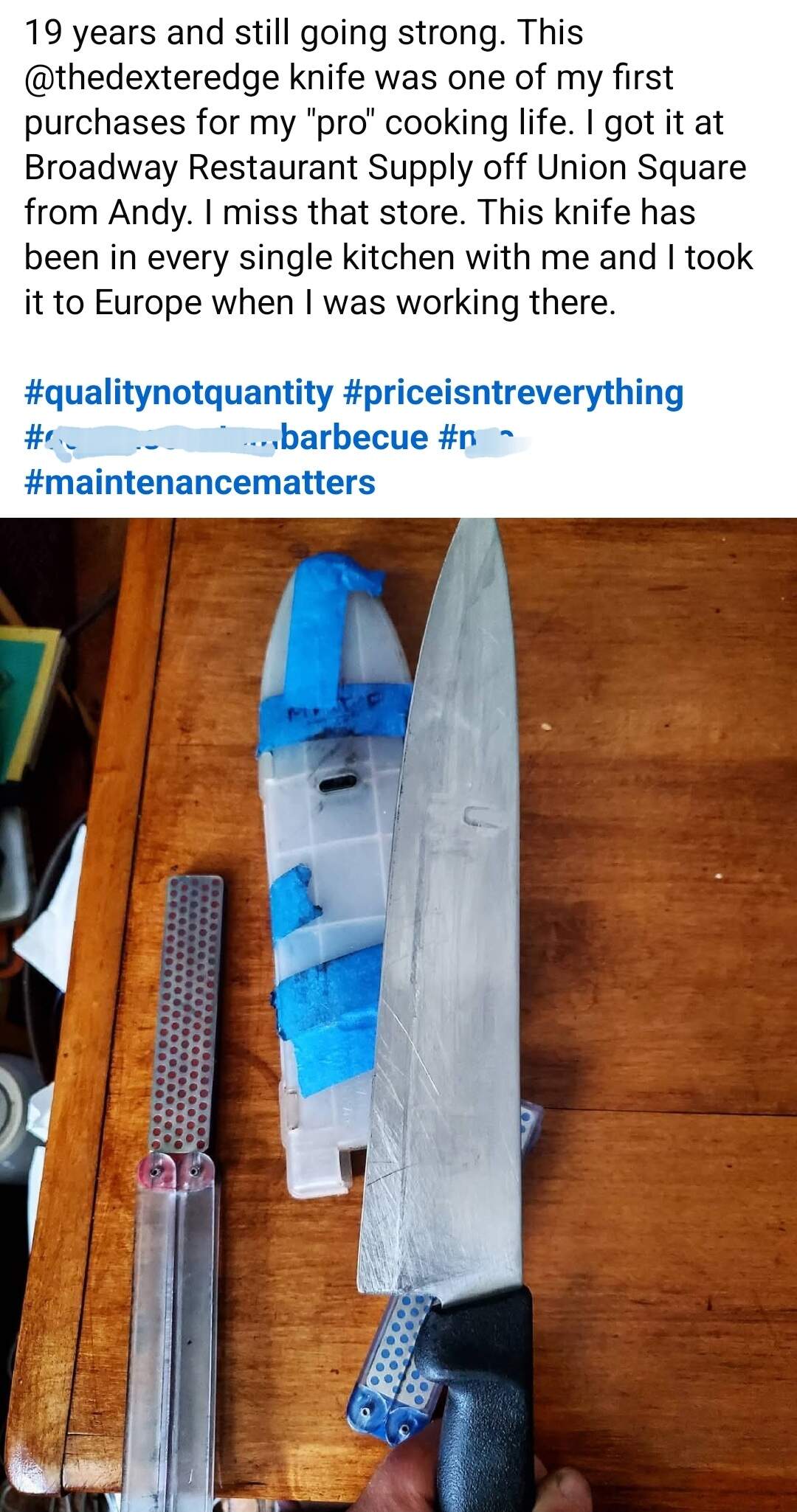
My comment addressed the fact that I don’t mind the investment, as it is a very good knife I use on a daily basis, besides my Misen.
If someone ends up with a counterfeit for less than a 1/3 of the OG price that’s on them
Whatever the provenance of the knife, I deplore counterfeiting. Even a brand that rankles yet has somehow managed to build a following deserves to have its brand protected. Counterfeiting also raises more questions than simply, “Does it look, feel, and work as hoped?” At the top of my list are questions about the working conditions and the level of environmental concern employed. Some people avoid products from certain places because of concerns over metallurgical impurities.
…and yes, I realize my own inconsistency in being ok with my no name products, especially my cheap Lyonnaise CS pans.
At least we agree that the difficulty of stone sharpening is widely highly exaggerated. It really isn’t that hard. It’s gets more difficult when you start thinning and changing grinds/profile. But you can get more then descent results with sharpening with pretty modest practice.
Something tells me the fellow in the video doesn’t faff about in the kitchen with a sonnet in one hand and a 10,000 grit Japanese waterstone in the other:
I worked at a carving station in bbq restaurants for more than 2 decades-- I definitely understand the waste issue. That’s why I always made sure everything went on a scale and we could account as well for weight before and after butchery and figure out loss in production (pre and after cooking) and on the line to minimize it-- reconciling portions served with what was being held. We also kept waste buckets to see what people were throwing away. In all areas of the kitchen minimizing waste and trying to achieve full utilization was so important. Turning scraps into gold feels so good!
Without derailing this thread further-- there is a loss in cooking through rendering whether you trim or not. The cooking technique of smoking and steaming it has a lot to do with it. It is gentle.
The fine gentleman in the video is laying waste to fat-cap and trim. I think Katz’s used to make a hash out of some of it, the better parts, of course.