I decided recently to do some more cooking from one of my favorite Ottolenghi-adjacent cookbooks, FALASTIN, by Ottolenghi’s primo chef and collaborator, Sami Tamimi from co-authoring the original Ottolenghi the Cookbook (2008). After Jerusalem, which the two also co-authored, Sami published this cookbook explicitly presenting the cuisine of Palestine. Its a wonderful book. Here are accounts of some of the dishes presented.
A dear friend gifted us that book a while ago, but we haven’t made anything from it (like most cookbooks we own).
What are some of your favorite recipes from this one?
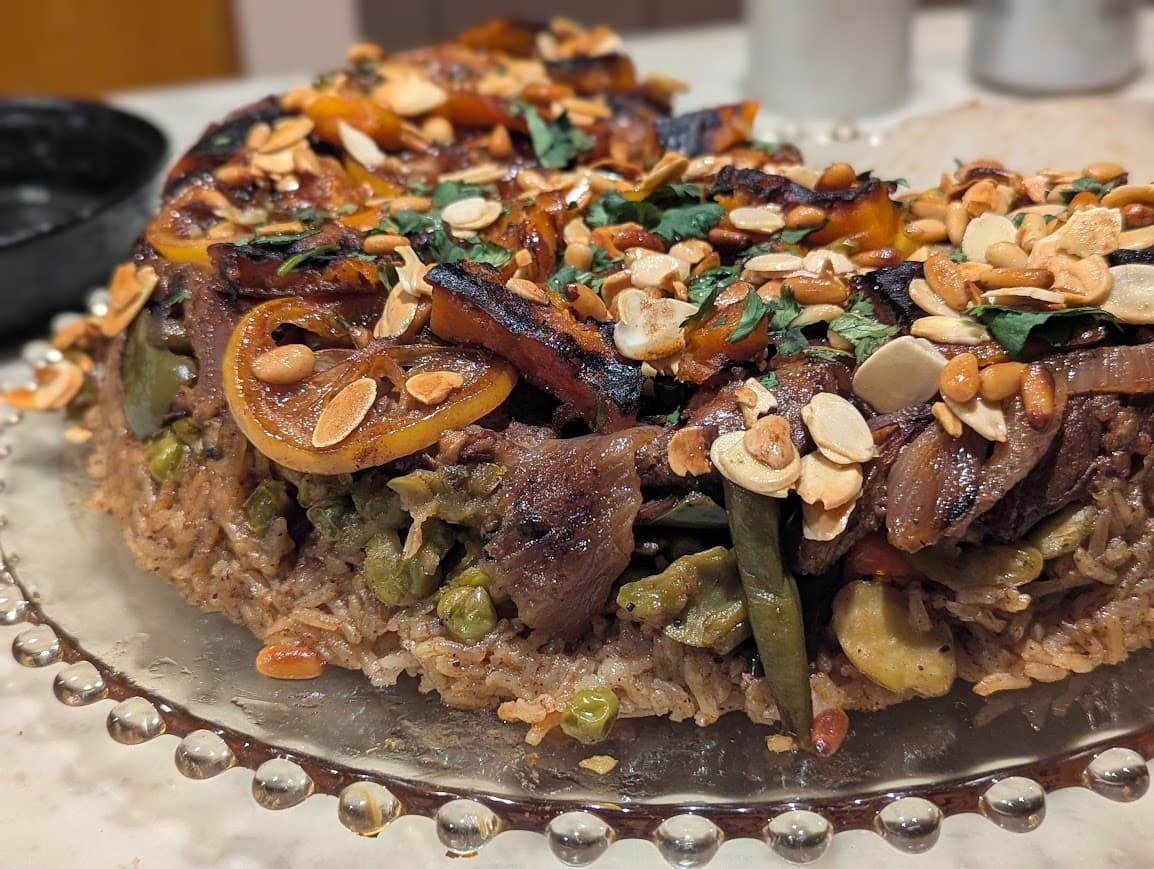
MUQLUBET EL FOUL EL AKDHAR - Upside down Spiced rice with lamb and fava beans
A “National Dish” of the Palestinian people and a beautiful centerpiece for a party, as written is serves 8. It starts with the soaking of basmati rice for at least two hours. Having no basmati, I uses some old Jasmine rice from my closet. Next, the lamb meat (I made it with extra lamb (used a frozen half lamb leg) is briefly browned then stewed in a large saucepan, at least 10 in in diameter and 2 inches high) in large pieces with aromatics, including dried limes, cardamon, green chiles, cinnamon and allspice, onions and tomatoes to which 6 c of water is added, until the meat is tender (don’t do what I did, allow the meat to fully cool in the large pot of broth, it may overcook somewhat. The lamb is removed from the broth and broken into large chunks, removing the bones. Retain the broth. While this is going on vegetable are sequentially sauteed in olive oil and kept in separate piles; squash (having none. I used sweet potatoes and carrots instead), green beans and green pepper pieces, and onion wedges.
Next the rice is drained and put into the stock to cook, til al dente and drained. A measured amount of the stock is used in the dish the rest can be kept for other uses (I put mine in the freezer last year and re-used it for my current execution of the dish)
The next step is assembly. The saucepan is buttered and oiled, sides and bottom, and then the ingredients go in in layers, first slices of a large lemon, seeded, then the squash (or subs) onions, chunks of meat, peppers and beans and finally thawed peas and skinned fresh fava beans.salt and press down, then top with the rice, pressing it down to compress. small holes are made in the rice and the specified amount of broth poured in through the holes, then the pan is tightly covered with aluminum foil and its lid and cooked on the stove, for 7 minutes over med high heat, turning to low and not disturbing for 40 minutes more, then uncovering, dotting with butter cooking for 10 min and then allow to cool off heat for about 20 minutes. Meanwhile, fry whole or slivered almonds and pine nuts in butter or oil for garnish.
Now comes the tricky part, finding a serving platter large enough to hold the completed dish (it needs to be at least 12 in diameter. I finally found one (Make sure your platter is oven-proof if you intend to reheat - this glass platter broke into 4 pieces when I reheated the dish for company. Fortunately, it did not shatter into shards so we could eat it!) . Remove the pan lid, invert the serving platter over the pan, and, holding it all together, invert the pan over the platter, tap the pan to help the contents detach and come out onto the platter. Garnish with the nuts, cilantro and some red chile if you like.. serve with yogurt alongside, if you like. Magnificent flavor and beautiful presentation.

10 Likes
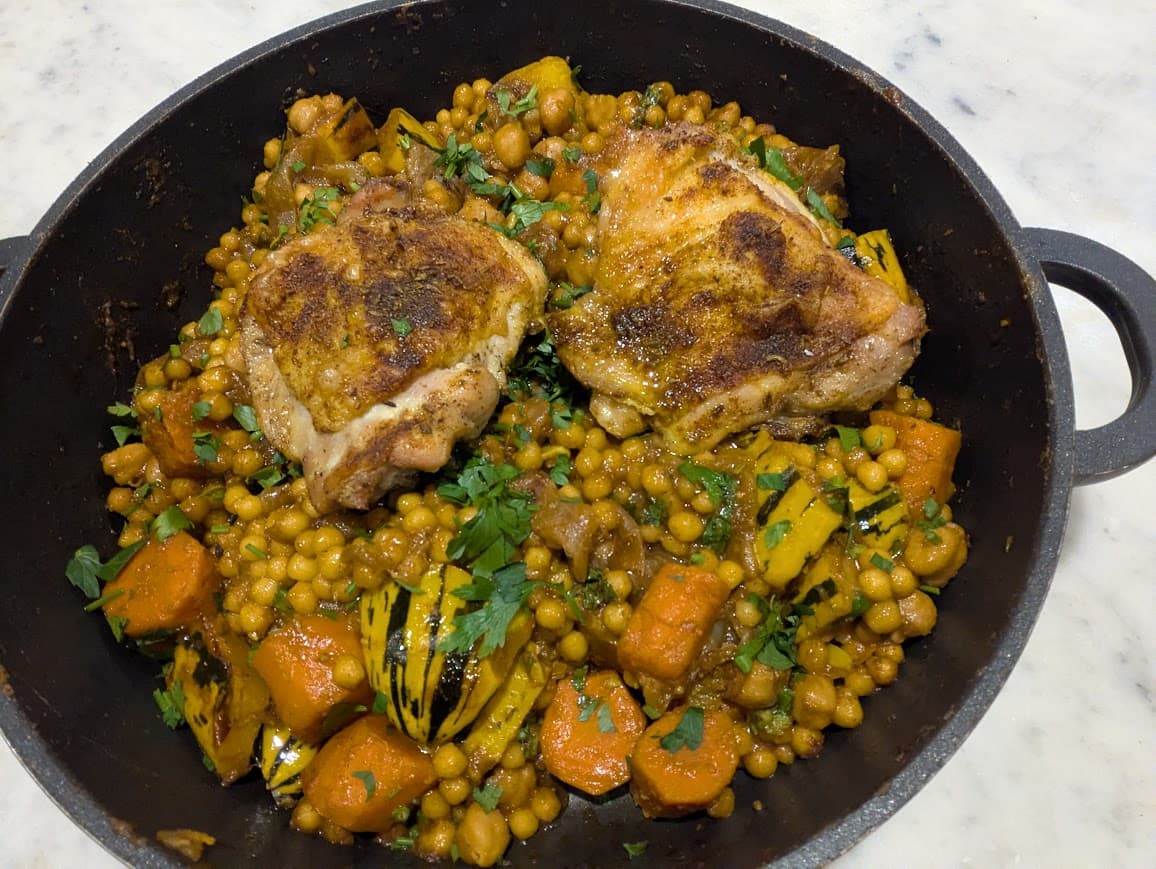
MAFTOUL - Fragrant Palestinian Couscous
I cooked a pot of this popular dish just this week - craziness for Thanksgiving week, its another delicious full flavored and much simpler dish than the Maqlubet. Here oven roasted and spiced chicken is served along with a deeply flavored couscous vegetable and chickpea stew. The fragrance of the dish cooking and while eating is unique, took me right to the scent just down the street in the palestinian stores on Atlantic Avenue (Brooklyn). Easy to make with canned chickpeas, too! First a spice blend is made with a large quantity of crushed fennel seeds, together with ground cumin, coriander, turmeric and cinnamon., Chicken legs (I used thighs) are put in a roasting pan to broil, skin skin side up, lubricated with some olive oil, salt, pepper and sprinkled with a fourth of the spice mix. Roasted til browned in the oven at 425F. Easy.
On the stove, cook sliced onions and salt in hot oil (10in 5in sauce pan) 5 min, add tomato paste and sugar then cut up carrots and squash (I used sweet potatoes) then a couple of cans of chickpeas, drained, spice mix 8 garlic cloves, and chicken stock, simmer about 15 min covered until veg are tender, then take out vegetables, strain and keep warm. Measure stock and return specified 2.5 C or so to pan, add 250 g of maftoul or fregola. Here I got into trouble because I bought mograbieh thinking it was the same as maftoul at a syrian store. No its not, its a bigger pasta ball, and has different grain content apparently so it took longer than maftoul would have taken to cook (recipe says 10 min) and needed more fluid. ANYWAY it did finally finish cooking, we fluffed the stuff up, added the veg and some chopped parsley and lemon juice, topped it with the chicken and served. Another triumph, I am still enjoying the pasta and chickpea stew, its exotic flavor is just fascinating and wonderful. Could have cooked more chicken this makes more than 4 servings - maybe the recipe meant the full leg and thigh.
7 Likes
That muqlubet sounds absolutely amazing!
I cannot explain quite why, but I couldn’t get to grips with this book and quickly passed it on (without cooking anything from it). It’s not that I’m short of Palestinian/Lebanese/Syrian cookbooks - Middle Eastern is my favourite “foreign” cuisine, bot for restaurant eating and cooking at home.
2 Likes
thats interesting. have you ever used any of the Ottolenghi books?
Yes. Jerusalem. Although I no longer have that one either.
He used to have a regular recipe spot in my Saturday newspaper. Never cooked anything from that - they were either too complicated for my skill, or used a hard to get ingredient which I’d never use in anything else. Or, quite often, both.
2 Likes
AMAZE
Sinisbiwbeibbsi e
interesting. Ive never found any of his recipes difficult technically but you do need to be a bit of an ingredient collector/shopper to put them together as specified. Which I am. Many are quite easy to make once you do that and you get a good often unusually delicious effect. The creative vegetable use is attractive to a lot of folks too, Flesh is definitely an afterthought in many of his books tho the recipes are good when they are there. Jerusalem Of course Jerusalem and Falastin are atypical since quite a number of the recipes are not new creations and they are representative of the local cuisines.
Gorgeous, and delicious!
1 Like
corrrection - in my post T-giving food coma I said I used sweet potatoes instead of squash in this dish - but you can see the squash in the picture!
1 Like
Here are a few of mine:
Yogurt-roasted cauliflower with quick-pickled chiles, sultanas, and red onions (p, 116)
Beet and feta galette with za’atar and honey, but with double the ricotta mixture and only a tiny drizzle of honey (p. 173)
Prawn and tomato stew with cilantro sauce (p. 212)
Chicken shawarma pie (p. 260)
Sumac onion and herb oil buns (p. 292)
That’s not everything I’ve tried, but my favorites of what I have. I really should get back into this book.
4 Likes
that yogurt roasted cauliflower sounds GOOD. I still have more than half a head left after making CAULIFLOWER AND CUMIN FRITTERS WITH MINT, very nice, I will give it a try. I hadnt intended to cook the fritters from Falastin, I was looking at Vidal Begum’s blog and he offered a recipe for cauliflower fritters and mentioned an inspiration from Falastin (I think there is a recipe in Jerusalem too) so I switched horses.
Liked these fritters, a little more complex flavoring thanBegum recipe. texture inside seemed a little moist I think from the Cauliflower but definitely cooked and tasty.
1 Like
I really loved that salad, the spicing and the pickled aromatics, etc. work really well.
two days later I just ate one of these fritters cold, out of the frig, no dip. I actually liked them much better than fresh fried, the flavors came through really well, so these are a good lunchbox or picnic item Excited by this!

3 Likes
I used to eat this when I lived in Jordan and loved it. It was always cooked by someone else. I’ve collected several recipes for it but am too intimidated to try it. My Jordanian friend says, basically, just do it. Probably not a recipe as complicated as yours, but something. It doesn’t matter if it falls apart.
I’m talking about maqluba.
go for it! I just went through this recipe step by step. There was nothing complicated about it at all. The toughest thing was finding a big enough platter to invert it on. you could use more or fewer vegetables but we loved this combo.
I’ve made it a few times with varying degrees of success in terms of appearance but it has always tasted good. Go for it!
1 Like

