NYT Opinion Guest Essay "The French Know How to Do Food. Even When It’s Frozen."

Is this here already? It apparently also appears as “The French Secret to Healthier Eating”

I was looking to add this somewhere ; maybe that thread about snacking habits, but that’s not quite right.

Gift link

The French Know How to Do Food. Even When It’s Frozen.

A few ideas interesting to me

“Over 1,400 brands have now adopted Nutri-Score, “

“A prepared food sector also has proliferated alongside dual-income families, with ready-made food shops and brands like Picard offering consumers healthier alternatives to ultraprocessed junk”

“Paris embraced the “15-minute city” ideal” — I am looking for a home in a “walkable neighborhood”. Apparently lots of folks are! Really drives up the price, and maybe reduces lot size, which iinterferes with my gardening goals.

“The lunch period is also meant to instill French values of food appreciation and culture. Children are supposed to sit for three or four courses.” :open_mouth:

Uh oh…looks like the opinion part is building up to politics.

4 Likes

I appreciated the “comment section” more than the article itself. A lot of insight from all sides. Something to think about. And yes, this article is definitely politically motivated, but then again, I would expect no less from the NYT.

1 Like

Interesting read. I really do wish the article had done more to emphasize its important point that food companies have been deciding what we get to eat, which has taken a toll on our health collectively. Of course there are solutions for healthier eating at an individual household level if you are fortunate to have enough time and money (say, a CSA share), but our food system as a whole is not designed to help in my view.

5 Likes

Capitalism, baby. In its most unadulterated form — unlike the resulting “food.”

1 Like

I’ve now finally read the article as well — but not the comments. NEVER read the comments :zany_face:! — and my takeaway was how little things have changed. Like, almost not at all.

All this overlooks a key fact: The burden of food procurement and cooking is still shouldered overwhelmingly by women, most of whom now also work outside the home. Asking people to cook more is usually asking women to cook more. Even in households that want to make every meal from scratch, the hours — planning, buying, cleaning, not to mention the actual cooking — simply aren’t there. (emphases mine)

You’d think with two functioning adults who both work full-time, the planning, cooking etc etc etc would be more fairly distributed.

You’d think. And yet.

4 Likes

It’s an opinion piece.

4 Likes

Ah, a belated sequel to “French Women Don’t Get Fat” :rofl:

The article, of course, as often tends to happen with many of these, oversimplifies and under-thinks, especially in its conclusions. Sort of disappointing from the author of a book called “Food Intelligence”.

But aside from that, a few disparate thoughts.

It’s good to see mention of frozen and canned vegetables in regular use, because any discourse on healthy eating in the US inevitably gets linked to fresh fruit and vegetables, food deserts, and so on, which is valid and important, but a different discussion. Access to frozen and canned is still access to healthful options, but after that comes choice of whether to include those things. There are plenty of conveniences available at every price point in the US to assemble a more healthful meal than fast food – however knowledge, education, or instruction about that isn’t as popular.

“By buying and preparing farm-fresh food, Americans could reclaim their health and repair the food system.”
This projection is one of the key hurdles to actually solving anything. Making people think the only healthy choice is shopping at farmer’s markets or participating in CSAs sets up a hurdle few can overcome. Instead, why not promote frozen and canned vegetables as healthy choices too, especially when frozen have repeatedly been proved to be such, and are easily and cheaply available in most areas?

“The burden of food procurement and cooking is still shouldered overwhelmingly by women, most of whom now also work outside the home. Asking people to cook more is usually asking women to cook more. Even in households that want to make every meal from scratch…”
Again, this is mixing up several separate points – invisible load / labor, cooking from scratch vs assembly for healthy meals, a living wage these days vs in prior generations providing references for the “traditional” concepts of food and family (that make it not always a choice, rather a necessity, for more external working hours for all genders), and more.

.

Nutrition education (or the lack of it), changes in the structure of society, inflation in cost of living vs wages, and the influence and control of Big Food, Big Agro, Big Pharma, etc. aren’t political, purely factual.

Painting them as political is what prevents positive change.

4 Likes

The big difference between the US and France, is France has a food culture that supports food that has influence to over-ride other social and structural priorities. Tradition matters even if it gets weird and unwieldy. The US is driven by commerce, the puritan work ethic and puritan food culture (look at what the US ate in the 50s and the immediate post-war era). The American food system’s priorities are NOT about food or people. France and other countries value food as culture, culture that carries some weight and influence. America seems to be on the commerce and food as fuel only deal.

Food eduction could help but America is in an anti-education bender right now, so don’t hold your breath. And you know what, industrial food makers don’t want education either..they’re fighting like cats and dogs to bury ultraprocessed food as a definition….because that might drive down sales.

Reducing education / promoting ignorance helps every Big XXX.

It is marginally amusing that some dog food ads are now about what ingredients are in one dog food vs another, whereas people food ads are… not. Amusing is the absolutely wrong word, of course.

There are many ingredients that have been banned in other places for a long time that are still in use in the US. Check out the list of ingredients for Heinz ketchup sold in the UK vs the US, and McD’s french fries – same companies, so it’s not like it’s unprofitable. Self-policing by manufacturers / GRAS is unlikely to do anything against the interest of the same manufacturers.

Again, not political. Lobbyists paid by corporations work on both sides of the aisle.

On the subject of the OP, it would have made sense for the author to research what ingredients show up in the convenience foods the people in France are buying, vs. the exact same products if they were purchased in the US.

4 Likes

Any time I see an article comparing French food culture to American food culture I simply scroll away.

The two are not the same in any way other than the word food.

That’s not political in any way…simply observation of living and cooking and shopping in both cultures.

There’s crap food in France. There’s healthy food in the US. We have to stop pretending otherwise.

6 Likes

I wish we could buy food in the quantities supposedly available in France, for example, ONE stalk of celery. I don’t know how much celery I’ve thrown out after it’s languished in the fridge. I find it essential for stuff like soups and stir fries, but don’t use it all that much.

1 Like

I can see you scrolling away then; sounds like you are quite familiar with both. I find I am not that interested in reading everything I pay for (or on HO for that matter) , but this seemed worth a few moments of my time.

I’m not sure what “crap food” means, but I was intrigued by the idea of what I might look for in the frozen food section. I rarely buy frozen food, but I think I should do it more. I think there was another story in NYT with that as the title.

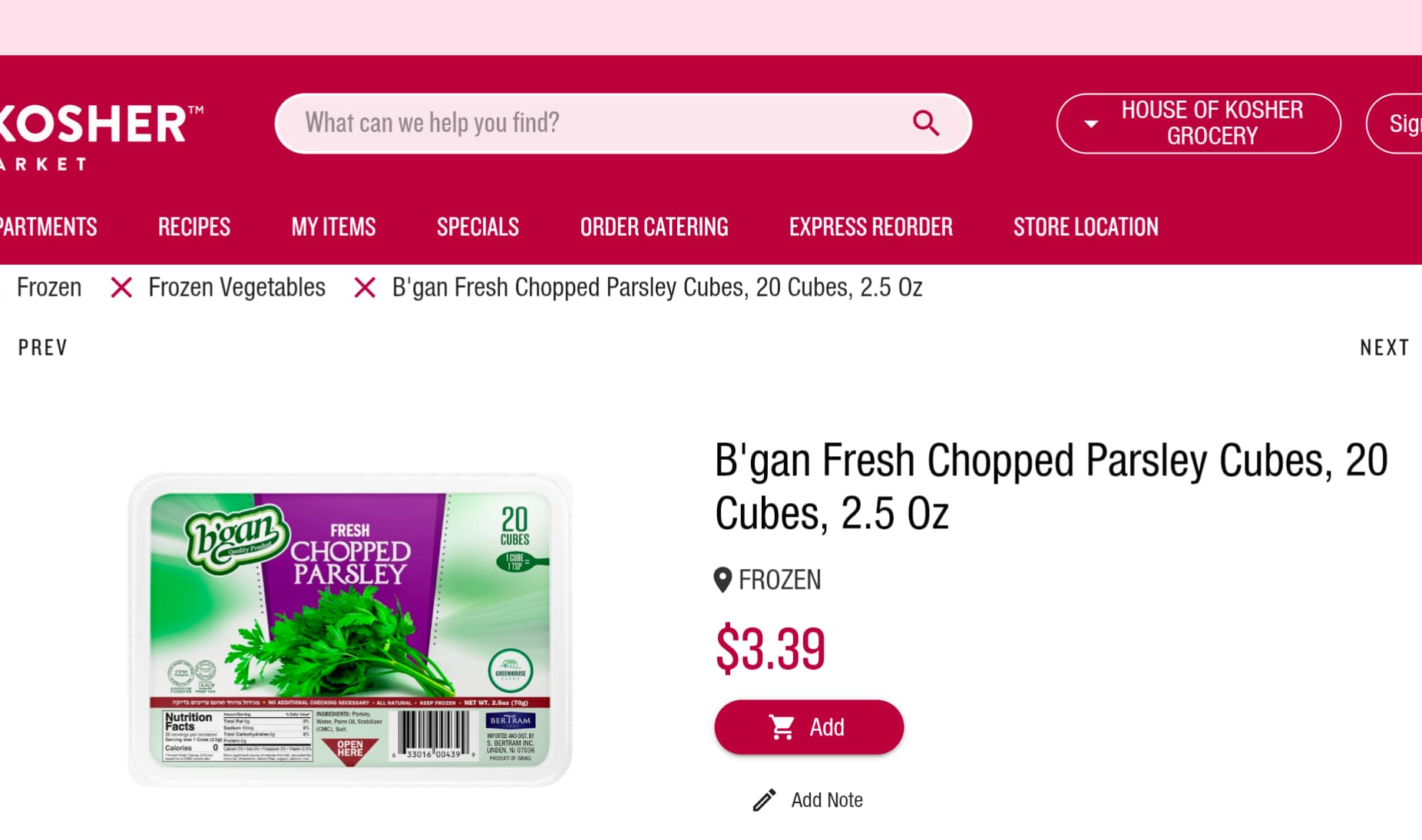
“…At home, she regularly melts Picard’s onions, along with its frozen garlic and diced parsley” . Is there “diced parsley” in the frozen section? There wasn’t as much there as I had hoped.

Without wanting to go into specifics, I will just say I felt like there were more similarities than I thought, but understood that was only in some communities.

I was especially intrigued by the notion that somehow everyone in France might be able to walk to almost everything they needed.

“…life’s essentials within a short walk or bike ride. To make that possible, the city leases spaces to local food purveyors — “. Still thinking about that.

In my search, those “walkable “ neighborhoods are usually the most expensive.

5 Likes

It was noted in the article that American grocers need to offer more healthy choices. In most major grocery stores there does not seem to be a lack of healthy choices, yet many shoppers ignore them in favor of convenience and quite often lean into less healthy comfort food options. In order to induce more of us to make the healthier choices, work/life balance, being overloaded on all fronts, and the noted imbalance heaping so much specifically on women would all need to be addressed. I can make healthy choices because I have the luxury of being retired and sharing duties with my spouse. My children try to model healthy choices in eating, but two small children and both adults working means that even though they share duties and love to cook, they necessarily must lean more heavily on prepared foods. Thankfully, they shop at HEB which offers a lot of pretty solid choices.

4 Likes

I think the quality of a grocery store’s offerings, produce for example, can vary wildly. As my mother moved into low income housing due to how her retirement played out, we noticed that the meat and produce available was not always good in the supermarkets local to those neighborhoods. Whether that was because of low turnover or the original quality of what the suppliers provided is outside my area of expertise.

3 Likes

Yes! Apparently in some of them!

1 Like

Well now I feel like a total n00b for never even having tried to dice parsley :smiley:

1 Like

I just scrunch it up in a ball and take the chef’s knife to it. I can’t be pressed to brunoise a carrot, so I’m certainly not going to go there for the herbs!

1 Like

Yeah, I thought that’s pretty much how everyone handles herbs. Not sure they can be … diced :thinking:

1 Like

Perhaps that is what makes it French!

2 Likes

The French are not like us. So hoity toity, those people :smiley: