Still in the last throes of S18 
And I’ve yet to find those champion series 
Still in the last throes of S18
And I’ve yet to find those champion series
Although his performing strengths are not in straight acting.
I offer, as evidence, his contribution to the cop series “Unforgotten”.
They are equivalent, just listed differently. No indication of more or less “authentic”.
Thai curries are completely different, and evolved very differently as @ML8000 alluded to earlier in this thread (through trade & interaction with India over centuries, not brought over by colonizers or flattened for the purpose of travel / translation / simplification).
Indian indentured labor was taken there by the British to replace slave labor on plantations after the abolition of slavery in 1834.
Although indentured labor was technically a free system, in reality, it resembled a new form of bondage. Workers faced long hours, corporal punishment, and poor living conditions. Overseers often abused their authority, and women were particularly vulnerable to exploitation.
The people who ended up as indentured servants were initially largely from the region of Bihar, so many Indo-Caribbean dishes have evolved from traditional Bihari dishes – roti, dhalpuri, phulourie, channa / bara / doubles, aloo pie / samosa, achaar, dhal, and so on (adapting to local ingredients and integrating with local cuisine over time).
It was interesting to me when I learned that Hindu festivals are still celebrated and festival foods eaten in many places, with the religion and culture persisting, albeit in a modified form. (Colonial regimes implemented Anglicization policies that actively sought to erase Indian identity. Indian languages such as Bhojpuri and Awadhi were banned in schools and ridiculed as “uncivilized.” Children were encouraged—if not forced—to take English names.)
.
https://www.unesco.org/en/memory-world/lac/records-indian-indentured-labourers-1845-1917
It’s quite deeply researched and well-documented.
British “invention” yes, hence the repeated call to “decolonize”.
But long before Bangladeshi immigration to the UK and the curry houses they owned.
No, an Indian restaurant owned by observant Hindus or employing observant Hindu cooks will not serve beef, no matter where it is.
Similarly, one that is owned or staffed by observant Muslims will not serve pork.
(And if the majority of the customer base is similarly observant in one way or another, even if the ownership & cooks consume one of those, they will still not serve them.)
If a place serves beef, most likely it is Muslim or Christian-owned and with cooks who are not Hindu.
Yep. Pretty intriguing. I haven’t seen some of those links before. Thanks!
Have you been to Trinidad? I have not, but feel like that’s were a lot of my mom’s family recipes originate. Easier to trace back to than St. Kitts/Nevis.
No, but family & friends here in NYC had many babysitters & helpers from Trinidad, so we have been lucky to hear / learn from their family stories, and treated to delicious goodies (both ways – they love our home cooking too).
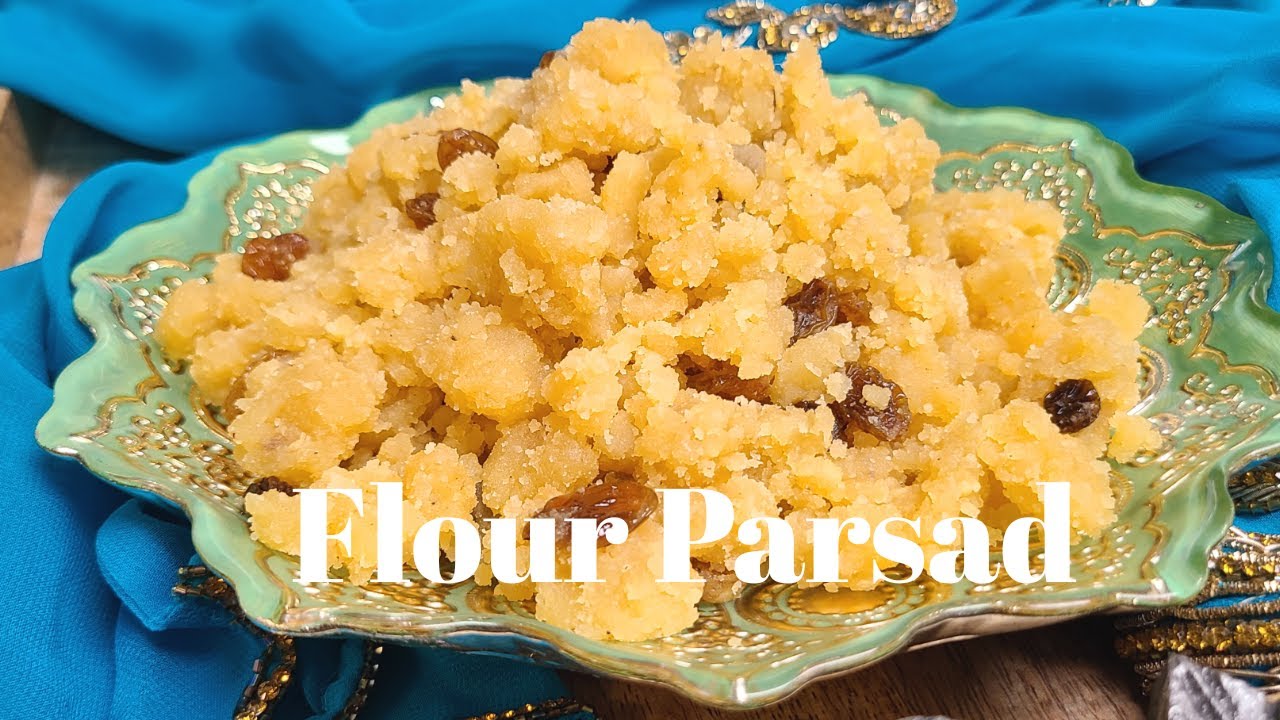
You might like this lady’s content – I came across it a while back when I was looking up recipes (“prasad” in Hindi just means edible religious offering of any kind, but when it traveled to the Caribbean, “parsad” took on the single meaning of what we call sheera / halwa – a wheat flour or semolina “pudding”).
https://www.youtube.com/@TriniCookingwithNatasha
As i understand it, while not forbidden like beef is, pork is frowned upon by Hindus as well. Is that correct? Two of the Nepali-indian restaurants here (with the same ownership) don’t serve beef or pork. I think the owner is Hindu and at least some of the employees are. The other Nepali-Indian restaurant serves beef and pork. Otherwise, the menus of the three restaurants are very similar.. The spicing of the food is similar, too. No kasoori methi that I can detect, light on coriander, very light on cardamom. Different than Punjabi style Indian food although most of the Indian dishes have the same names. The protein choices carry over into the Nepali/Tibetan dishes, too.
The same religious points apply to Nepal – its population is over 80% Hindu.
Pork isn’t frowned upon by Hindus, just uncommon. Chicken is easy to source (locally raised), and seafood as well in coastal or river-adjacent areas. Goat is more expensive, and eaten more judiciously.
Who the butchers are in an area also impact who is eating what – in most places, butchers are predominantly Muslim. There are also some Christian butchers, who cater predominantly to Christian communities (Goan, East Indian, Syrian Christian, etc) – that’s where pork is available. But it’s not always available everyday. In the northeast (eg Assam), pork is one of the more easily available meats, so popular among Hindus too.
The spicing you’re talking about is variable by region and by dish. Nepali and Tibetan restaurants (you may not be able to tell the difference, because there are many Tibetans who call their restaurants Nepali, similar to Bangladeshi and Pakistani owners who would call their restaurants Indian for easier marketing) will serve their own food, as well as popular North Indian and Indo-Chinese food.
Also re spicing: Kasuri methi is used mostly in Punjabi cooking, not really much elsewhere in the traditional canon. Cardamom is not a main flavoring – it’s a whole spice that is used sparingly along with other whole spices, but only in certain dishes. Ground coriander and ground cumin will be in most things whether you can discern them or not. Fresh coriander is almost always used as a garnish.
It’s been my experience that Punjabi spicing is heavier in general not just with kasoori methi. I’ve bitten into cardamom pods more than once. No chance of that happening at my local restaurants.
Punjabi spicing is heavier than, say, Gujarati, but not than Maharashtrian or Bihari. I’m not sure what you are comparing it to. Kasuri methi is a specific ingredient used in Punjabi cooking, but not in many other regions.
Re cardamom pods – that’s not to do with Punjabi spicing, that’s to do with usage of whole garam masala (cardamom, black cardamom, cinnamon stick, bay leaf, cloves, etc), which happens in all regions for certain preparations. Other preparations may have the whole spices ground into dry or wet masala, or use a localized spice blend that contains them, or powdered garam masala, or not use them at all.
I’m comparing Punjabi style to Nepali-Indian style.
But to make up for this “lack”, one sees a lot more lamb and goat on the menu, which pleases me just fine.
Goat is commonly eaten in India, so it’s traditional rather than filling in for a lack of beef or pork. (Lamb was used when goat wasn’t easily available, and for folks who aren’t used to eating goat.)
How commonly is water buffalo eaten in India? I think it’s not considered beef in Nepal. I bet Hindus in the U.S. could use American bison if they wanted to. Seems a logical thing for somewhere like Montana. Or maybe not. Bison can crossbreed with cattle but water buffalo can’t.
Beefalo (usually Angus or Whiteface bull, buffalo cow, originally) was popular for a while but less so now. Later on most had very little real buffalo in them anyway. Pity it did not work. They were hardy and good eating. But they did not tolerate feed lot conditions as well as Angus.
Feedlots are the bane of the cattle industry in many ways.
“One bad day” is much better. Meat tends to be tougher though. Feed lots work not just to fatten up but to soften up thd muscles before the animals are butchered. You can see a continuum if you put 3 tenderloins next to each other, veal, feed lot and free range. It is striking.
Most “beef” eaten in India was always water buffalo, it just wasn’t identified as such until the beef ban came in.
Hindus are not looking for a sneaky work-around the religious aspect of the cow – they either eat beef irrespective of that, or they don’t.
Just like some Jews and Muslims eat pork, others don’t – trying to make a fine distinction about wild boar is unlikely to sway the latter group.
I wasn’t viewing it as a sneaky work-around. I was trying to understand what makes one type of bovine sacred but another not. After delving into it with AI websites, the closest i can get to understanding it is that the water buffalo is culturally established as being not sacred and that American bison would probably be avoided because it lacks that status. American bison wouldn’t be avoided because it is sacred. It would be avoided because it’s a bovine that isn’t established as being not sacred. Does that make sense?
Muslims are forbidden “swine”, which includes wild boar. Jews are forbidden animals that do not both have cloven hooves and chew the cud, so they are forbidden wild boar as well. There really is no “wiggle room” here for either.
Now for Jews birds are a different matter, since the prohibited birds are enumerated, and hence birds discovered post-Biblical are not explicitly prohibited. For complicated theological reasons, turkeys are kosher, but for many birds fall into the gaps. And the fact that in many cases we don’t know exactly which birds the Hebrew names refer to doesn’t help, and whether the prohibitions are for species, or genera, or families, or what.
To return to the original question about water buffalo, for both Jews and Muslims, water buffalo can be eaten, as long as it is slaughtered and prepared in the appropriate fashion.

