A thoughtful article about how the vast portfolio of Indian food is discussed, 78 years after independence and with 1.4 billion native eaters.
.
.
[The author] unpacks the imperialist history and racialised convenience of the term ‘curry,’ examining its role in erasing the diversity of Indian cuisine.
The West’s creation of the ‘curry’ has done more than just produce a narrow and ignorant view of Indian cuisine. It has also restricted the vocabulary of Indian food.
What began as a long history of contempt against Indian food, with the practice of calling it “filthy” and “smelly”; became an arc of appropriation when up-scale restaurants in London started using the imagery of the Empire in its royal existence to serve, market and orientalise Indian cuisine… This gave curries an “exotic otherness”, that ultimately helped reduce the stigma around Indian food within upper-class British society. It became only a matter of time until the curry got appropriated entirely.
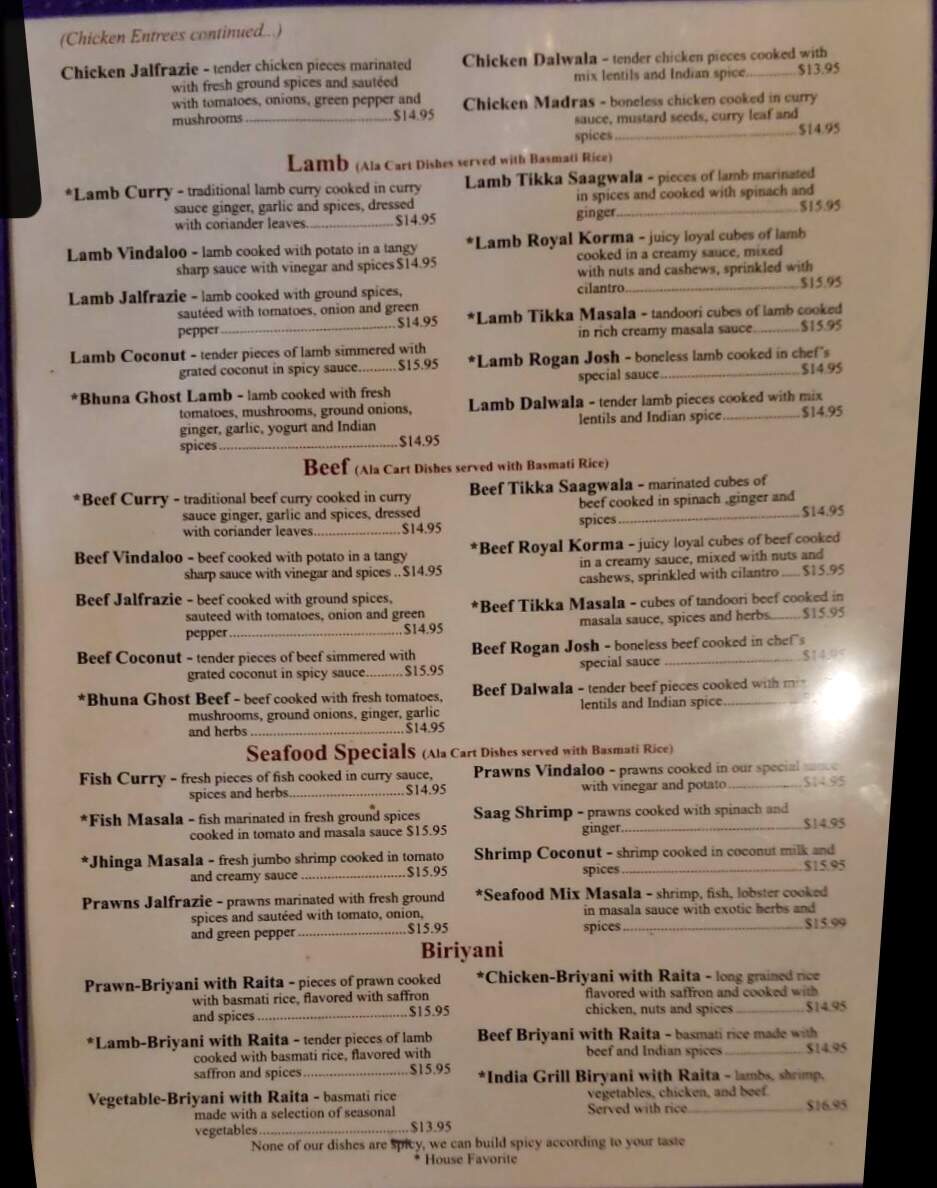
…The curry is an invention of racist convenience. Reducing complex dishes like korma, rogan josh, vindaloo and moilee into the ambiguous ‘curry’ is nothing short of an imperialist masterstroke… The implication of the Curry therefore stretches far beyond plain oversimplification. It is, at the core of it, massively racist.
It is also an insult to centuries’ worth of culinary knowledge… Not only does it erase or leave out India’s impeccably rich culinary diversity, but also hegemonises the Indian food market and its global perception.
…Appreciation comes at the cost of erasing historic knowledge, skills, identities and experiences. At the cost of pandering to the orientalist gaze, and at the cost of forever remaining the empire’s subjects.
What does it mean, really, to decolonise food, and to decolonise curry? … When it comes to Indian food, perhaps we need to begin by letting dishes be explained by the name of the dish itself.
.
.
If colonialism is a system of power, part of that power comes from the ability to name, simplify, and take away complexity.
…Take up space—tell your stories. It’s imperative to talk about where specific culinary techniques and cuisines originate to give credit and respect to the cultures they derive from.