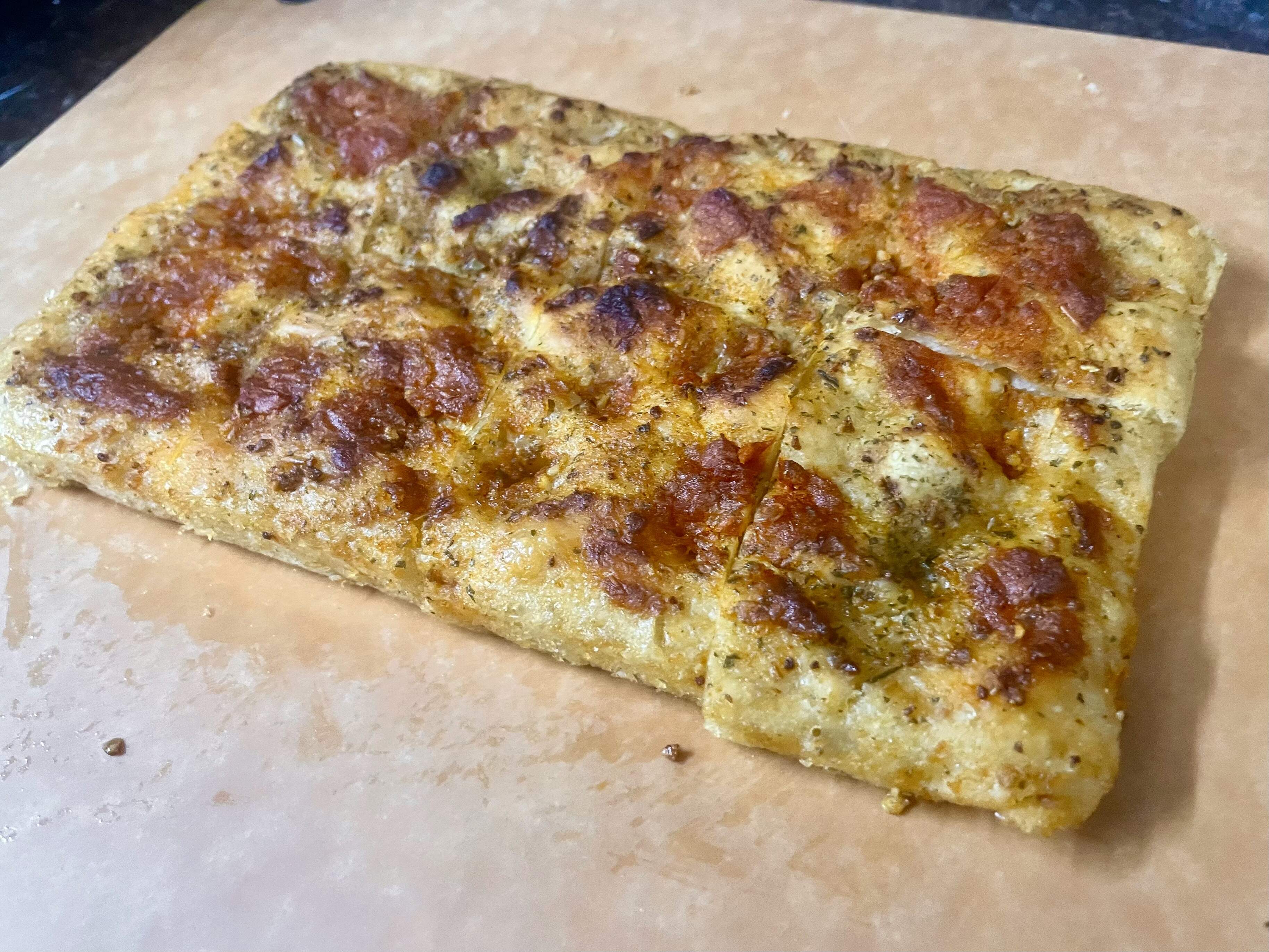
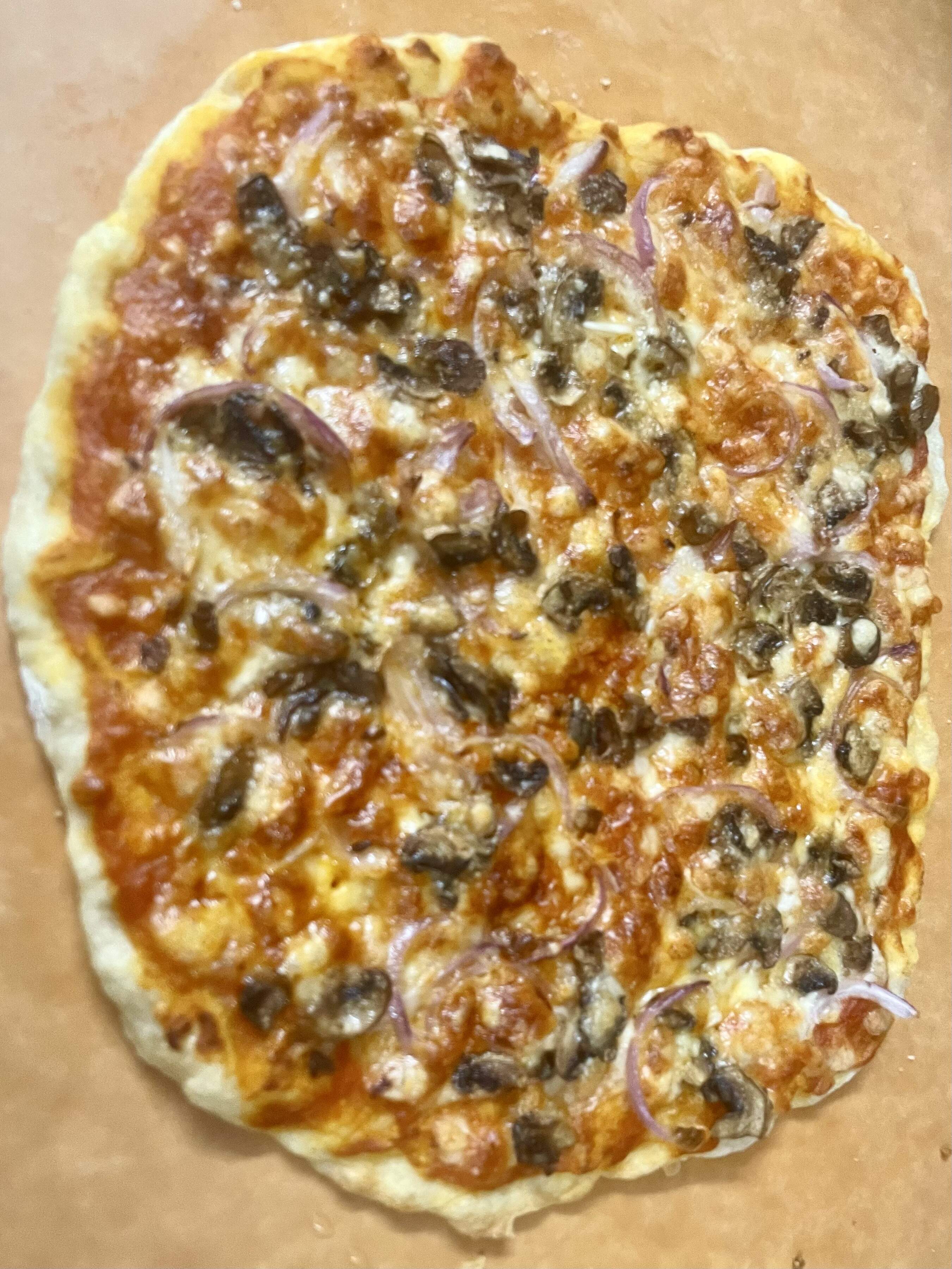
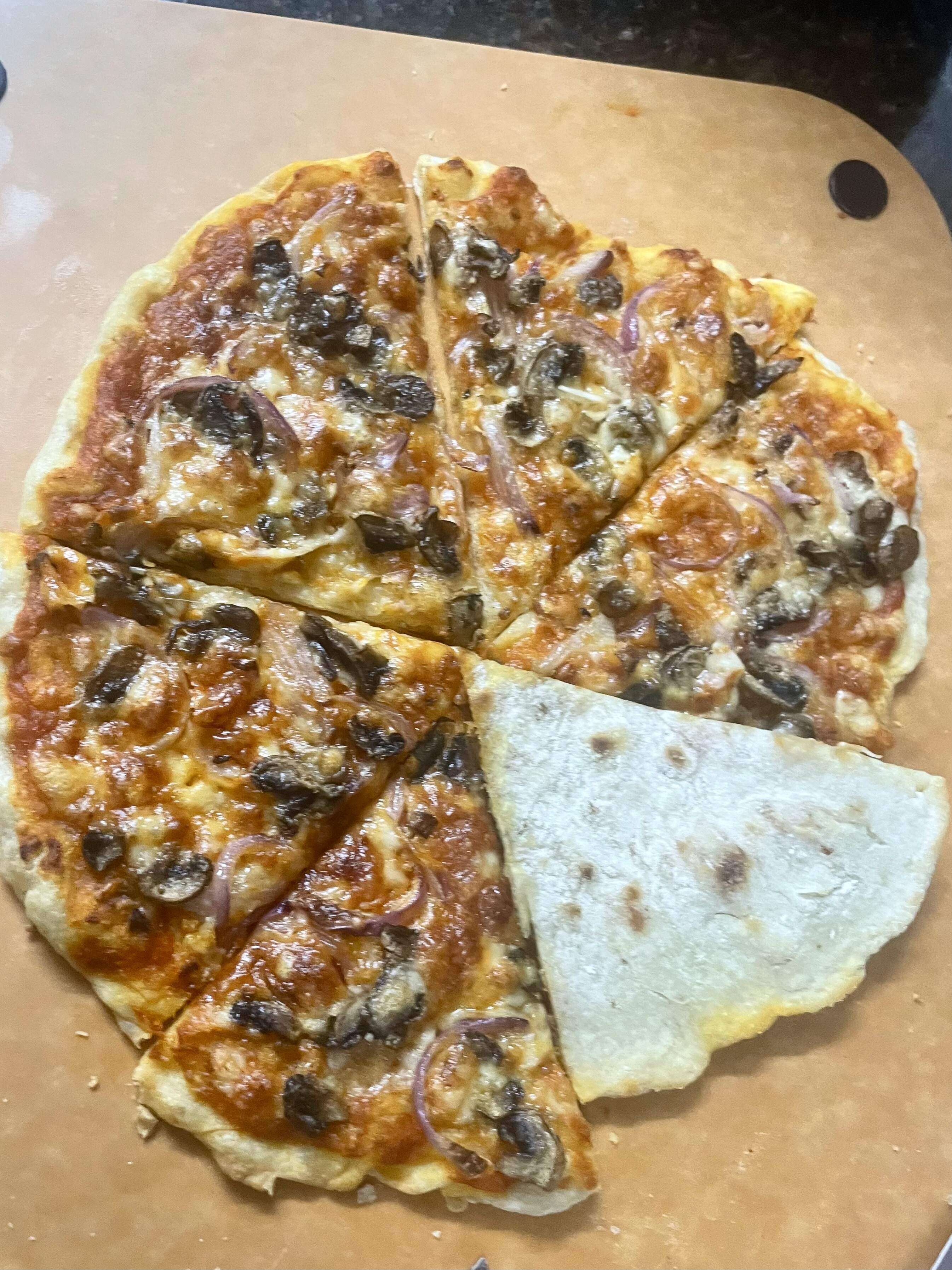
Plan was pizza for all, but then my mom mentioned focaccia, and also that she was planning to cook something special for us for dinner, so pizza only for 1.
1/4 of the dough became a small focaccia with herbs and tomato, and the other 3/4 I turned into 3 pizza crusts, , one of which I topped for her dinner: a simple homemade tomato sauce, sautéed mushrooms, red onion, mix of cheese. (Must have turned out decently bec my mom who is usually good for 2-3 slices finished the whole thing .)
I used Bittman’s stovetop method to par-cook the pizza crusts, and finished the pizza in the countertop oven. Focaccia has been frozen, other 2 crusts are waiting to be topped and finished as needed.
I understand this to work the opposite way: Covering for more time will yield a thinner/less robust crust. The idea being that the dough is releasing moisture, which will collect inside the vessel and keep the outside from drying out. That might only apply to higher hydration doughs, though, I’m not sure.
That was my understanding, too. I actually heard the opposite in a sourdough class I took recently, but she was a self-taught layperson. In my own experience, uncovering earlier seems to make for thicker/harder crust. But now I’m questioning everything
I can’t for the life of me find the notes where I tracked this several years ago.
I was searching for the adjustments I remembered, and now found some folks who suggest an entirely covered bake, and others who suggest skipping cast iron in lieu of glass or ceramic – at home, I bake in a covered glass casserole, and my crusts are definitely thinner than in cast iron.
Finally, yesterday’s loaf had a soft bottom, and the only change was that I put a baking tray with some ice cubes under the aluminum box. Saw elsewhere that someone suggested placing a baking tray on the rack below a dutch oven to prevent the bottom crust from charring or getting too thick. So maybe that’s an easy first adjustment.
Version 2, a slight variation.
Oil cured olives and Castelvetrano olives were very finely chopped in the FP along with the dough. Rolls were topped with black sesame and toasted sesame seeds.
I guess that I was surprised that they considered it cold enough to cancel a flight on Saturday.. but then I am from Winnipeg. The snow today is another thing: shoveling is a Sisyphean task, which I think that I have now given up on ( until tomorrow AM..)
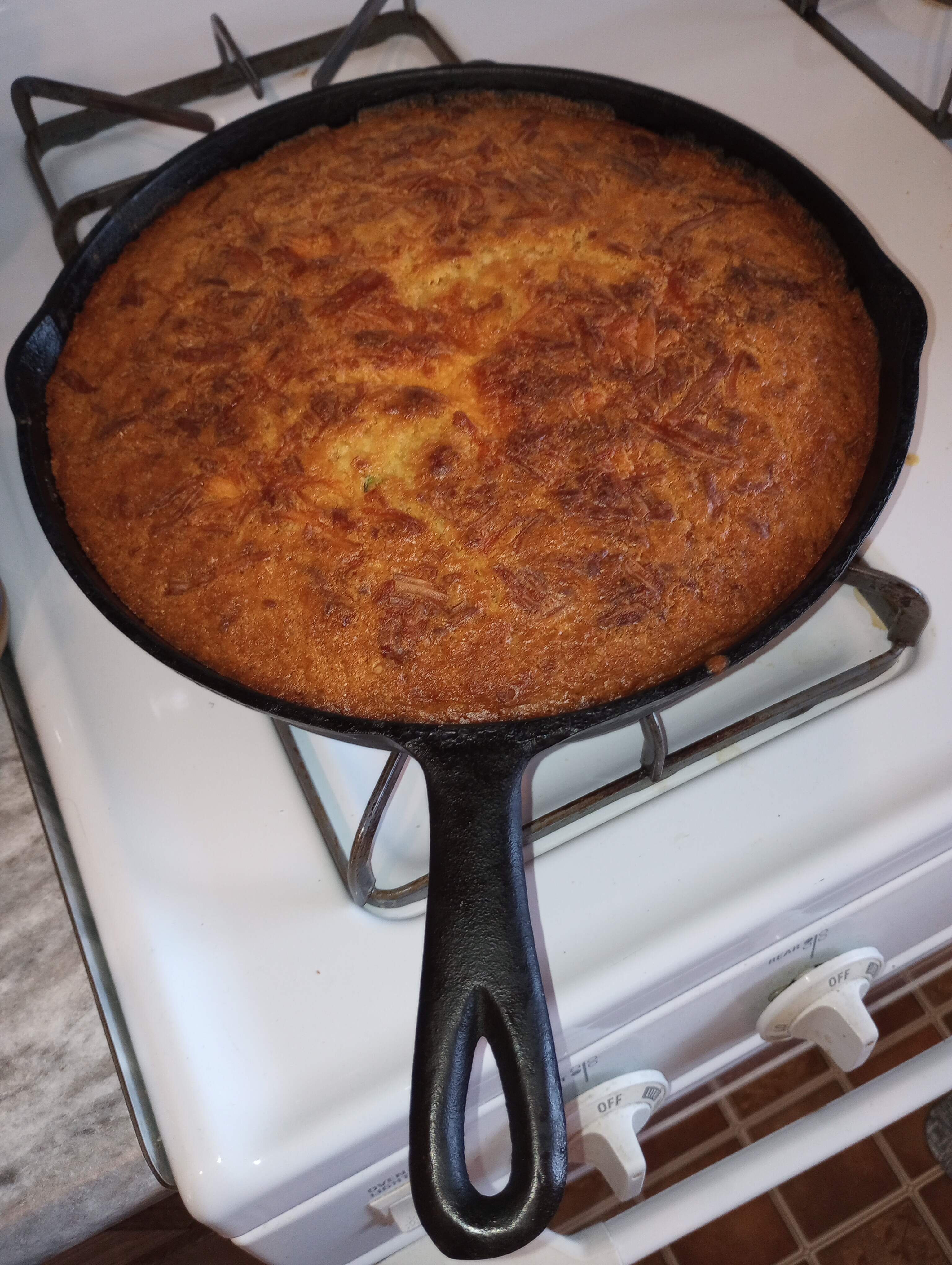
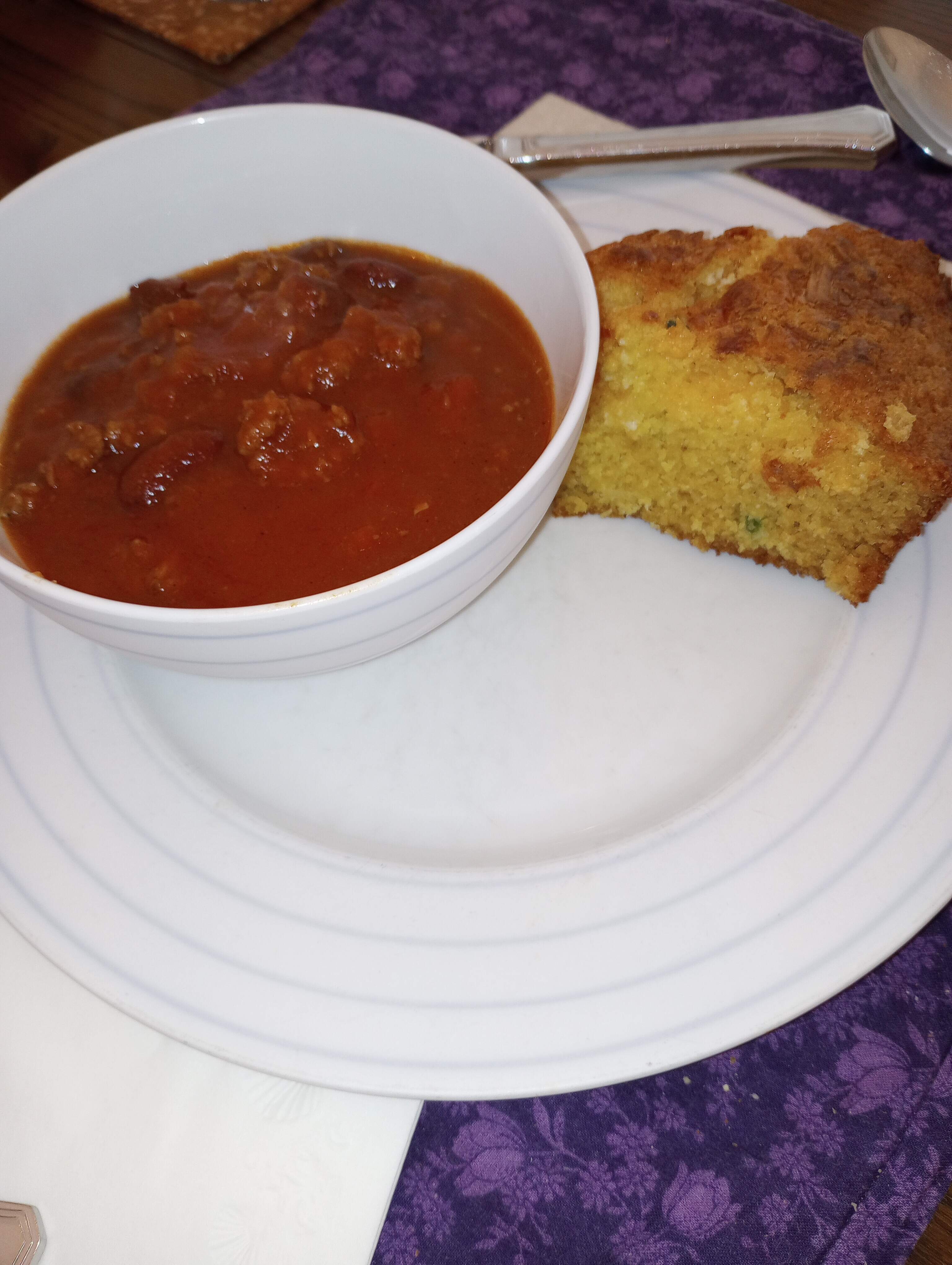
Cheddar jalapeno cornbread in a cast iron skillet. A Melissa Clark recipe with excellent, accurate instructions and great tasting - buttery, cheesy, tender-crumb - result. Mine baked 45 minutes in a 10 inch skillet. I used 2 seeded / chopped jalapenos (4+ T) and will reduce that to 1 finely diced/2T next time, for us spice wimps. I intentionally made today’s chili soup slightly milder-than-usual spice level, to balance what I thought might be too-zippy cornbread. The combo worked well. No need for extra butter on the baked bread, and it’s mildly sweet from the honey in the recipe, although my husband also added some honey to his serving. I’ve got a quarter of the cornbread stored in the fridge to enjoy at another meal beside the remaining chili. The rest is stored in the freezer to serve later as side for a soup or main.
Does anyone know why some burst out? I followed the recipe to refrigerate for 20 minutes, put on egg wash, bake. I thought I pressed the edges well with a fork.
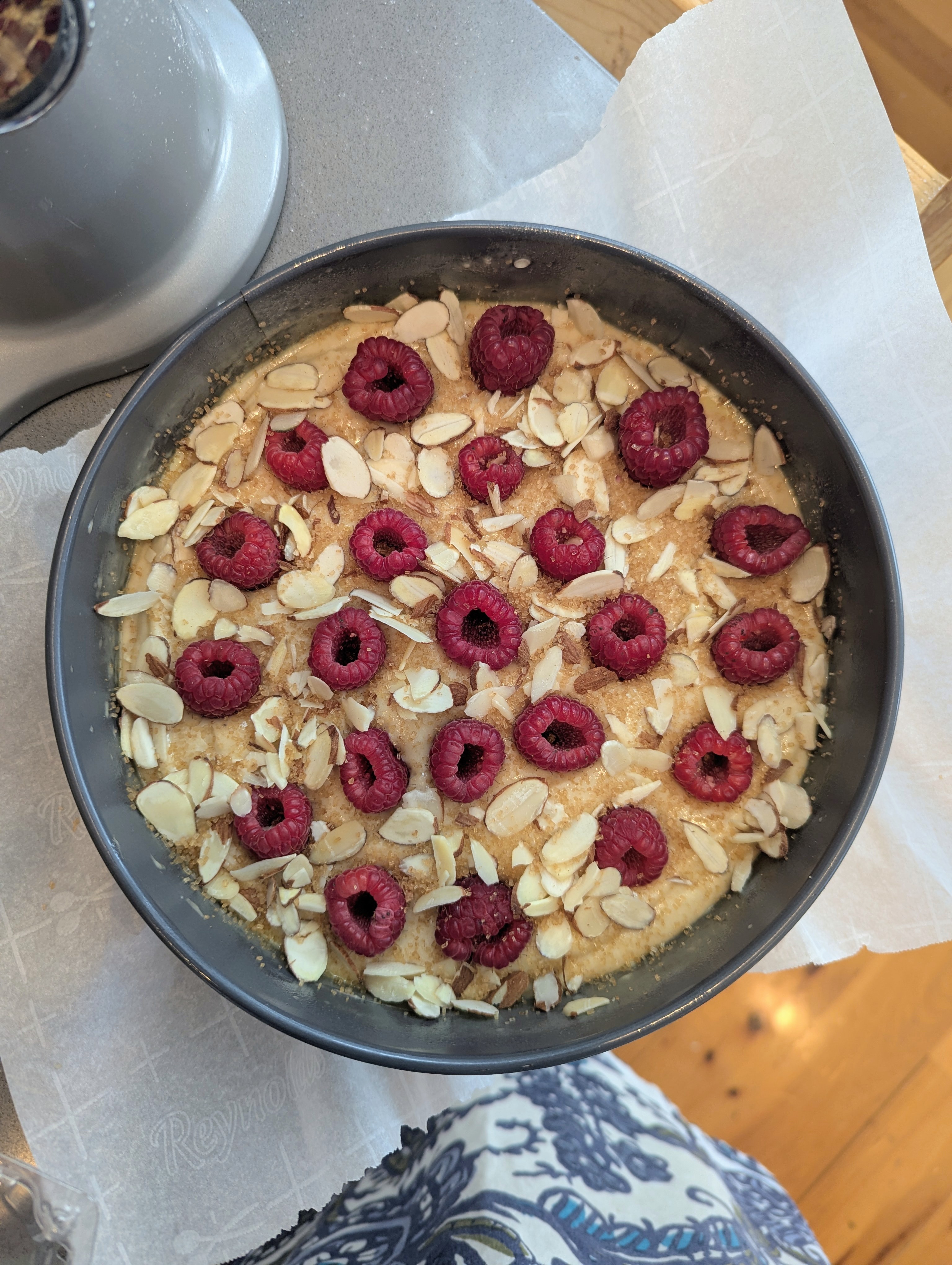
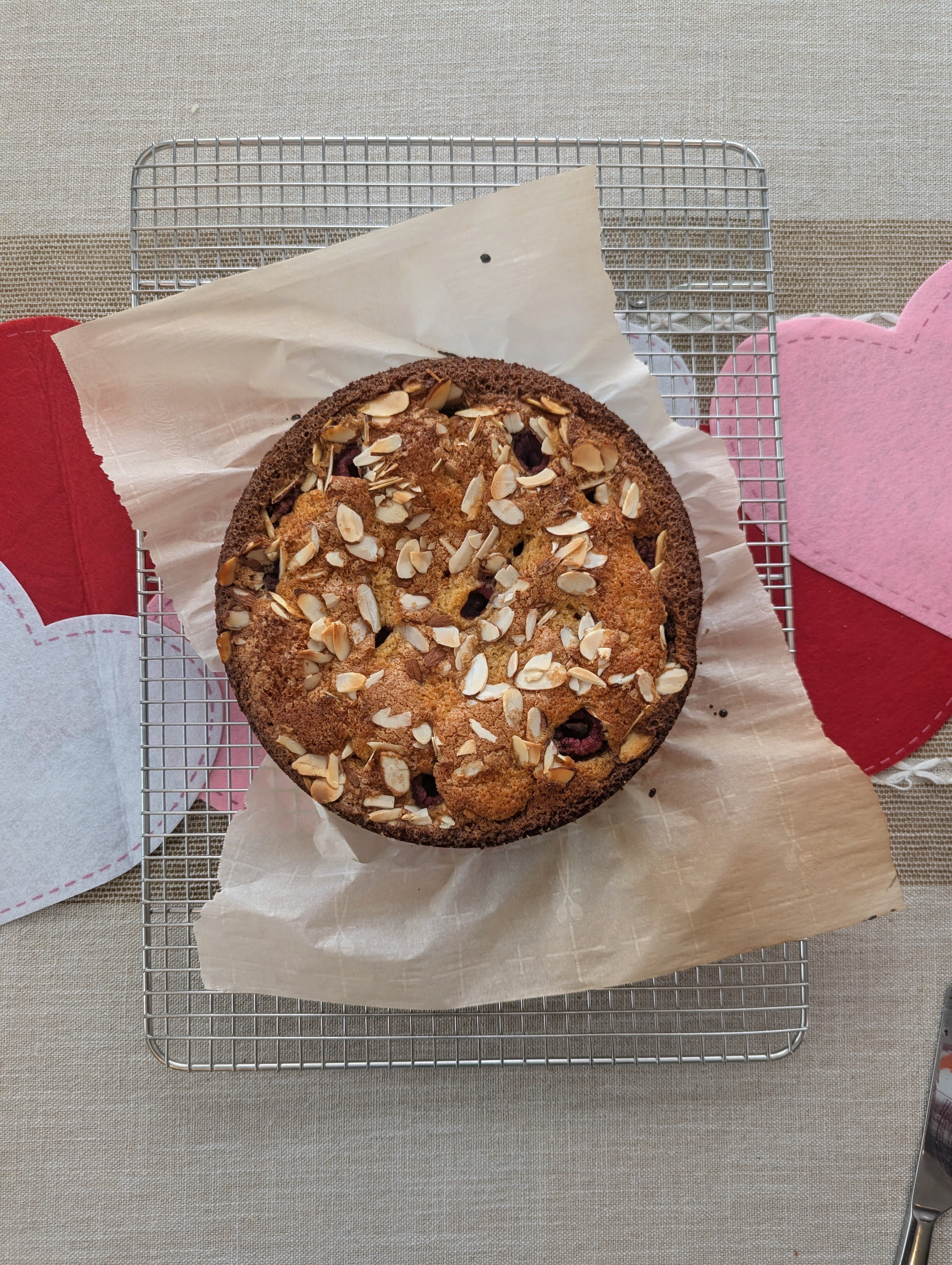
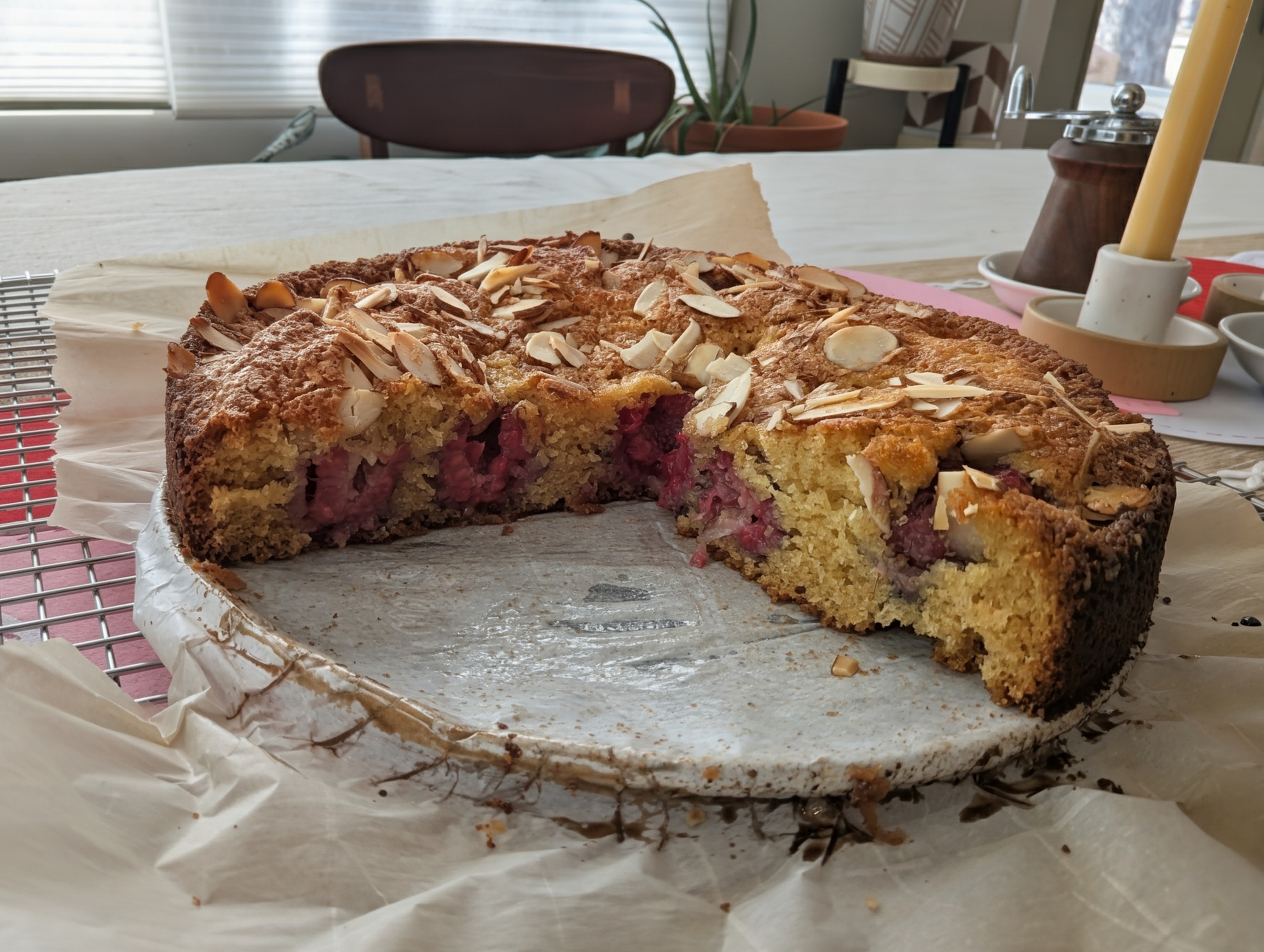
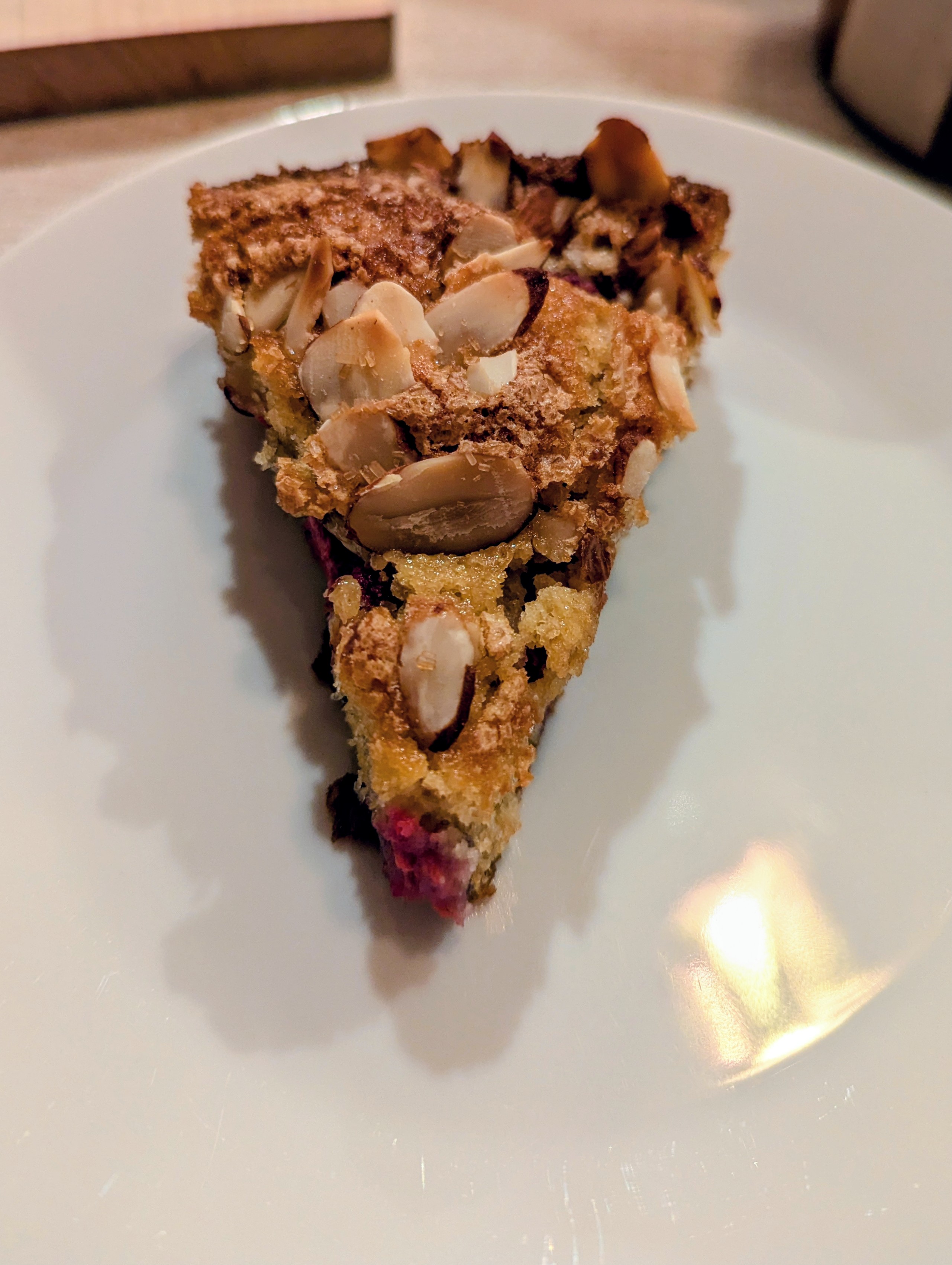
I made the raspberry buttermilk cake from Smitten Kitchen omitting the lemon zest and adding sliced almonds and a drop of almond extract. Dusted the top with Demerera and subbed ww pastry flour for half the AP.

 .)
.)