SAVALLETRI DI FASANO-Puglian coast

We’ve finished our exploring and are now ensconced at one of my favorite spots for relaxation in Italy, just inland from the tiny port of Savelletri and a few miles from the larger town of Fasano. Since we were here last, about 2012, a few more luxury masserie have opened and I feared that the area had lost some of its charm. But the little port of Savelletri appears to be the same as it was back then, although there are several new places to dine.

Although the famous towns of the Valle d"Itria are within an easy drive–it’s a half hour drive to Ostuni, for example, I think we will stay closer to our base and take most of our meals in Savelletri itself. But if anyone has a strong recommendation for a restaurant in Monopoli or Locorotondo, I’m certainly willing to take the drive. Extra points ifi it’s in the countryside, so I don’t have to navigate tiny streets of a town in the dark.

Besides the fancy masserie, Savelletri (and neighboring Torre Canne, is part of the “costa de ricci,” the sea urchin coast (restaurants have names like RICCIOLANDIA, etc) but, sadly, one of my favorite delicacies is not only out of season but there is a ban on taking them. (I did have a plate in Bari last week, but when I mentioned this at last night’s restaurant they told me they may have come from Croatia.

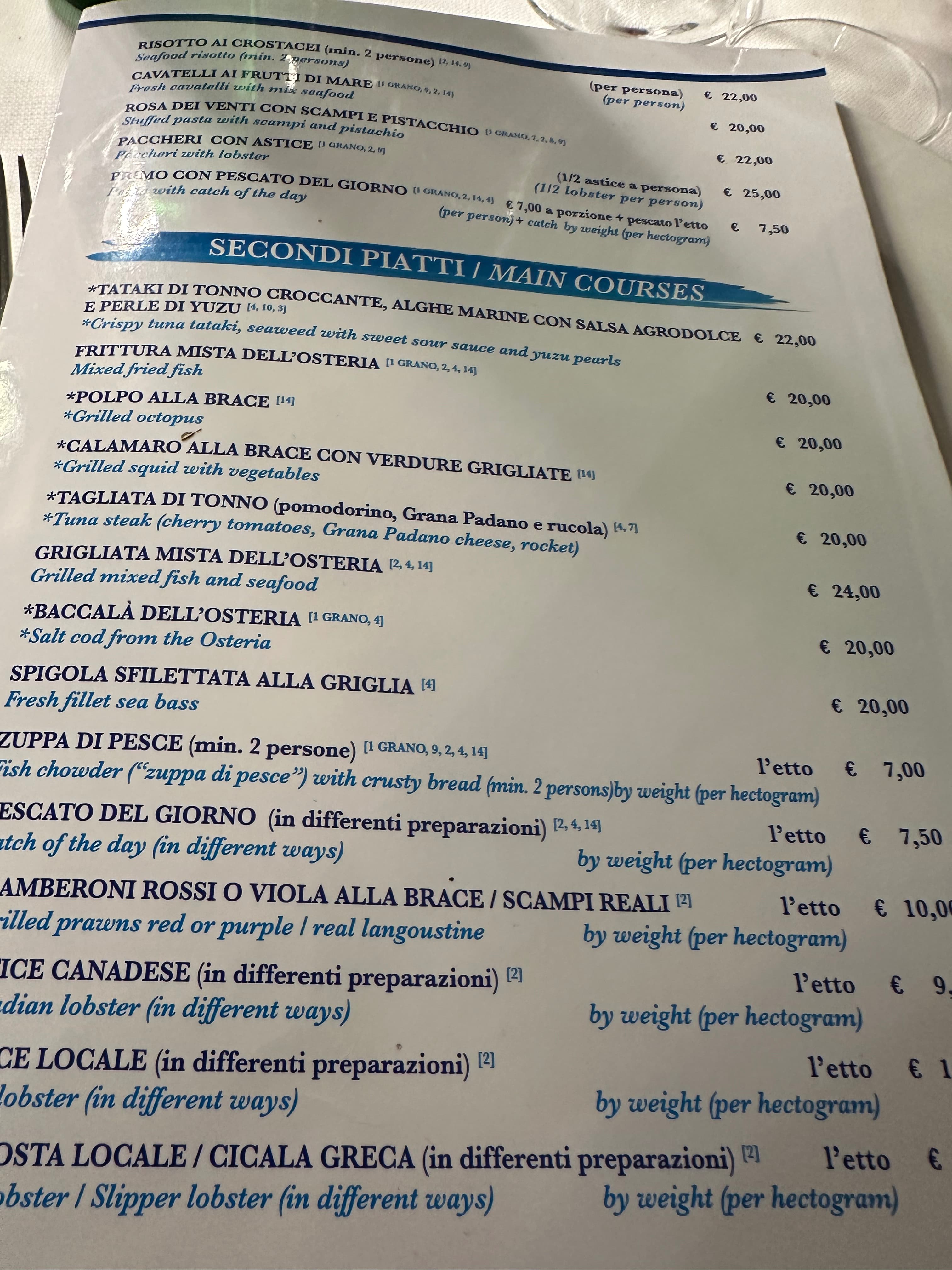
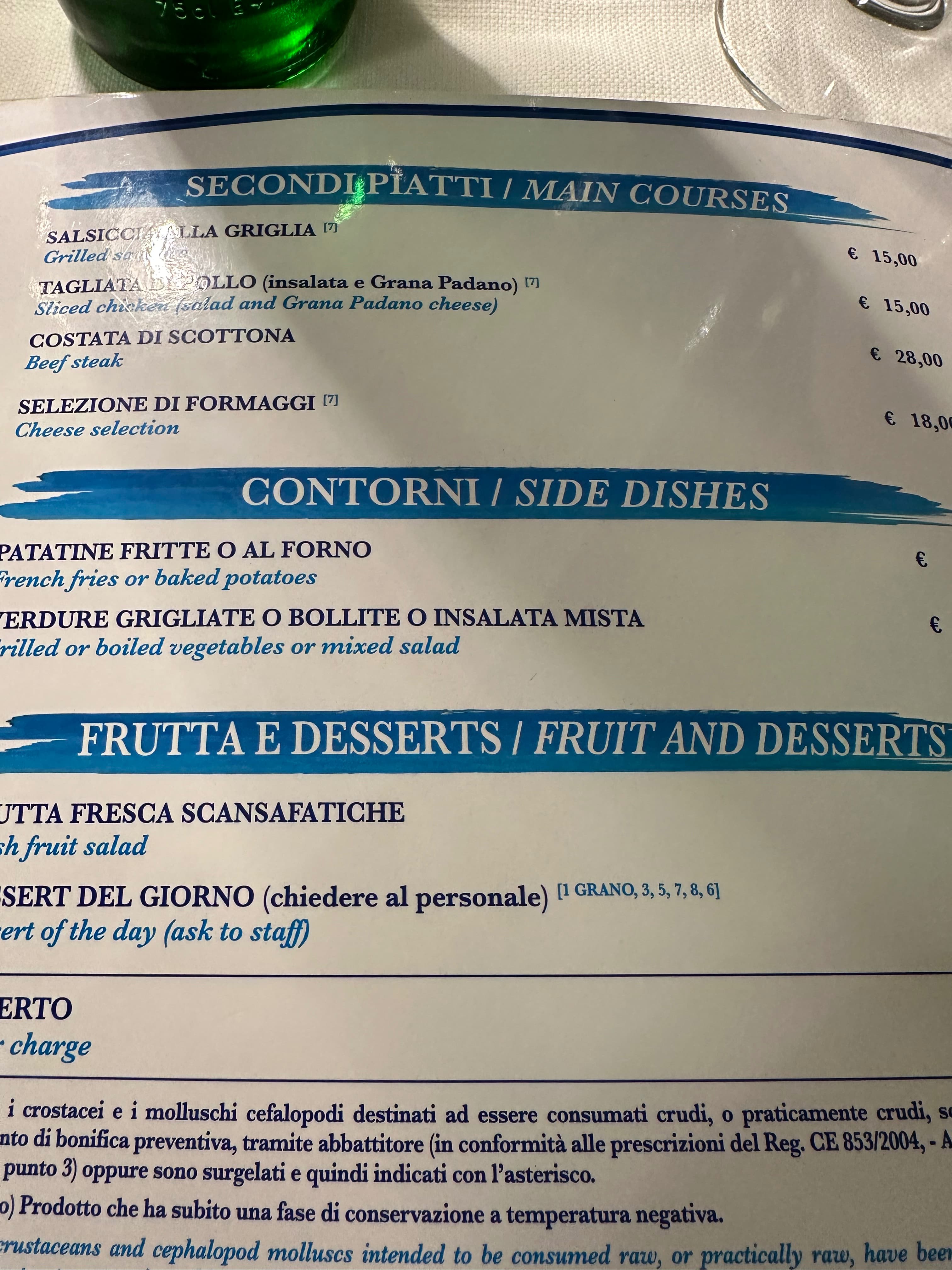
OSTERIA DEL PORTO, Savelletri

No frills place a few steps from the Adriatic, this was recommended by a staff member at our hotel. (BTW, I asked him about IL CORTILLETO, in nearby Speziale, an easy drive from here and where we had been years ago; he advised me to stay away as it was now “totally tourist land.”)

By 9pm on a Saturday night, the restaurant was filled with Italians including groups of young persons and a few families. Breakfasts at our hotel are so sumptuous that neither of us had much appetite, even for dinner, but what we did eat was very good and I’d recommend if you happen to be in the area.

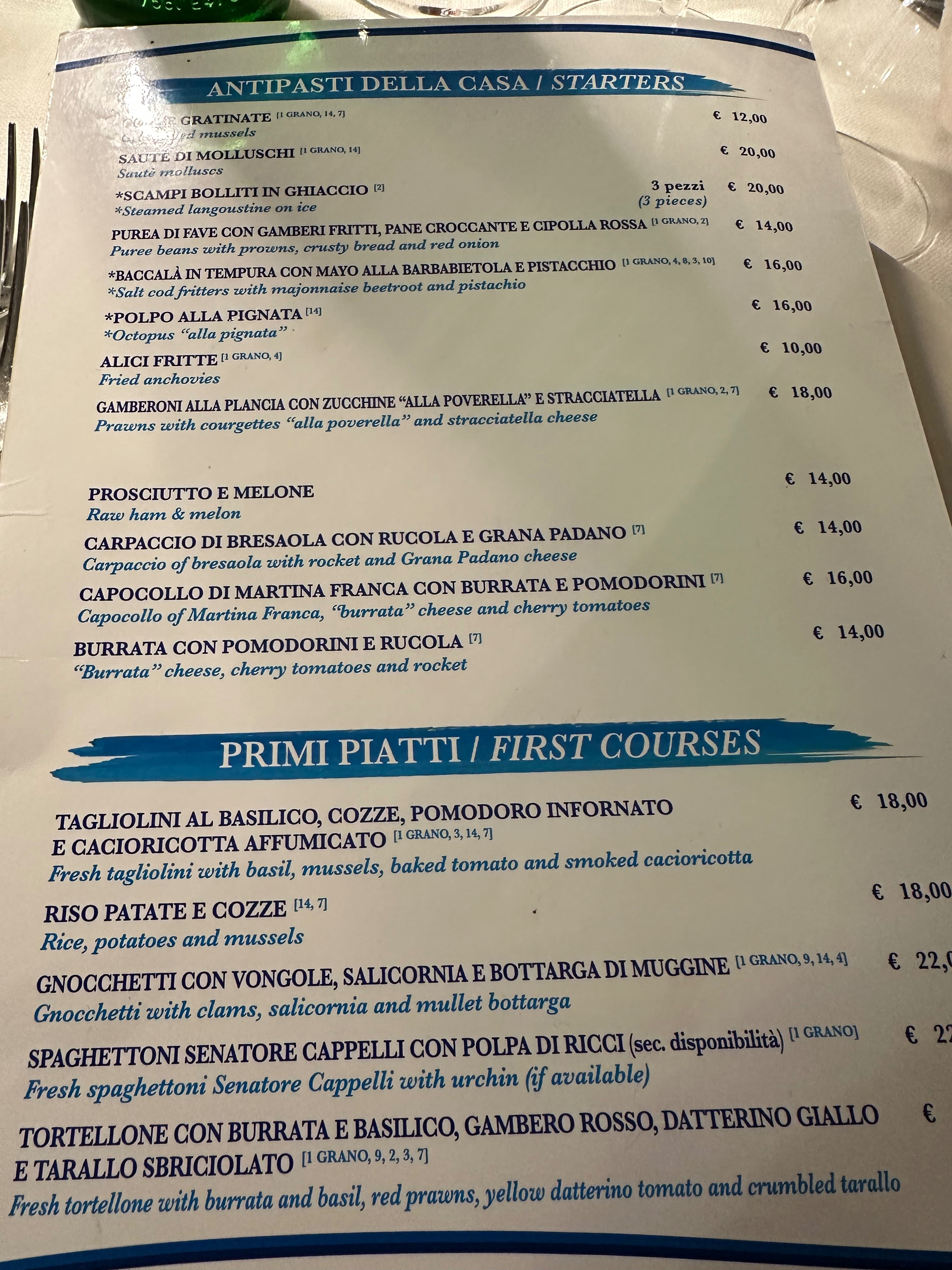
Menu:


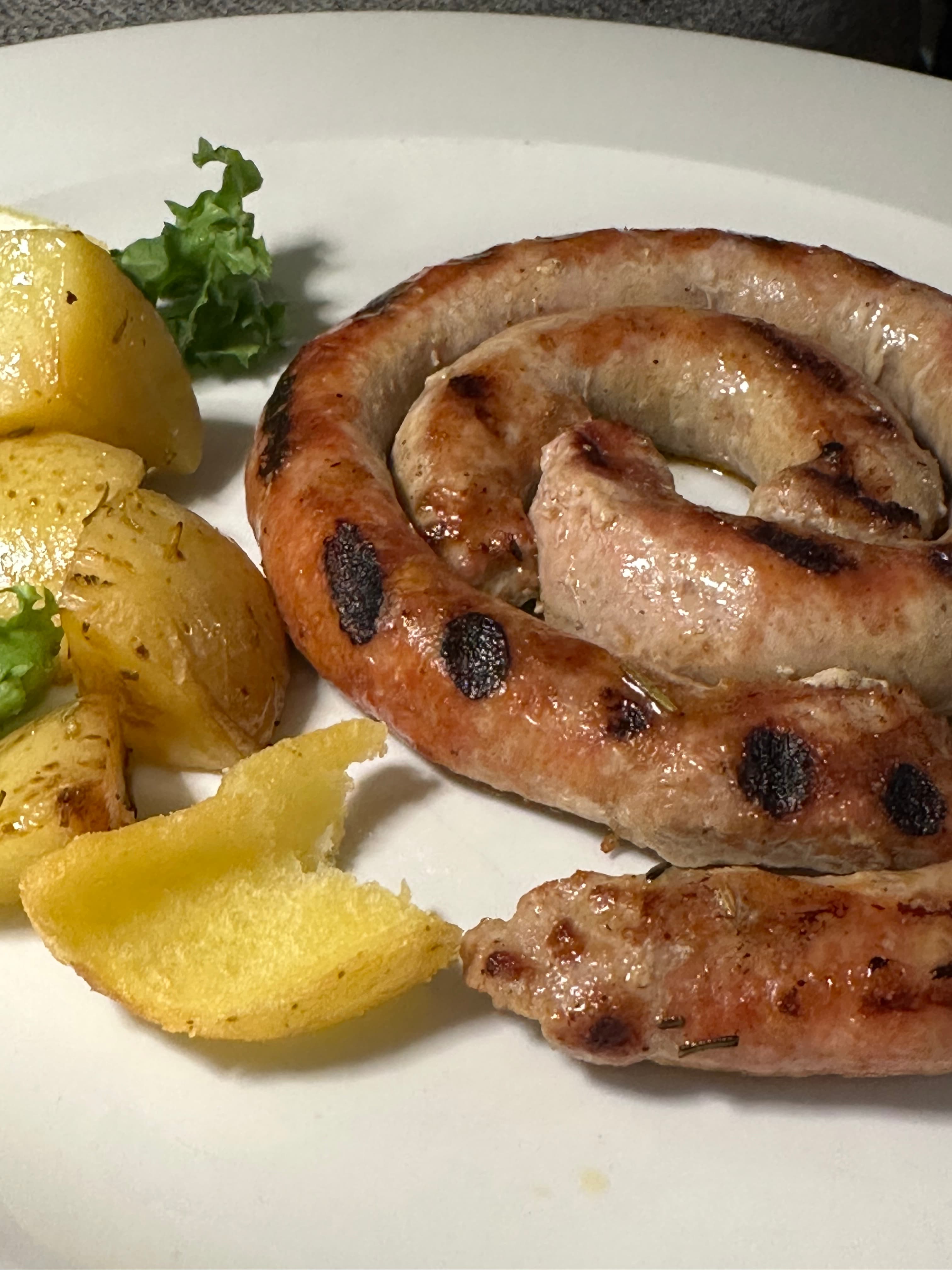
I’m not sure I’ve ever ordered sausage at a restaurant, but I envied my partner for his dish, and grabbed a nice portion for myself. Outstanding, as were the accompanying roasted potatoes, and the house-fried. potato slices that we also ordered, by mistake. Cisternino is a meat town not too far away, so might have to investigate a restaurant there–recommendations welcome.
I chose an orata from the fish display, grilled, and this, too, was excellent:
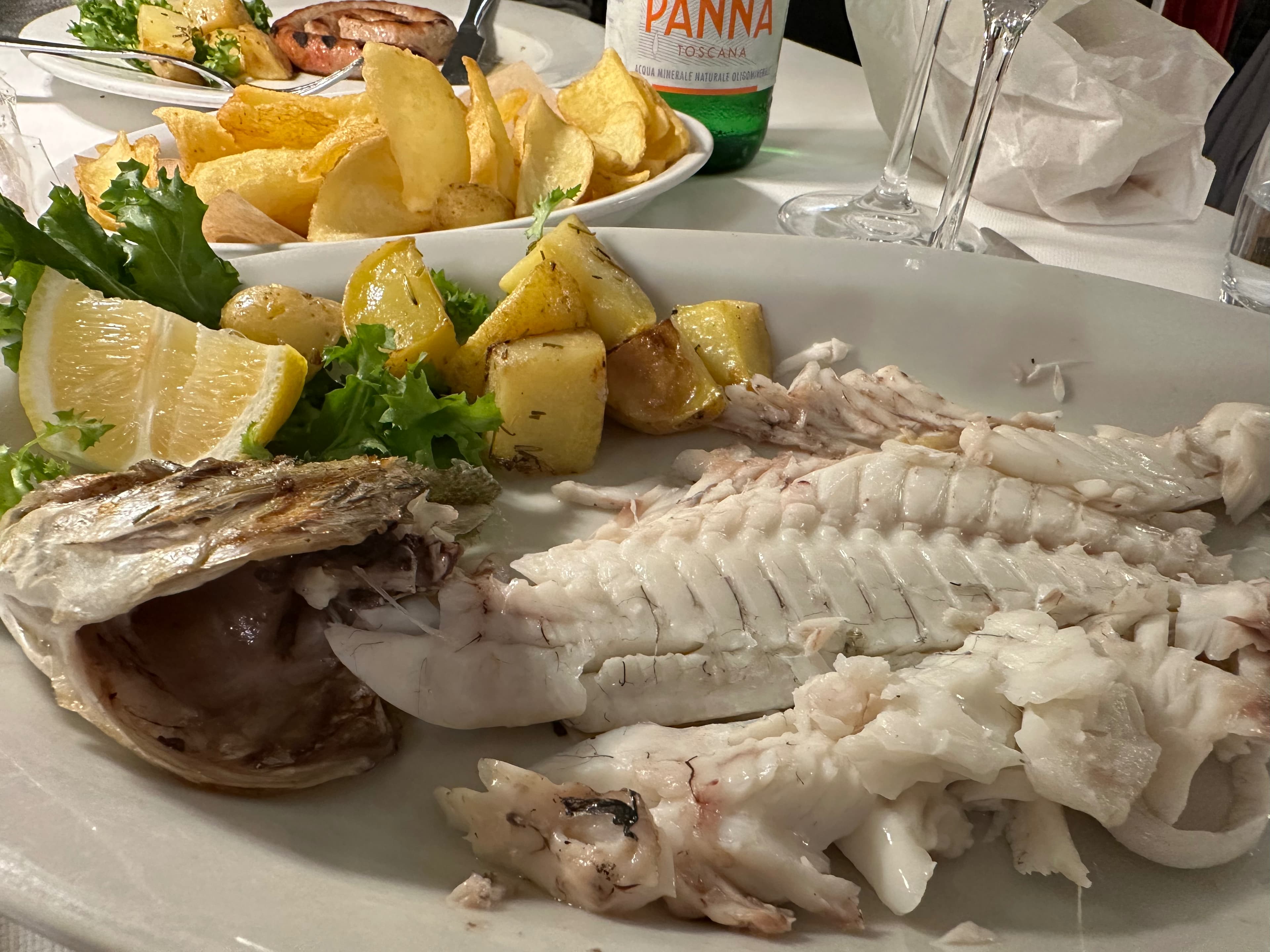
For 56 euro total, this was a very simple, but very good, dinner.

9 Likes

Looks absolutely wonderful. I am following your on-the-ground reporting on two sites. I also leveraged the Puglia guys for my trip a couple years ago, and found their site quite useful, whether for dining specifics or more general “this is what this town/beach/area is like” coverage.

Leely, Agree; I like their site. Tonight we will go to a restaurant in Fasano (ten minute drive from the hotel, which is outside Savelletri di Fasano) that they recommended.

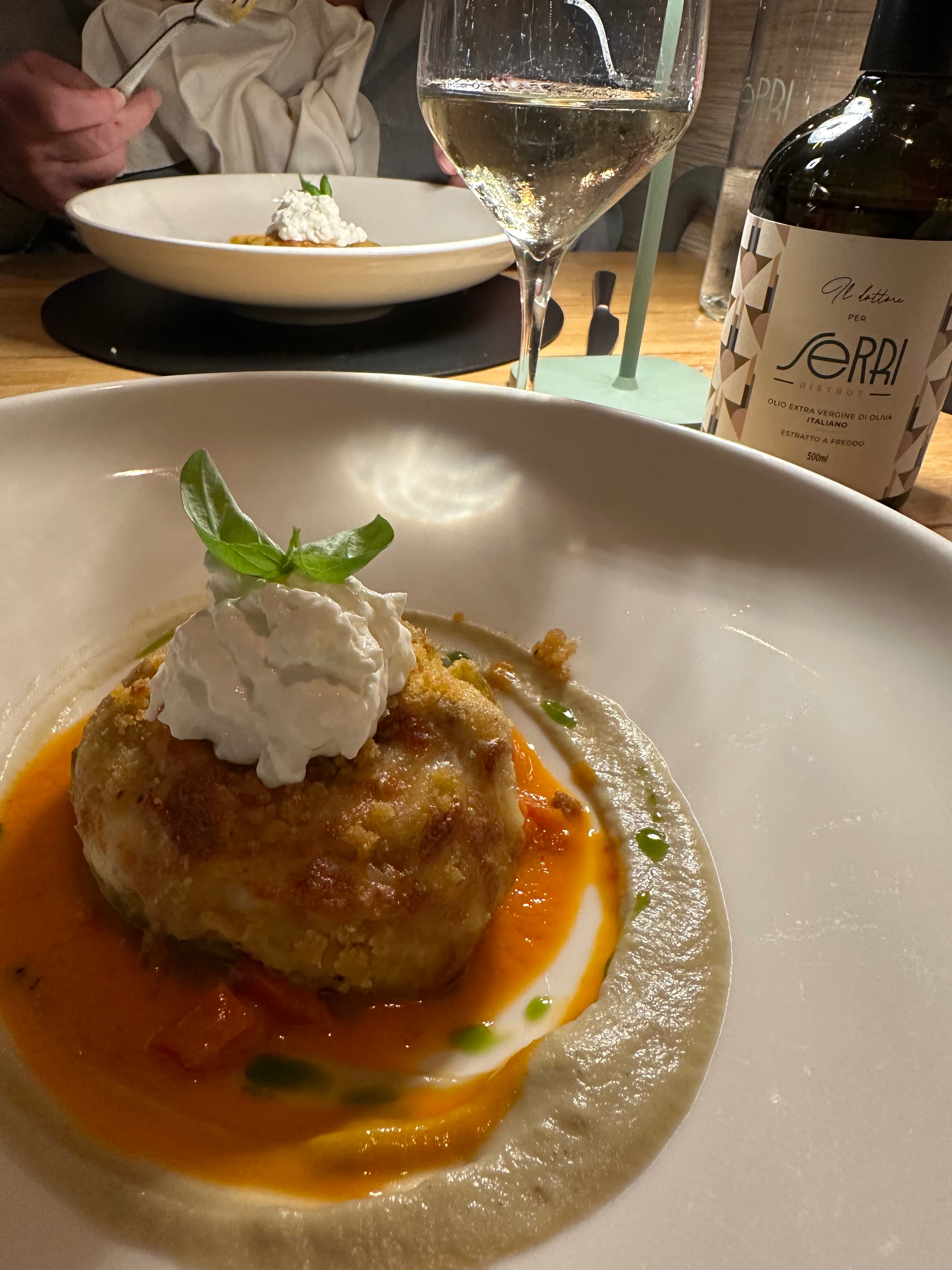
Last night we had dinner again in Savelletri, this time at SERRI BISTROT, small place in the little" restaurant zone" of tiny Savelletri. Owner took orders and kept an eye on everything. Fish and seafood dominate the menu, but we both had our eye on the eggplant dish, which was a twist on the regular Parmigiana.

We both agreed that this might be the best eggplant dish we had ever tasted.

Stratciatella cheese inside and on the top, and a delicious pureed tomato sauce.
This dish alone would be well worth a drive!! We each had this, (15 euro each) and shared a dessert. With one glass of white wine and water (our norm), bill was 57 euro, which does sound high when I look back, but we were both very happy.

While I wait for photos off SERRI
BISTROT to upload:

Among the seemingly dozens upon dozens of dishes at the groaning breakfast buffet here at home base included a typical Pugliese item that I’ve not seen anywhere else except in Matara, lampascioni, or hyacinth bulbs, preserved in olive oil. I’m imagining that these were part of the region’s “cucina povera,” dug up and eaten by folks in the countryside. I may have seen them on past trips as part of a mixed antipasti, but they are not common on restaurant tables today.

This is what they look like freshly dug:
https://www.pugliagenuina.com/shop/lampascioni-freschi-pugliesi/?srsltid=AfmBOorE4GByJUWUEU_0W1akx4cwuku0yburmuFBVNwr_TNZhec7XqUj

And here they are, sott’ olio (under olive oil, on the breakfast table, along with fresh burrata, red currants, and a crostata di chocolate that is driving me wild with joy:

SERRI BISTROT in Savelletri..eggplant with stratciatella..outstanding!

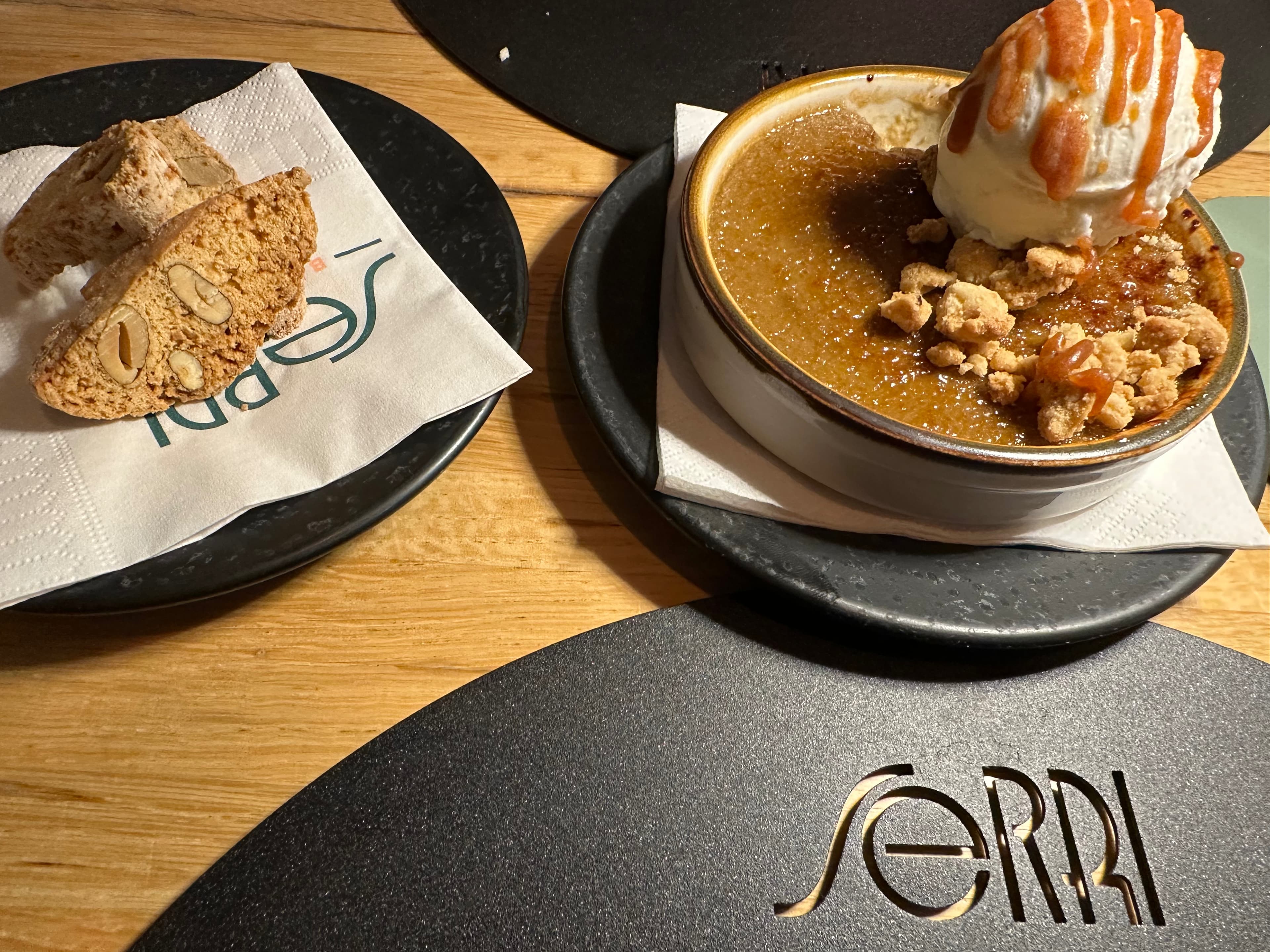
Coffee-flavored creme brûlée with latte-flavored gelato and cantucci

6 Likes

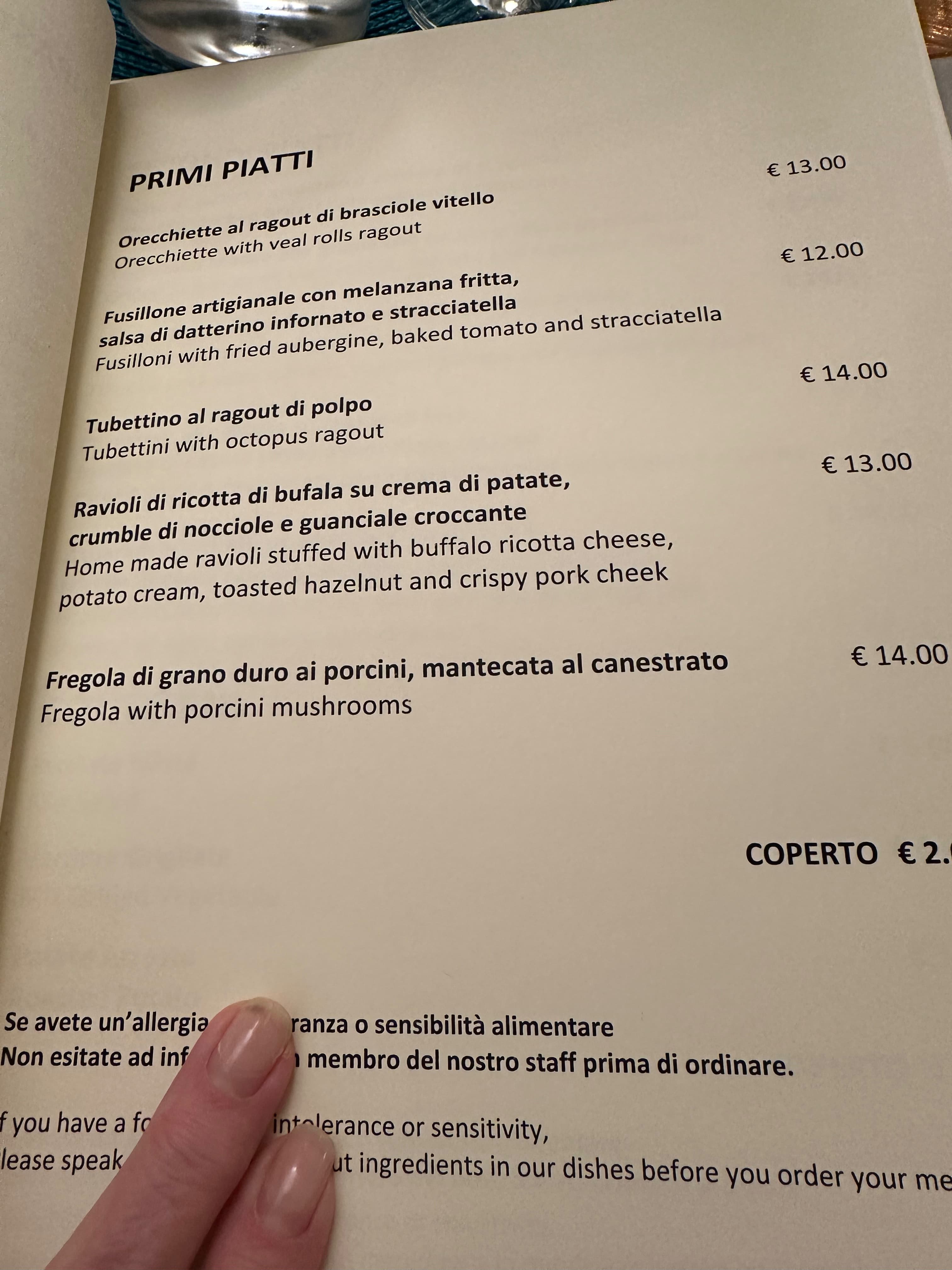
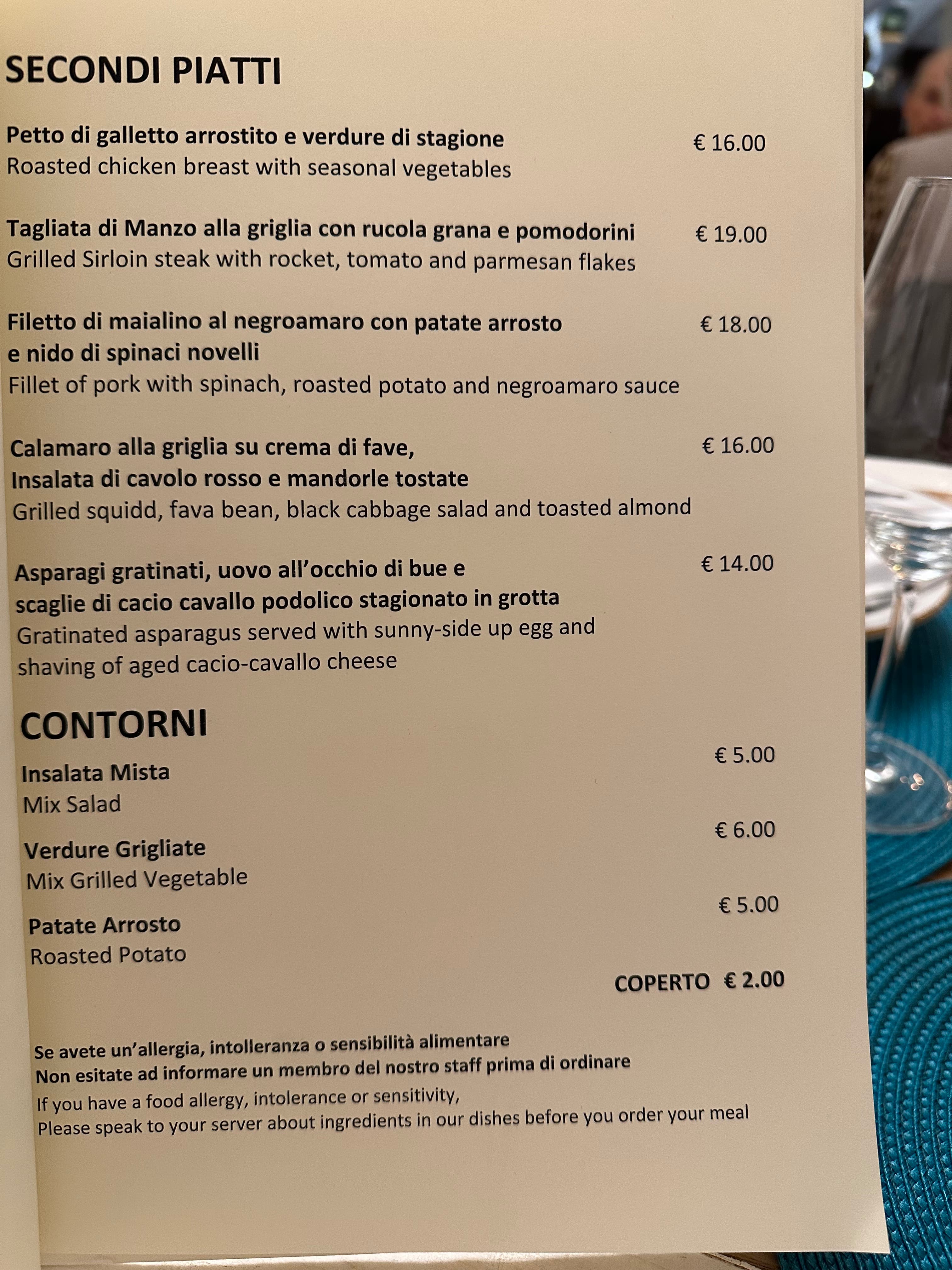
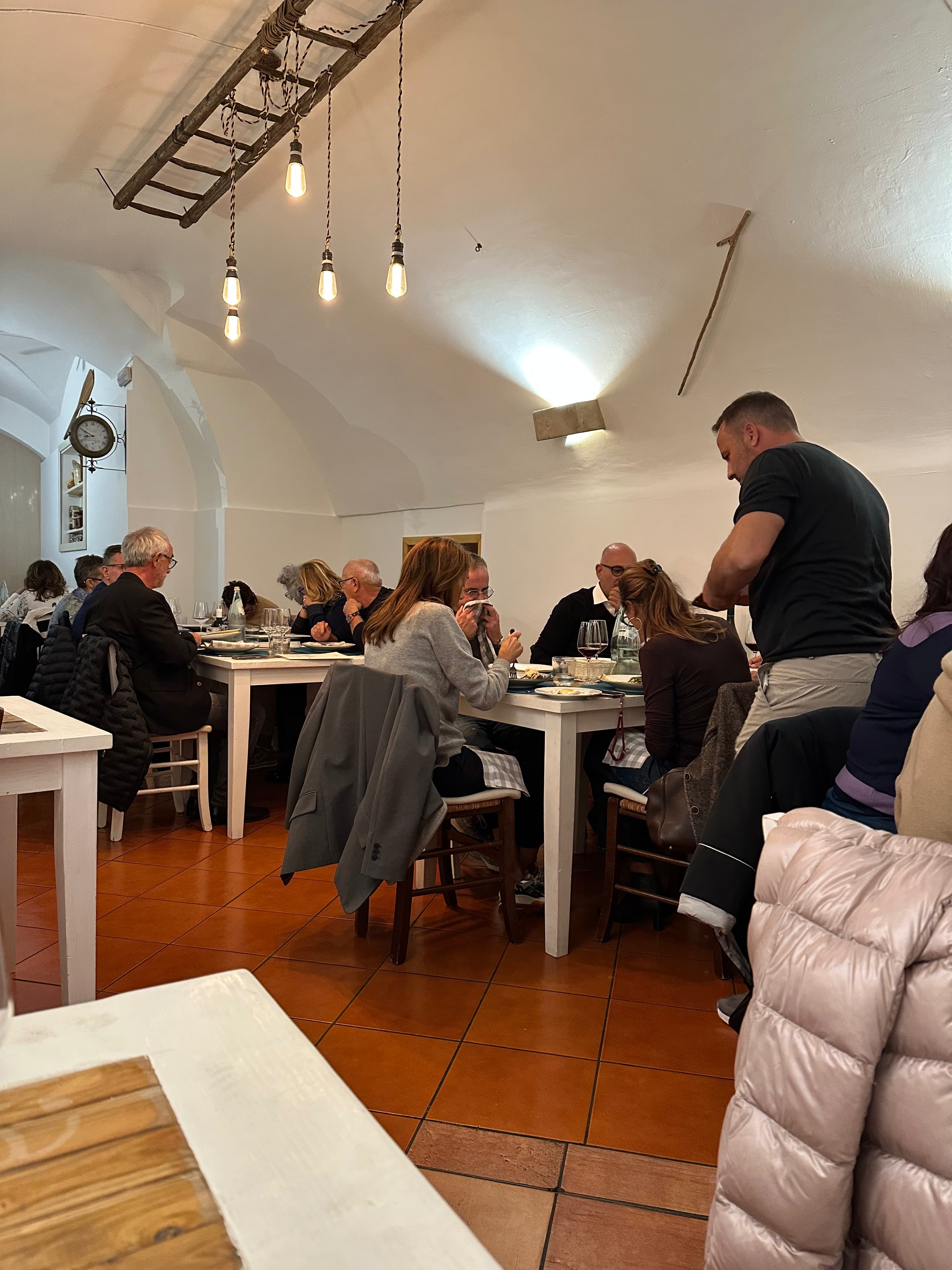
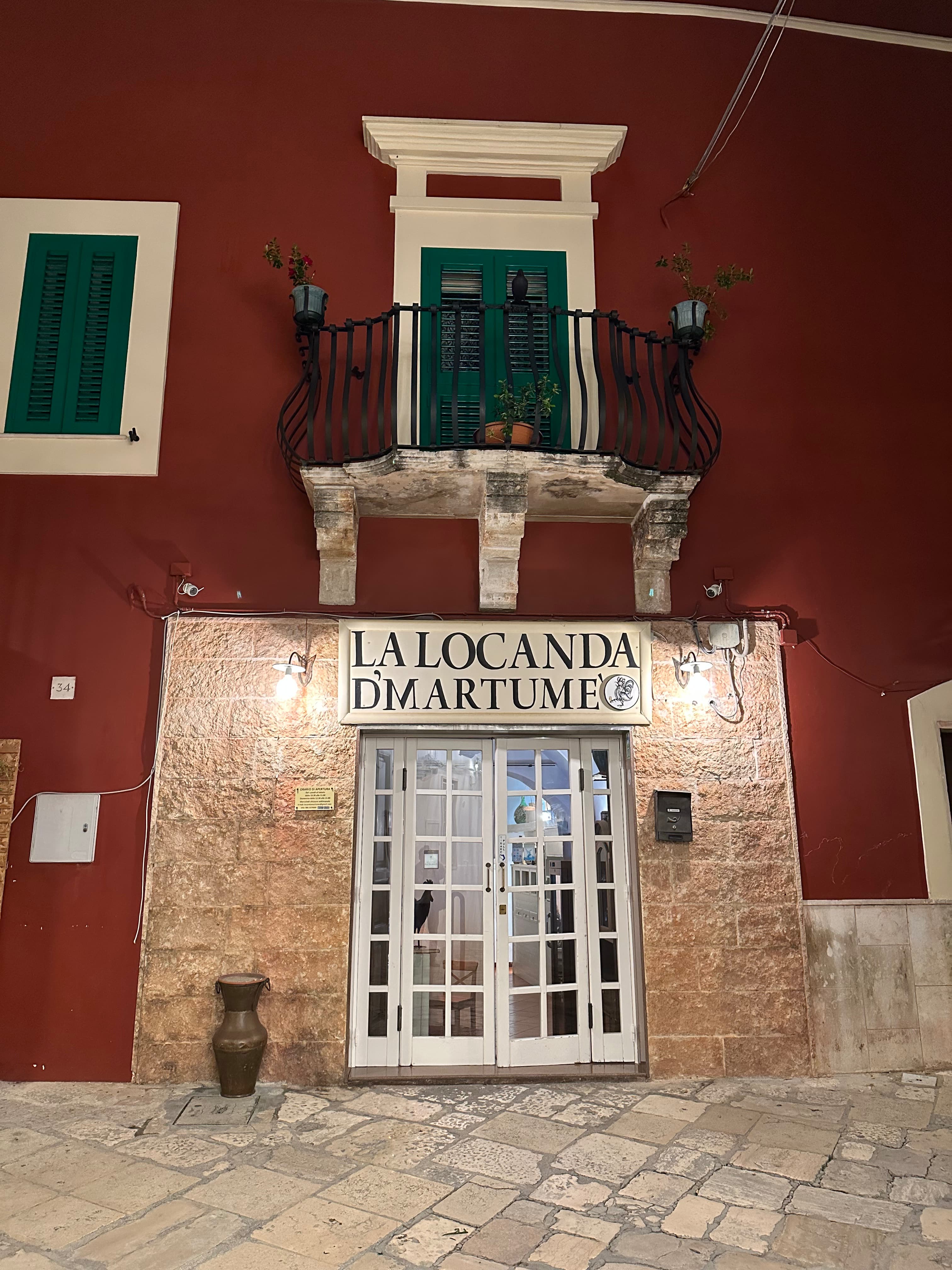
LOCANDA D’MARTUME, in the beautiful and very white, tourist-free, town of Fasano


Keep in mind that this (excellent) restaurant is open on Monday night, when most are closed.

For a total of 52 euro with, again, a glass of local wine and water, we were very happy with the following:

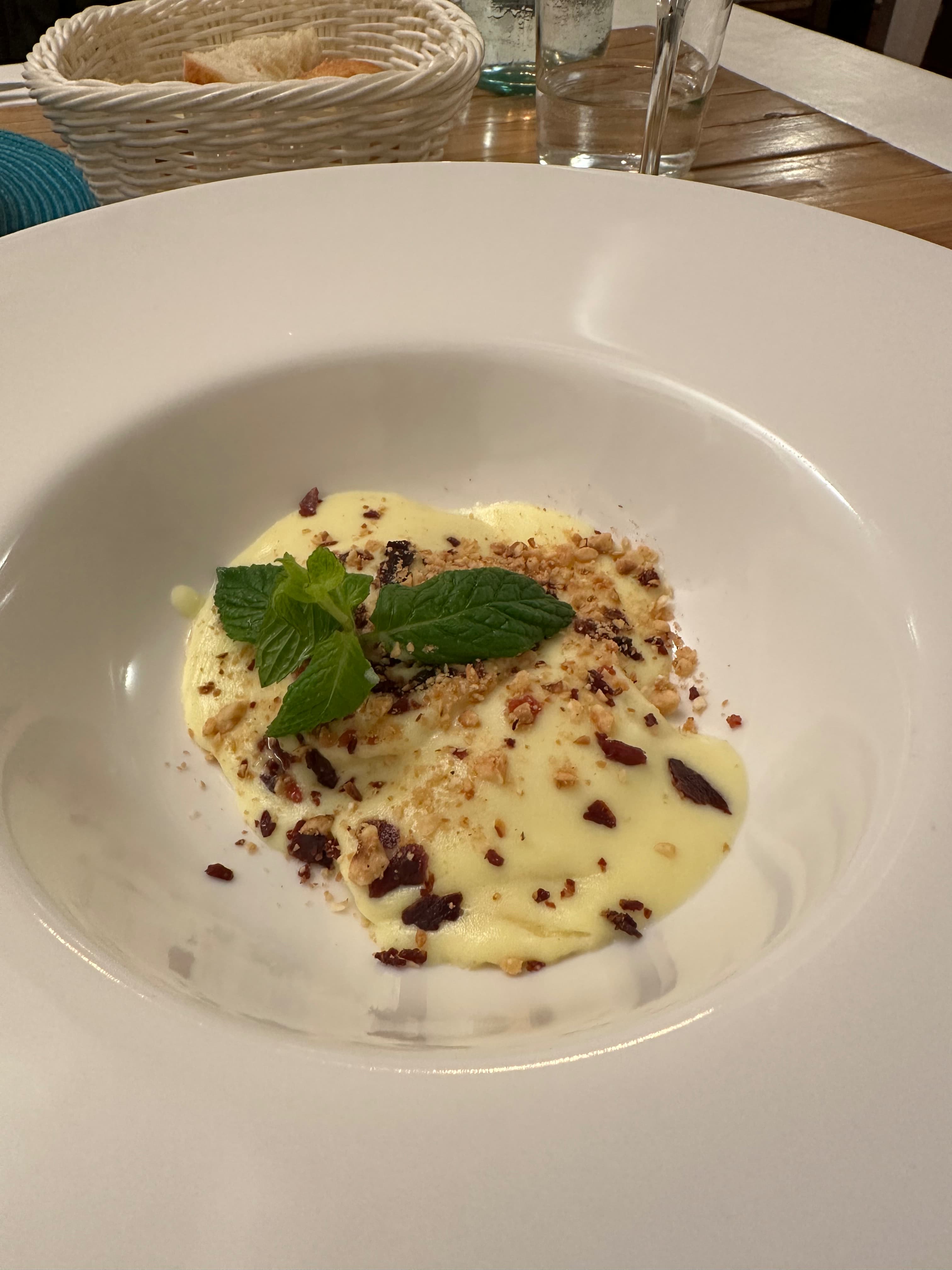
A half-portion (we shared one full order) of ravioli stuffed with ricotta di bufala, bathed in a potato cream, and topped with chopped hazelnuts and bits of crisped guanciale

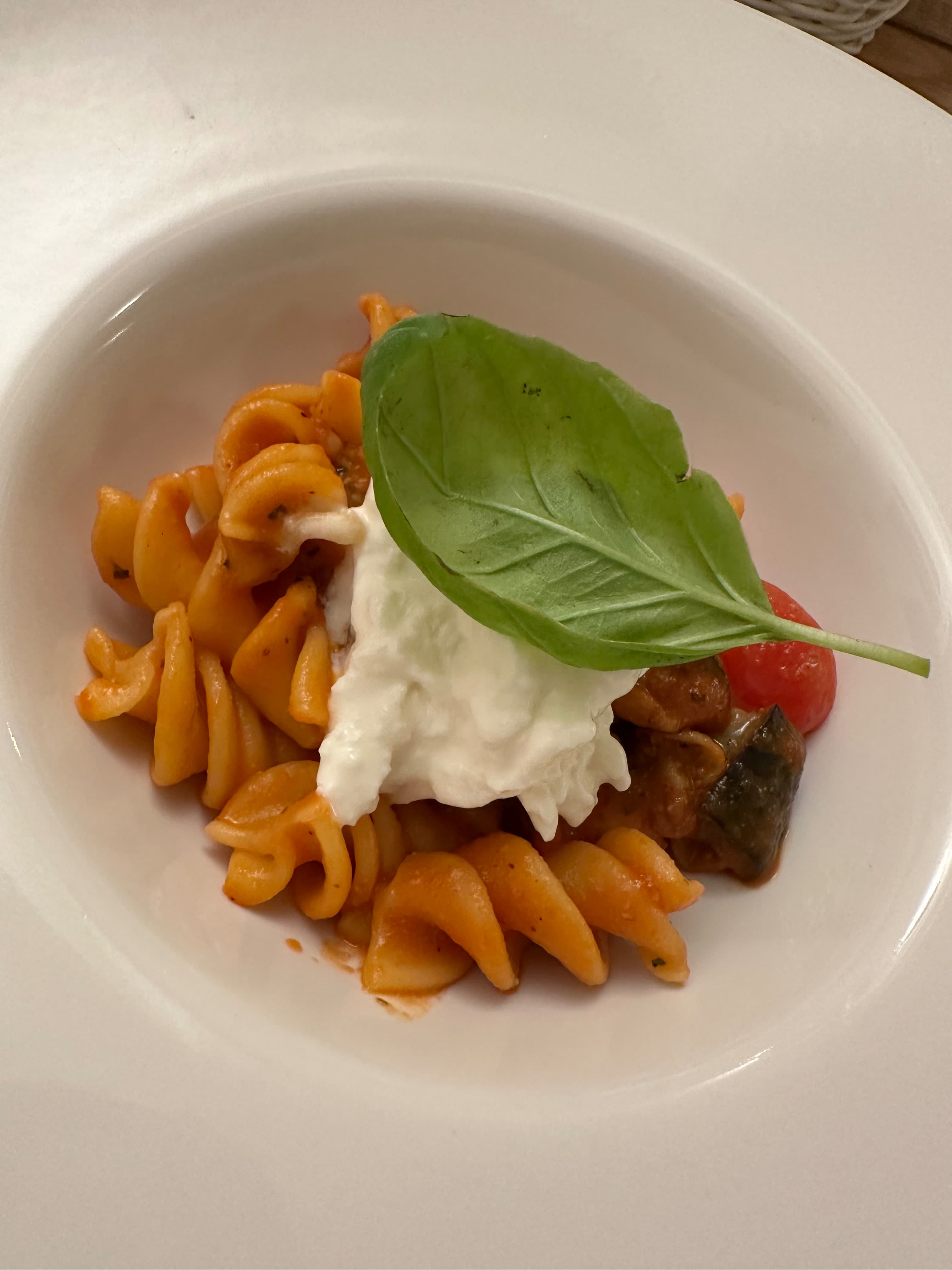
Fusillone with eggplant, fresh tomato, and stratciatella cheese; I mixed the cheese into the pasta

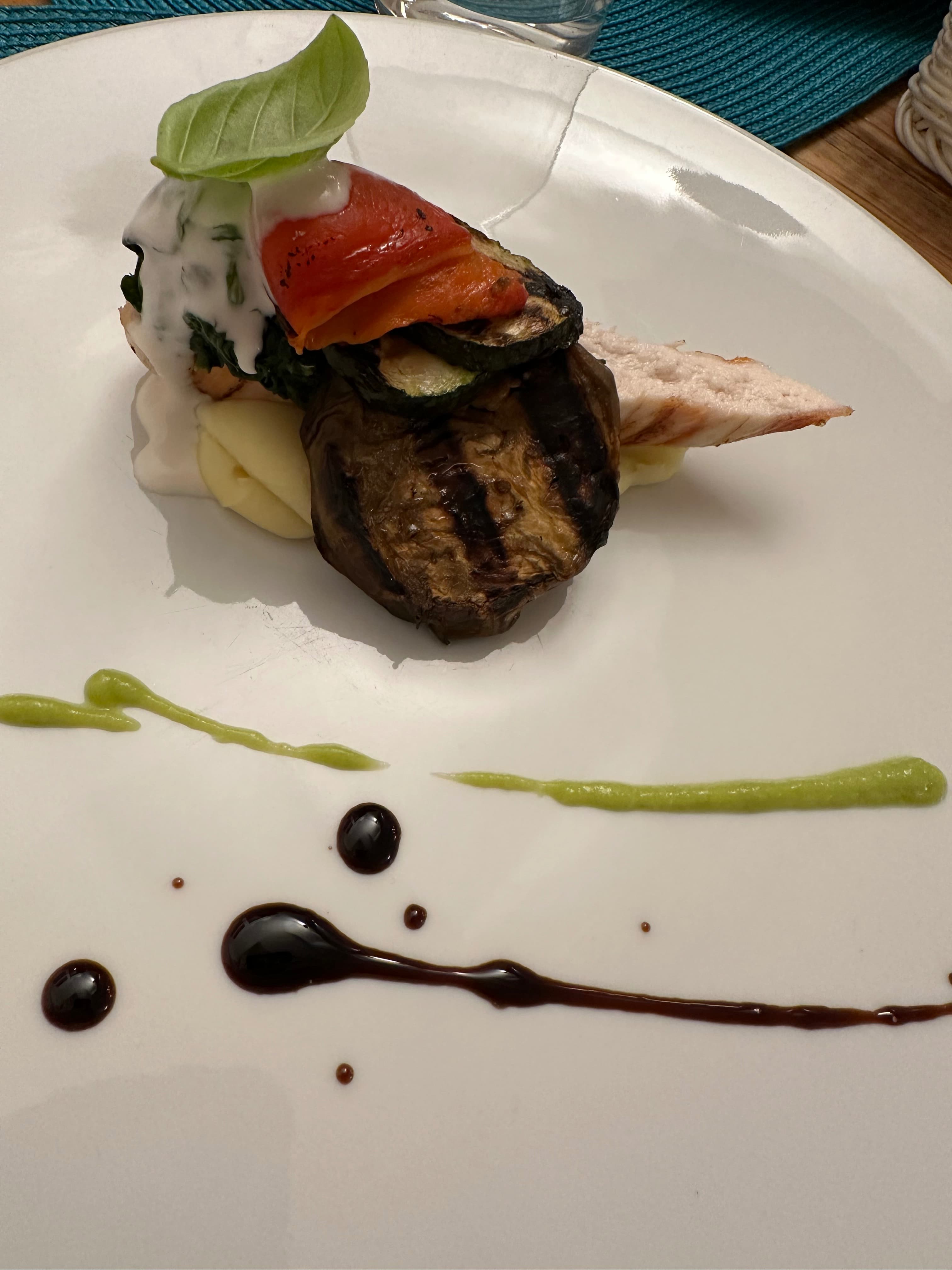
One half of the full order of roast chicken with eggplant, zucchini and red pepper, served over creamed potatoes. The chicken breast was so juicy!

Owner, and English-speaker, Vito taking orders from a group of Italians

4 Likes

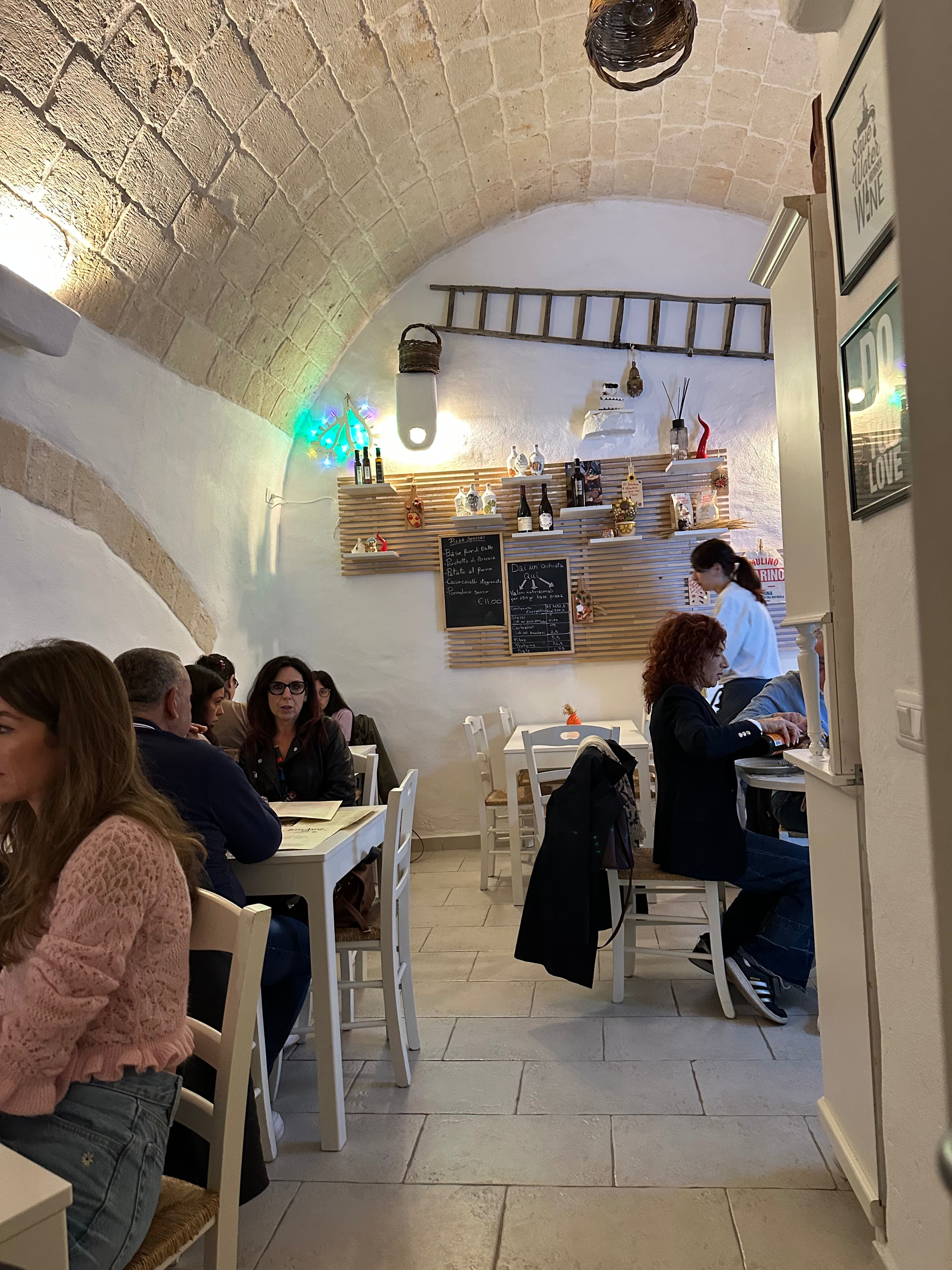
We tried to book two restaurants last night in Fasano; one was closed for the week and the other (LA DISPENSA DI ELENA) had no tables. I had a mild craving for pizza so we again follow the advice of hotel staff, many of whom live in Fasano, and had dinner at ARTE FARINA, a tiny little place where we were told that we could occupy the table for one hour only. It’s deep in the narrow lanes of the historic center but we found the place easily, after consulting with a passerby.

Before I post the photos, I’ll say that the gleaming white town of Fasano is brilliant! I felt as if I were walking into a movie set: Winding white lanes, tree-encircled piazzas, handsome white buildings interspersed with ruddy reddish palazzi—and not one tourist in sight. Every single person we’ve met has been exceedingly friendly and helpful. And there’s no shortage of good places to eat.

ARTE FARINA

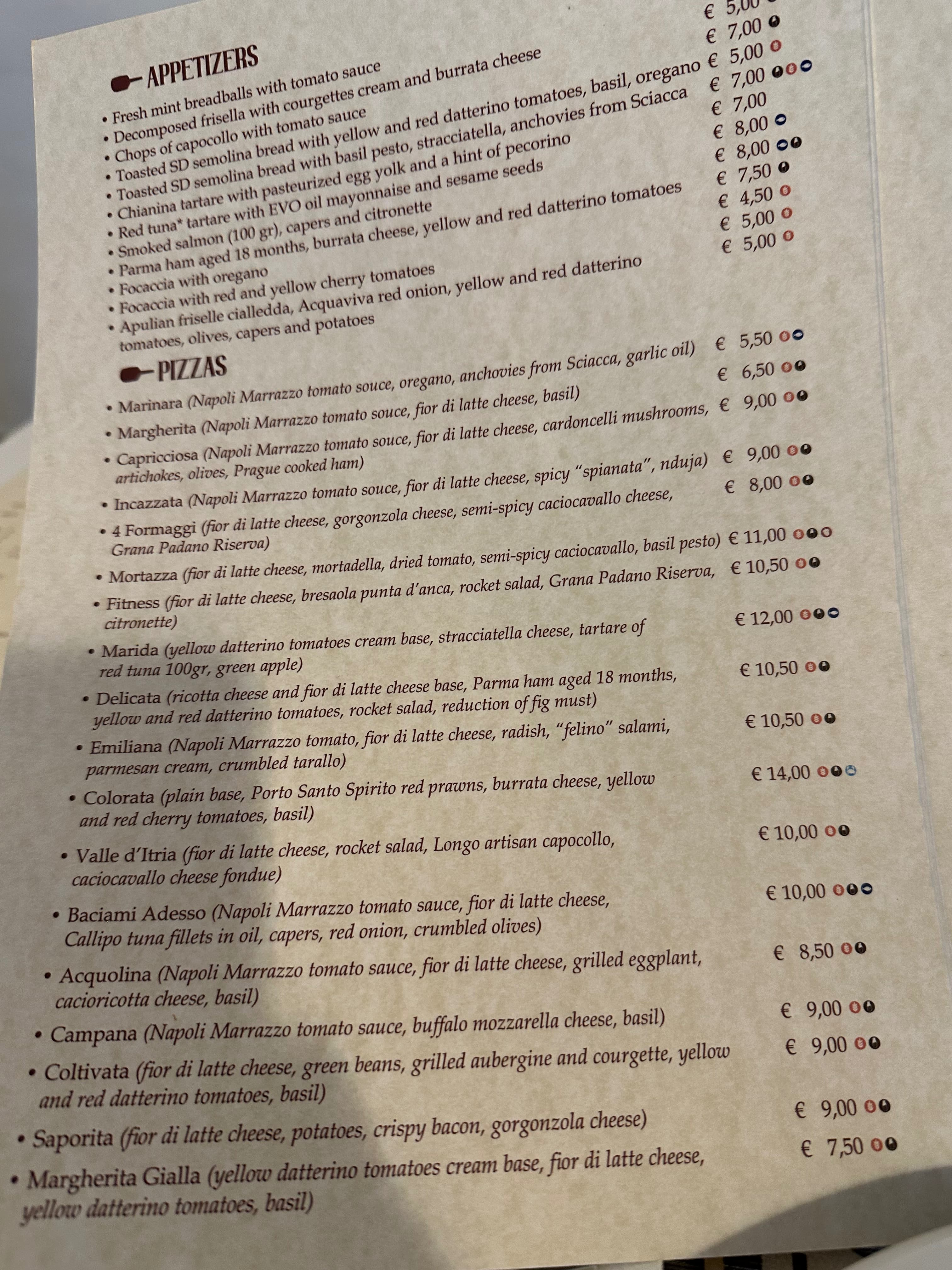
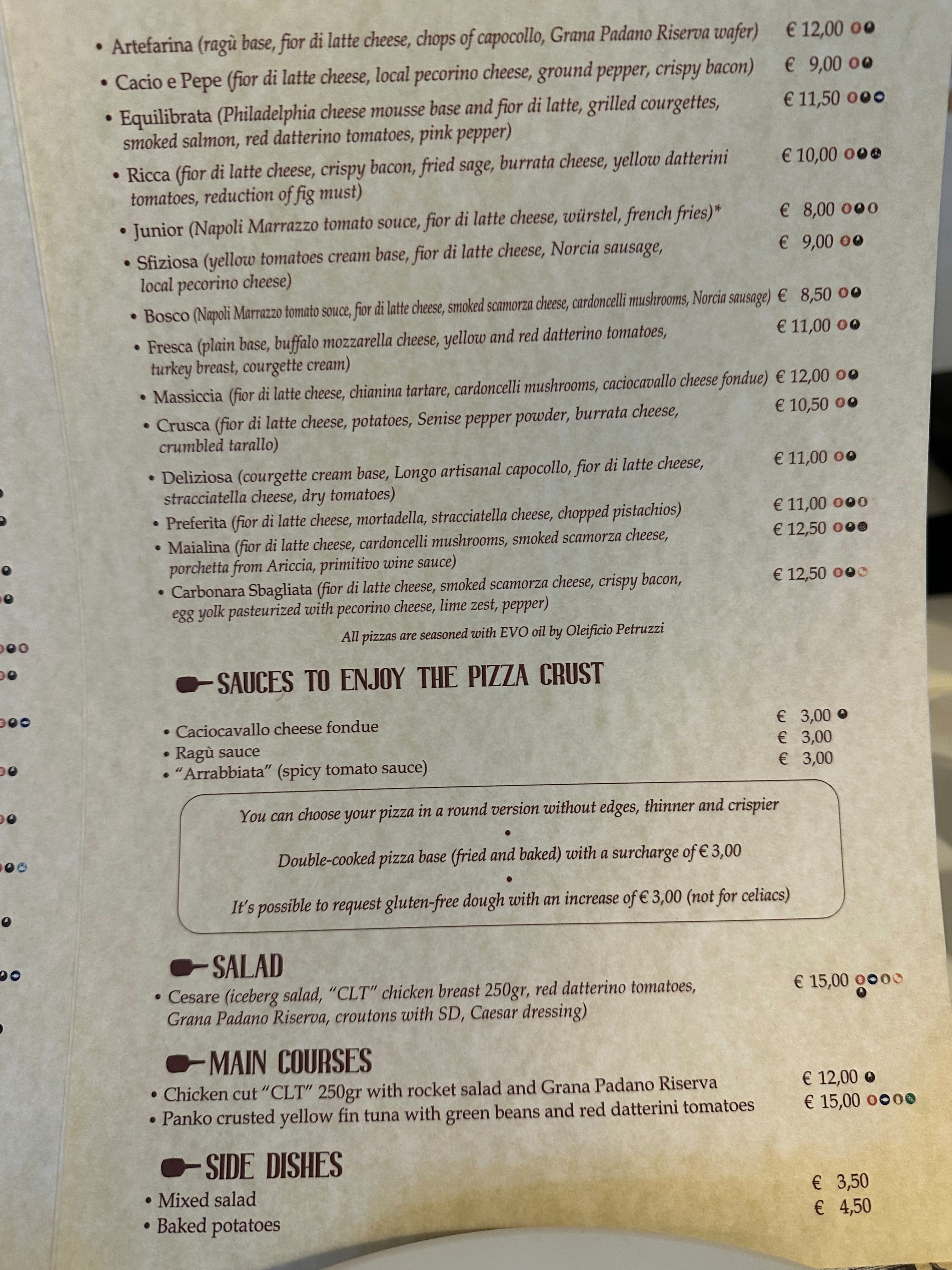
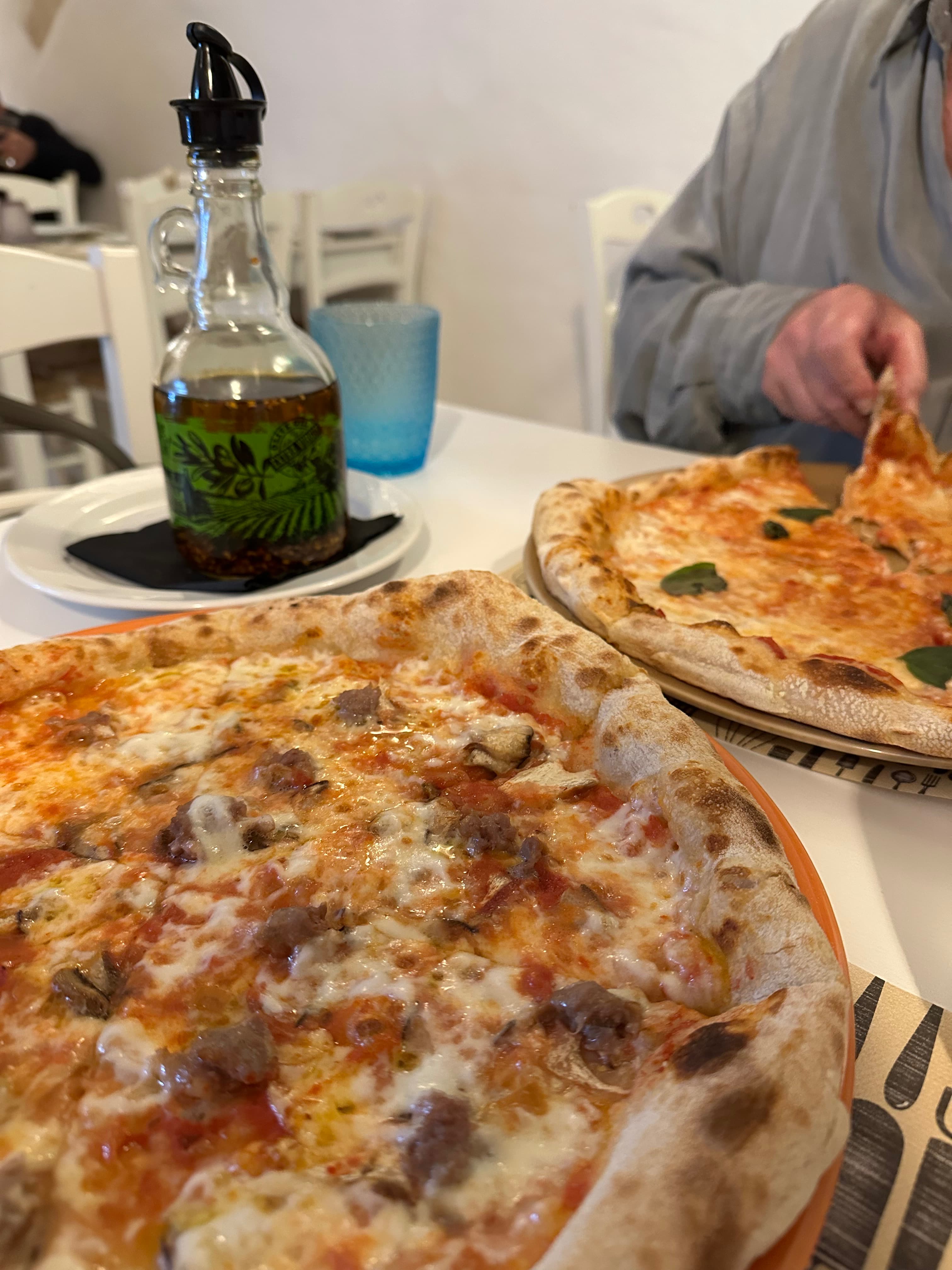
They had few other dishes, including the bread “meatballs,” often seen on tables here, but we chose from the VERY long menu of pizza, ordering one Margherita (6.50) and one Bosco (8.50.). The latter was topped with tomato, fior di latte, cardoncelli mushrooms, and superb morsels of Norcia sausage. I think this was the first time I’ve ever finished a not-too-small pizza by myself.

With water, coperto, and wine, we paid 26.50 euro.


5 Likes

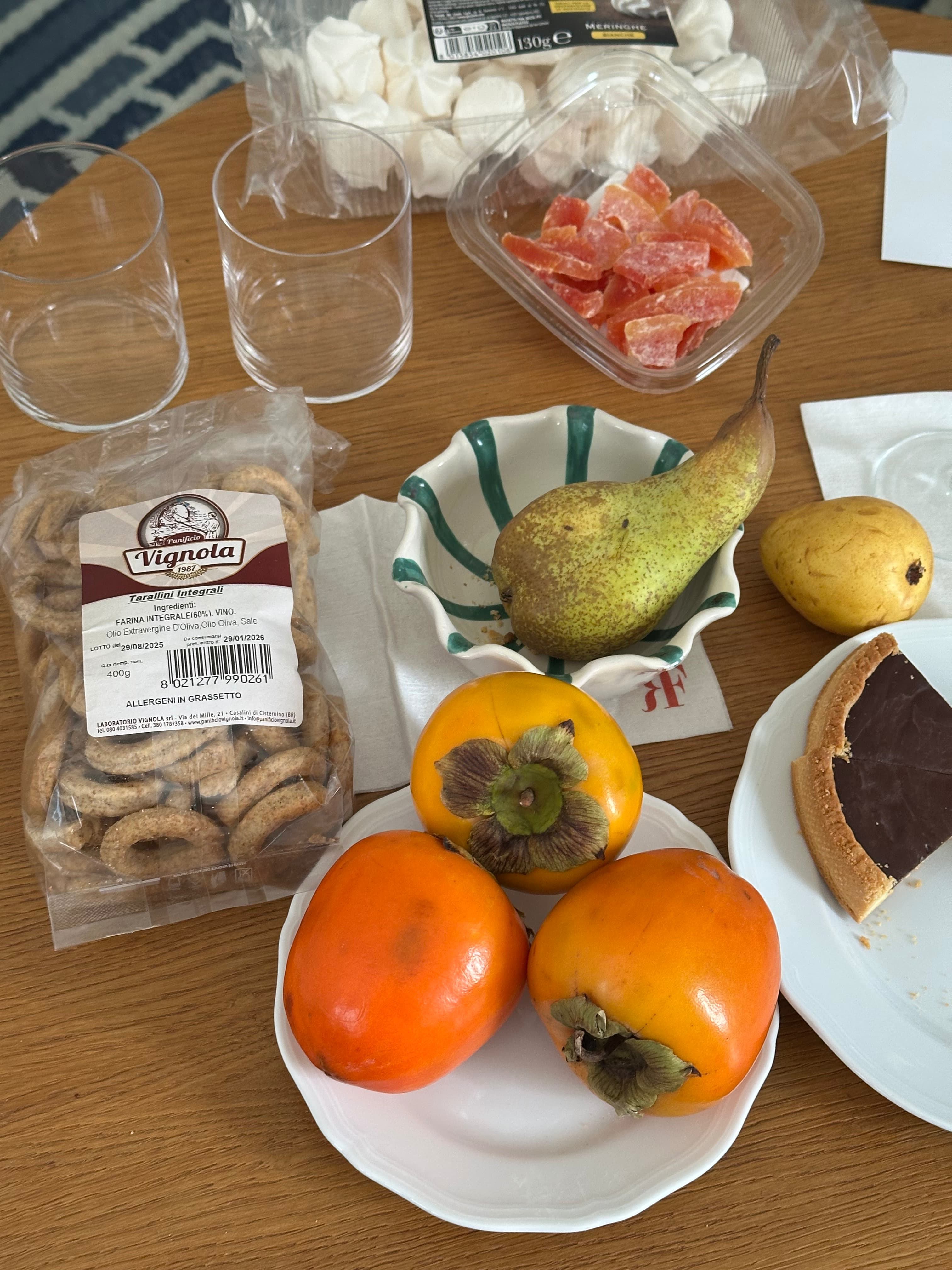
Not sure if I mentioned this before, but one of the surprises of this trip has been the persimmons!!! I’ve bought these a couple of times in New York, where we get both Hachiya and Fuyu. But neither of these, nor any persimmon I’ve ever tasted before, has been as delicious and addictive as these beauties.

There are two types here: The harder kachia mela, eaten by removing the stem end and slicing, and the kachina vaniglie, the very soft variety eaten by scooping out with a spoon.

This photo shows the hard variety, on a little snack table I set up in the hotel room. Also local are the pears (the one in the bowl is an Abate pear) and the ubiquitous tarallli. The crostata di chocolate, from the hotel breakfast buffet, might be the best cake I’ve ever eaten. and I’m good for at least four slices a day while here.

(The wine (local chardonnay) and the scamorza are in the mini bar)

3 Likes

I wish I liked persimmon or a number of other fruits., but maybe I will give it a try next month in Sicily. I can see why you are not very hungry at dinner right here in the picture!:grinning_face_with_smiling_eyes:

Jen, do try the persimmons; maybe there are different varieties in Sicily. I think I will take into account which fruits are in season when planning future trips! One food I’ve not seen in Puglia in October is artichoke, which I love. I know there are different seasons for different varieties–I will ask if and when they come to the market around here, and even if they grow in Puglia.

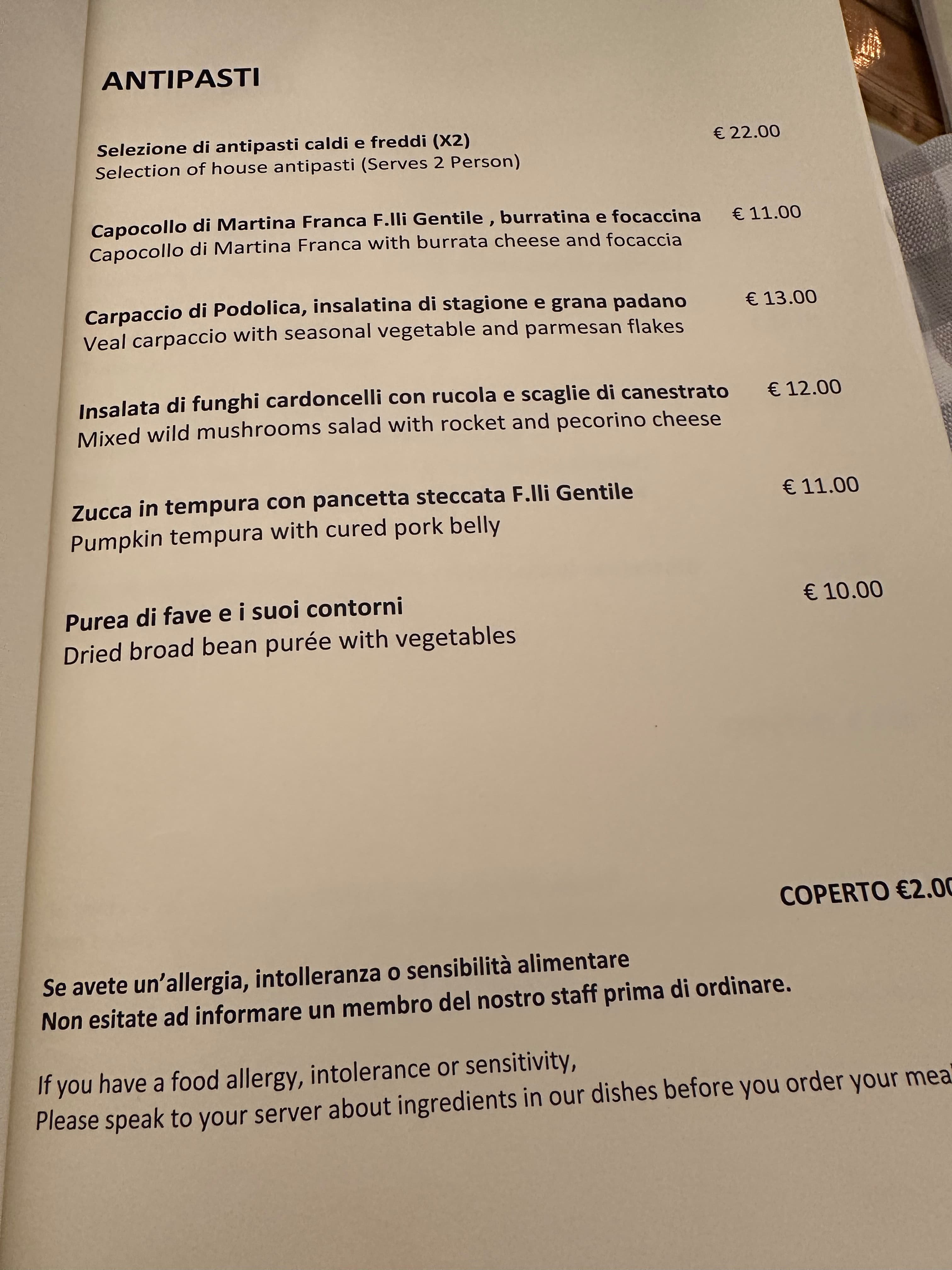
LA DESTINA DI ELENA, FASANO (historic center)

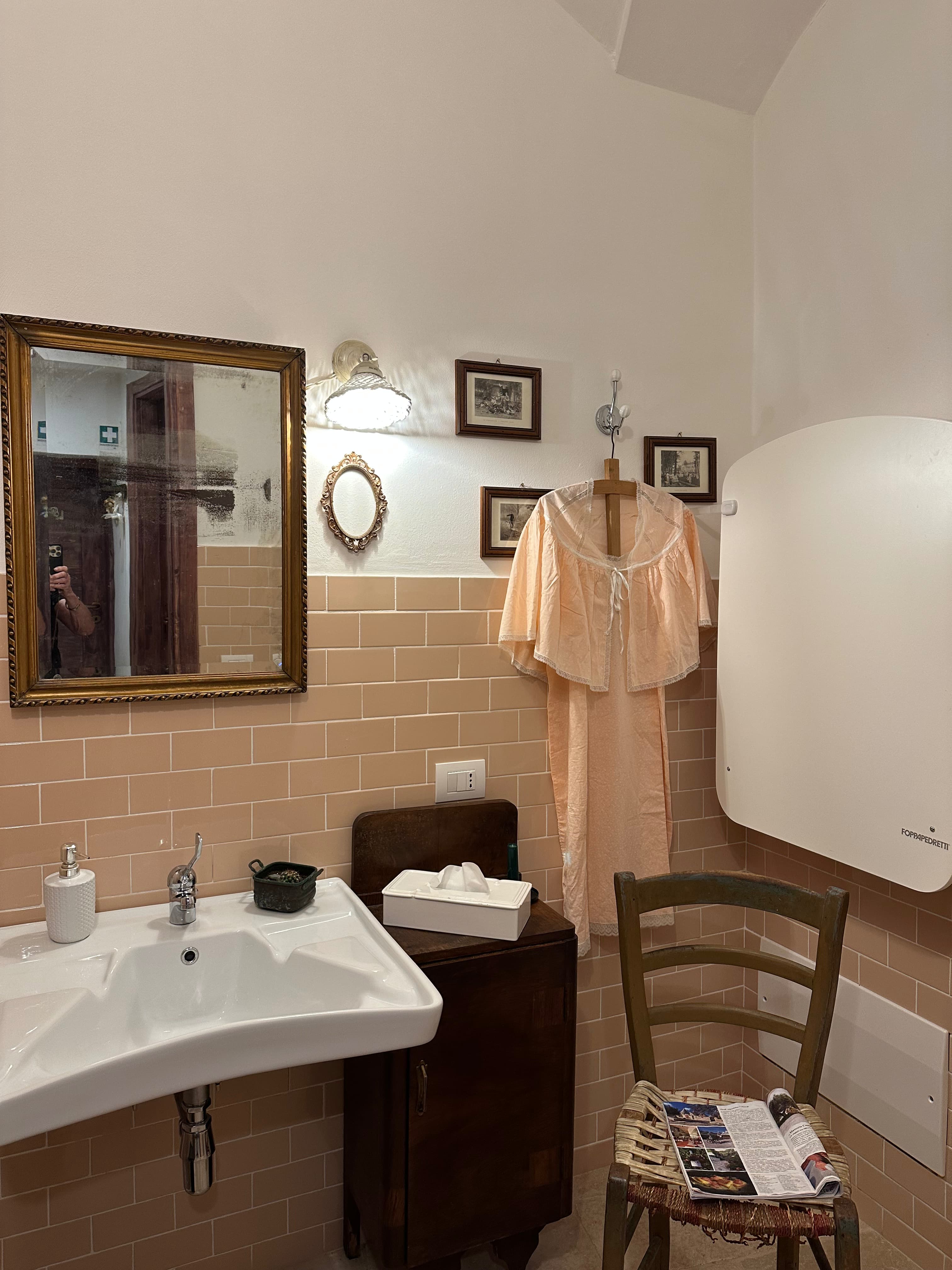
We tried and failed, to get a table earlier in the week but last night we were fortunate. Very fortunate, as this restaurant came close to being THE perfect Pugliese dining experience. In every way. The place is run by Elena and her son, Matteo. Elena was not around, as she had to collect someone at the airport, but Matteo was about as good a host as anyone could imagine. Chatty, eager to offer suggestions, happy to explain various recipes, and speaking excellent English. And adorable, with his Glen’s plaid wool jacket and giant black glasses. Eating here is about as close as a tourist could get to eating in a local home and I’m sure that this was someone’s home at one time (did not get the details). There is a dining room, with one large table, for large groups, and the main eating area, set up like a living room, complete with an old tv in a huge walnut case sprouting antennae. Lots of old photos on the walls along with household implements and—a lacy nightgown hanging in the ladies room! It’s charming!!!

The menu sticks mostly to rustic Pugliese dishes but the renditions are much better than those we’ve sampled one previous trips.

If you’ve been to LE ZIE in Lecce, imagine that atmosphere and decor, but more attractive. and with even better food and fewer guests. (We were there about fifteen years ago and I did read that LE ZIE has buckled under the pressure of tourist crowds but I don’t know this for certain)

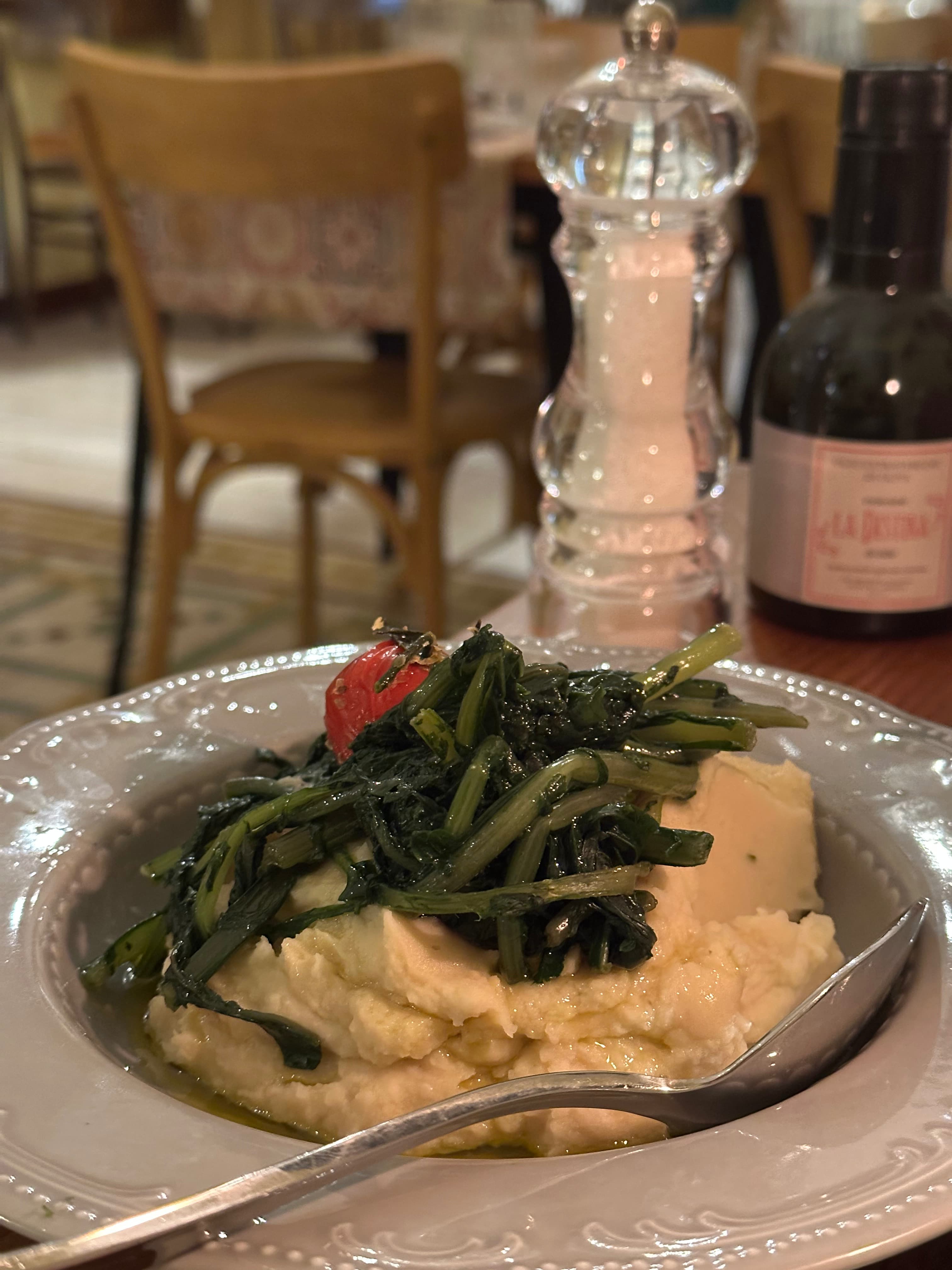
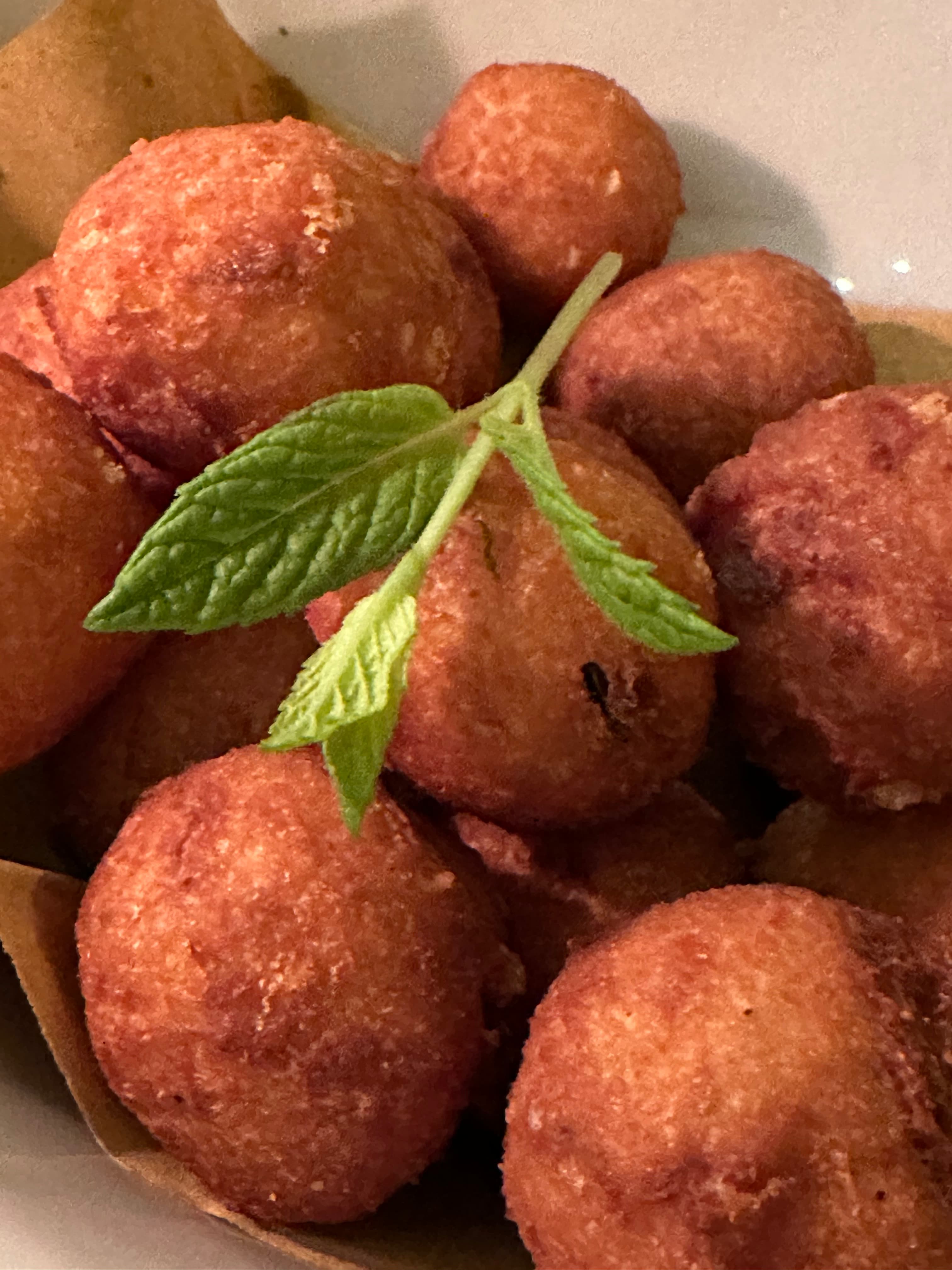
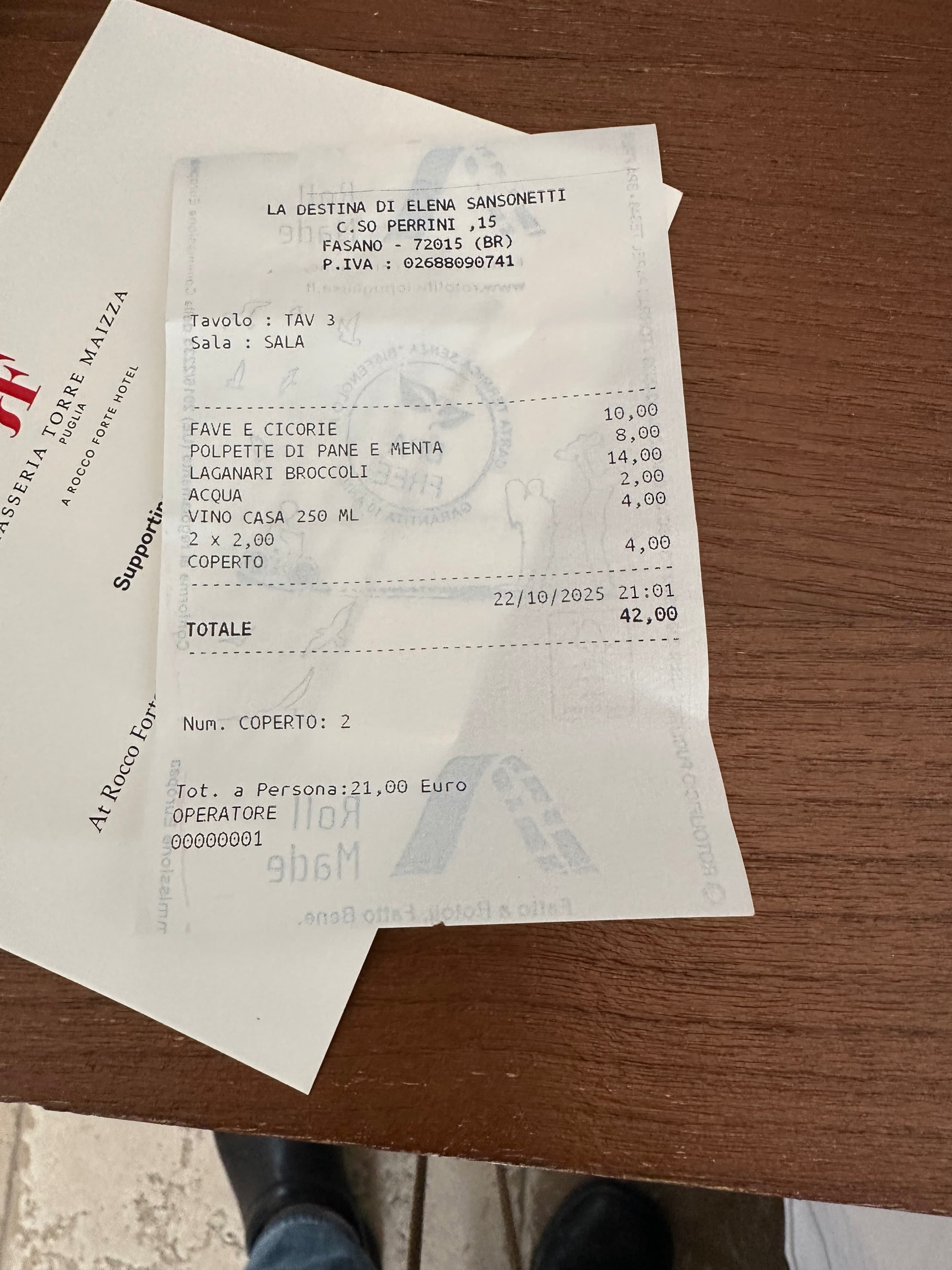
For antipasti we chose two emblematic Puglese “land” dishes: Polpette de pane ( fried bread balls, one of the canons of southern Italian “cucina povera,” originating at a time when meat was rare on the tables of most folks, (8 euro) and Fave e Cicorie, another “cucina povera” staple: A puree of fresh fava beans with salt and olive oil, topped with a tangle of long-cooked chicory (a dark green at its peak in the colder months in the NE USA). (10 euro)

When Matteo took our order, he suggested following this with a shared pasta, correctly guessing that we would be pretty full after finishing the two starters and assuring us that we could order more if we were still hungry (slim chance of that, I knew)

On his recommendation, we chose the orechiette with veal braciole, to share. But minutes after taking our order, Matteo returned to the table with the news that Chef Giuseppe was not happy with the quality of the meat and would not prepare the dish we had ordered. I’ve never had that experience before!

We settled on another of the restaurant’s signature dishes: Laganari (a long, very thick fresh pasta that I never see back home in the US, or anywhere outside southern Italy) with a sauce of broccoli and anchovies. (14 euro)

After assuring my partner that he would not detect the taste of the oily fish, we made our decision.

How can a single puree of cooked broccoli (still with a few chunks of the florettes) and a few anchovies taste so delicious? I’ve made my share of pastas with broccoli back home and the only adjective I can use for those is “boring.” BUT, I did not add anchovies at home. Lesson learned.

Highly recommend this restaurant, even if you have to drive for a half an hour or so. Closed Sunday night and Monday. Like almost all restaurants around here, they open for dinner at 7:30pm.


5 Likes

As always, Erica, fantastic report and thank you for taking us along.
This “sauce to enjoy the pizza crust” caught me by surprise. Have you, or anyone, seen this at pizza restaurants in Italy? I always thought this was something us Americans came up with, and admittedly makes me want to throw the ranch dressing cups at the wall and revoke pizza rights from those people. :slight_smile:

3 Likes

Sounds like a great find! FWIW Ive had lagane (in a flat noodle form) in campania, when we visited Paestum. There, they were served, as I recall, with the small chickpea like legumes called cicercie - one of those sustaining starch on starch dishes they love in southern italy.

Jen, I remember buying cicercie years ago; I may have read about this legume in Fred Plotkin, or maybe in one of the (excellent) books about Italy by Matthew Fort. It was delicious in vegetable soups that I concocted back home.

I wish I had asked about the sauce for the pizza crust!! I’ve never seen this offered before, not even in the US. So there are places in the US that sell cups of sauce as an extra, to dip the crusts into?? I also only now noticed that menu option to have your crust fried AND baked. I did try a fried pizza in NYC at Montanera, a place that touted its “authentic” fried pizzas. I don’t know Naples well; is that really a popular way to prepare pizza in that city?

I had an interesting discussion this morning with a young woman from Fasano who was bemoaning the fact that so many tourists went to Ostuni but very few made it as far as Fasano. She was trying to concoct a plan to entice more visitors and asked me what I thought the city needed in order to do so. I remarked before about the lack of tourists in the beautiful historic core; I imagine there are many more in summer, when Italians descend on the nearby beaches. Although I shuddered at her idea of making Fasano into a “little Ostuni,” I understand her point of view. I was last in Ostuni in 2012 and I hear it’s become tourist central now, but is this true? I know Ziggy liked the city a lot when he stayed at a masseria just outside (I think). Fasano is flat, so it does not have the views of Ostuni. The only idea I could offer was a Gelateria (these seem thin on the ground round here; I’ve had gelato but once on this trip, in Nardo, and I did see a couple in Bari) ) or some kind of tour that would highlight the “undiscovered” towns of the area…there are certainly some excellent, homey restaurants, and the sea is only a 10-minute drive.

Also, I learned that there is are buses to Rome from Fasano, as well as a train; the train requires changes, however.

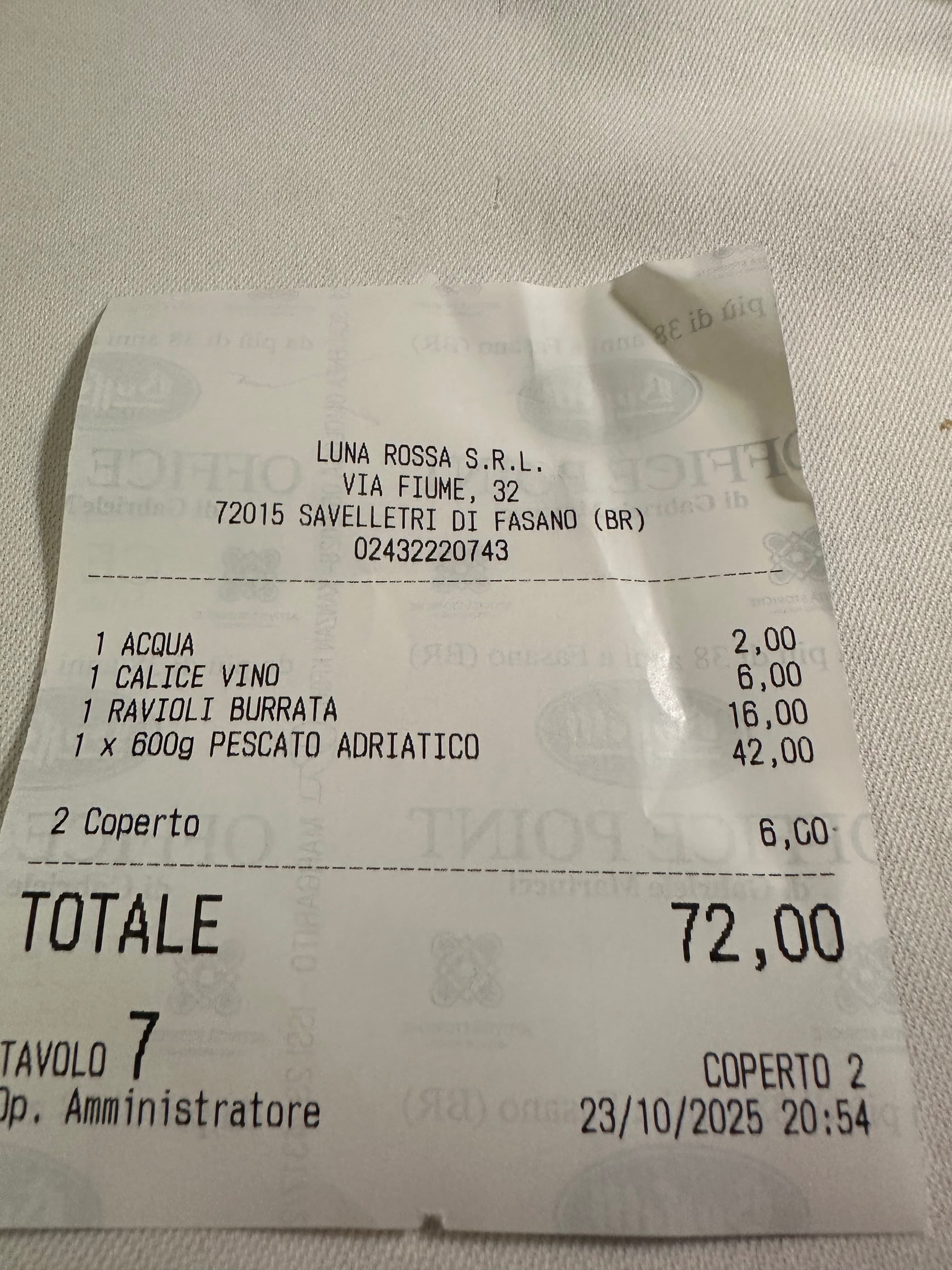
LUNA ROSSA

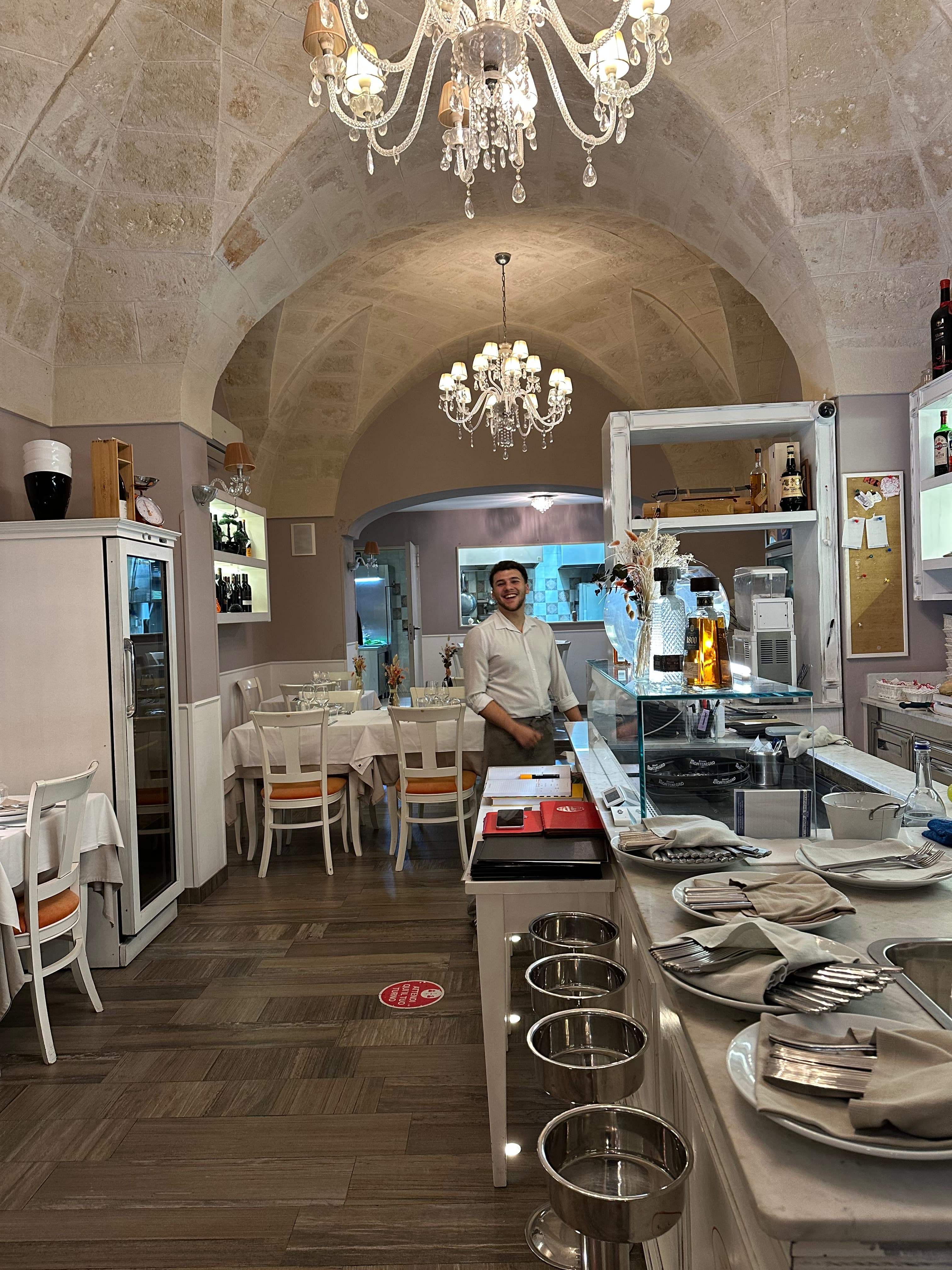
In a mood for fish, and wanting to take advantage of the free shuttle offered by the masseria, we chose this popular restaurant in the center of tiny Savelletri for last night’s dinner. I cannot stress enough how amiable and welcoming the service has been on this entire trip–every single person we’ve come into contact with showed us such warmth and friendliness.
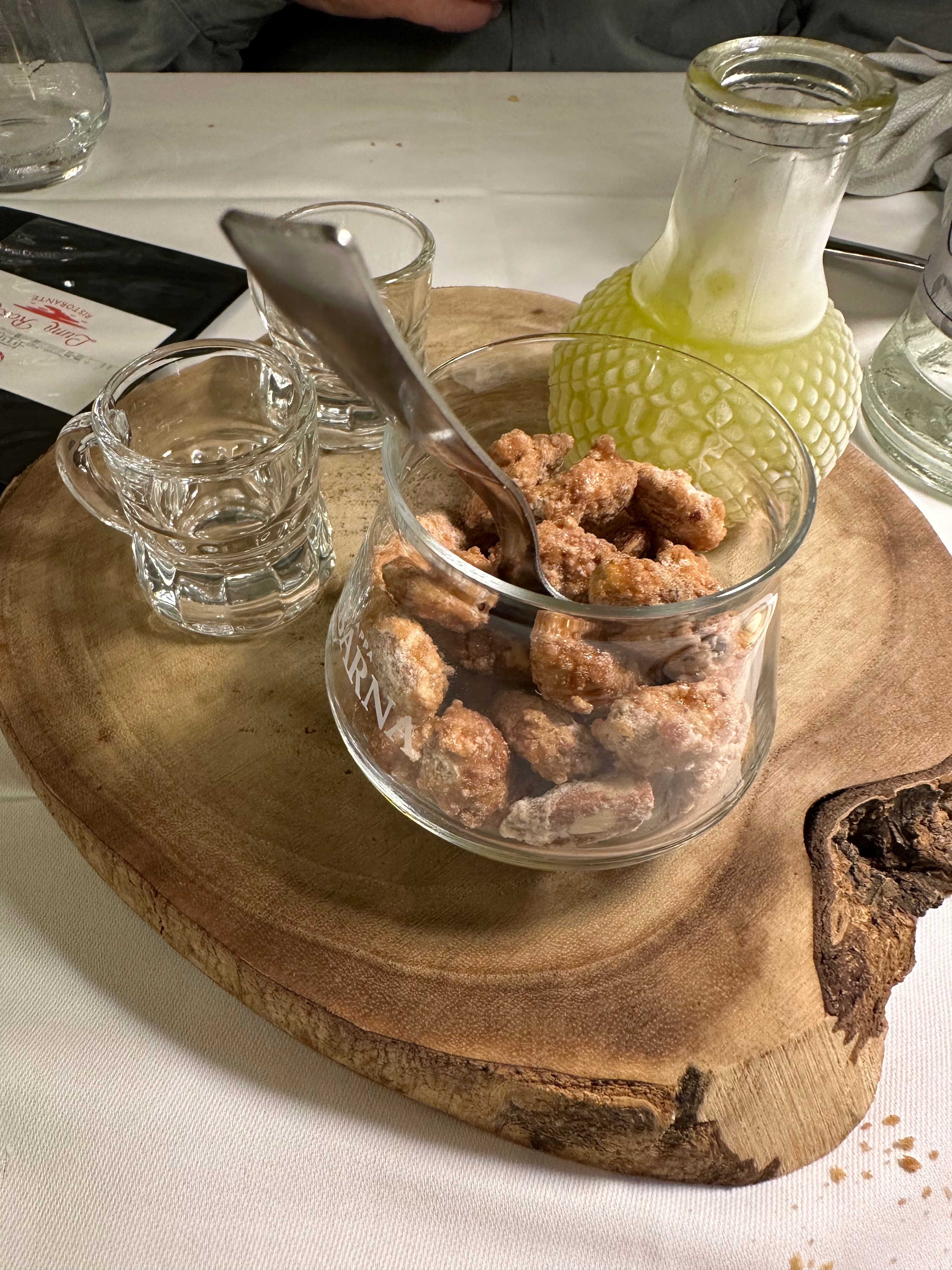
Once again, we had limited appetites, even though I made a point to do no snacking during the afternoon. (But breakfasts here are massive and delicious)

This is a solid place, popular with tourists and with locals, although the latter consider the prices to be high. I thought they were in line with all of the other fish and seafood addresses we tried Prices along the coast here, where fish dominates the menu, are generally a lot higher than those inland. Our 72 euro bill last night was among the highest we’ve had in our three weeks in Puglia, but keep in mind that we’ve not ordered any bottled wine.

Dinner was very good, not memorable but it’s a solid bet ifs you find yourself in Savelletri where it appears that every restaurant focuses on fish or seafood, with at least one (2Mari,) focusing on crudi.

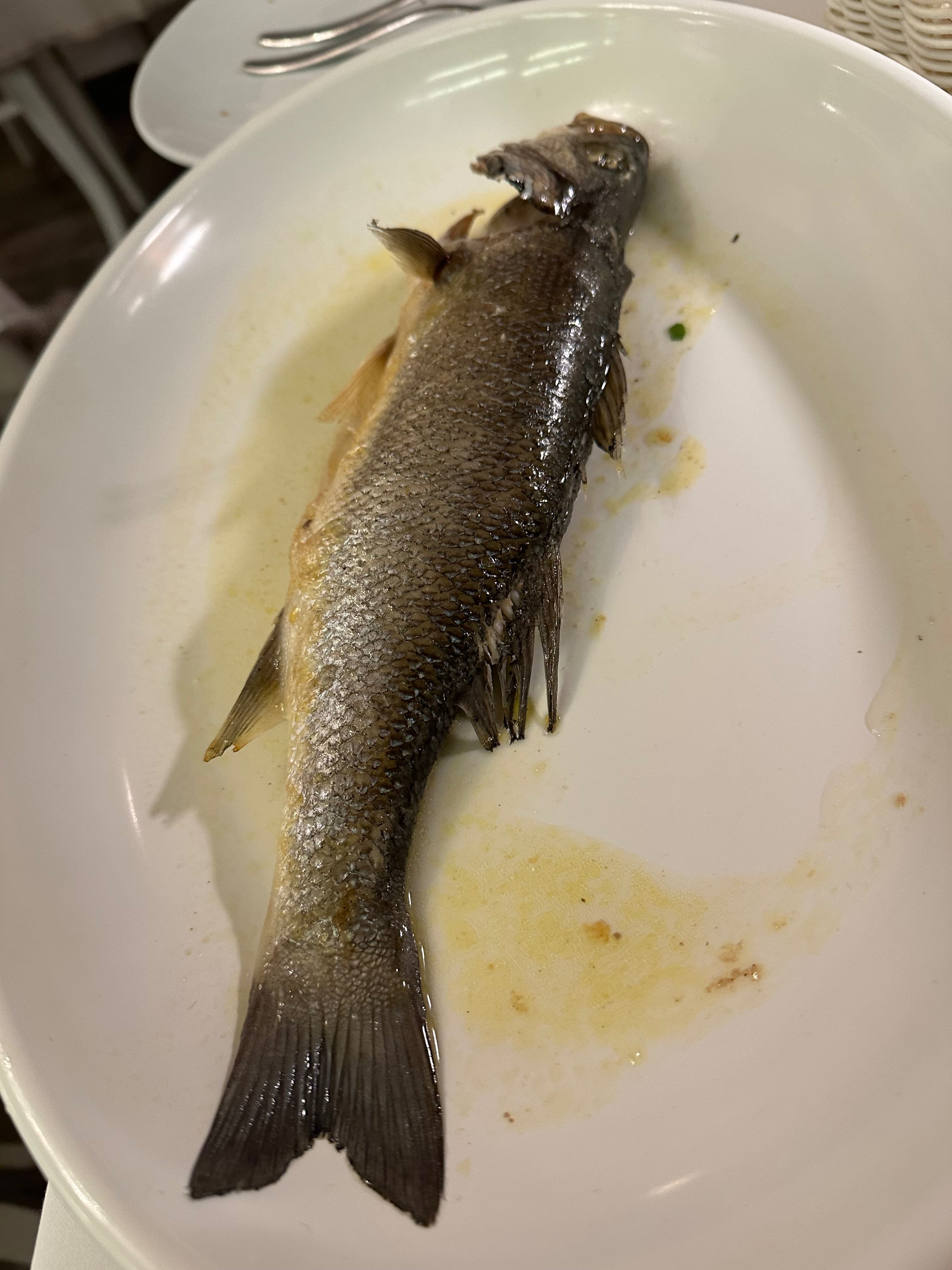
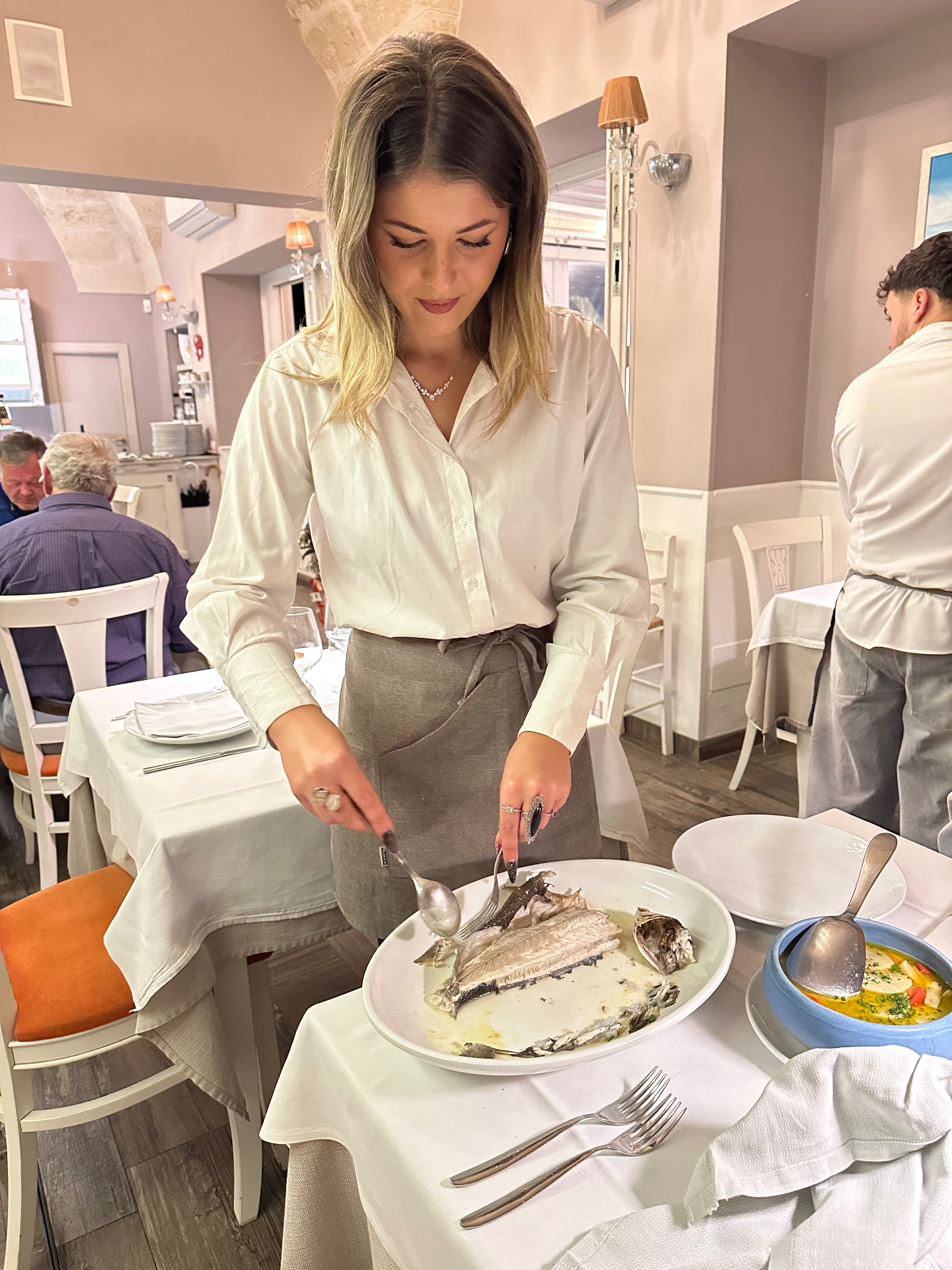
There was a limited choice of small-ish whole fish, so I took the spigola and heeded the advice of the server for the preparation. I chose the spigola over the other option, peace dorado, because the spigola had been wild caught, while the dorado was “cultivated.” I wonder if I am missing out by shunning the farmed varieties here in italy (??)

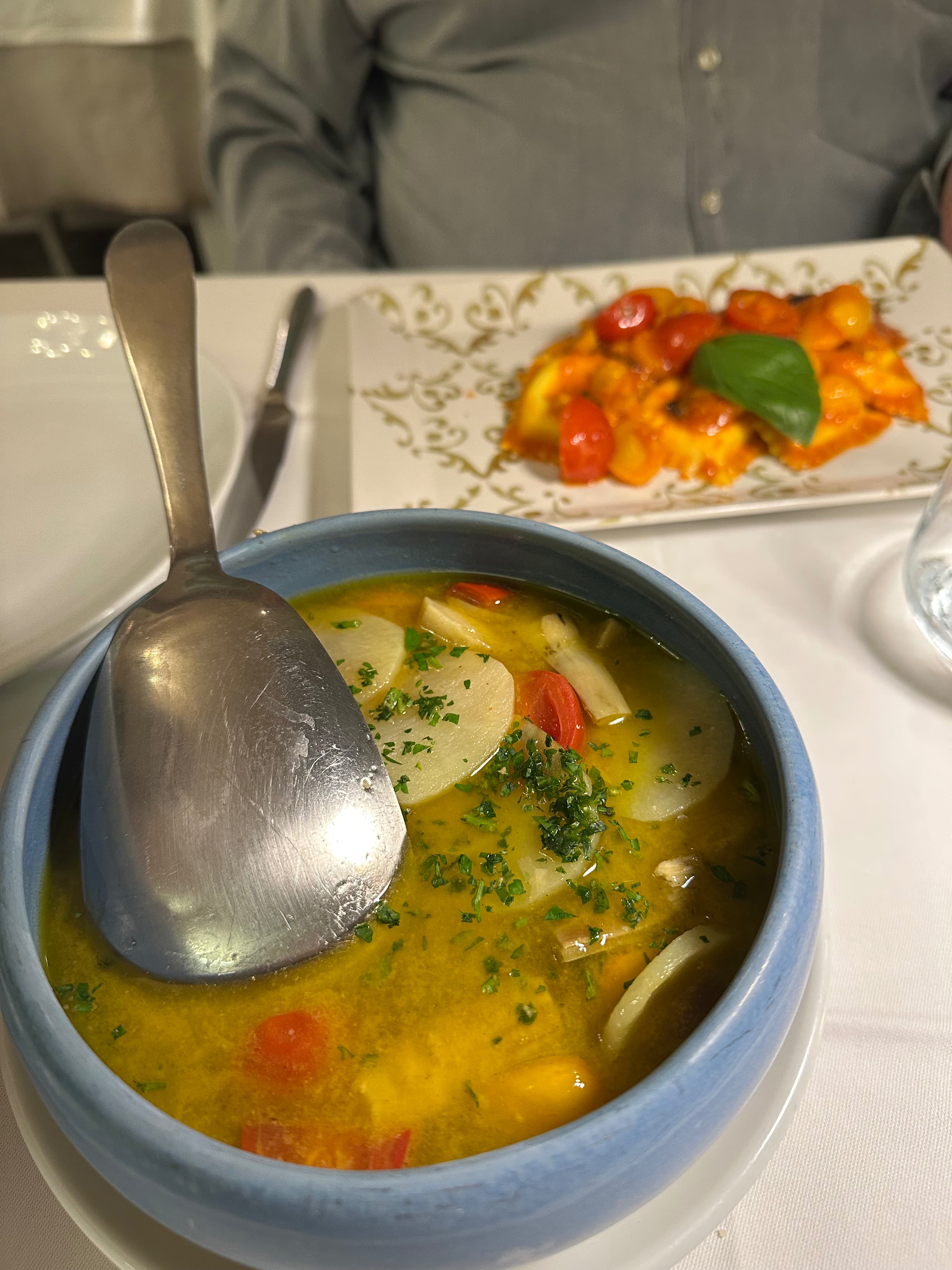
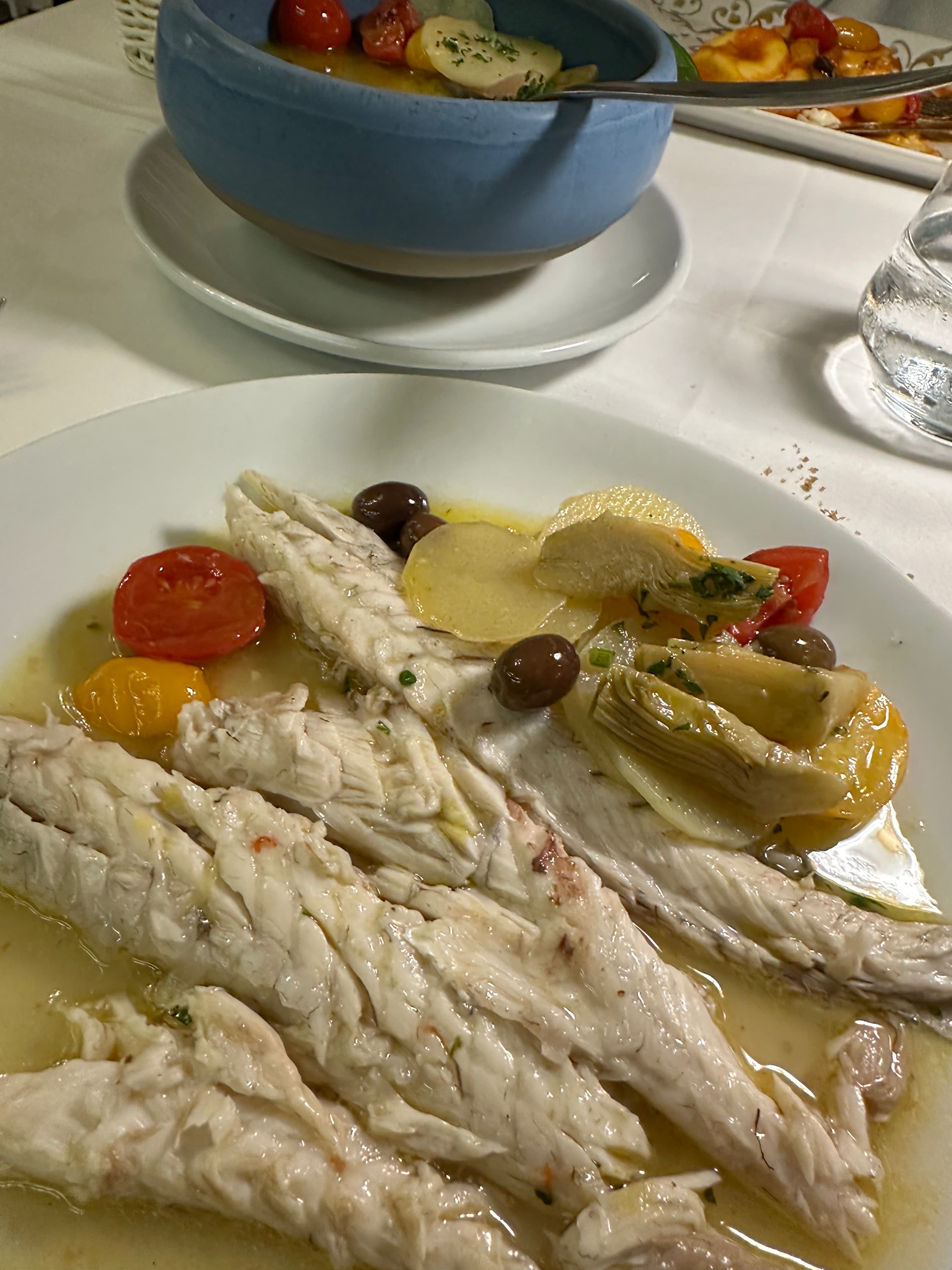
After filleting the fish at the table, she put down a large bowl of sauce (more of a soup) with chunks of potato, small tomatoes, black olives, and artichokes (not fresh artichokes, though).

I’m not sure what this preparation was called; she told me that the fish had been cooked in the sauce, first, but it was whole, not broken up as you would expect for fish cooked in liquid. I’m sorry I did not inquire further, but I wonder if this was the classic acquapazza that I think is common to Campania but which I’ve never tried before last night.

The spigola was excellent, very juicy; 600 grams (1.3 pounds) of whole fish was just about the correct amount for a generous portion for me. The white wine (only a glass) was verdeca, one of the principal grapes used in the DOP wines of the Valle d"Itria. Excellent.

The second photo shows my partner’s burrata-filled ravioli in the background.


This was the first time on this trip that we were gifted an after-dinner drink (maybe this is more common in Spain than in Italy (??). The grandmother of our server, who was herself the daughter of the restaurant’s owner, made the limoncello at home, using 90-proof alcohol, water, sugar, and lemons which have been peeled at the pith removed. (Don’t quote me on the recipe, but it was delicious.).


3 Likes

Jen, look what I found in my e-mail:

MASSERIA TORRE MAIZZA

We had a 100 USD to spend within the hotel, so we chose their restaurant for our last dinner of the trip. I doubt if many readers will eat there, due to the prices, but the menu had many tempting dishes. If you want an upscale meal in lovely surroundings, look no further.
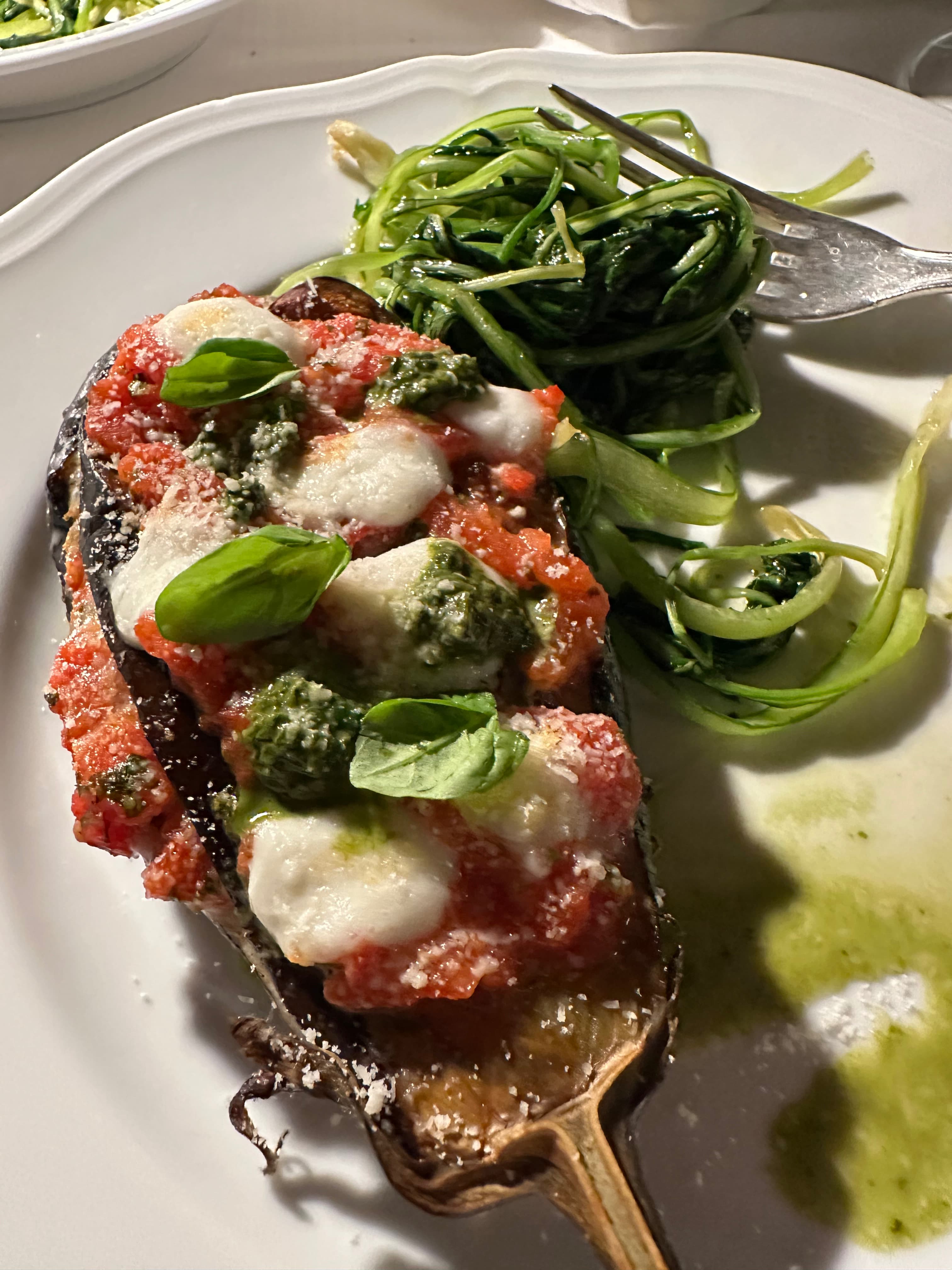
Yet again, we both had the eggplant parmesan which was stuffed into the eggplant skin, similar to the dish we had in Nardo. Along with that, we had a contorno of chicory (14 euro, so you get the idea bout the pricing)

So I’ll wrap this up with photos of our last supper in Puglia:

Complimentary antipasti of a delicious swordfish slice over puree of ceci (chick peas)


I rented our car at Bari airport from SIXT; I like that company a lot.
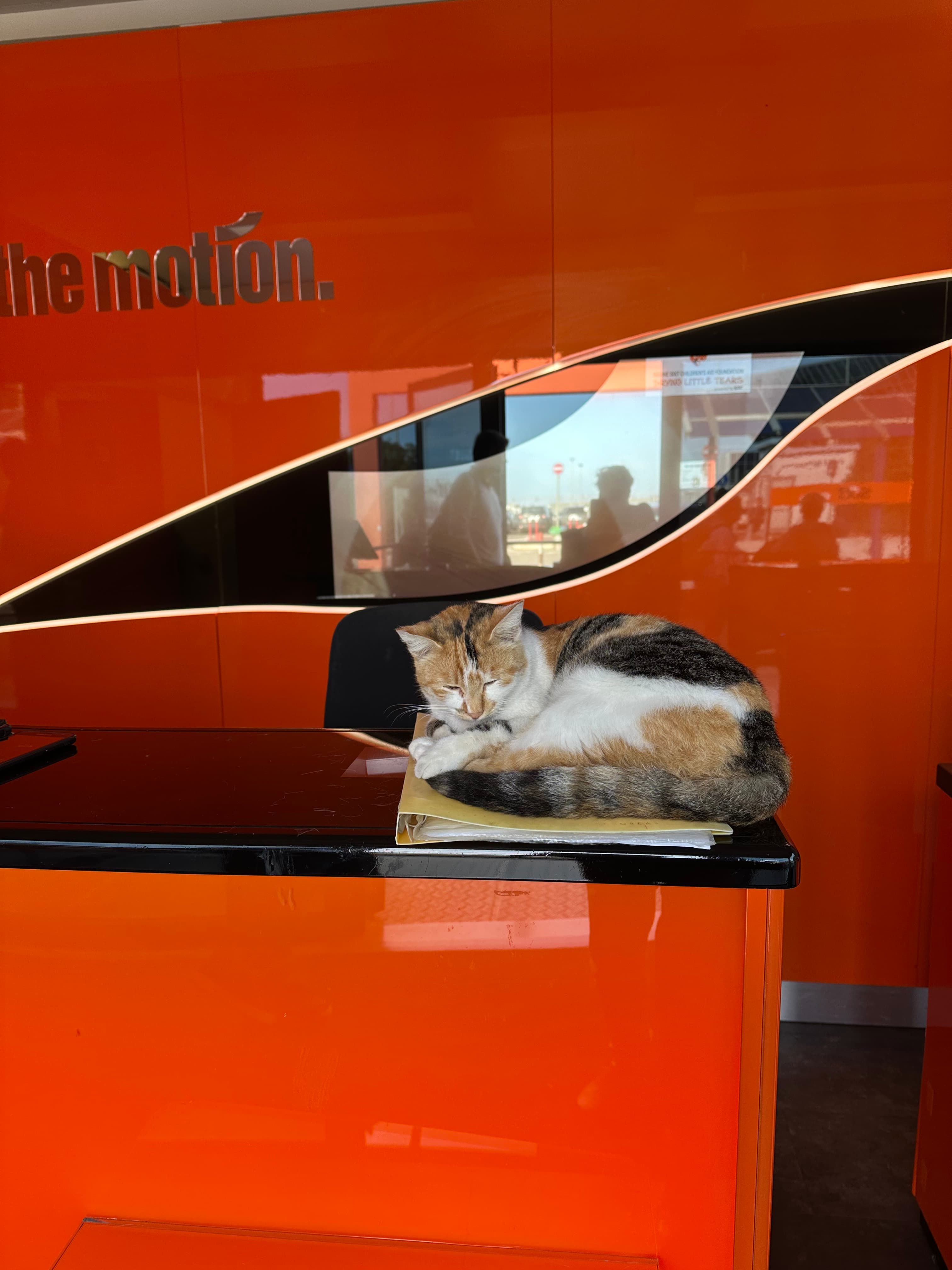
When I returned it yesterday, the employees were on their lunch break, so we were delighted to meet the general manager of the agency, who stepped in to man the return counter:

2 Likes

Another nice trip. We also rented from the same Sixt, and usually rent from Sixt
Safe travels.

Thanks, Z! I need nothing further as far as research, now that I have your Basque report in hand! After reading that, I know that a return to that area is on the horizon.

1 Like