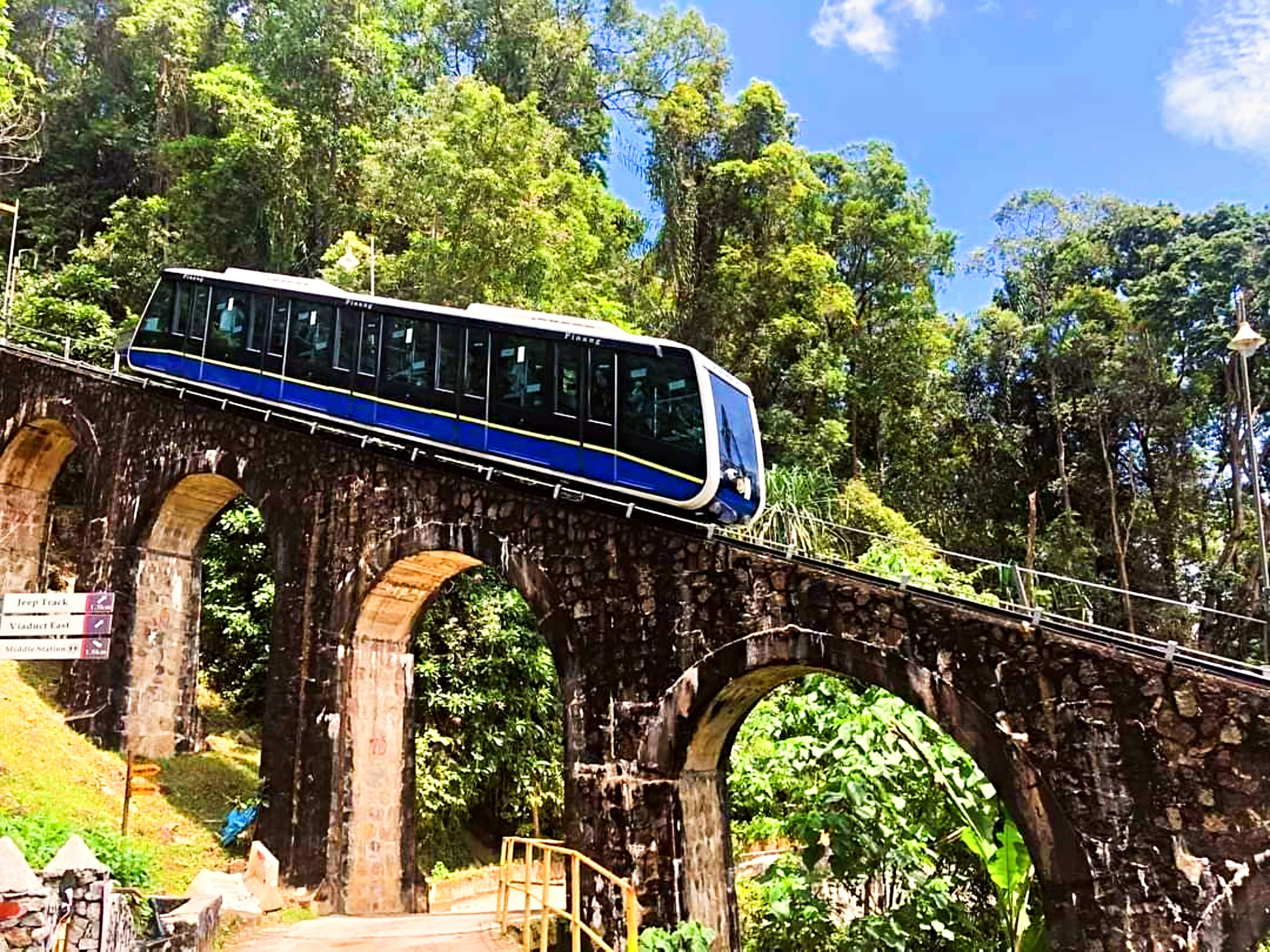
Journeyed to the bustling local market in Ayer Itam this morning to try its street food options. Ayer Itam is known for two things in Penang: (1) its huge Kek Lok Si Buddhist/Taoist temple complex, one of the largest in South-east Asia, and which draws in worshippers and tourists from around the region, and (2) its funicular railway system which transports visitors to the summit of the 2,733 feet-high Penang Hill, bristling with colonial-era bungalows ever since its founding by British settlers as far back as the 1780s.
Kek Lok Si temple



Penang Hill funicular rail
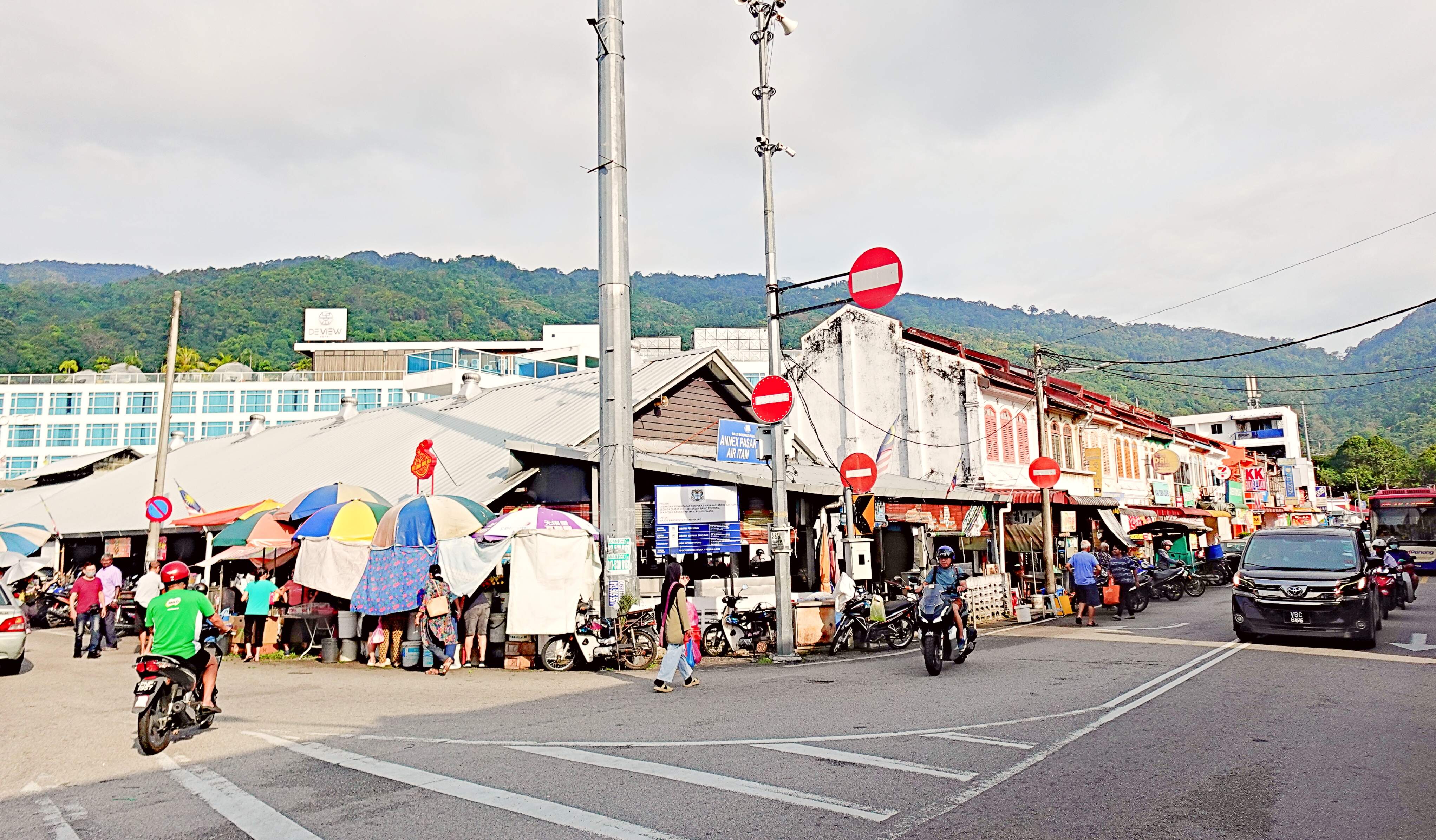
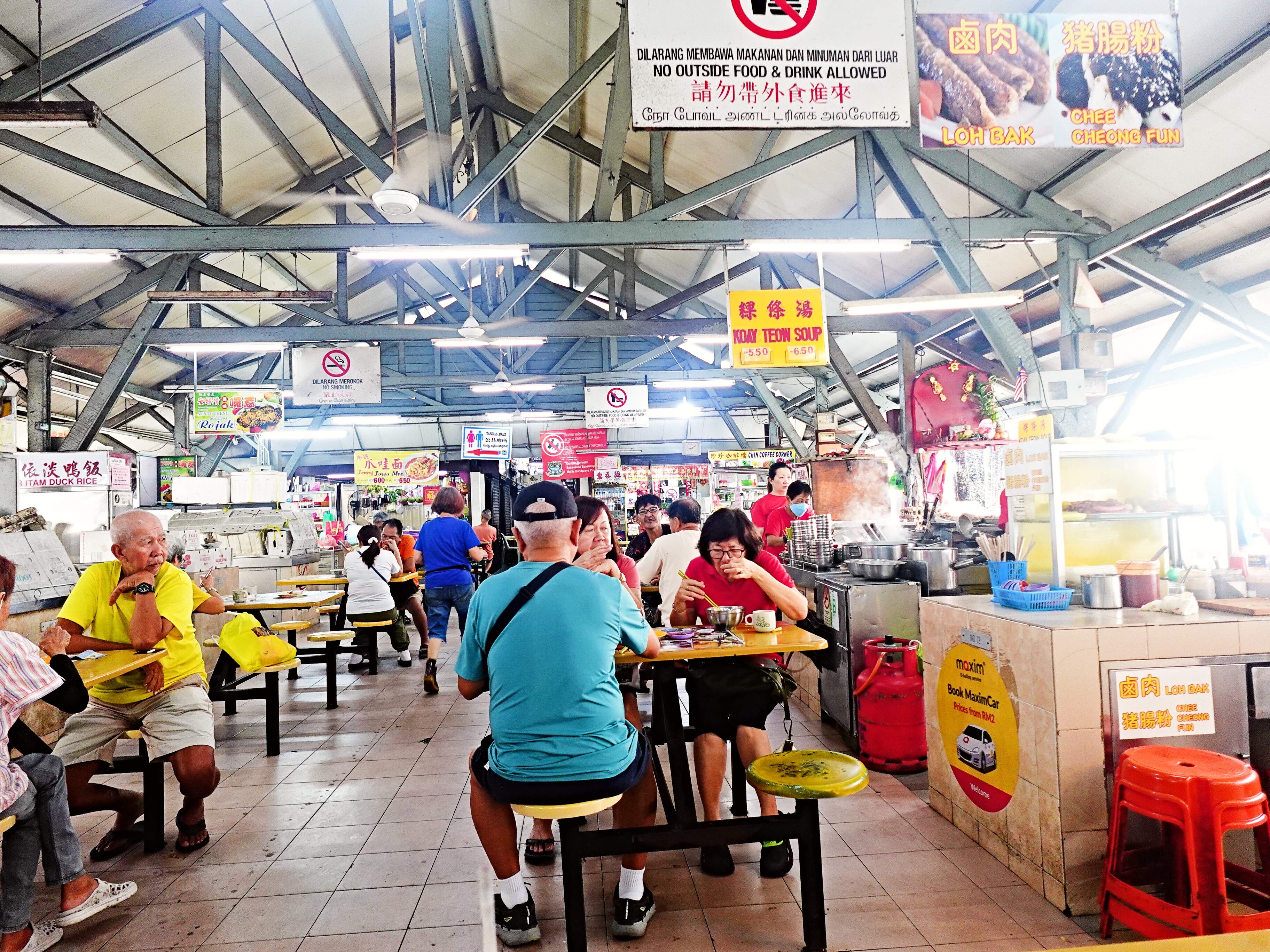
Ayer Itam market gets busy daily from 6.30am, with shoppers coming from the surrounding housing estates and further afield. The market emanates a rural, country charm, like a Chinese village. The hawker food stalls there offer some of the best renditions of Penang street food around.
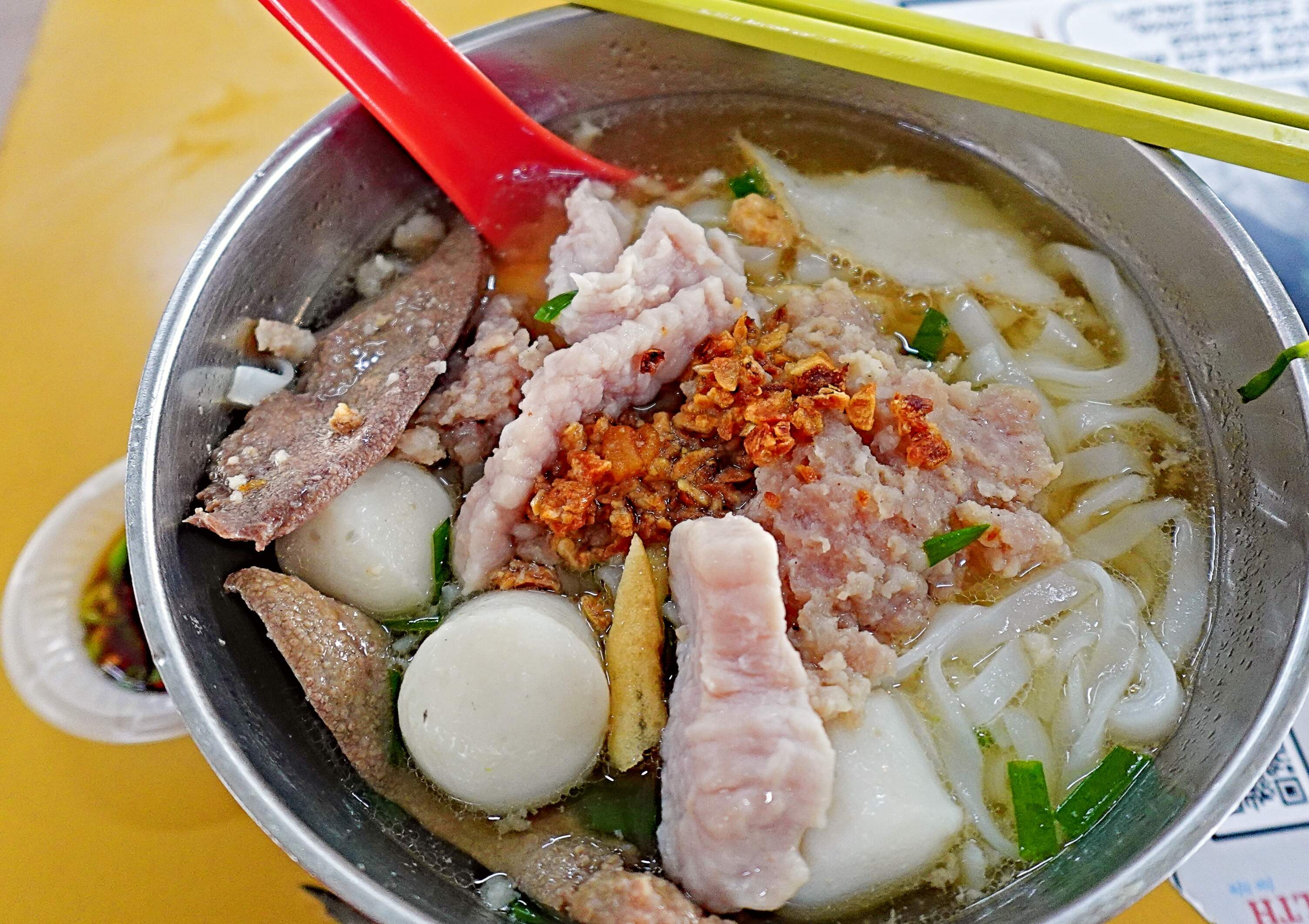
- Koay teow th’ng - this is a popular street food of Teochew origin. The version here consists of flat rice noodles steeped in a flavorsome, clear pork broth. A standard order consists of the noodles, topped with Teochew-style fish-balls, slivers of pork, minced pork patties, pig’s liver and chopped scallions. A spoonful golden-fried lardons in pork lard provided a rich finish to the sumptuous bowl of noodles. Wait-time can be up to one hour on weekends for this dish here.


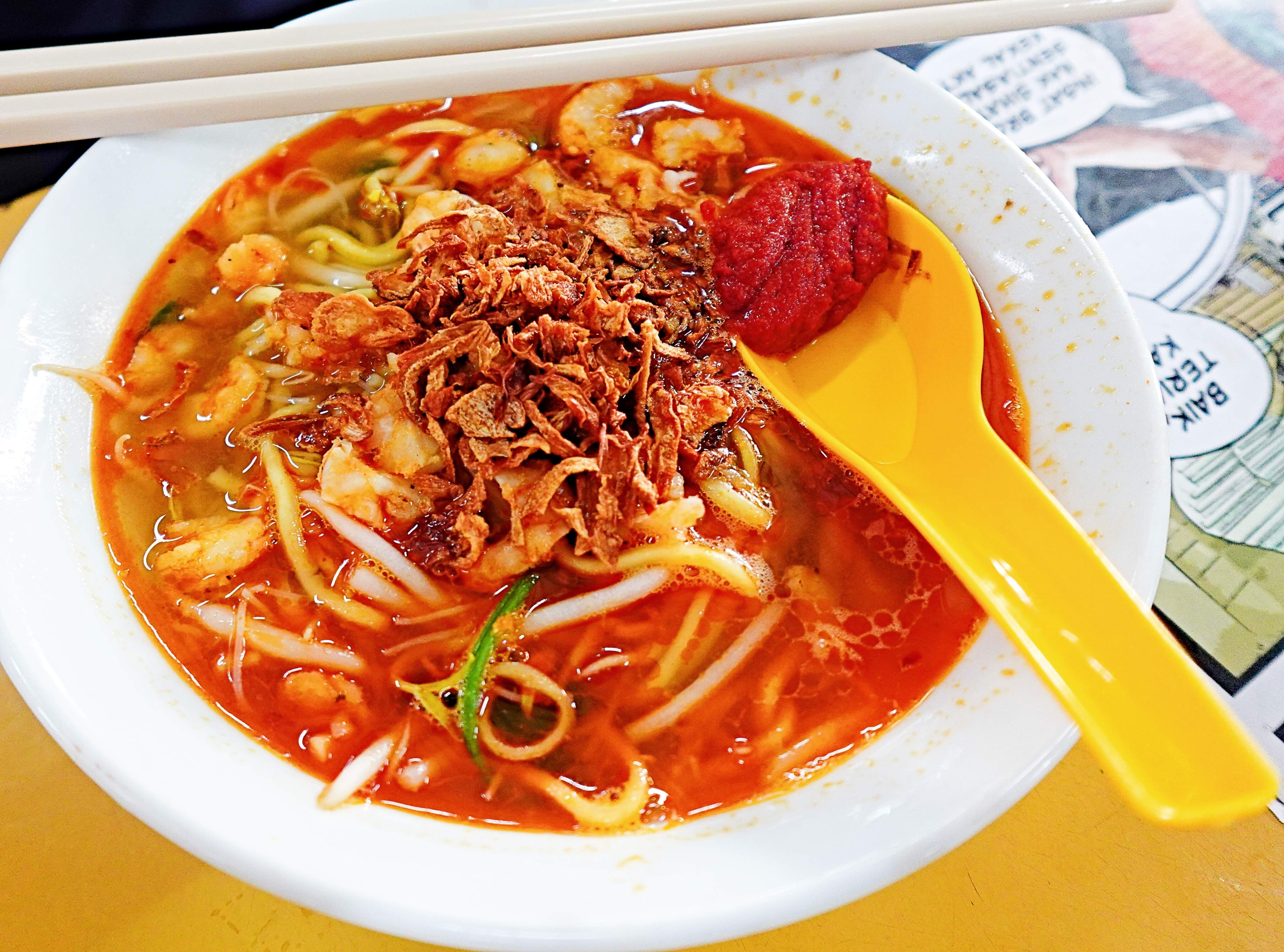
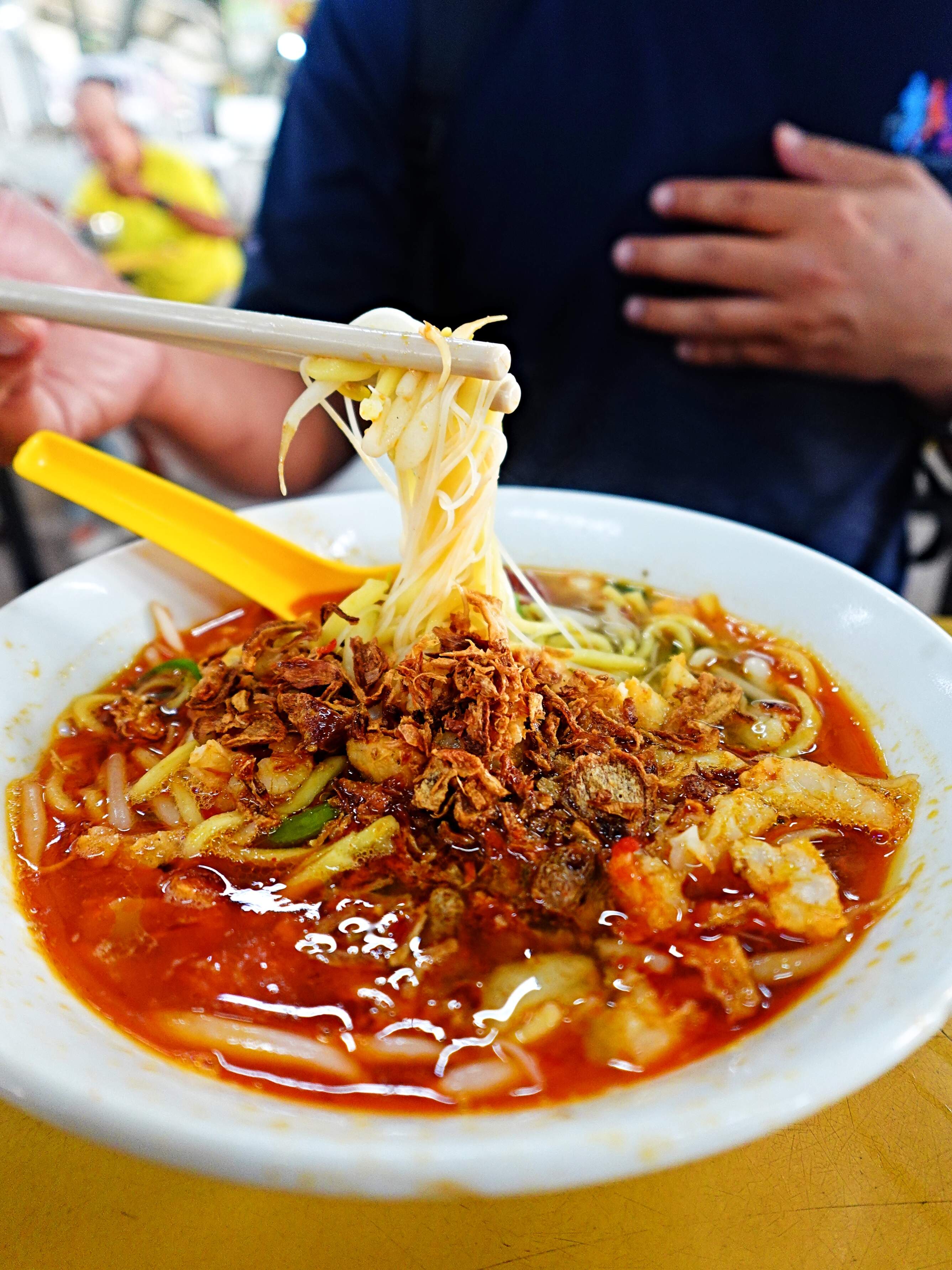
- Hokkien mee - a classic Fujianese prawn noodle dish which consists of a combination of Hokkien yellow noodles, thin rice vermicelli (called ”bee hoon” in Hokkien), and beansprouts, immersed in an intensely-flavored, spicy prawn-pork broth. Garnishes consist of small shrimps, slivers of pork and a wedge of hard-boiled egg, topped with crisp-fried shallots.
-
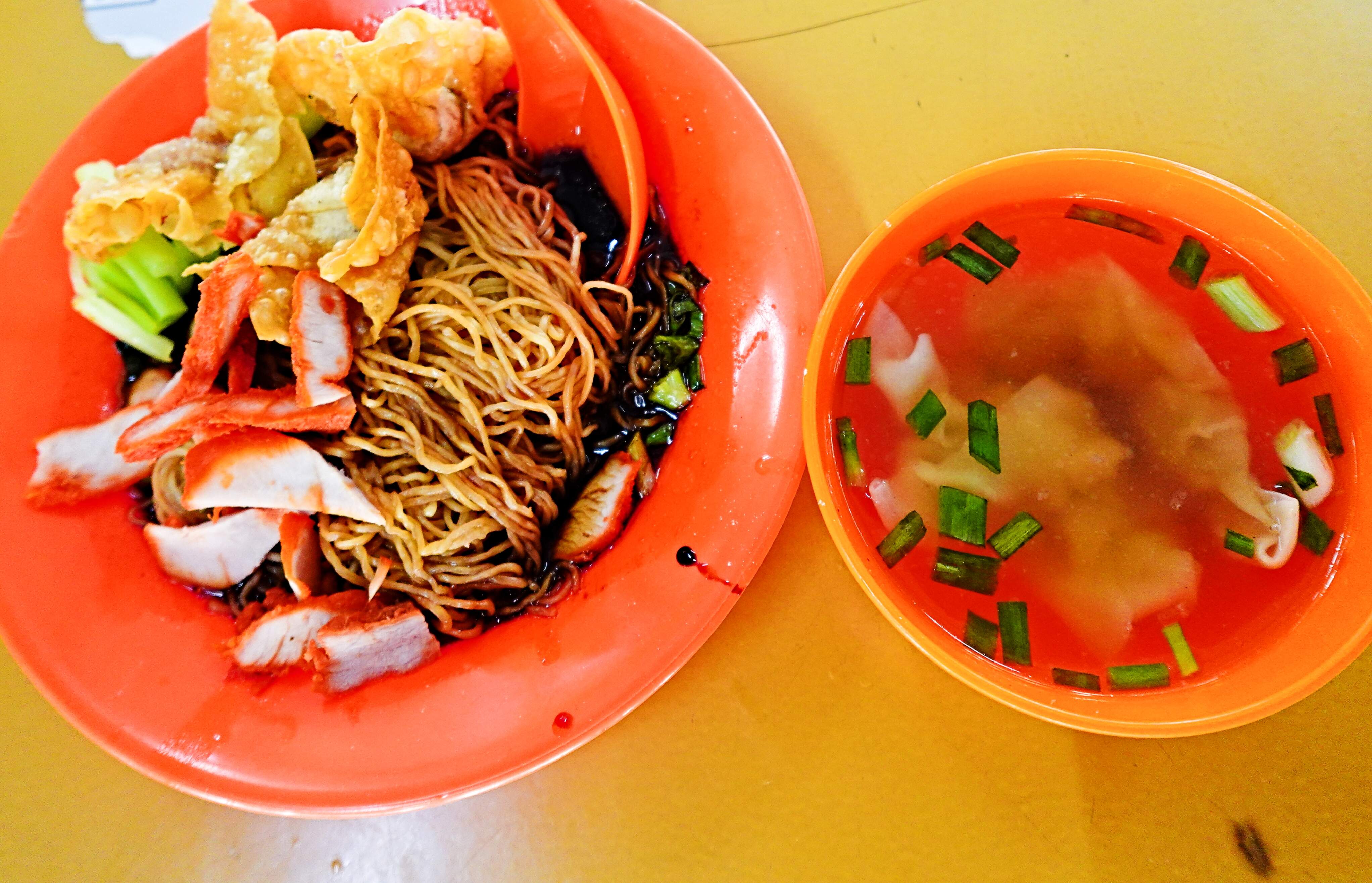
Wantan mee - a very popular breakfast noodle dish of Cantonese origins. The Malaysian adaptation retains the springy-textured wheat flour-based “wantan noodles” and the wantan dumplings that’s de rigeur in Hong Kong or Guangzhou, but there the similarity ends. Malaysian wantan mee is dressed in a dark soysauce-based dressing, with sesame oil, shallot oil and other condiments. Garnishes would include char-siu (Cantonese-style BBQ pork) and choy sum greens. Penang-style wantan mee would also have crisp-fried wantan dumplings, besides the poached ones.
-
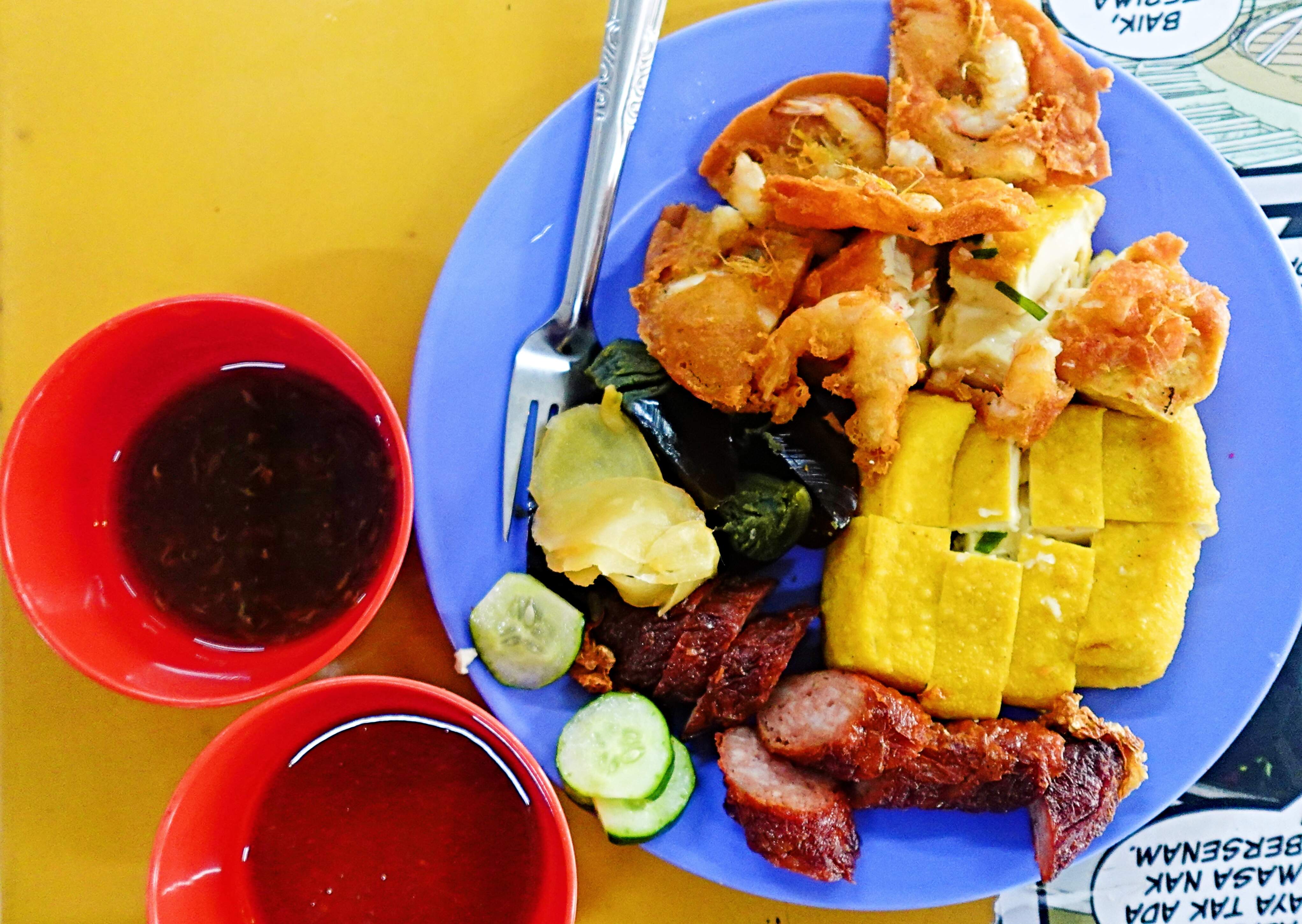
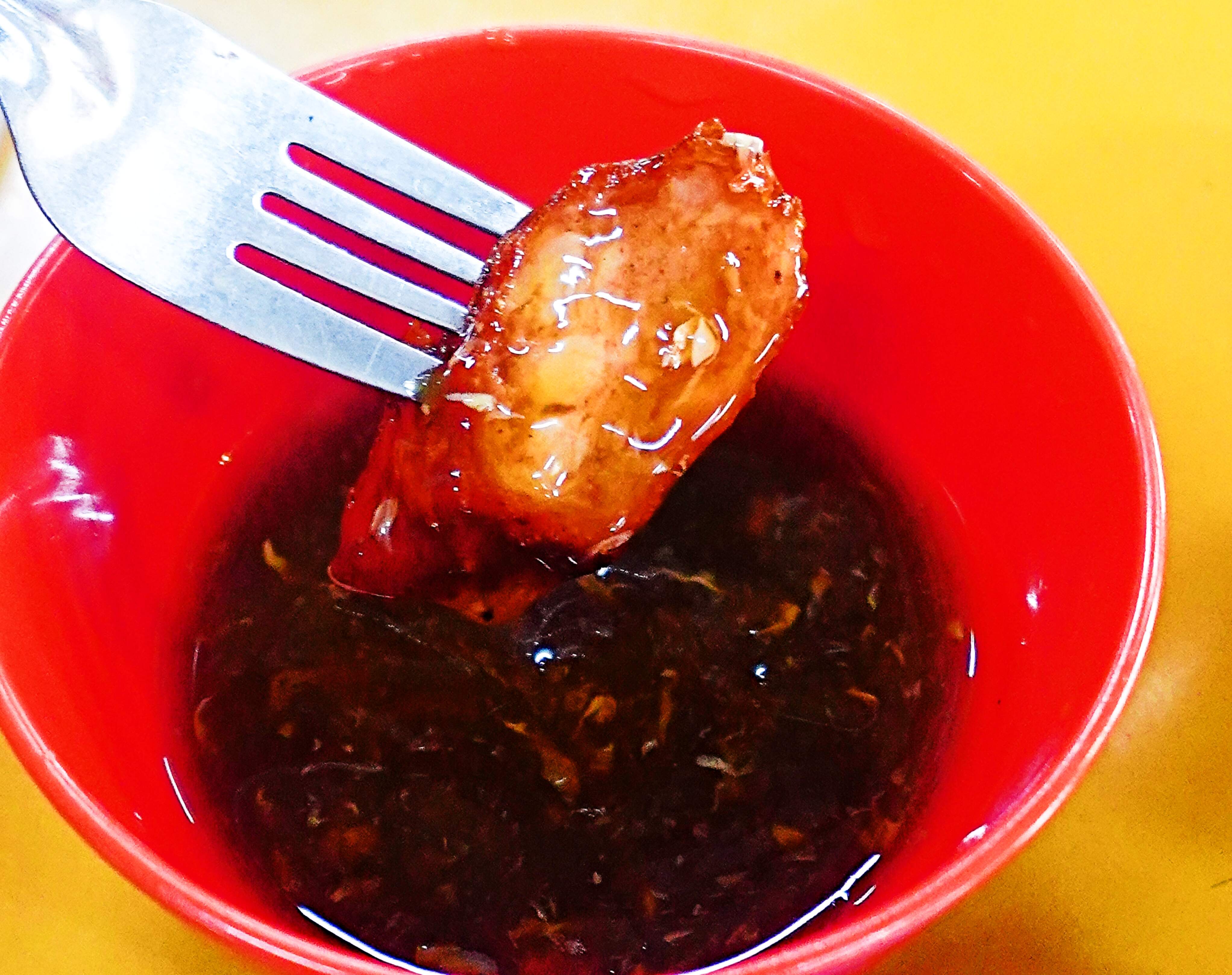
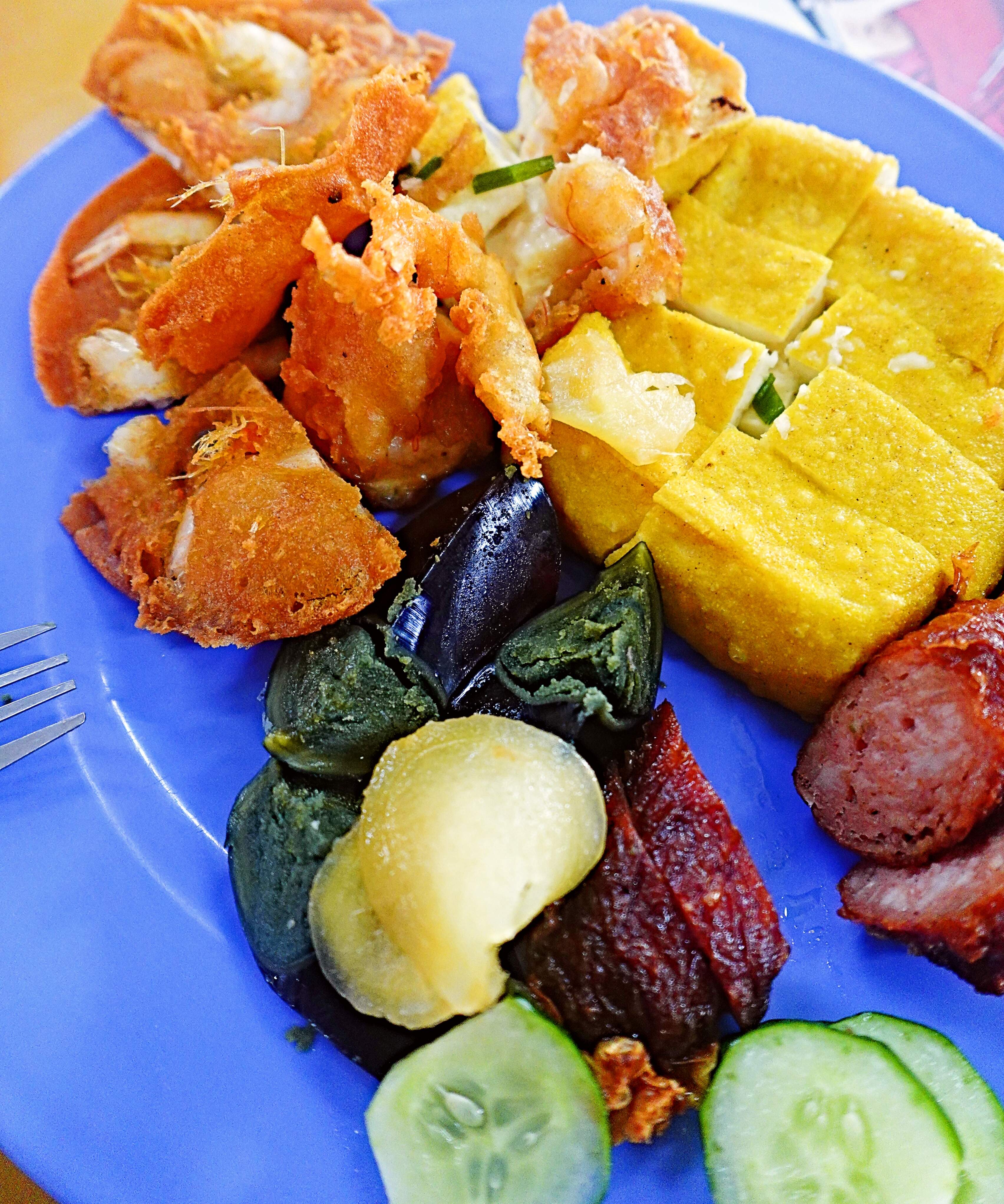
Lor bak - the name of the dish, "lor bak” refers to the signature 5-spiced meat rolls (consisting of pork strips marinated in Chinese 5-spice, then wrapped in beancurd sheets and then deep-fried), plus a variety of deep-fried morsels that, together, make up a lor bak platter.
In Singapore, a similar dish is called “ngoh hiang”, which is Hokkien for “5-spice”. The term used in Singapore is also used elsewhere in the region, including Taiwan and other parts of Malaysia. What makes the Penang version unique is that it has a lor dip: an unctuous brown dipping sauce flavored with 5-spice, dark soy sauce and sugar, thickened with a tapioca flour slurry, and streaked through with egg white ribbons. A standard serving of lor bak in Penang will be accompanied by the savory-sweet lor dipping sauce, and a spicy, red chilli dip.
Dunking the meat-fritter into the lor dipping sauce.
-
Chee cheong fun - another Cantonese breakfast option: steamed rice flour rolls. The Penang version will include three types of sauces to be drizzled over the rolls: a fermented beanpaste sauce, a liquid red chili sauce, and a funky-selling fermented shrimp paste (called “heh koe” in Penang-Hokkien). A generous sprinkling of toasted sesame seeds will provide a nice nutty flavor to the dish. The rendition here is among the best around.
-
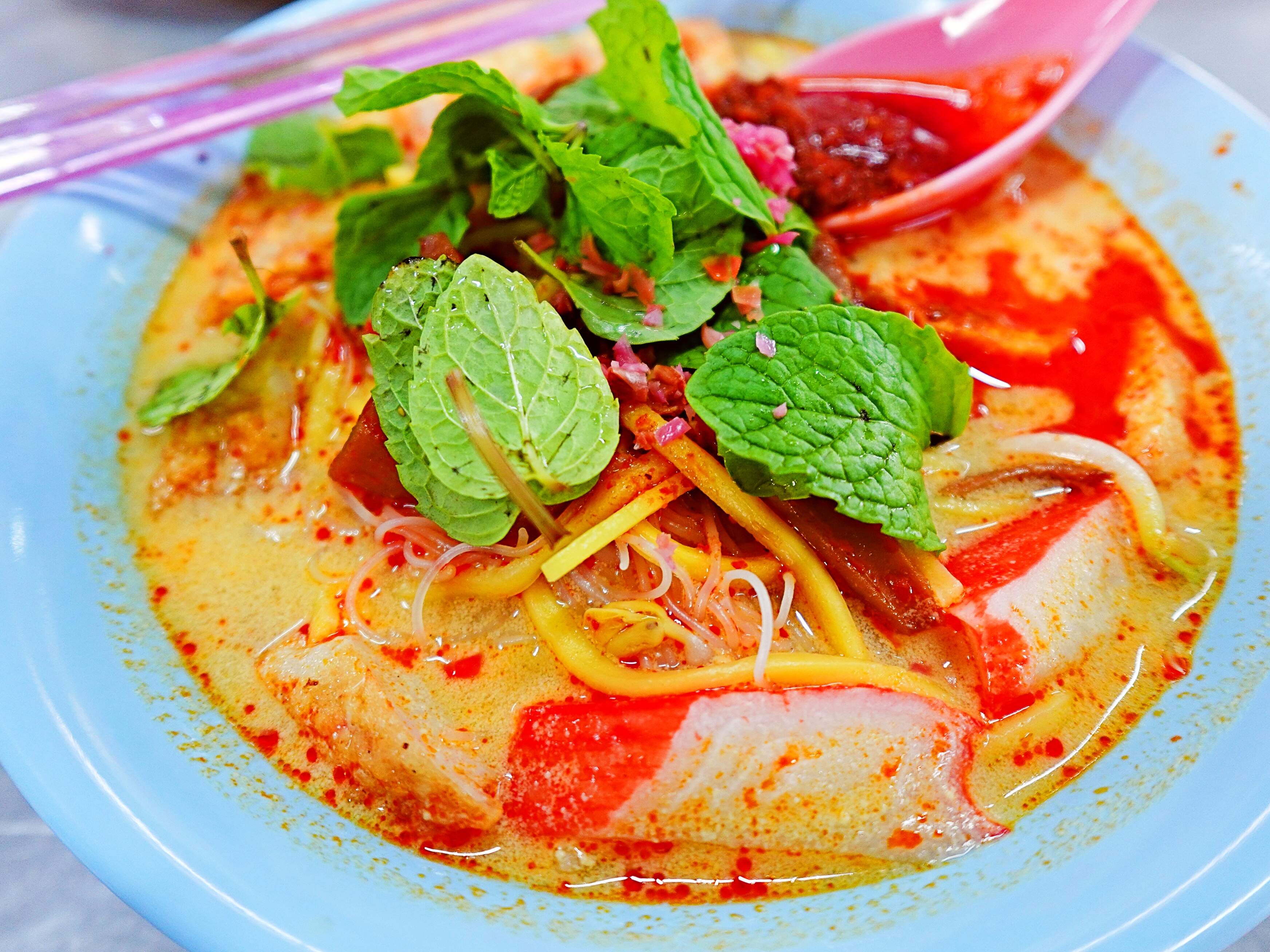
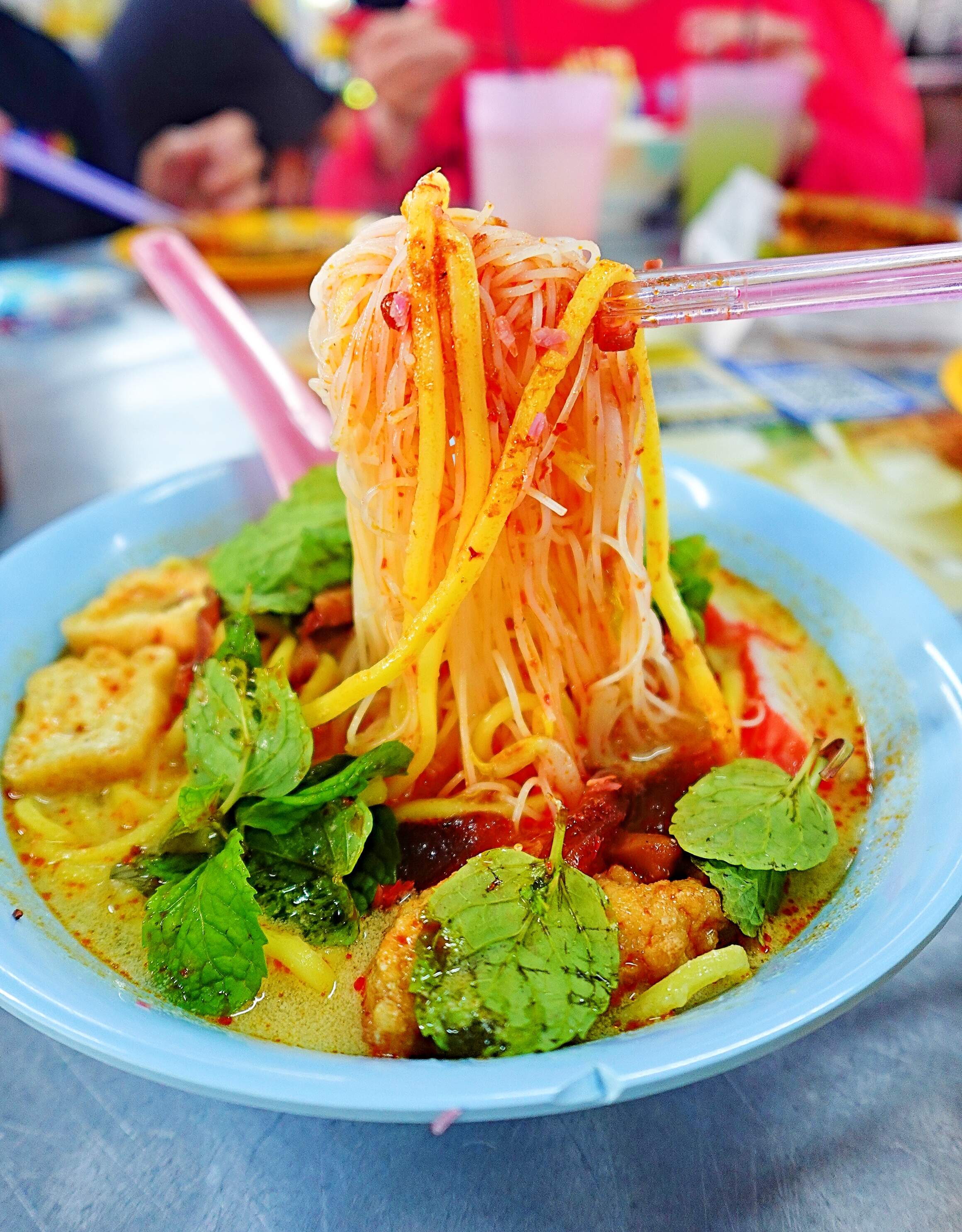
Nyonya curry mee - an interesting version here: a variant of Penang-style curry mee, with its mix of yellow Hokkien noodles, rice vermicelli and beansprouts, in a more herbal version of the curried broth, garnished with fresh mint leaves and finely-chopped pink torch ginger flower.

-
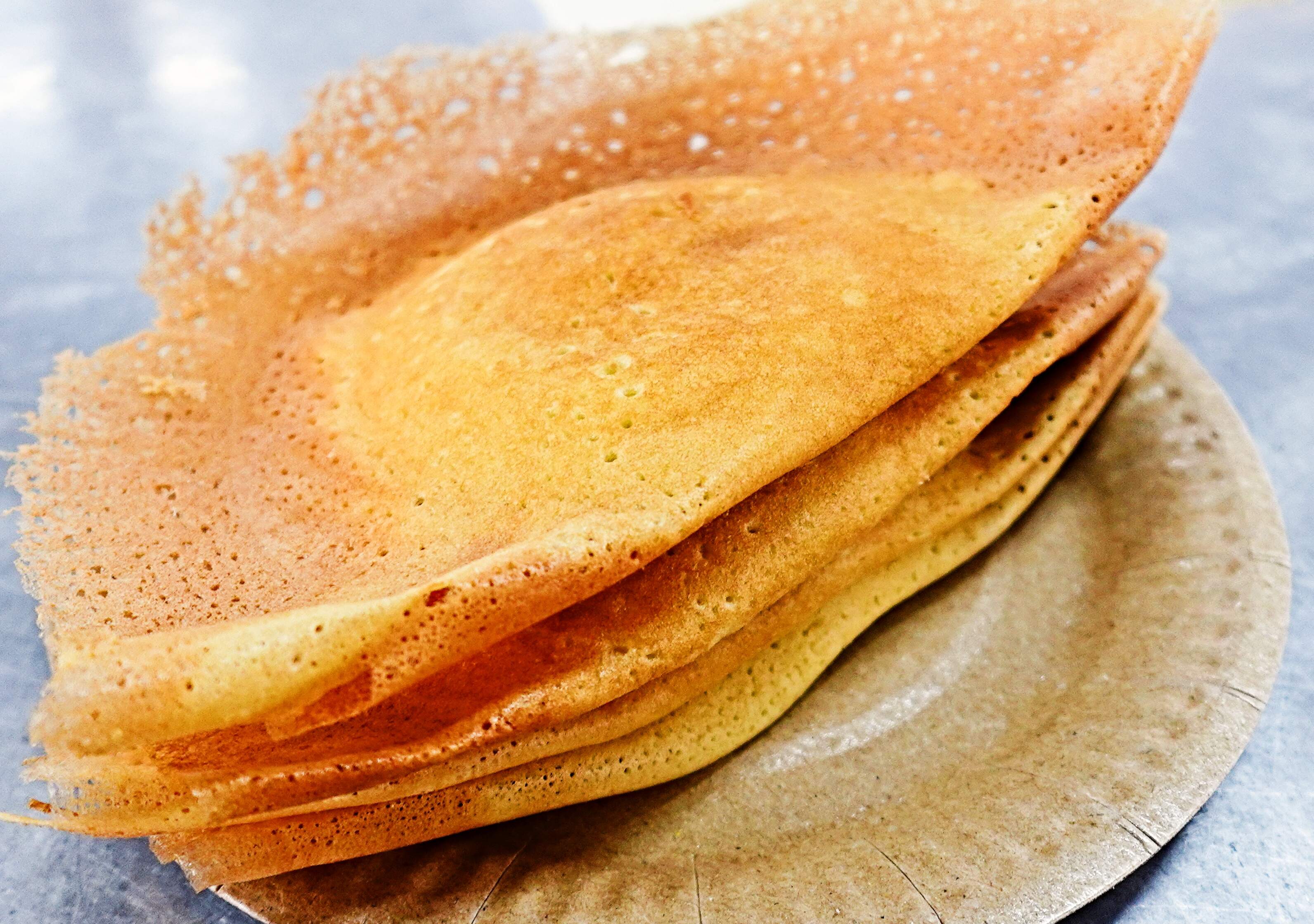
Indian apom - Penang’s Indian apoms are excellent: an eggy adaptation of South Indian/Tamil appam. The Penang version retains the spongey-soft texture and coconutty flavor, but adds eggs and sugar to make these small crepes more aromatic and addictively tasty.
-
Ban chien kueh - the classic Fujianese pancake. ban chien kueh (慢煎粿) is also known as meen chien kueh (面煎粿) in Singapore and dai kao meen (大旧面) in Kuala Lumpur. It is a large, heavy pancake filled with crushed peanuts, sugar, and margarine.
Legend has it that this style of pancake was invented by General Tso Tsung-tang (1812-1885), the same Qing dynasty viceroy who was commemorated in General Tso’s Chicken, a popular dish in Chinese-American restaurants. General Tso did not invent that chicken dish, but he purportedly did invent this pancake dish.
General Tso Tsung-tang started his military career during the Taiping Rebellion in the 1850s. During a Qing military invasion of Fujian, where sugarcane and peanuts were found in abundance, he’d asked the army chefs to fill pancakes with sugar and peanuts in order to feed his hungry Qing troops.

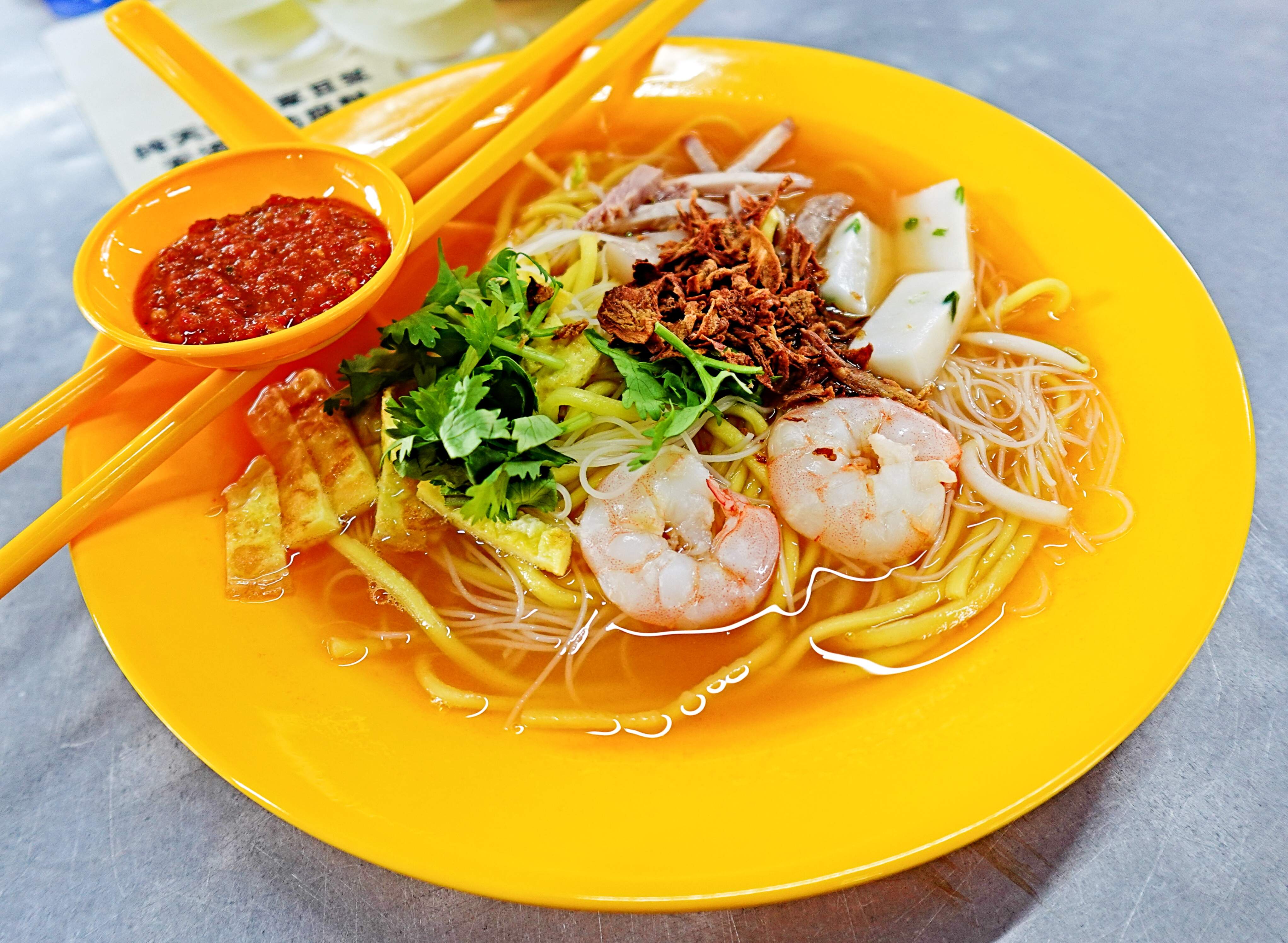
- Lam mee - a light noodle dish which consists of the signature Hokkien mix of yellow wheat mee and rice vermicelli, bathed in a light pork-prawn broth, garnished with prawns, pork, egg omelette strips, beansprouts, parsley, scallions and shallots. A dollop of sambal-belachan (chilis-fermented shrimp paste puree) gives the dish its spike of heat.
Still too many other breakfast options to try there. We barely scratched the surface of what are available there.
Address
Ayer Itam Market Food Court
Jalan Pasar, Pekan Ayer Itam, 11500 Ayer Itam, Penang, Malaysia
Operating time: 6.30am to 2pm, daily. Varying hours for different stalls, but best visiting time is during peak morning market hours: 8am to 10am.

