I had dinner at Nisei this weekend. Nisei is a Japanese-California fine dining restaurant from chef David Yoshimura, who was formerly chef de cuisine at Californios and who previously worked at the kaiseki restaurant Kagurazaka Ishikawa in Tokyo. The name of the restaurant reflects chef Yoshimura’s heritage as a second-generation Japanese American and also the ethos of the restaurant, which combines Japanese techniques and local ingredients. This was my second visit to Nisei, which was awarded one Michelin star in 2022.
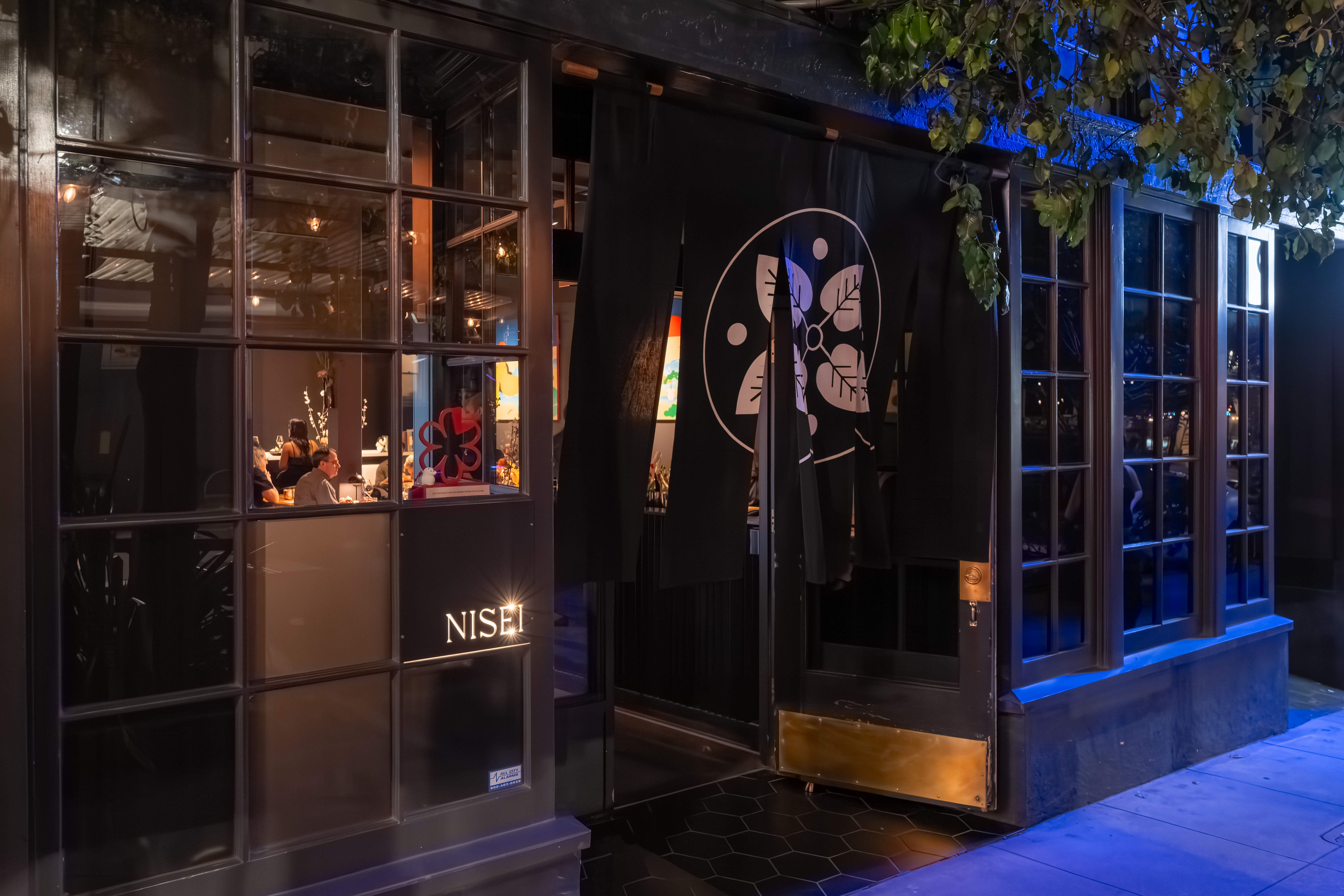
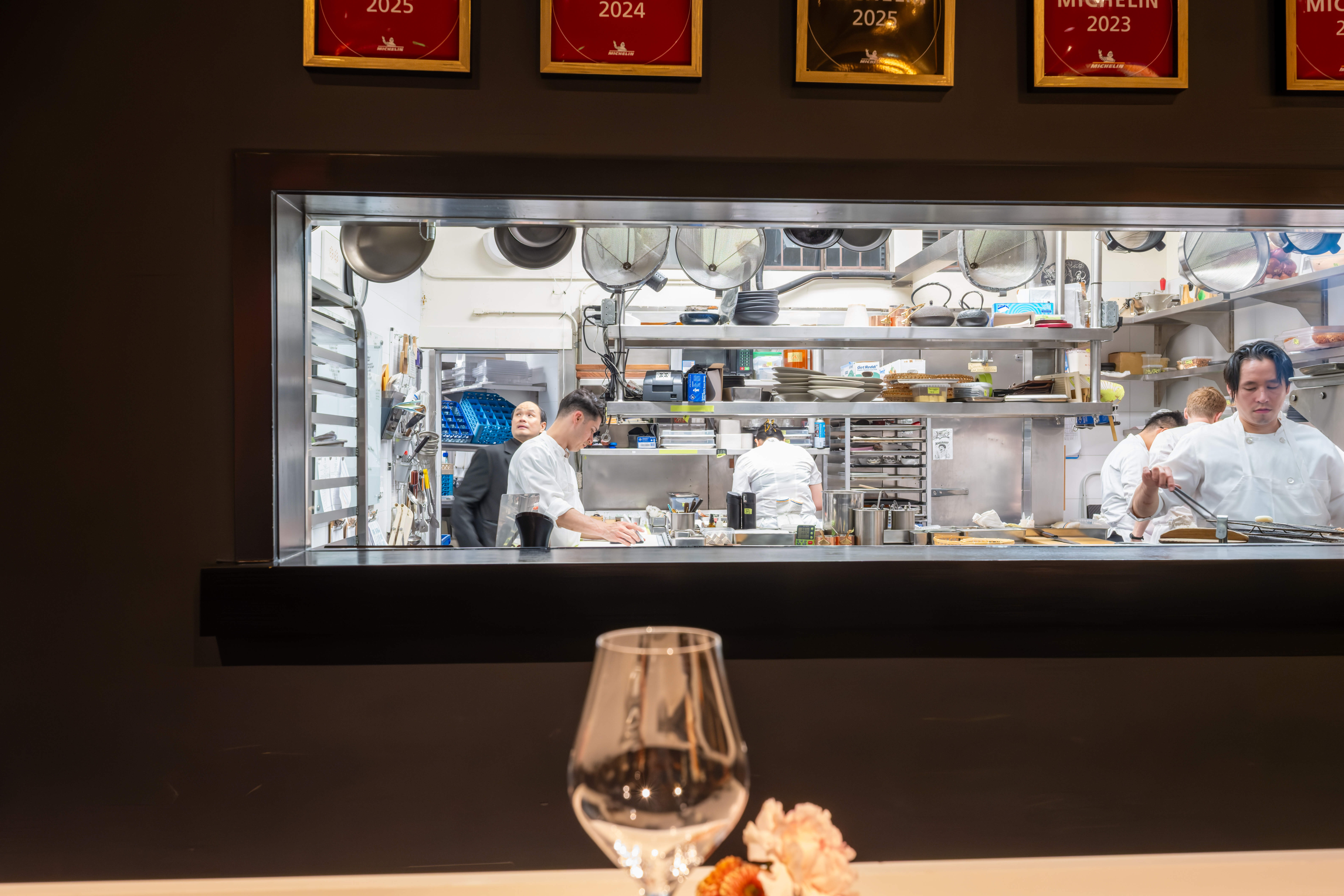
Prepaid reservations are made on Opentable. I opted for the seasonal tasting menu ($326.40 including 20% service, before tax) and sat at the counter, which has a view of the kitchen. To drink, I added the non-alcoholic beverage pairing ($165), which looked interesting.
Note: The descriptions in italics are the non-alcoholic pairings and were copied from the menu.
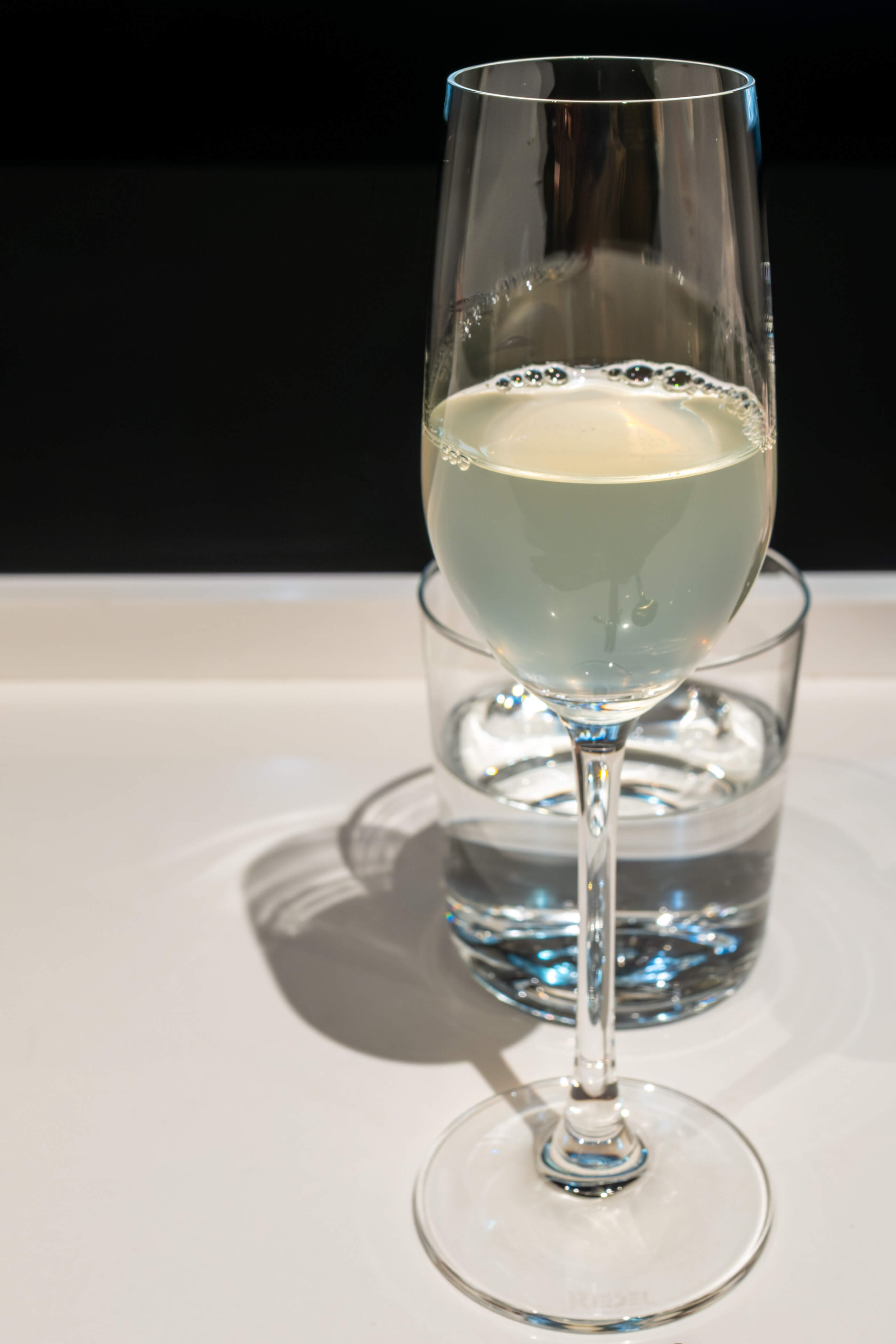
Dinner starts with a choice of aperitif. There was a choice of a sparkling brut riesling from Balthasar Ress and a n/a option - LYSERØD sparkling tea from Copenhagen Sparkling Tea Company. I chose the riesling.

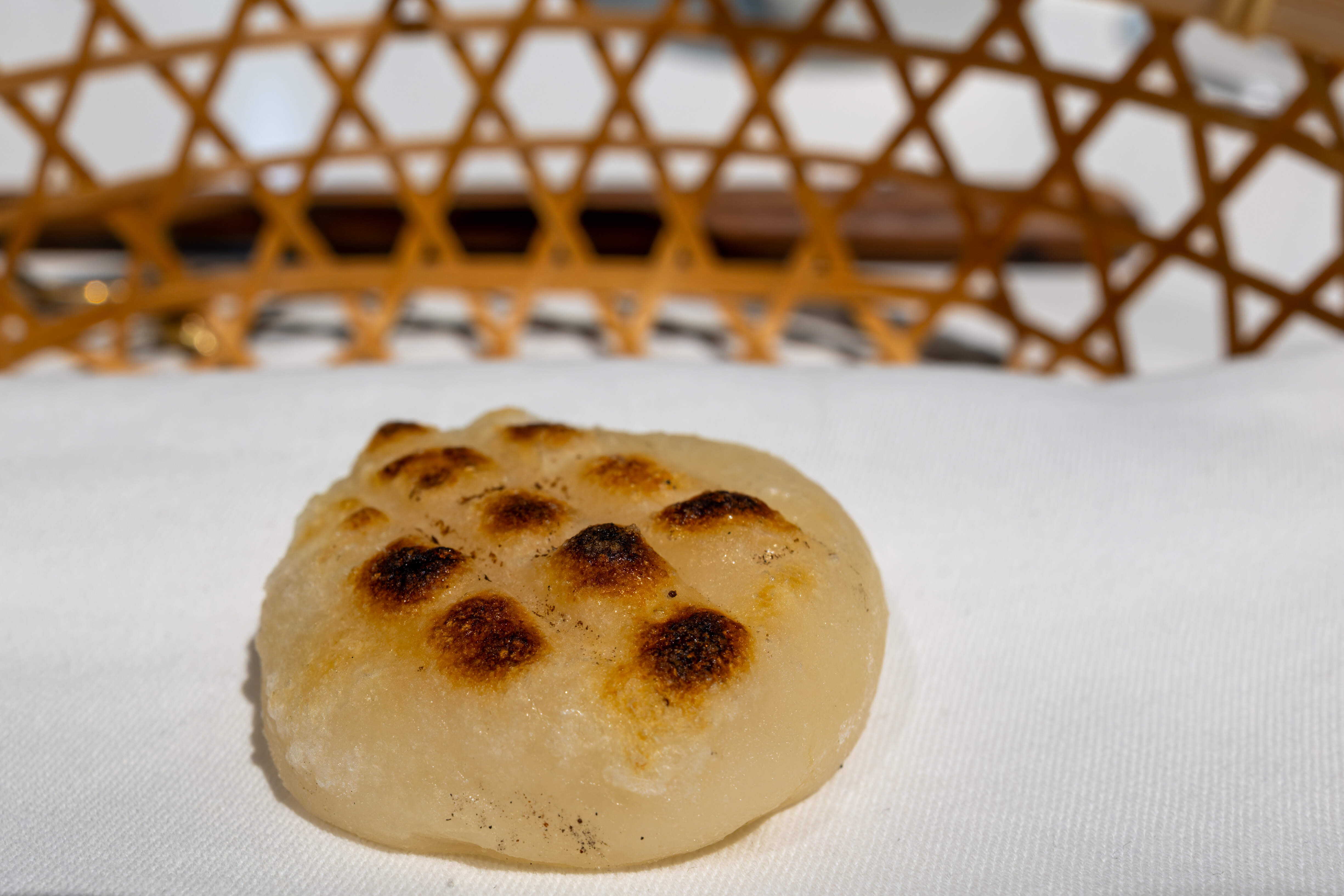
Bread and butter was served. This was a grilled sourdough mochi, made with sourdough starter and glutinous rice. It was warm and a little chewy - as mochi is - and had a sourdough tang. It was served with a sweet koji butter atop shoyu.
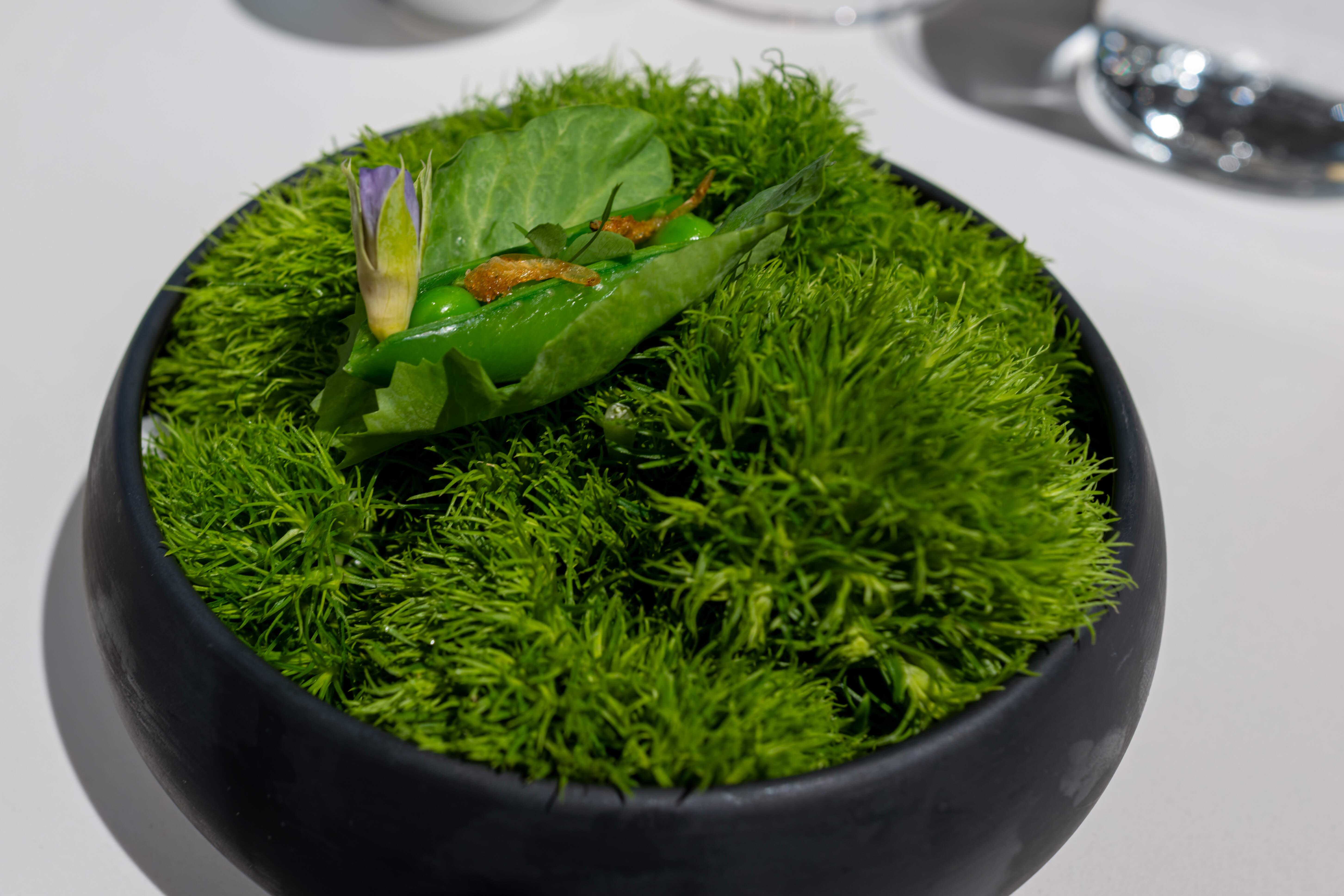
Snap Pea. Crispy Ebi.
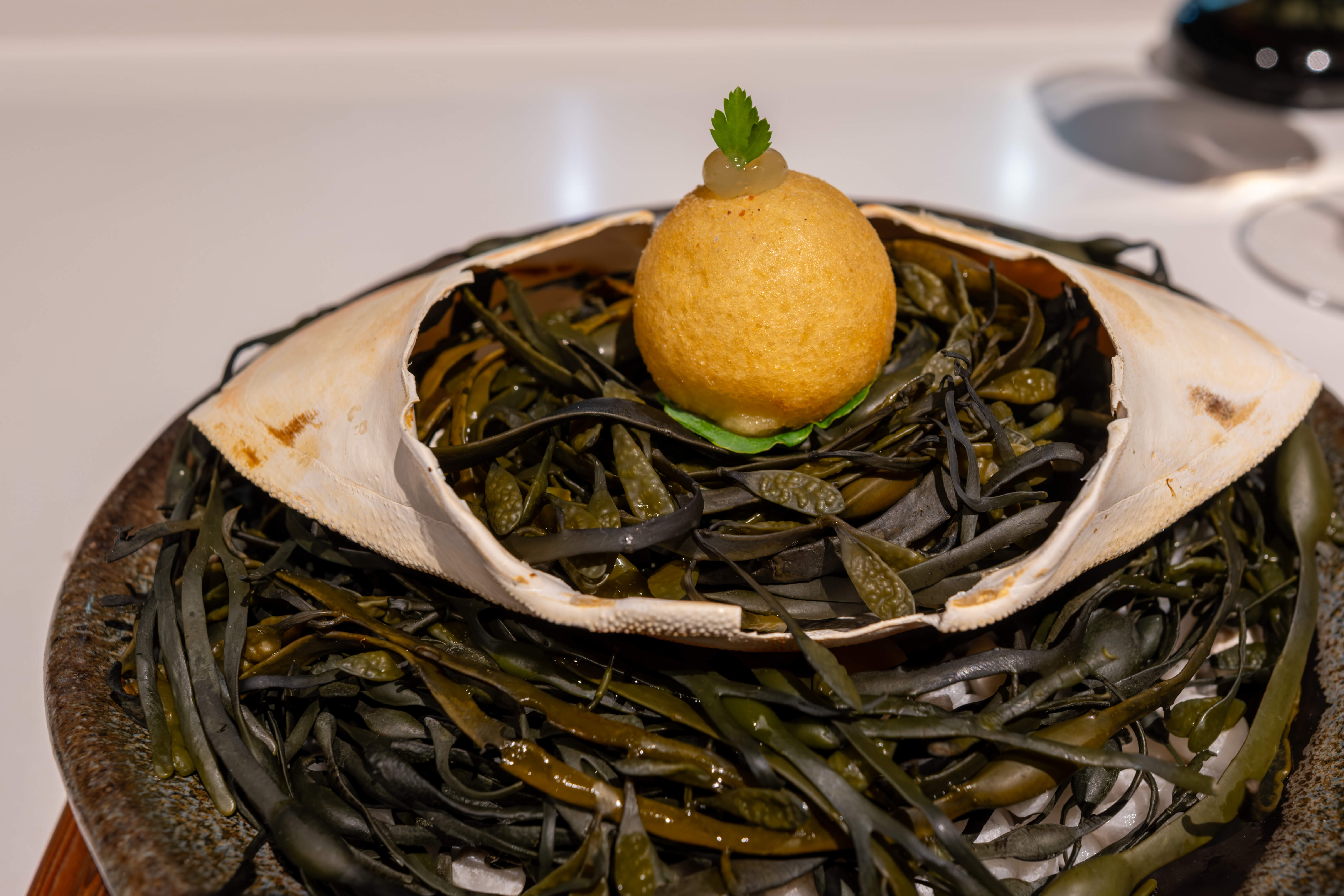
Mint Dungeness Crab Andagi. Yuzu Kosho
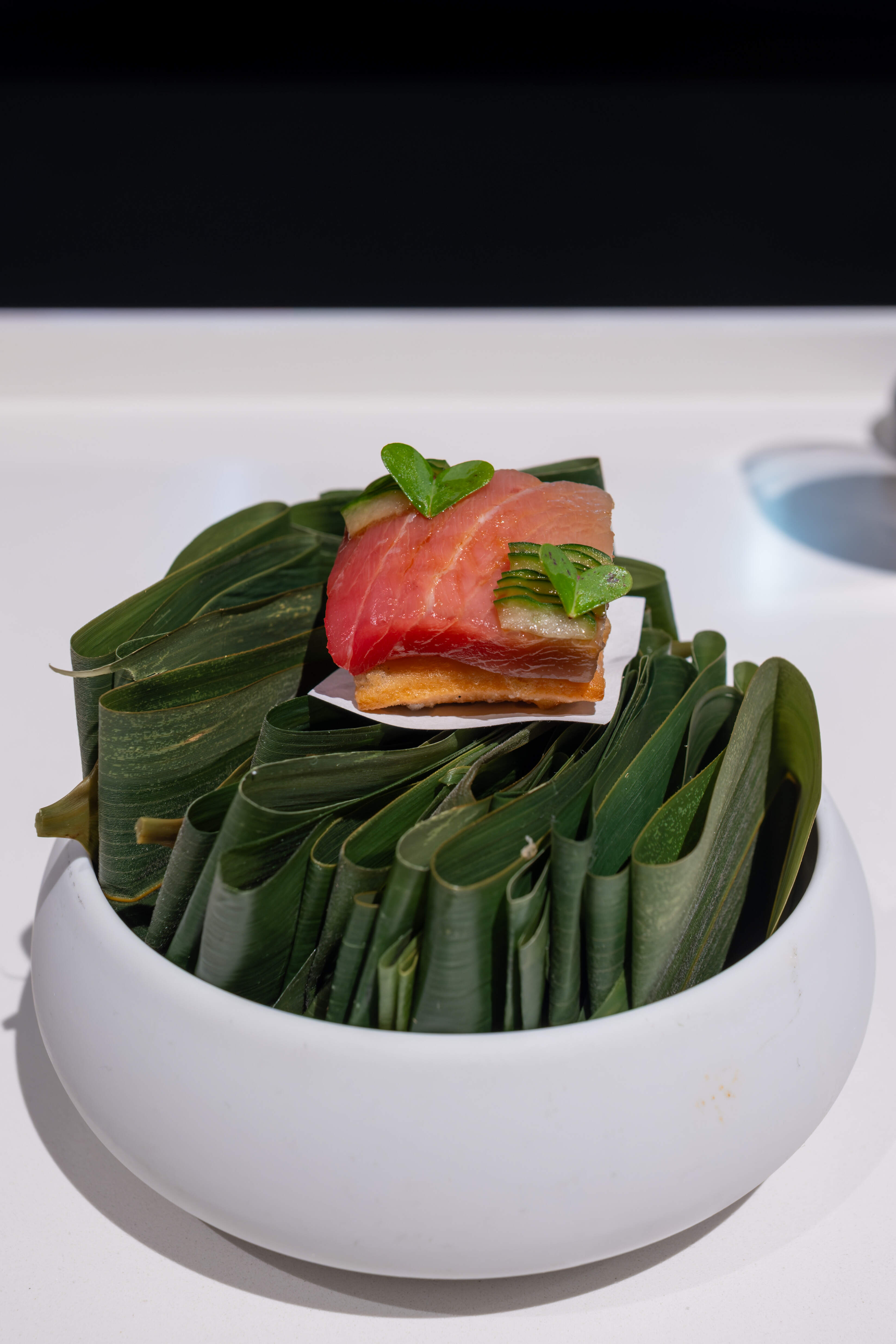
Senbei. Tuna. Cucumber. Goma-ae
To start, three bites. First, a snap pea with tiny crispy fried shrimp, sprinkled with pea wasabi powder, and which was meant to taste a bit like wasabi flavored peas. This was a nice sweet bite of spring. I didn’t really taste the wasabi though.
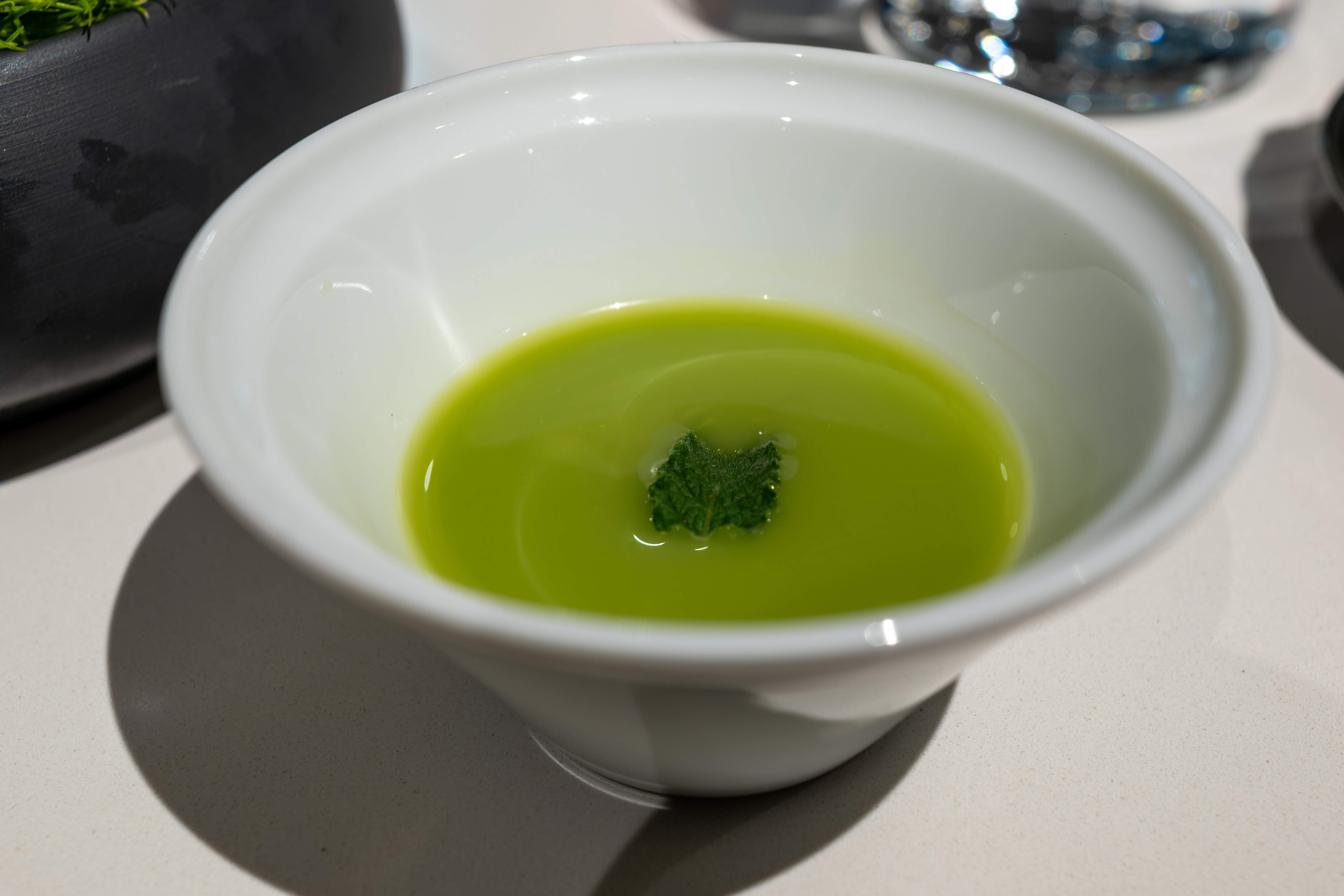
It came with a green drink that tasted like essence of peas with a little mint.
The second bite was an andagi - a type of doughnut from Okinawa - filled with Dungeness crab and crab “butter.” This was a delicious bite of plentiful sweet Dungeness within a delicate shell, with a yuzu kosho gel on top. It was beautifully presented in a crab carapace on a bed of seaweed.
The last bite was my favorite of the three. This was senbei / rice cracker covered in nori, with goma ae / spinach in sesame sauce, and cucumber, topped with a piece of tuna belly - chutoro IIRC. Delicious! The tuna was rich and flavorful, and very nice with the crispy cracker. It was also beautifully presented.
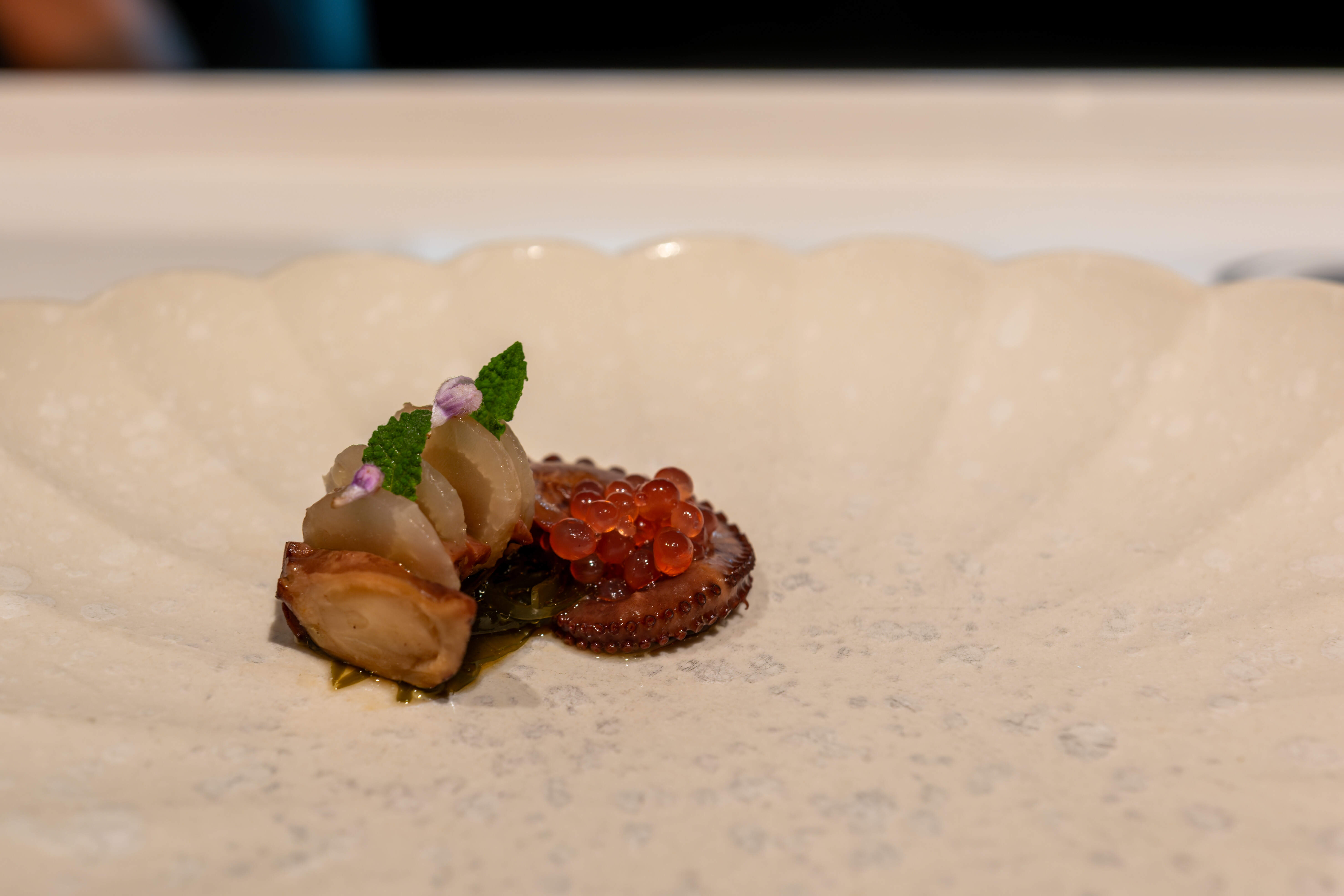
Tako Sunomono. Green Strawberry
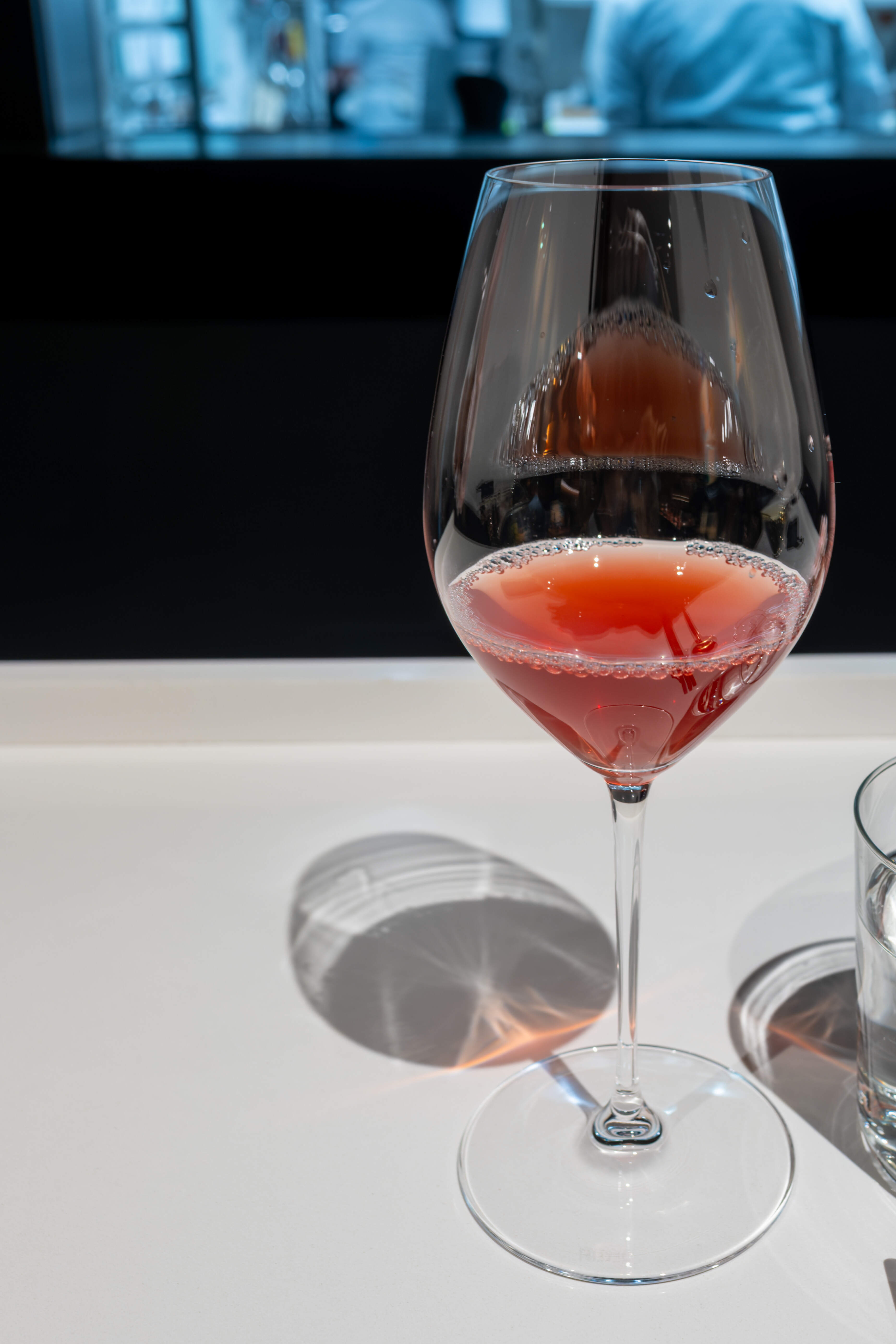
Nagano: Damrak ‘0.0’ N/A Gin. Rhubarb
Raspberry Leaf. Verjus
The next dish was octopus. There was an octopus tentacle with blood orange “caviar.” This was one of several dishes brought out and described by chef David which was pretty cool. The octopus was perfectly cooked, and a very nice bite.
The pairing for this course was a concoction made with mock “gin” and rhubarb with verjus. There was a bit of sweetness from the rhubarb that complemented the octopus nicely.
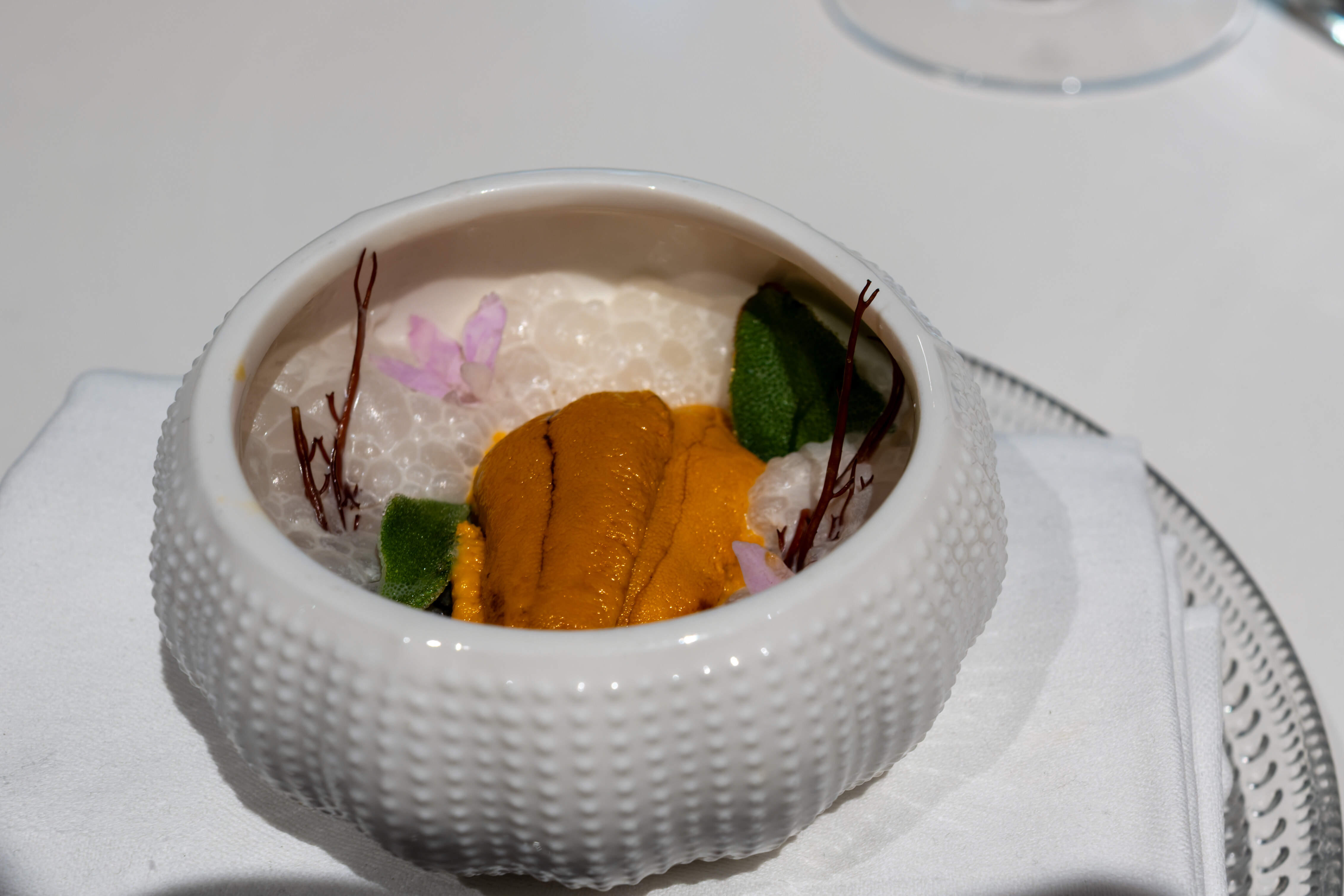
Eat More Uni! Foraged Seaweed. Almond
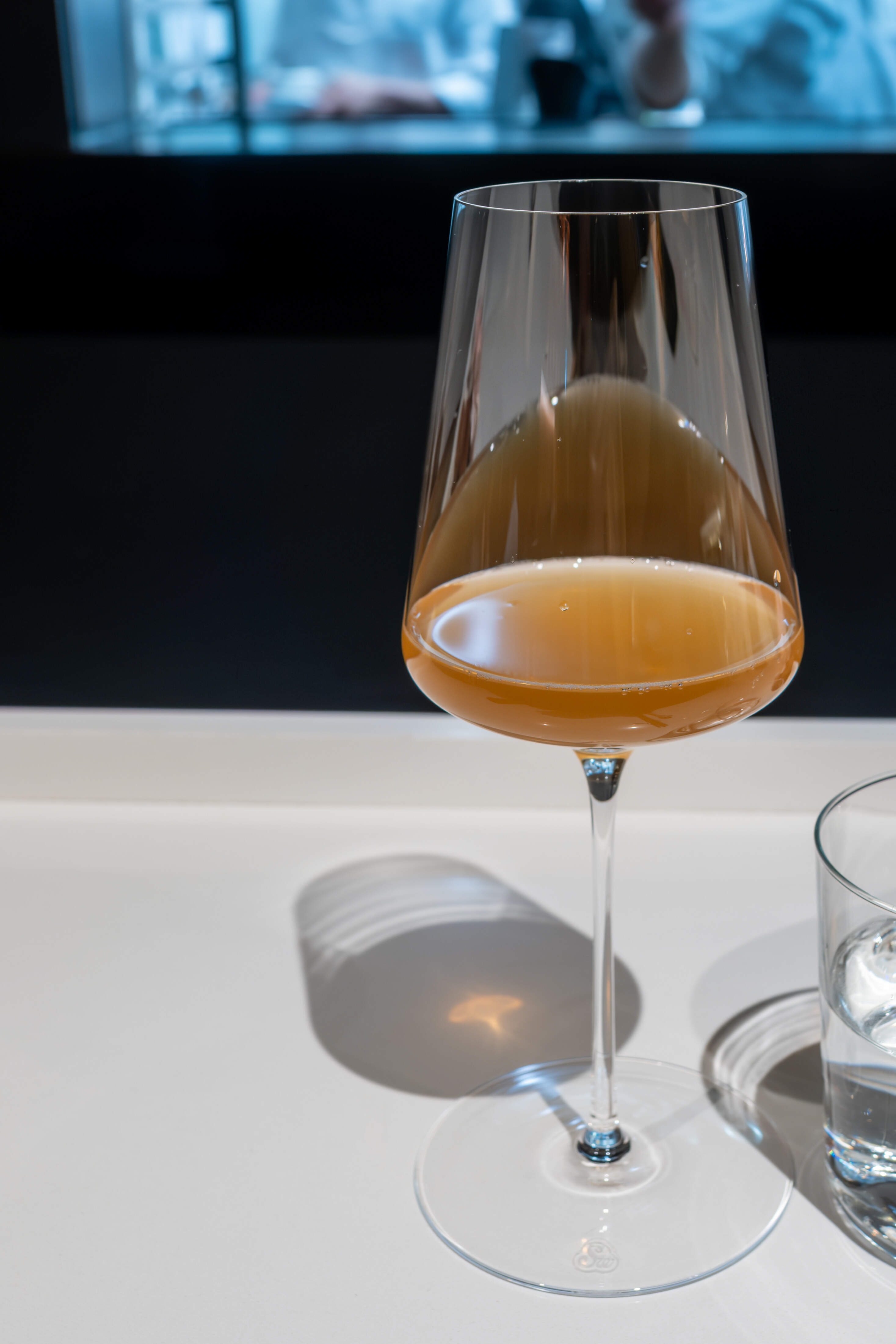
Villbrygg ENG 02
Oslo, NOR (Meadowsweet, Fireweed, Sweet Vernal Grass)
The next dish was locally foraged kombu and uni, specifically purple urchin I believe, a species that is eating up kelp forests in California due to overpopulation. Well I did a small part in population control by eating this one, which was in an almond milk foam atop candied almonds. This was delicious. The slightly briny sweetness of the uni was complemented nicely by the slightly sweet almond milk sauce and candied almonds.
This was the pairing for this dish, which was from Norway but about which I took no notes.
Green Tomato. Hog Island Oyster. Kuzu Noodle
Yamagata: Seedlip Garden 108. Fennel
Elderflower. Yuzu
The next dish featured green tomatoes, a reference to chef David’s upbringing in Texas. There was a very nice green tomato tempura with powdered green tomato, and a lightly smoked Sweetwater oyster from Tomales Bay within a savory green tomato dashi with jelly-like noodles made with kuzu / arrowroot.


The pairing for this dish was made with Seedlip garden “gin” and fennel with a touch of citrus from yuzu.
Omurice. Caviar. Vegetable Demi-Glace
Domaine Dupont Jus de Pomme Pétillant
Normandy IGP, FRA 2024 (Sparkling Apple)
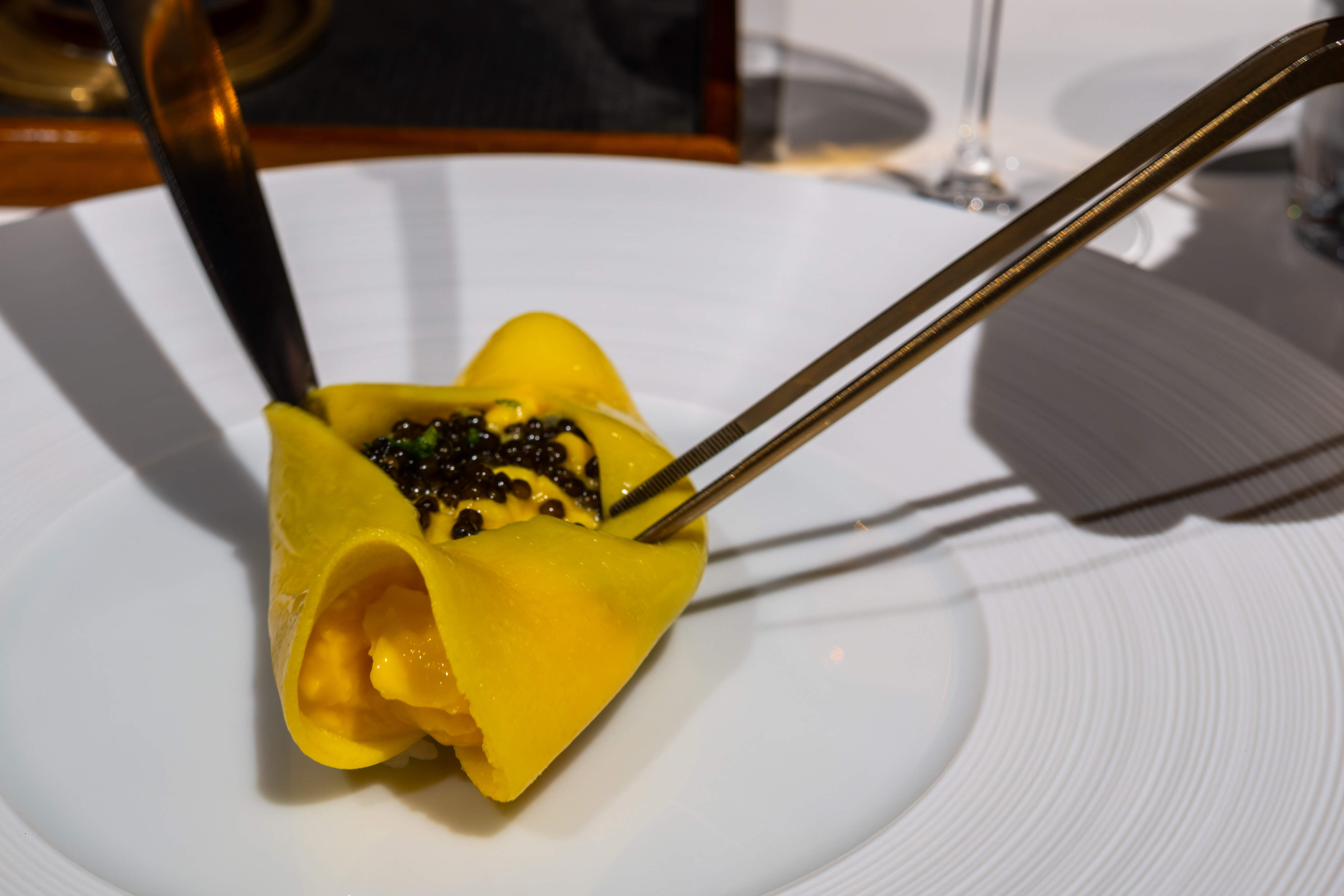
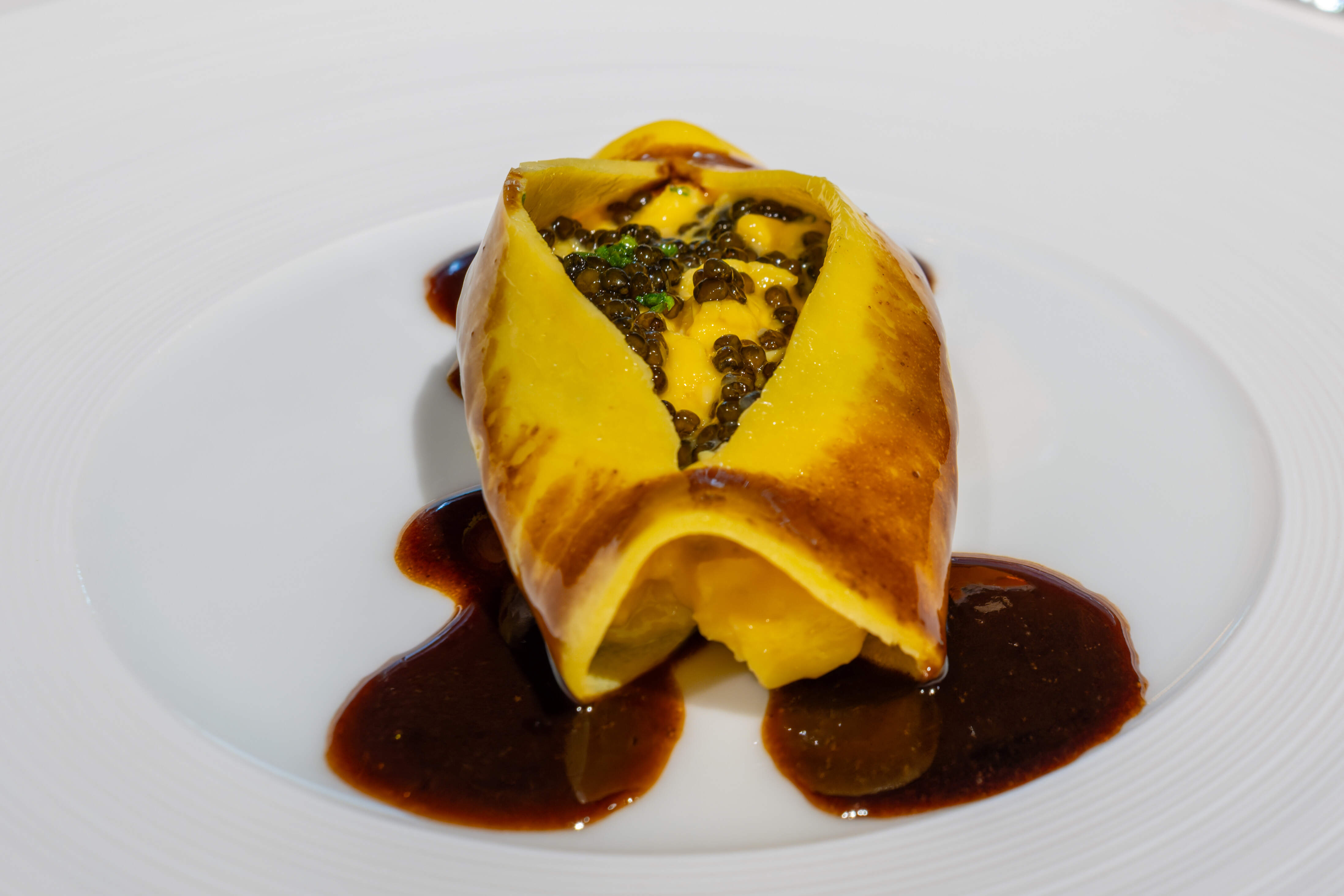
The next dish was the fanciest “omurice” that I’ve ever had. This had a bed of Koshihikari rice from Luna in Sacramento, topped with a sheet of egg which encased more custardy egg and Osetra caviar from Tsar Nicoulai, also from the Sacramento region. A very “nisei” dish creating a Japanese comfort food interpretation using local ingredients.
Here’s a slideshow of the presentation. The omelette was sliced lengthwise, exposing the caviar within. A vegetable “demi-glace” was then spooned on top.
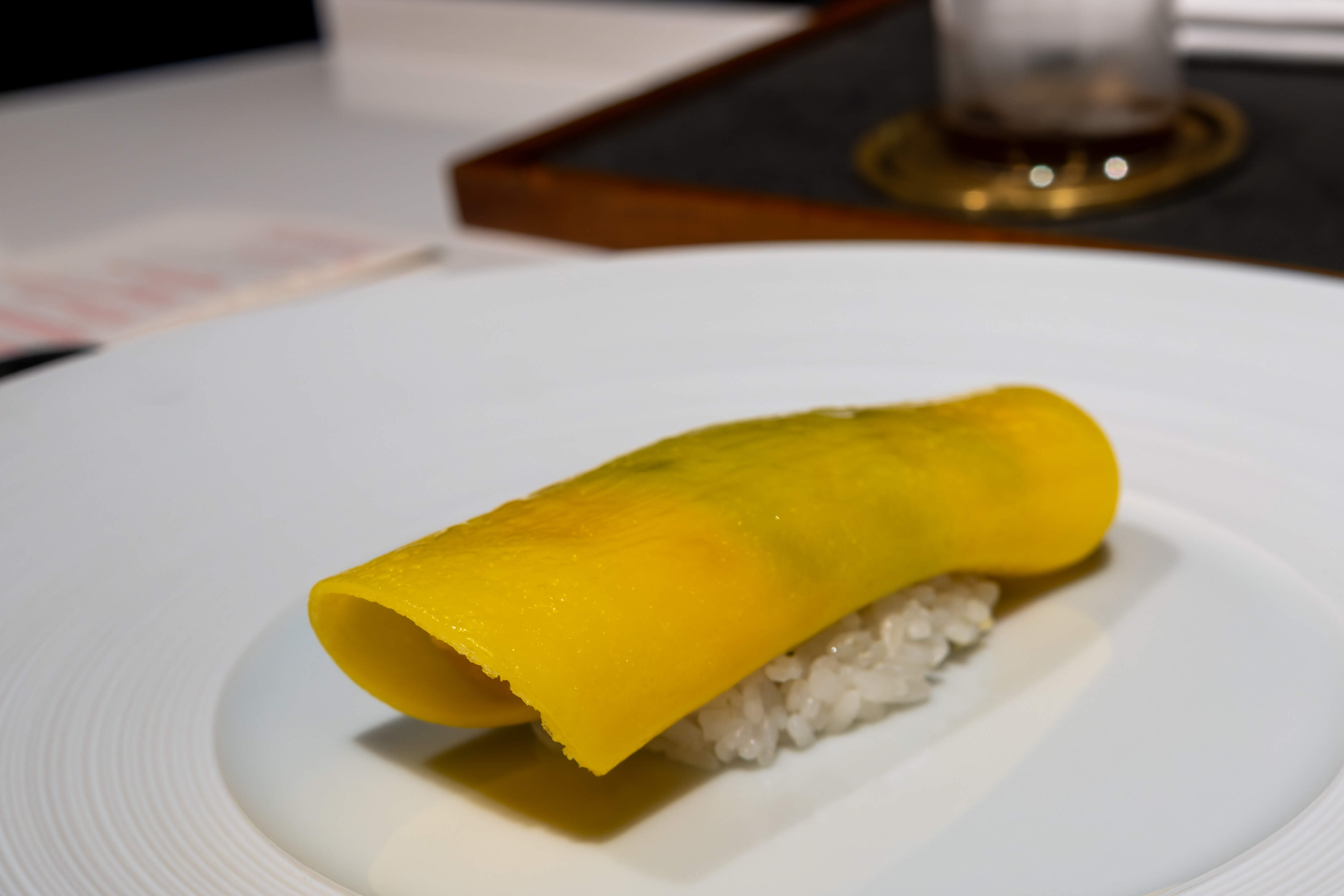
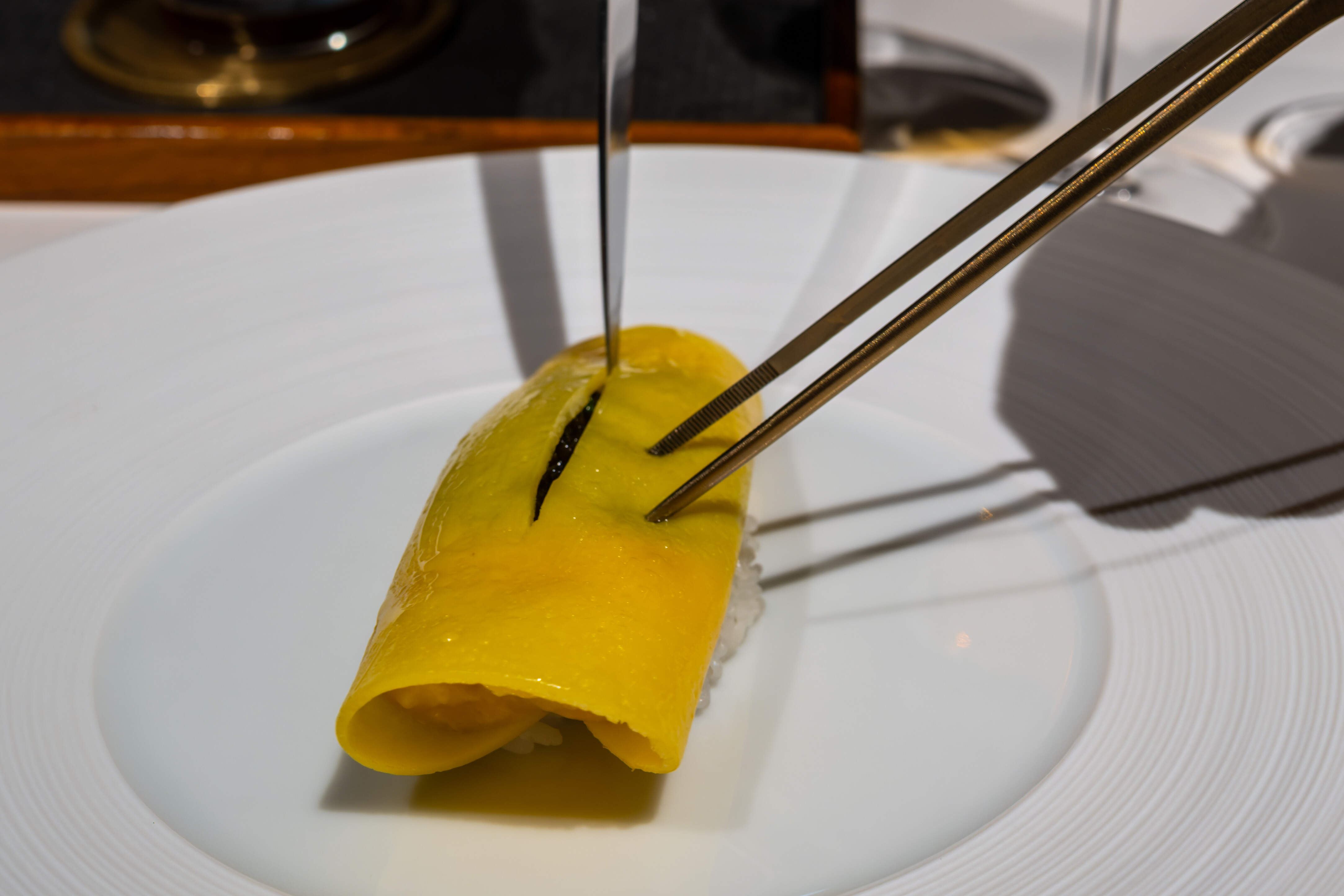
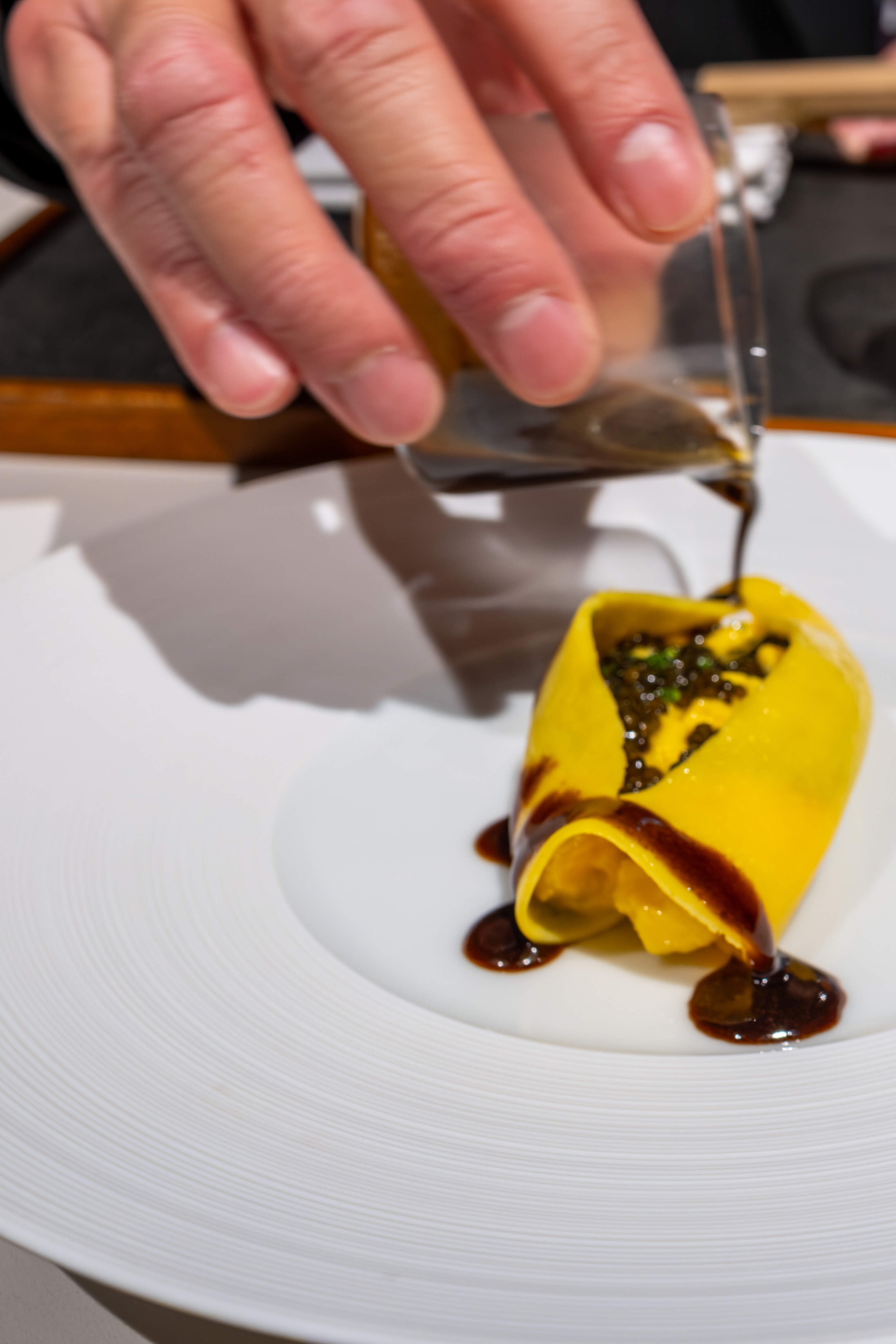
This was luxurious and delicious. It was a little like a tamago nigiri with the excellent rice on the bottom. The vegetable demi was rich and meaty and also had a bit of acid.
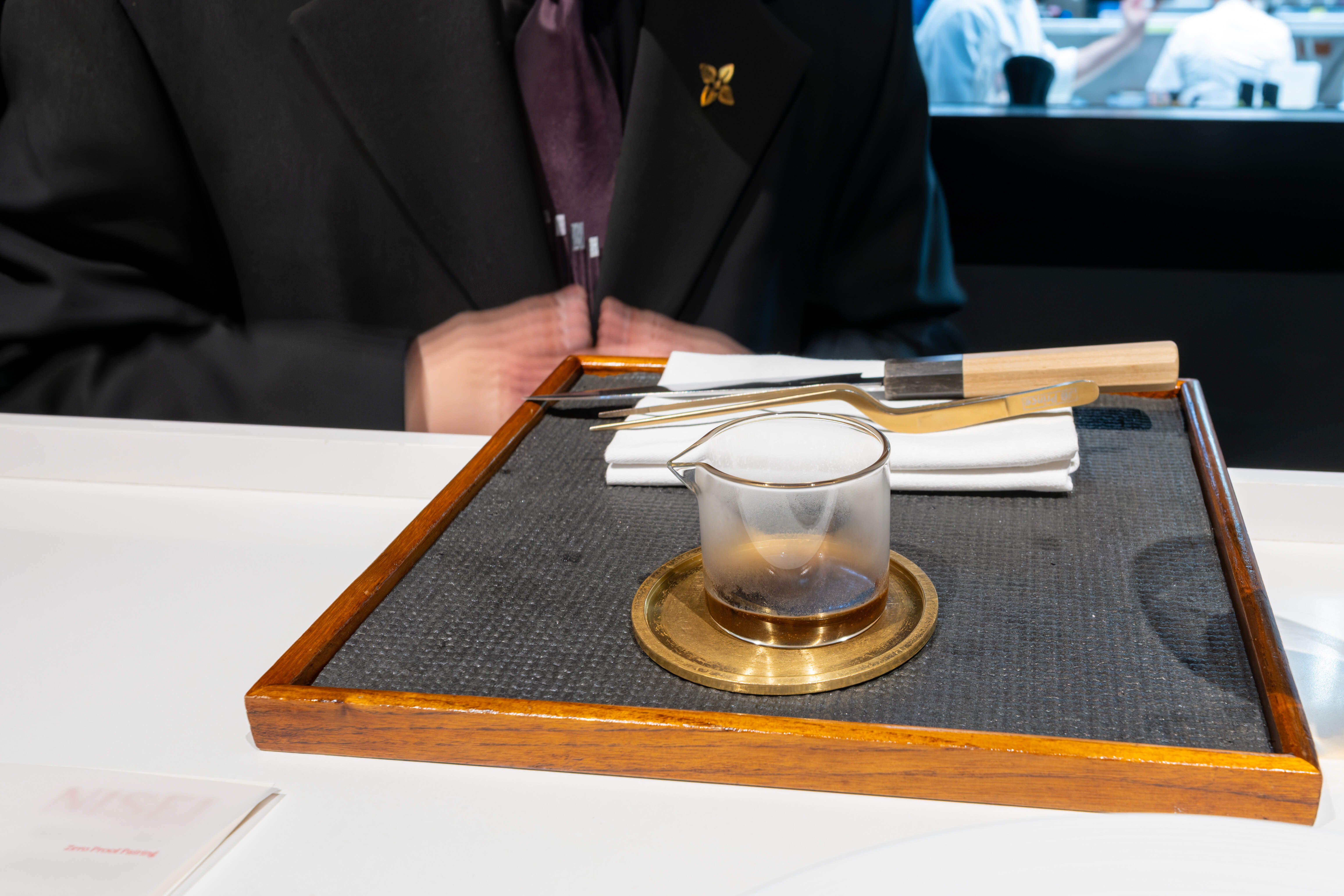
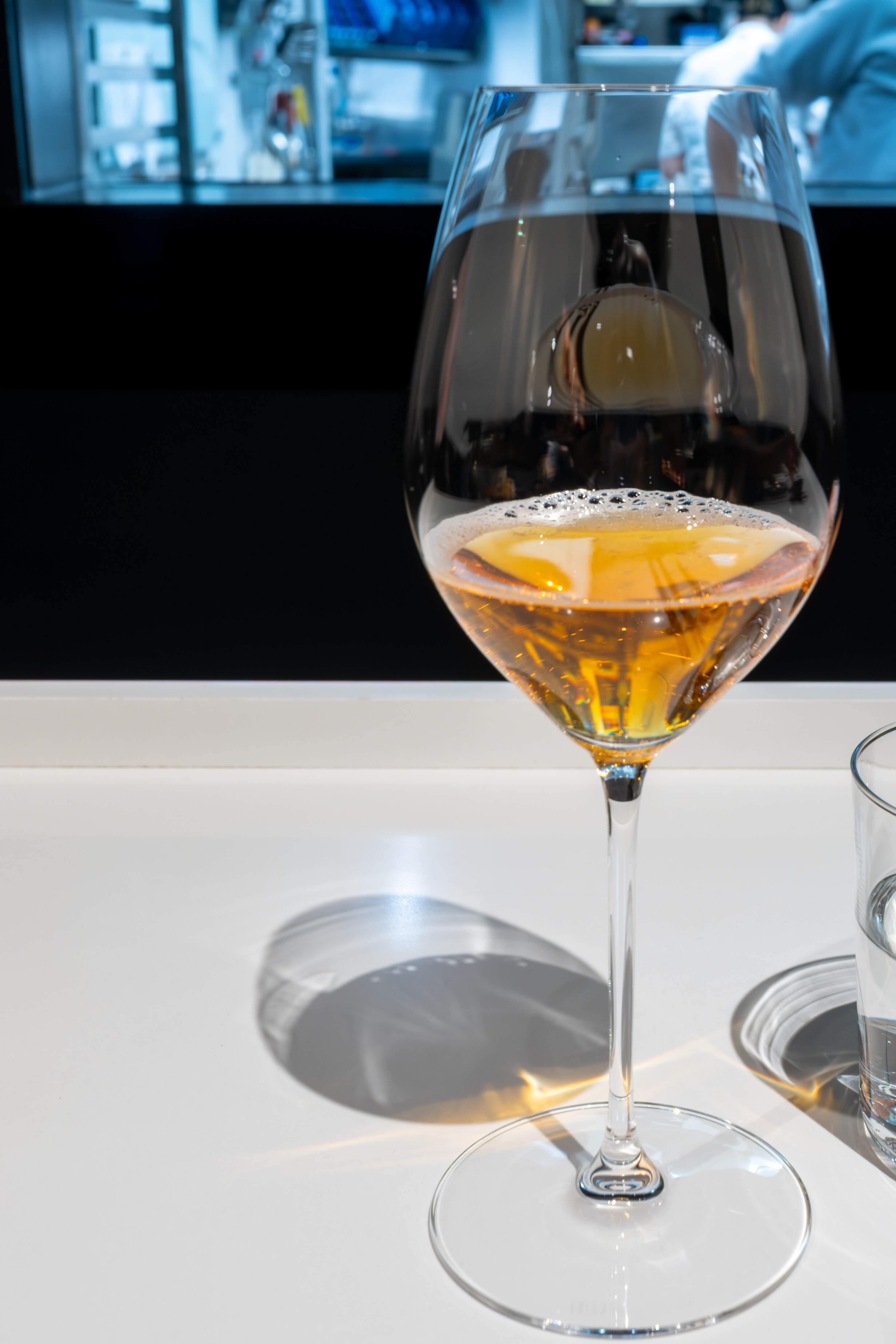
The pairing for the omurice was a very nice apple cider.
Meadowood Chrysanthemum. Cod. Shiro Miso. Herb Oil
Tarama Island: Dr. Loosen N/A Riesling
Goat Milk. Mizuna. Melon
The next dish highlighted chrysanthemum from Meadowood in Napa Valley. There was a piece of local cod, just cooked by steaming. The cod was meaty but delicate. It was atop a bed of tender chrysanthemum and a very green chrysanthemum oil miso butter.
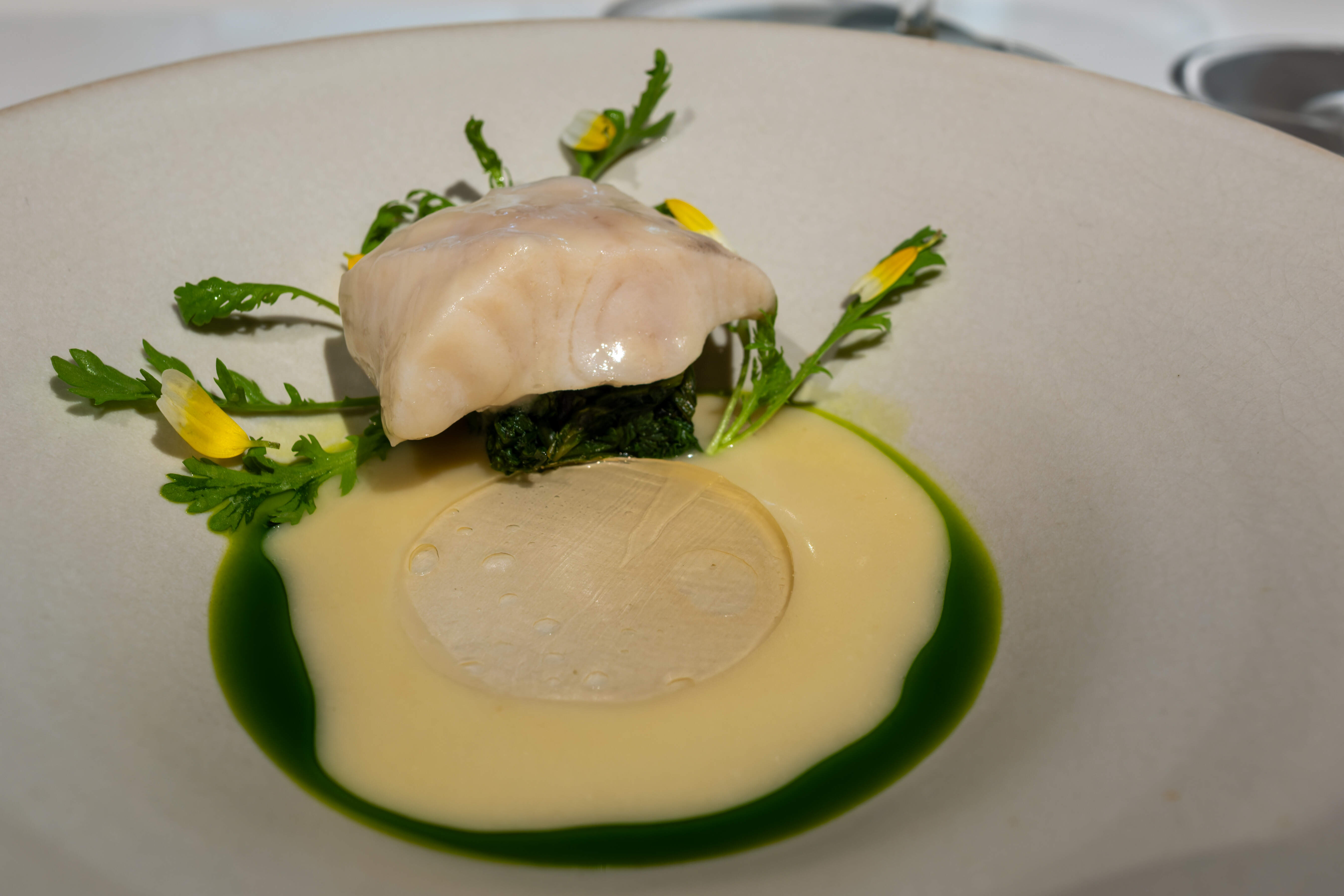
The pairing for this dish was very nice. Tarama Island in Japan is known for its goats, and this concoction had a goat milk, mizuna which is a type of Japanese mustard green, and melon. It was slightly sweet with the melon, a bit of vegetal flavor from the mizuna, and a little tanginess from the goat milk which also rounded it all out.
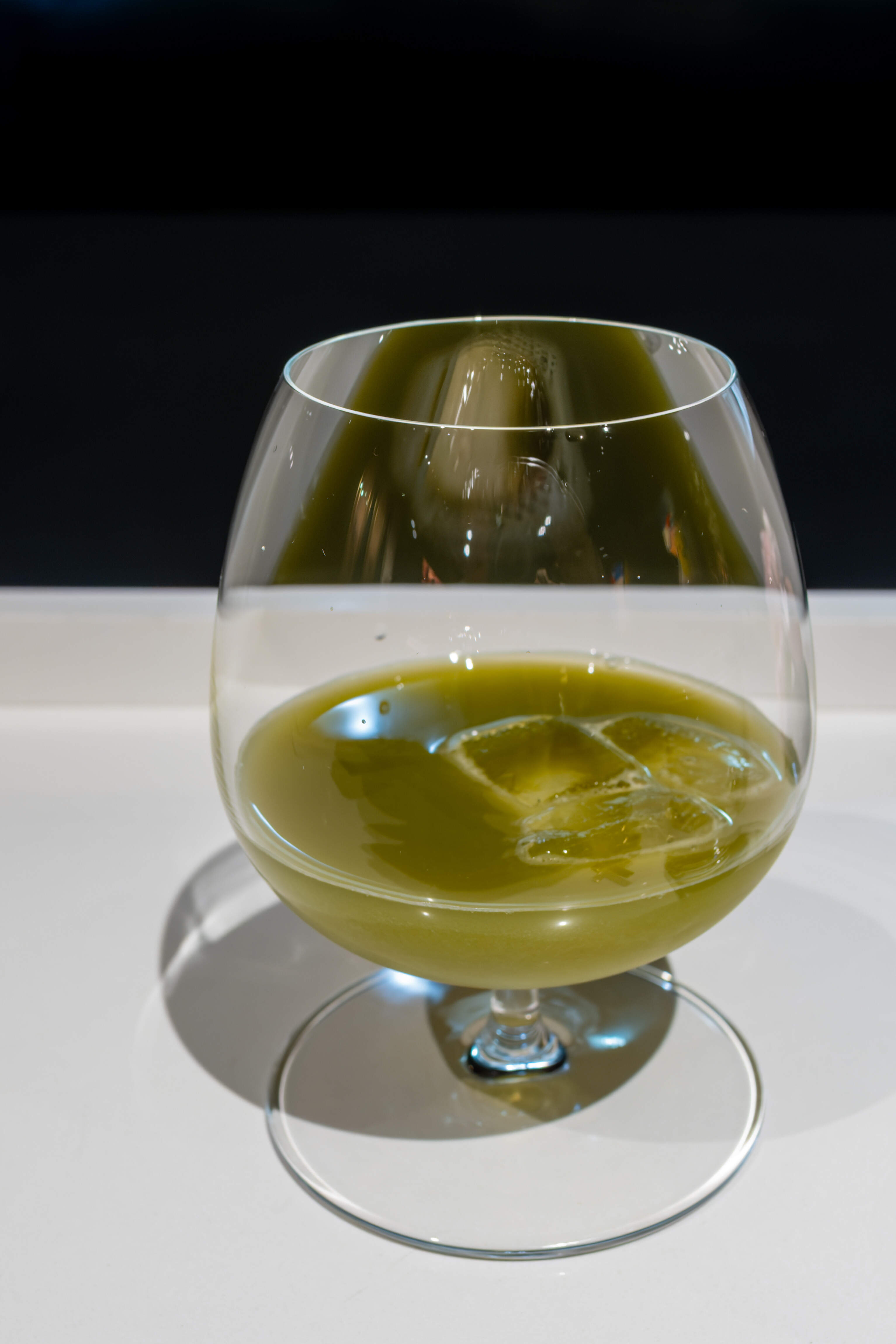
Later on I was also comped a cocktail based on this pairing, a Mizuna cocktail from Bar Iris, their sister bar next door. This was also very nice, basically the alcoholic version of the pairing, with the alcohol provided by shochu. It also had an egg white head and some slightly numbing sansho pepper on top.

American Unagi. Nori. Wasabi-Zuke. Cucumber
Tamagoyaki
Kishu: Hachimisu. Seedlip ‘Spice 94’ Damrak ‘0.0’
Pathfinder ‘Hemp & Root’. Verjus Rouge. N/A Bitters
The next dish had unagi / eel from Maine-based provider American Unagi, the only unagi farm based in the US. Chef David mentioned that unfortunately American Unagi will be shutting down later this year, so this may be the last time domestic unagi will be featured on the menu for the foreseeable future.
It had a piece of grilled unagi brushed with unagi tare, atop a sheet of crispy nori, atop a layer of tamagoyaki / omelet, atop another piece of nori. So good! The piece of unagi was warm and flavorful, and the tamagoyaki layer provided a little creamy contrast along with the crispy nori sheets.
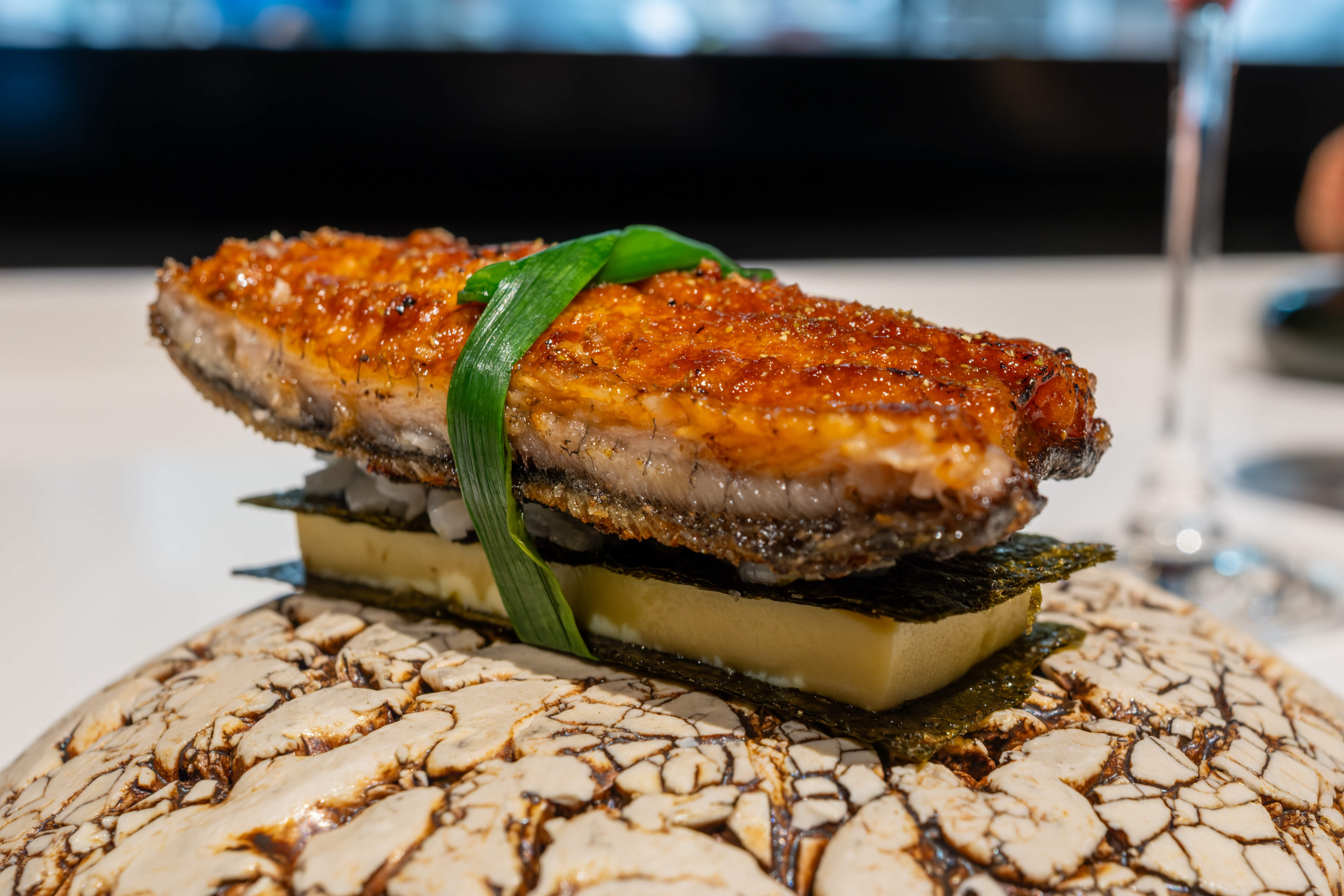
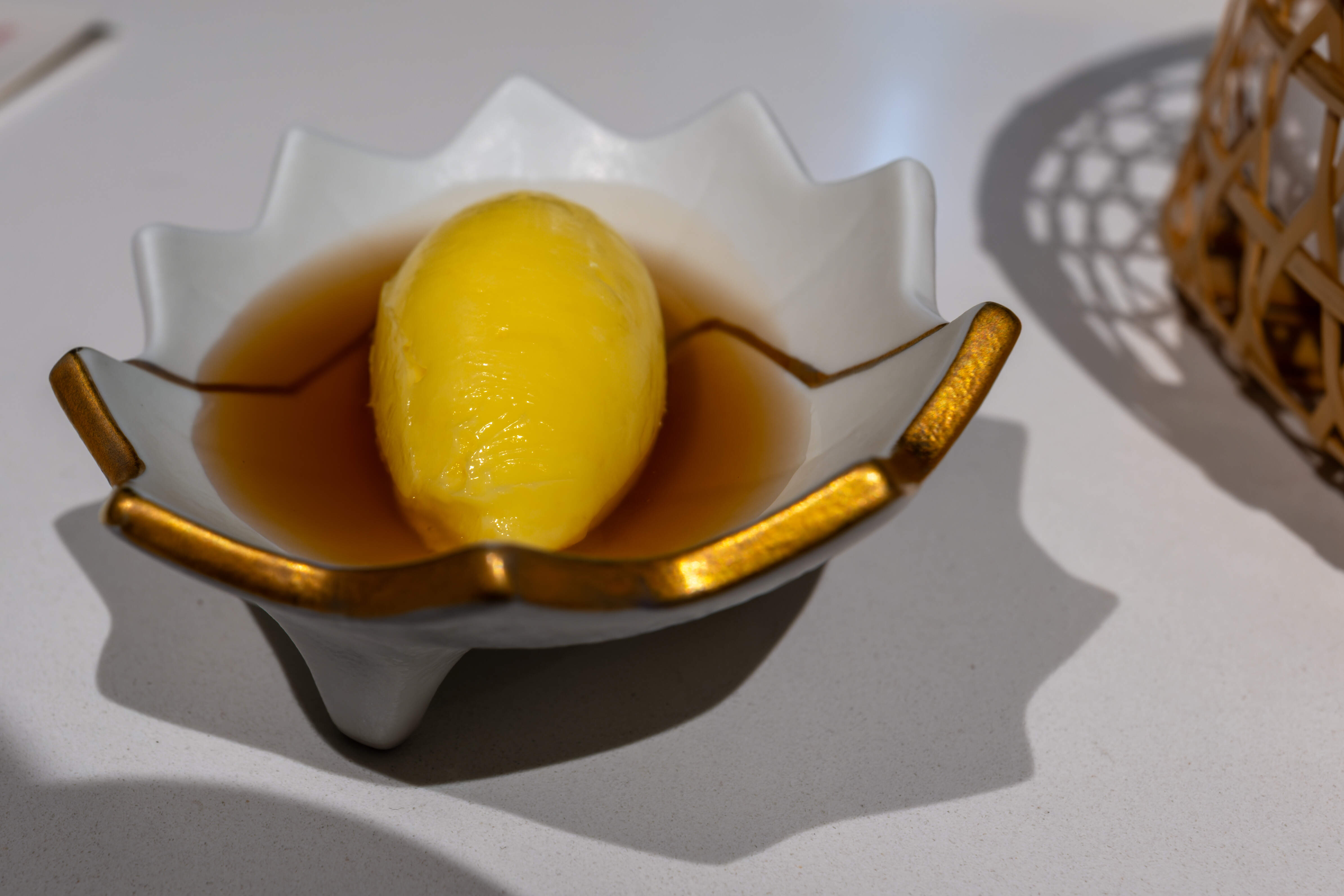
It was served with slices of an interesting crunchy smoked Takuan pickle.

The n/a pairing, which I didn’t take any notes on.
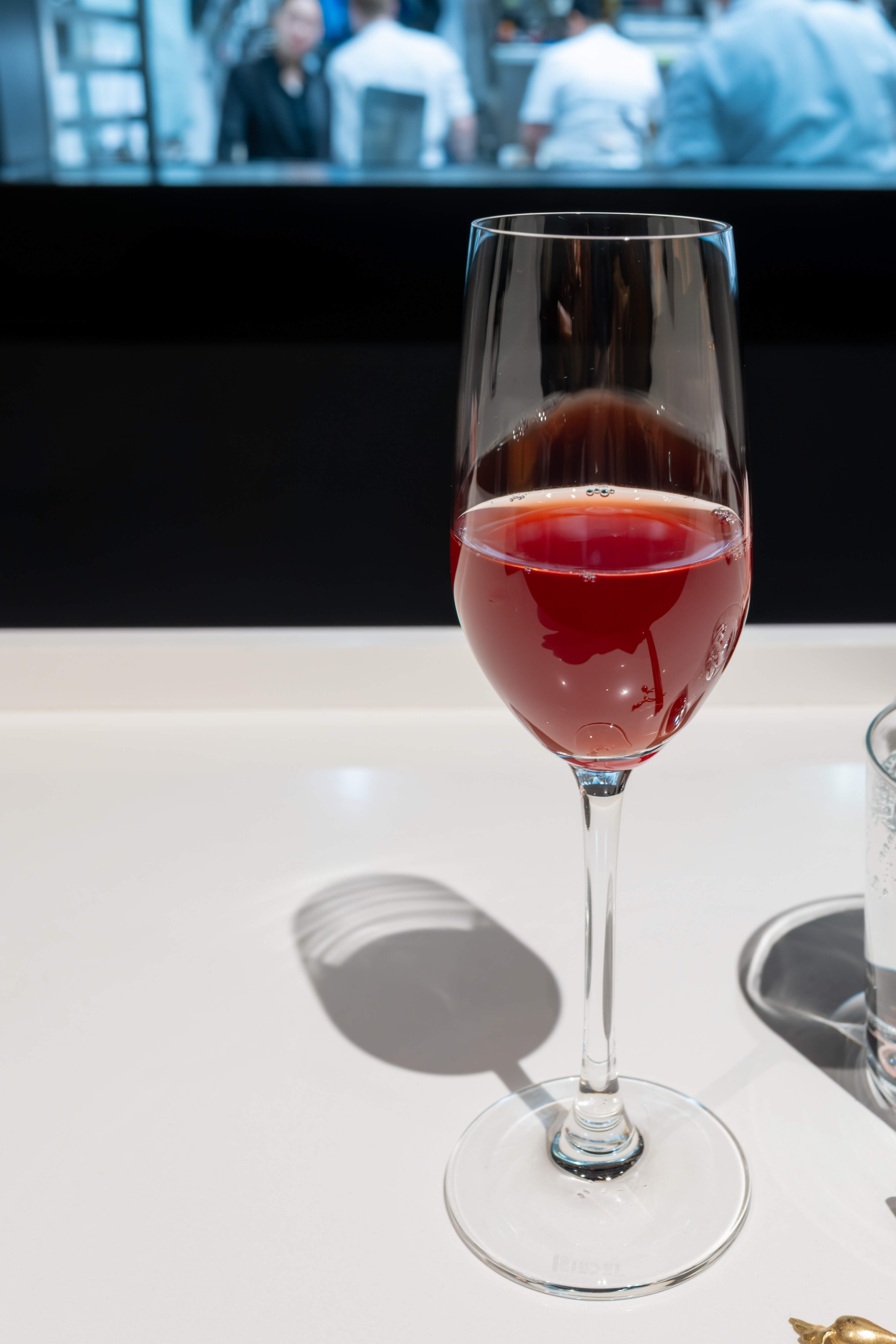
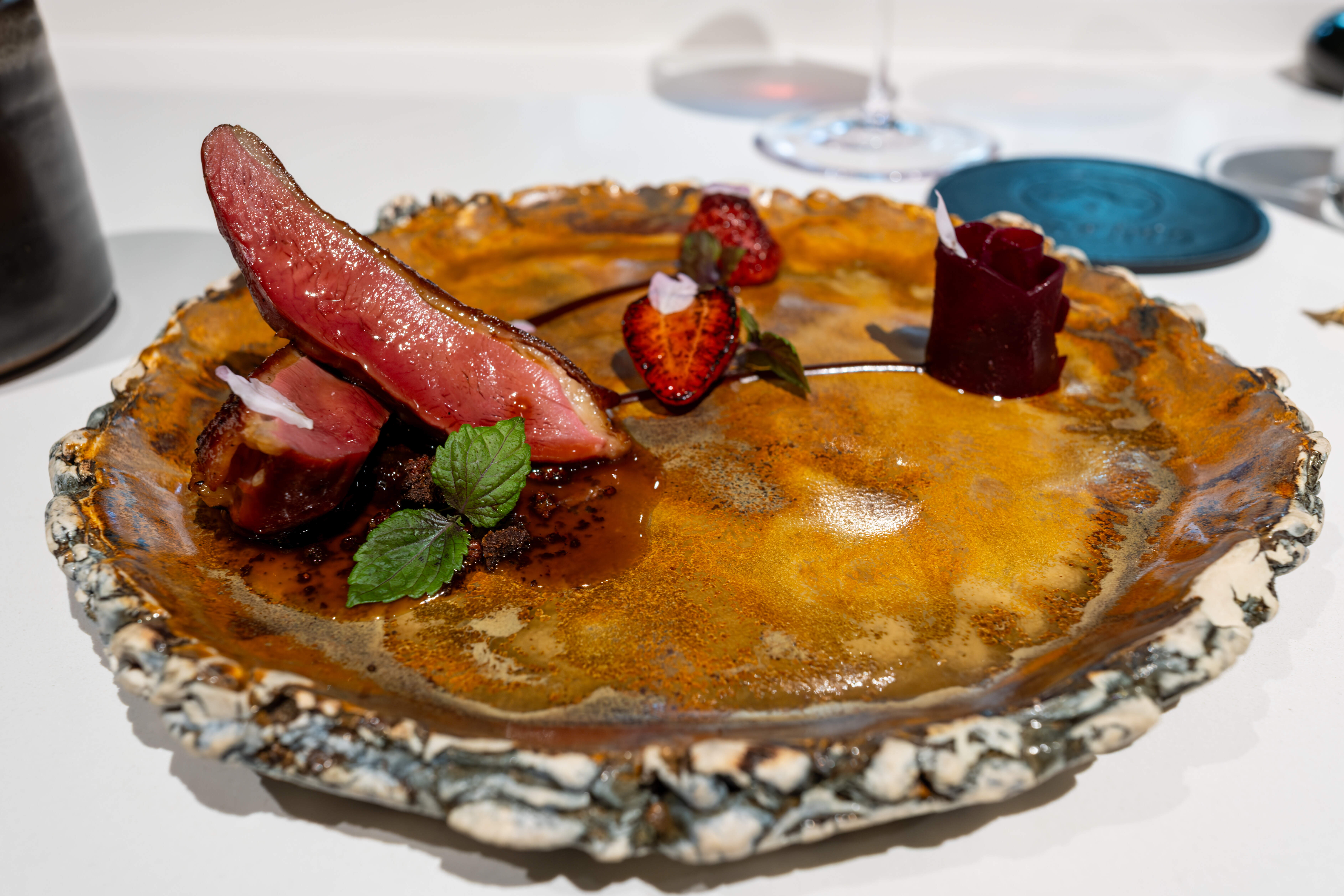
Squab. Cocoa Miso. Strawberry. Umezuke
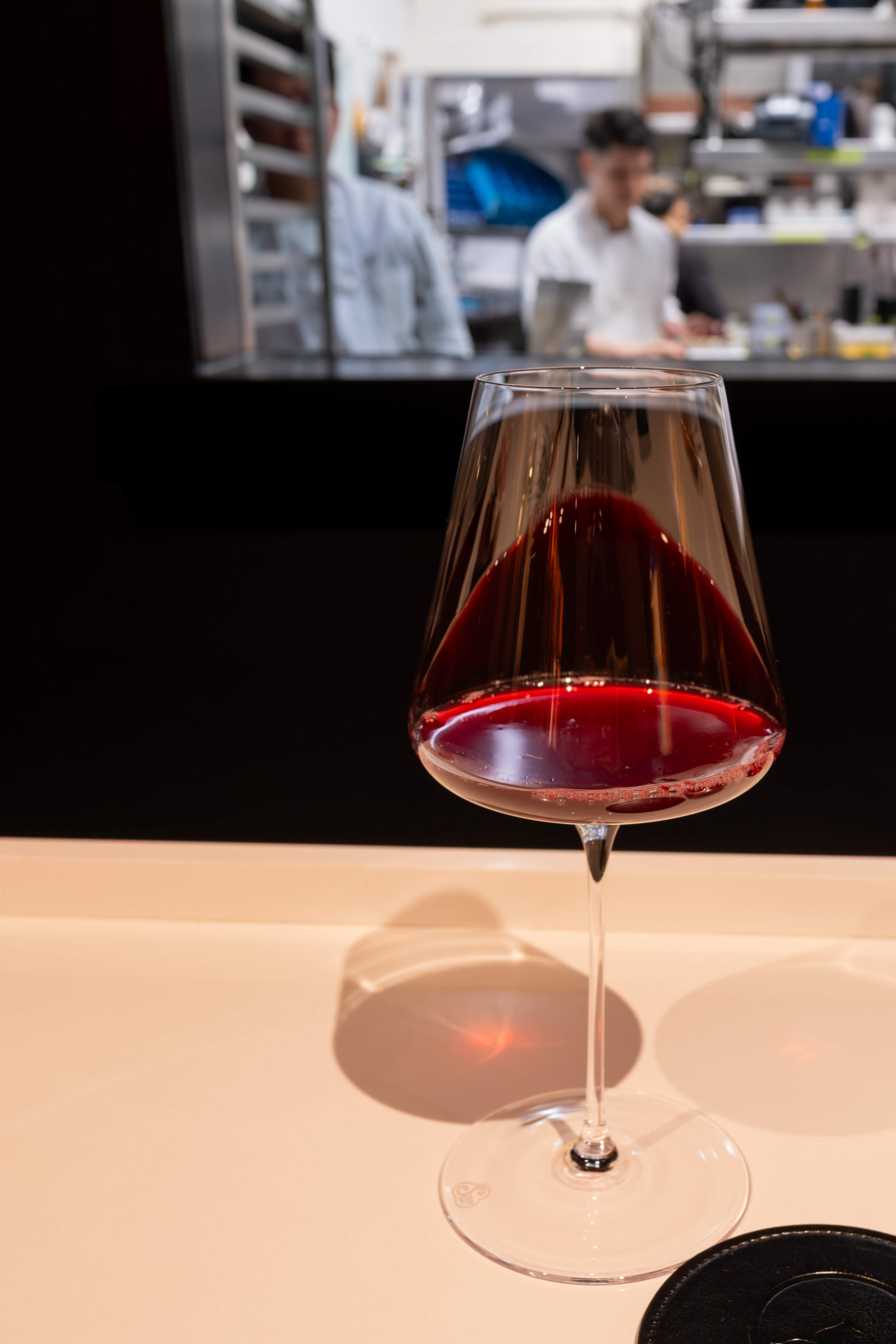
Yamanashi: Hojicha. Black Currant
Verjus Rouge
Next, the last savory dish of the dinner. Squab, koji aged, then dry aged, and then lightly grilled. A meaty sauce was poured over the squab at the table. So good! The squab had a great texture and was on the rare side of medium-rare. There was a little flower of ume (pickled plum) marinated beets, strawberries, and a cocoa crumble that provided a nice contrast with bitterness and crunch.
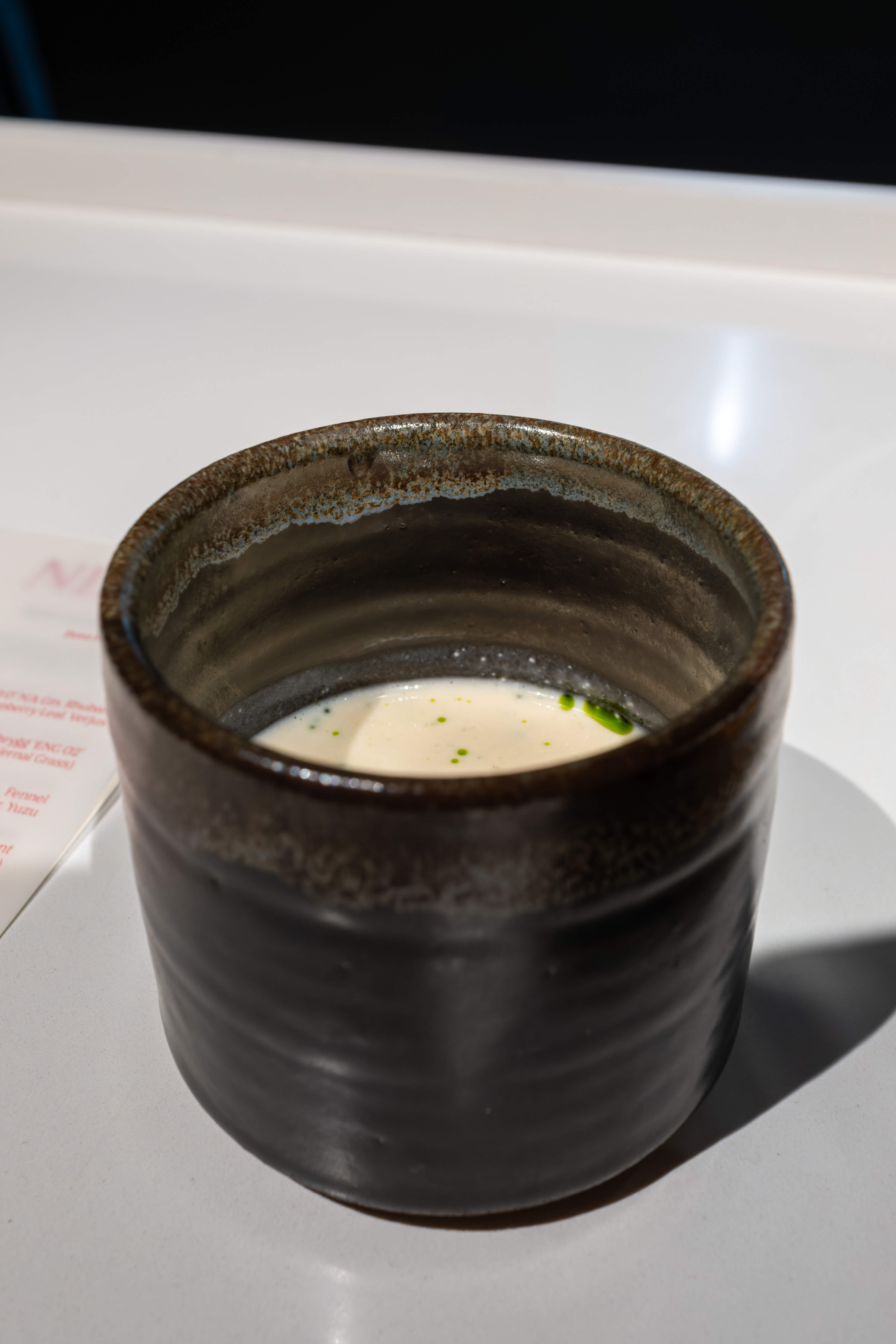
On the side was a delicious creamy miso soup with mushrooms.
The n/a pairing for this was a mix of hojicha and verjus, described as being kind of in between the sweetness of the beets and the strawberries, spot on.
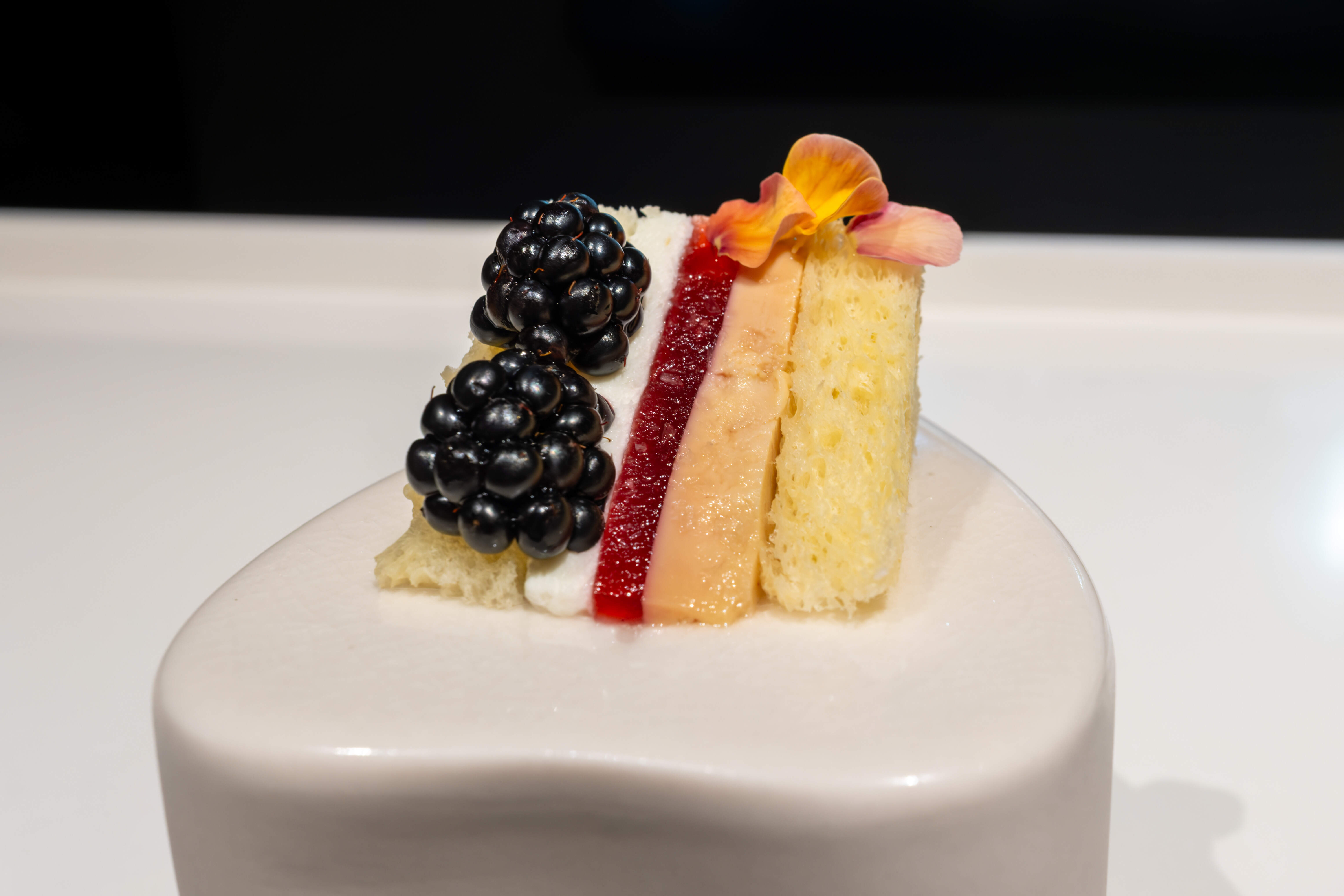
Shokupan. Duck Liver. Raspberry. Blackberry
The first dessert was an ode to fruit sandos from kombini / convenience stores in Japan, which are sandwiches on milk bread with a whipped cream and fruit filling. This had shokupan / milk bread, a raspberry filling, duck liver, and fresh blackberries. It was a delicious mix of sweet and savory, with the slightly sweet fluffy shokupan, the creamy savory duck liver pate, and the layer of sweet raspberry filling along with the blackberries and whipped cream.
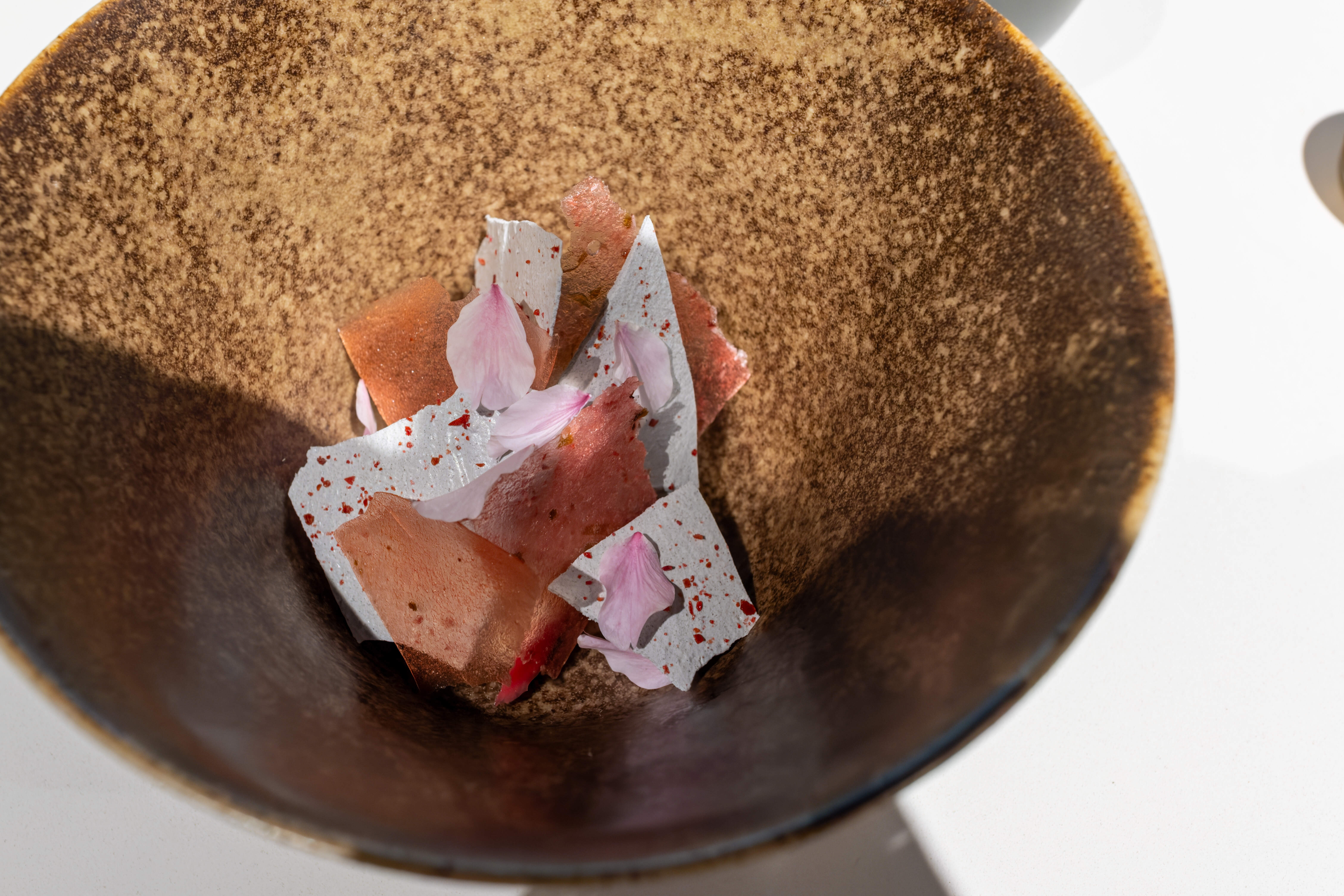
Sakura. Koji. Rhubarb. Pink Peppercorn
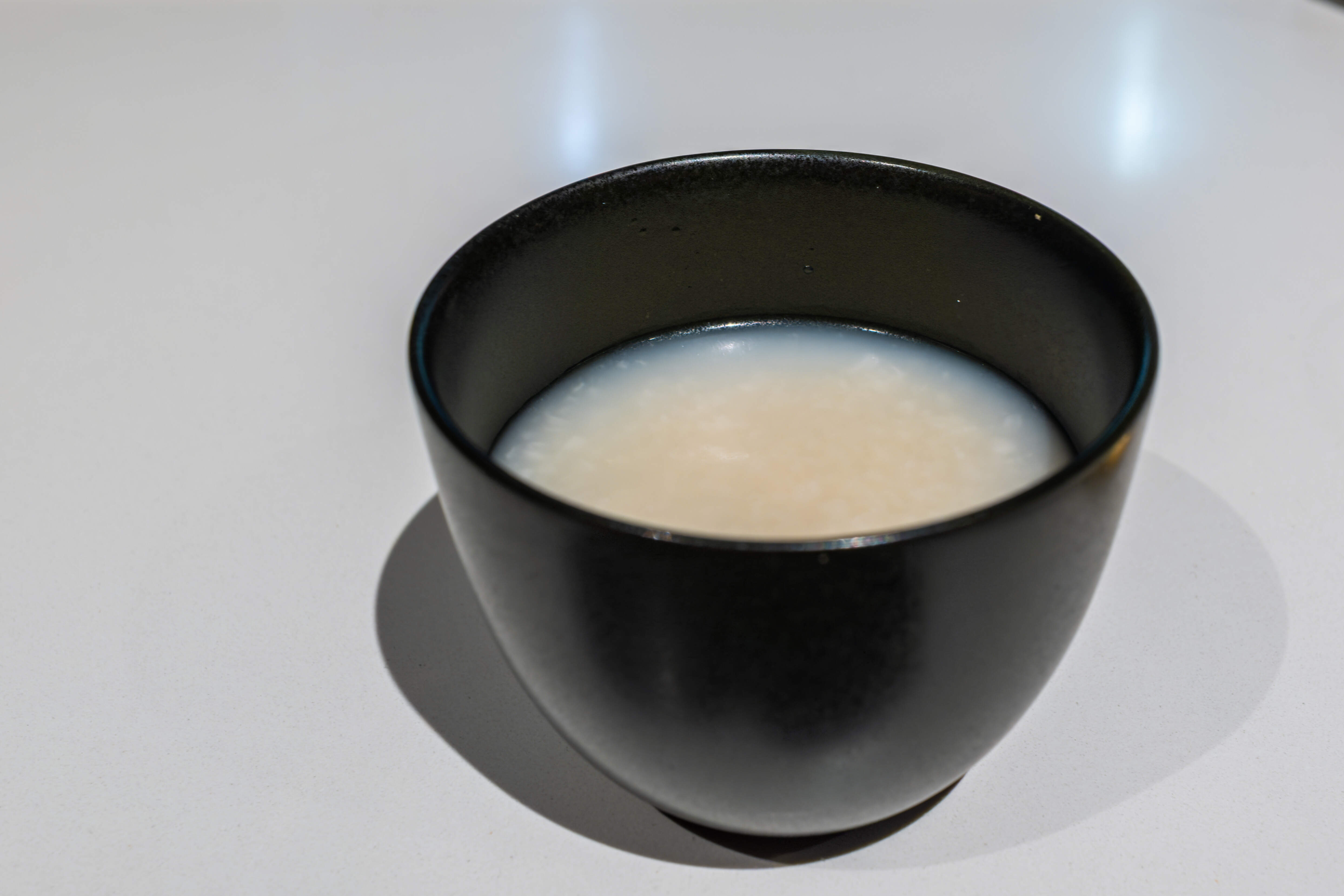
The Sake Lab Amazake
Nagano, JAP (Hitogokochi)
The next dessert was presented by pastry chef Ellie Estrada-Londo. It was described as evocative of Ueno park in Tokyo during cherry blossom season. It had some koji ice cream on the bottom and thin wafers, which IIRC were supposed to evoke not only the sakura / cherry blossom season but also the concrete of the park. It was a delicious dessert.
The n/a pairing for this dish was an amazake, which is a beverage similar to sake in that it is made with fermented rice. It’s unfiltered and cloudy and a little sweet and slightly thick.
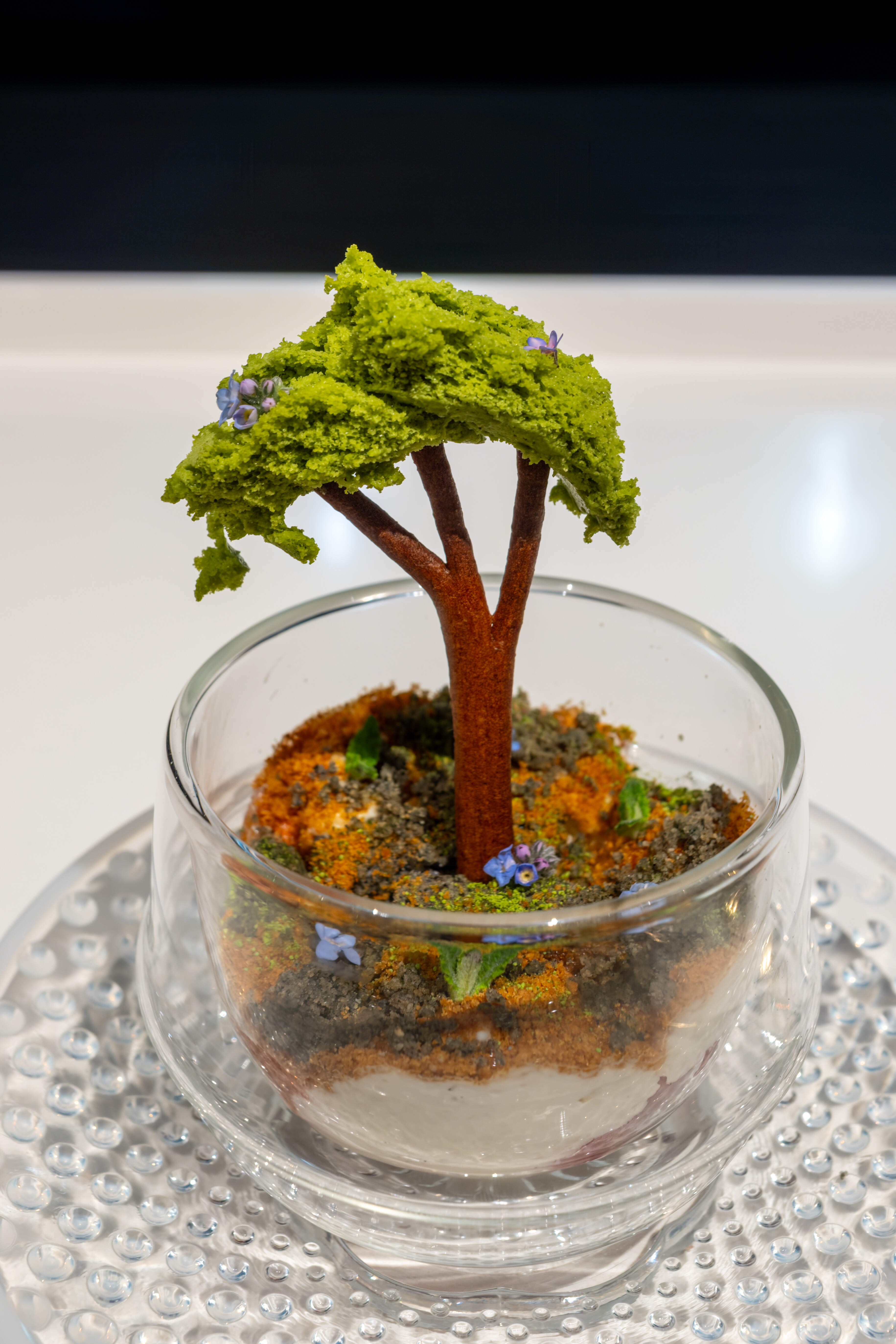
Black Sesame. Matcha, Strawberries Kinako, Mount Eitan Goat Cheese
Dessert number three had a striking presentation, inspired by the bonsai trees from the Imperial Palace in Tokyo and I believe is called heaven on earth. It looks like a little tree!
This was also delicious. The top of the “tree” was made with a fluffy matcha cake, and the trunk was made of chocolate. Everything was edible. At the base of the tree were layers of strawberries, kinako / toasted soybean, and goat cheese cake.
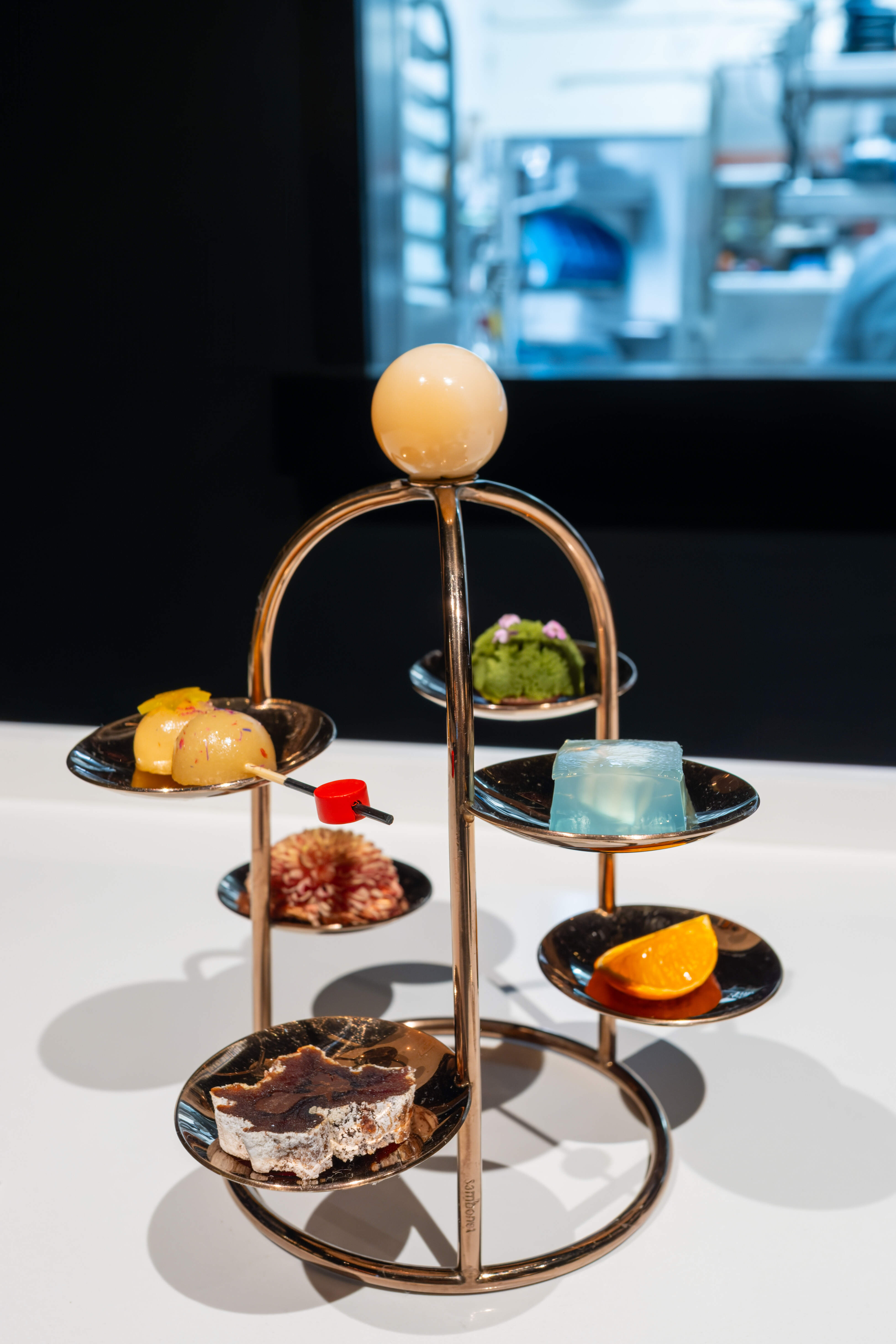
Wagashi
Mugwort. Matcha. Red Bean. Kinton. Nerikiri
Pear and Ginger Chichi Dango
Ramune. Kumori Kanten
Hibiki Nama. Hoshigaki
Seasonal Fruit
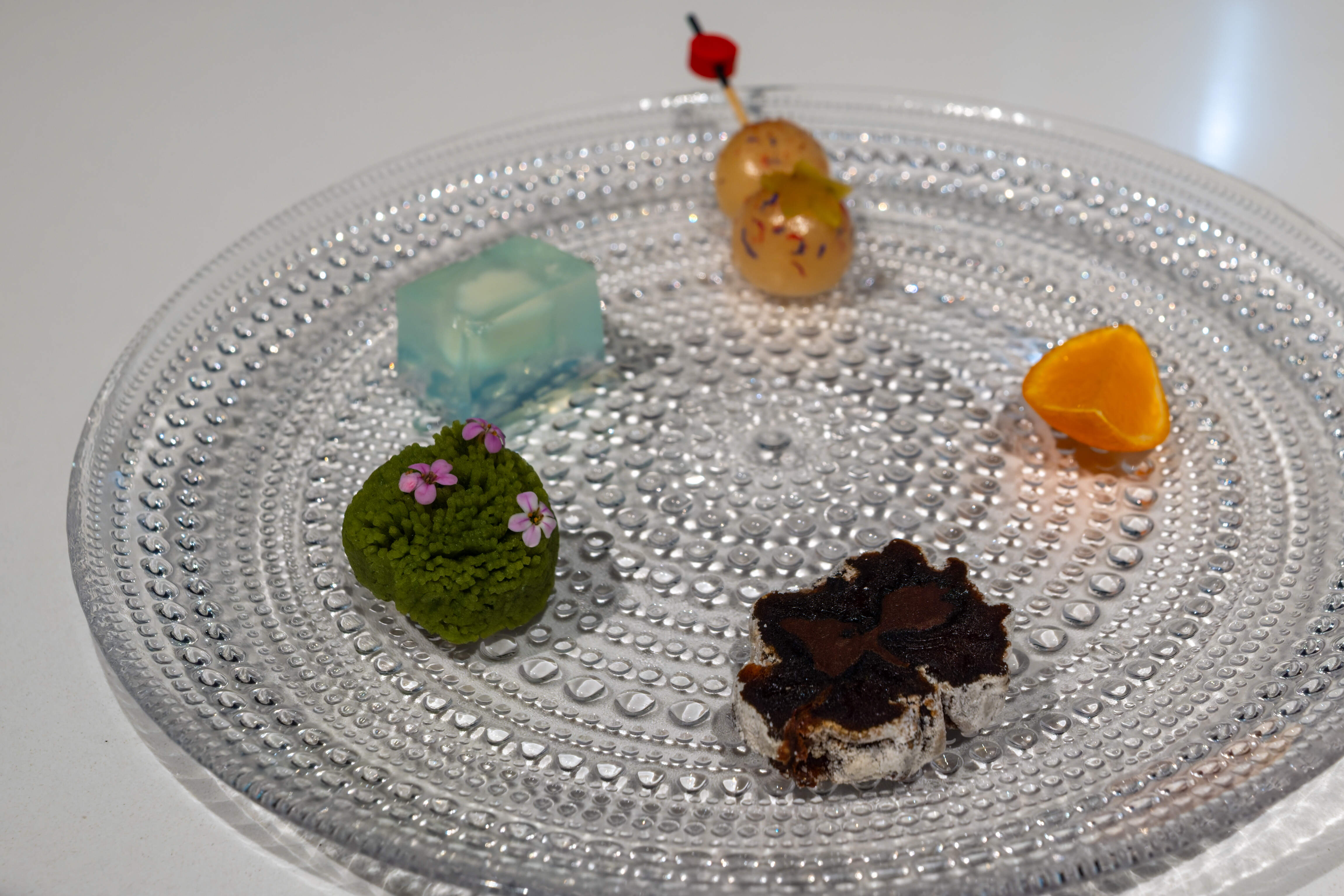
Finally, a selection of wagashi. There was a mochi with pear and ginger, a small green matcha-covered pastry filled with red bean, a jelly-like confection made with Ramune soda and yogurt, a slice of tangerine I think, and hoshigaki / house-made dried persimmon filled with chocolate.
This was an excellent dinner. The top bites for me were the chutoro, the Dungeness andagi, the caviar omurice, the unagi, the squab, and I’d better stop before listing the entire menu. The desserts were also all excellent and super creative. Nisei also offers a dessert-only tasting menu from chef Ellie which looks very interesting.
The non-alcoholic pairing was quite good and unique and complemented each dish nicely. I didn’t miss the alcohol at all. Finally, in addition to the delicious food, the service was exceptional - warm and informative without being overbearing.

