I originally added this bit to Maribel’s review of EL MURO in Vejer, but it’s best if I present in a separate topic.
This is in response to the question of how this revered hyper-local product is used in local kitchens…I will add a few more details alter but want to get this down before my wireless cuts out again…
Maribel, I think I wrote (on another thread?) that I spoke with Chef Connie, who oversees the kitchen at the 3-star B&B where I stay outside Vejer and whose resume includes a stint as chef at RESTAURANTE LA CALIFA in Vejer. There is, indeed, a large container of Manteca colorá (red lard) in the frig.
To demonstrate its use, Connie toasted two thick slices of the bread that she makes here daily. While the bread was still warm, she lathered the slices with Manteca colorá for me to devour while still warm, with the fat melting into the toasted bread.
Although the idea of red lard might sound off-putting, I’ll remind Italo-philes of the IGP lardo di Colonnata (lard from Collonata) of Tuscany that is a delicacy served as an antipasti at many fine restaurants in Tuscany and beyond.
I first tried it at AI GONDOLIERI, a meat-centric restaurant in Dorsoduro, as part of a mixed antipasti. Our waiter noticed my exuberant reaction and kindly gifted us an entire platter, instructing us to drape the slices of lard over the warm bread so that it melts into porky greatness.
Unlike the Tuscan lard, which its presented as a solid block for slicing, the red lard of La Janda is usually sold in terra cotta jars from which you scoop out portions with a spoon. (I think this is true).
The lard we have here at the B&B is the product of a matanza, pig slaughter, which usually takes place on local farms once or twice a year and which yields meat and fat from every part of the animal. (" El cerdo hasta los Andares," is a term Maribel taught me and which produced hysterical, almost paralyzing laughter when I used it last week with the woman here who makes the lard.
The entire day, she kept telling everyone how erica used this phrase and that erica now has shown herself to be a true “Andaluz.” Obviously a joke but we had a lot of fun with it. This home-made lard was not creamy looking like that I bought in a butcher shop and brought home last year; this one was coarser and seemed to have tiny bits of pig mixed into the fat. Declious, yes indeed!!
Finally, I asked Connie how she used the Manteca in the kitchen here at the B&B. Surprisingly, she rarely uses it here and never uses it at home, as the paste is “too piggy.” Several of the other women here agreed; with MariLuz telling me that her husband adores it but she cannot stand the smell!! (I can’t detect much of a smell)
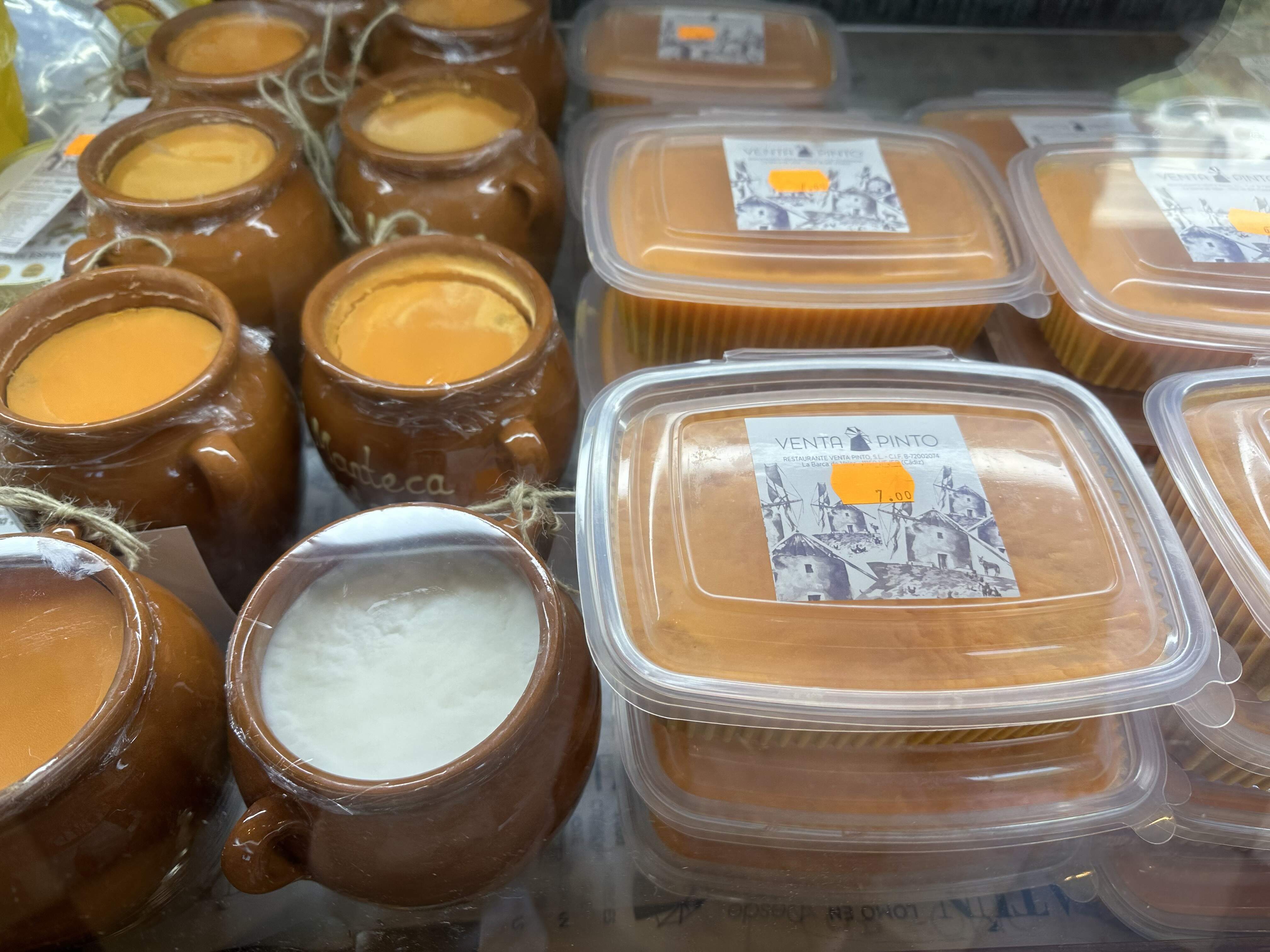
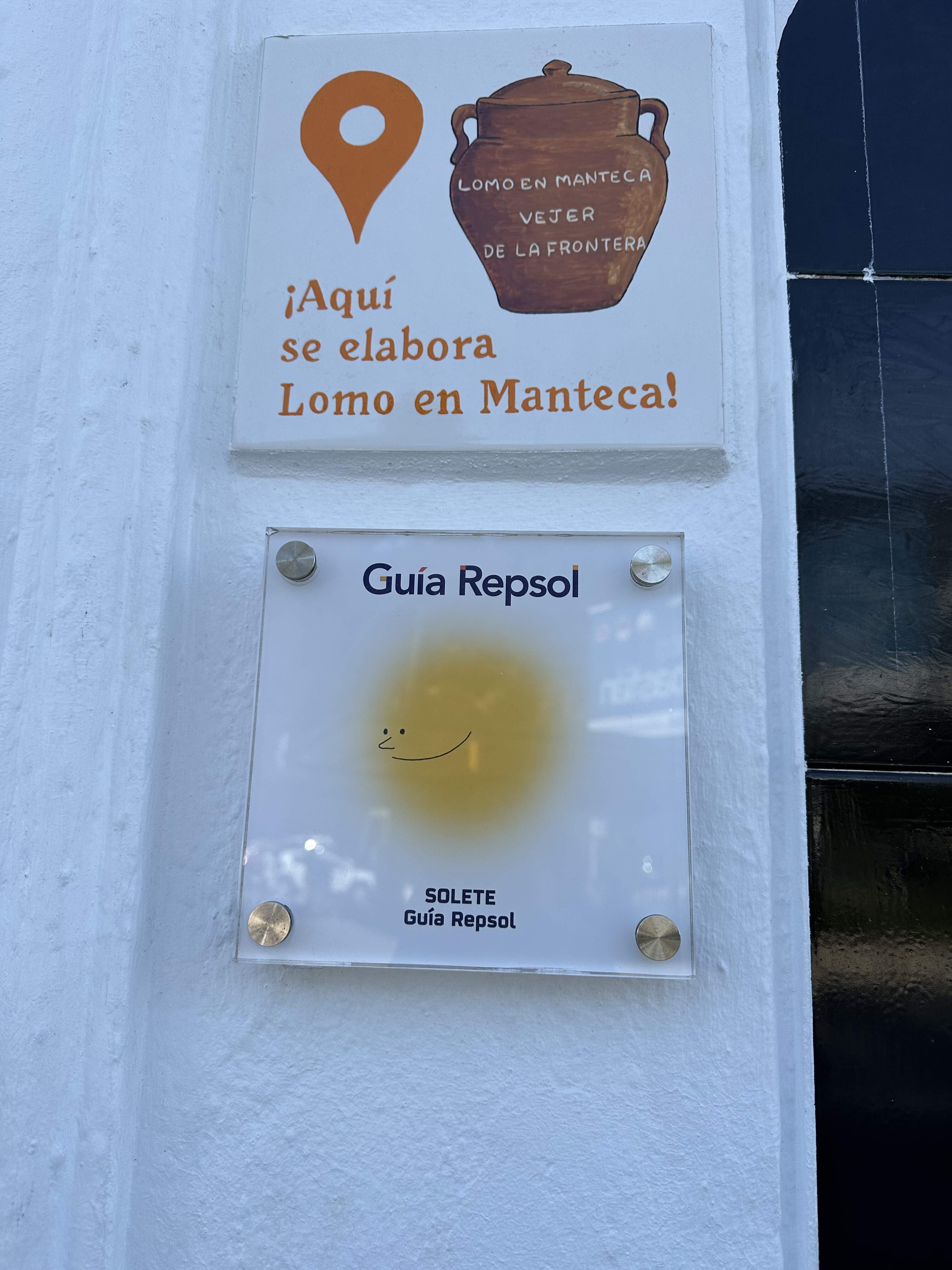
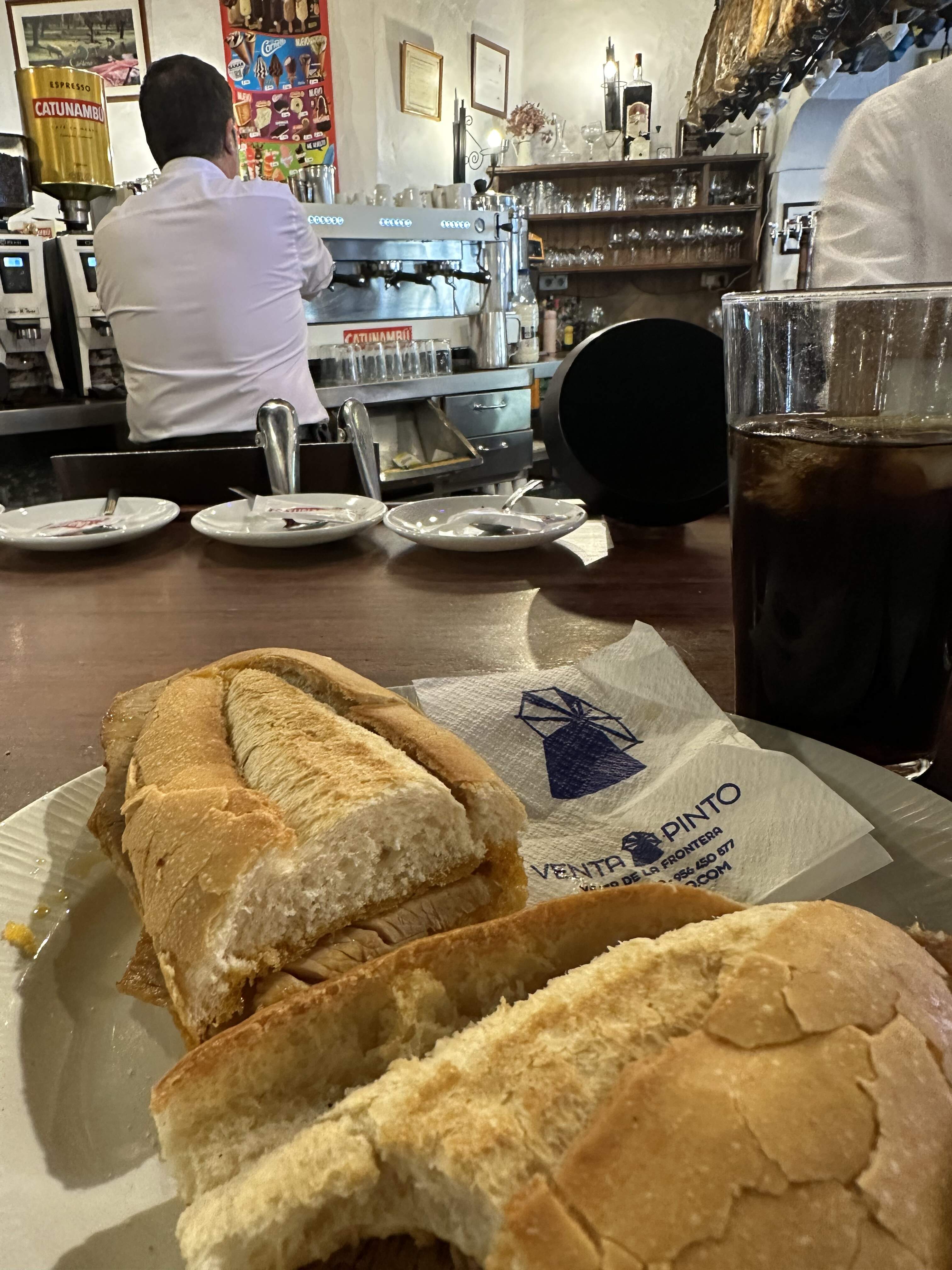
Red lard for sale at VENTA PINTO in La Barca de Vejer, below the hill town of Vejer; you can also buy slices of lomo (pork) immersed in the lard, perfect for making a bocadillo (sandwich) like the one from the bar at VENTA PINTO (third photo below)
Snack of (coarser, home made) red lard on toast in my room at the B&B:


