COSTA DE LA LUZ..2026. Vejer de la Frontera, Barbate, Conil de la Frontera, etc

I’m back again for the fifth time in recent years. Many of the restaurants I will visit are ones that I’ve already written about here, sometimes more than once. These include my “top three:” RESTAURANTE ANTONIO (Zahara de los Atunes); EL CAMPERO (Barbate); and LA CASTILLERIA (just below the town of Vejer).

I could not wait long to check out my old favorite, EL CAMPERO in the rather nondescript (but surrounded by glorious coastline stretching in either direction) town of Barbate. Happily, I detected no change in the visuals, the service, or the food since the recent change in ownership.

Three plates; each impeccable:

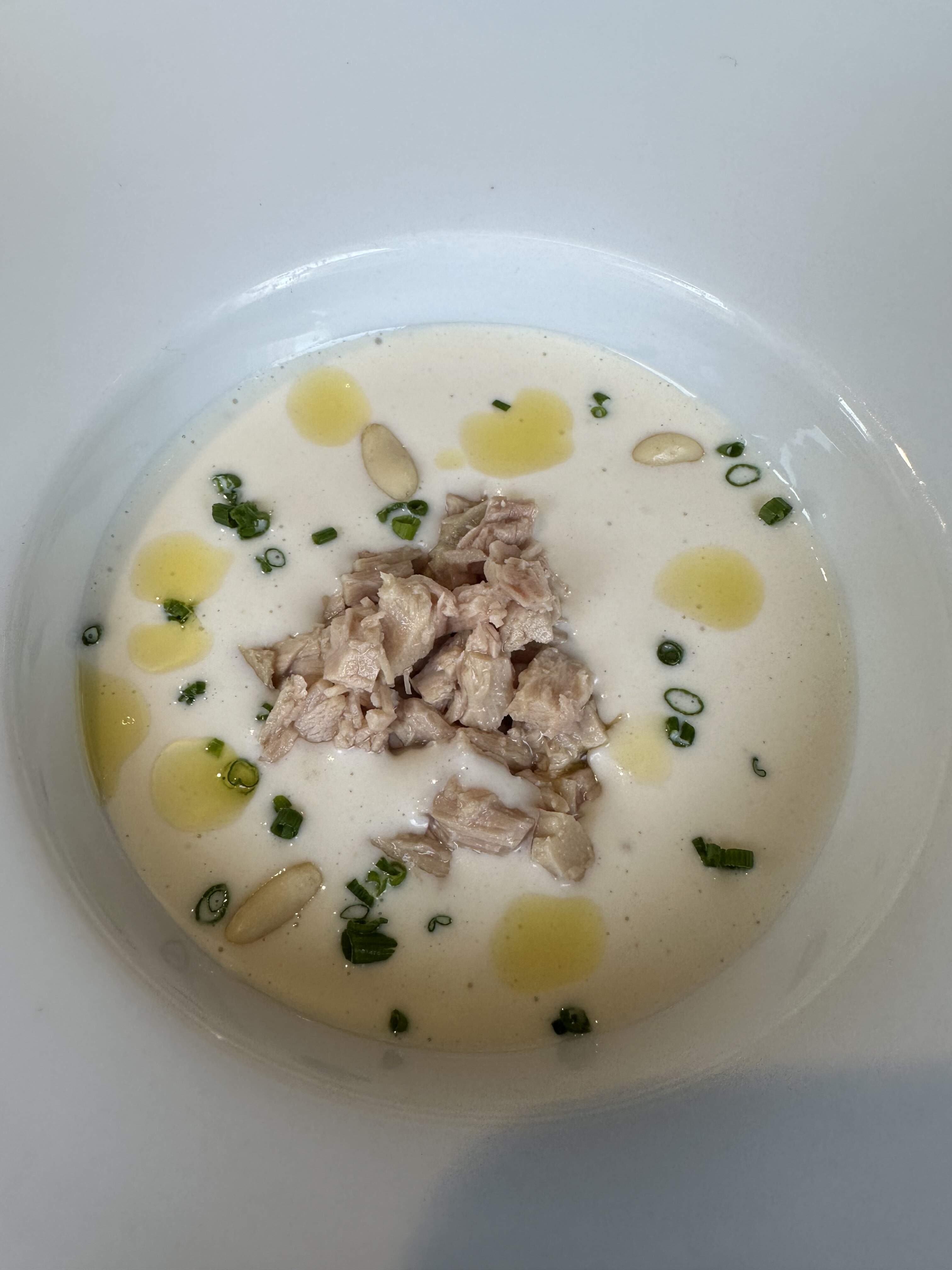
Amuse of salmorejo with tuna bits:

Not only will I visit many of the same restaurants, but in many cases I plan to order the same dishes that have become my favorites: I could not visit EL CAMPERO or ANTONIO, for example, without beginning with sashimi of ventreuca (raw blue fin tuna belly).

Instead of delving into detail about places Ive covered before, I’'ll post a few comments and photos, and will elaborate more on restaurants that are new to me.

I commented on my dinner at the superb LA CARBONA in Jerez de la Frontera, on the great three that Maribel recently contributed; as it happened, I had the exact same dishes as she did several weeks prior to my own visit.

I visited all of these restaurants alone, and had no problem booking for a single diner; I usually prefer to sit in the bar area, if not at the actual bar, at a table in the bar area rather than in the main dining rooms. There are a few exceptions, though.

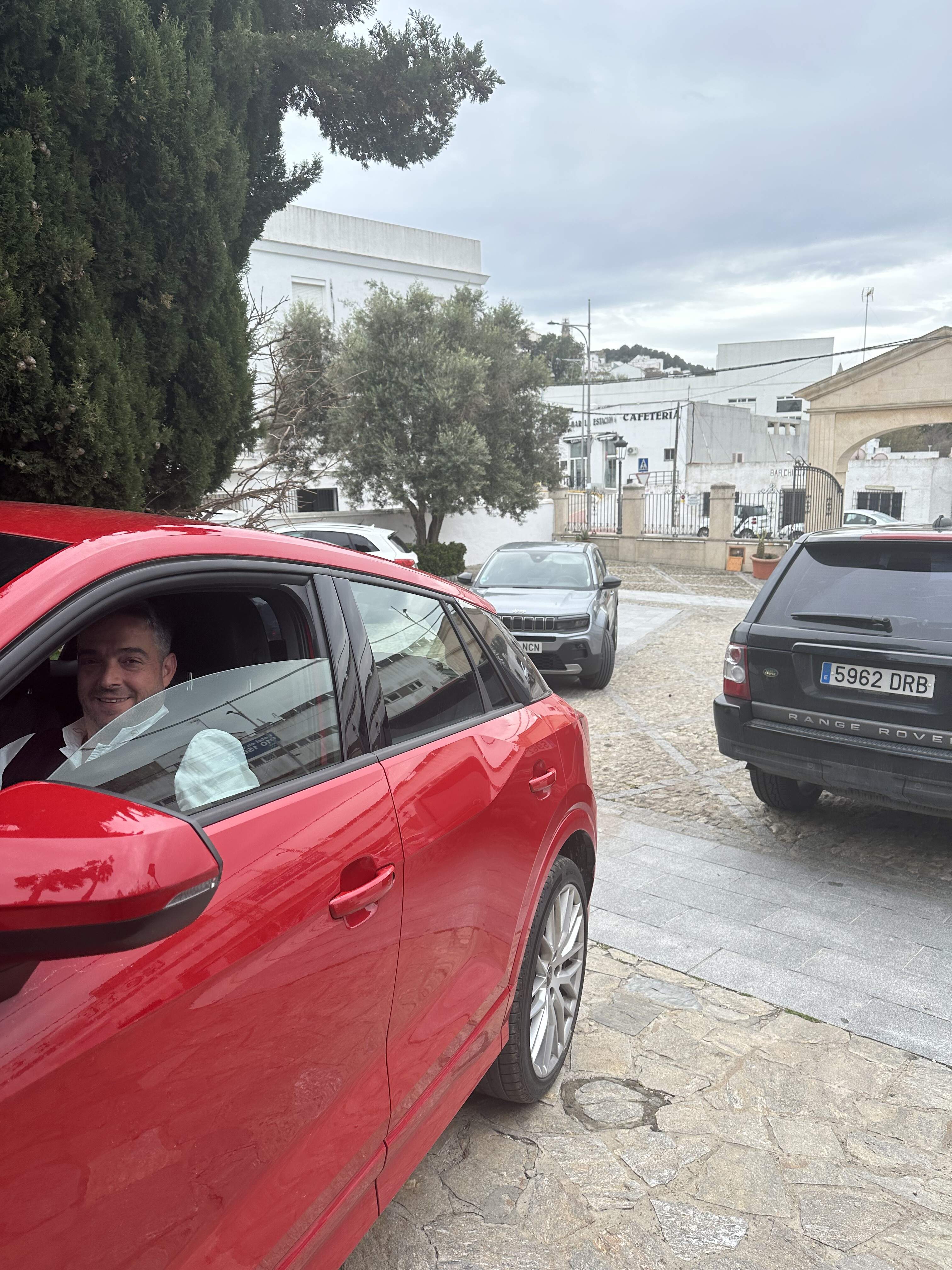
I rented a car from SIXT at the small, easy-to-navigate, airport of Jerez, about 20 minutes taxi ride from my hotel in the center. (PALACIO MARIA LUISA, one of the finest in southern Spain). I’ll have the car for 18 days before returning it at the airport and flying back to the US. Despite the recent storms, roads have recovered and I’ve found only a couple one, fairly minor, disruption on the routes that I’ve driven so far. This is along the N-340 near the turn off for Santa Lucia.

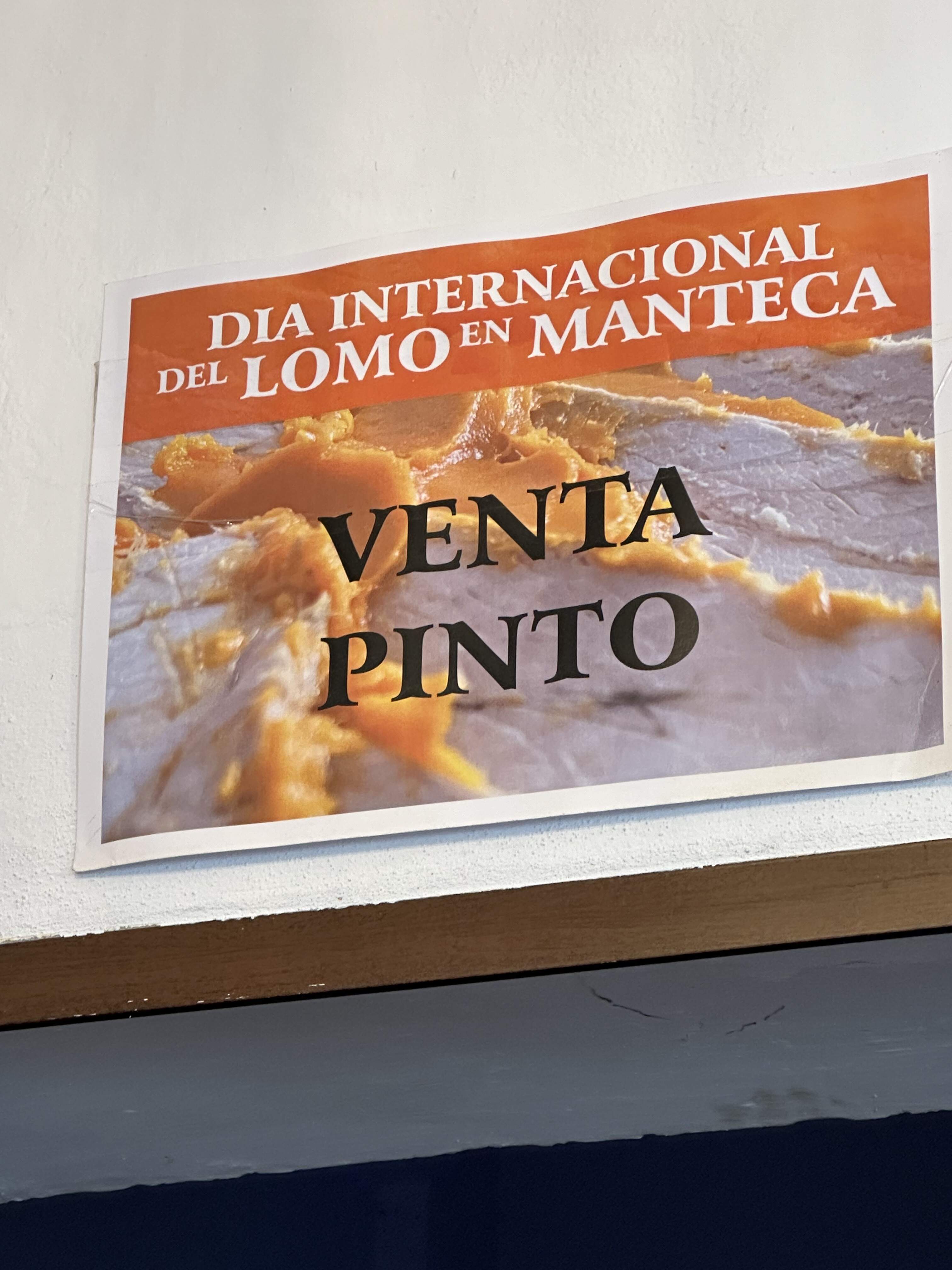
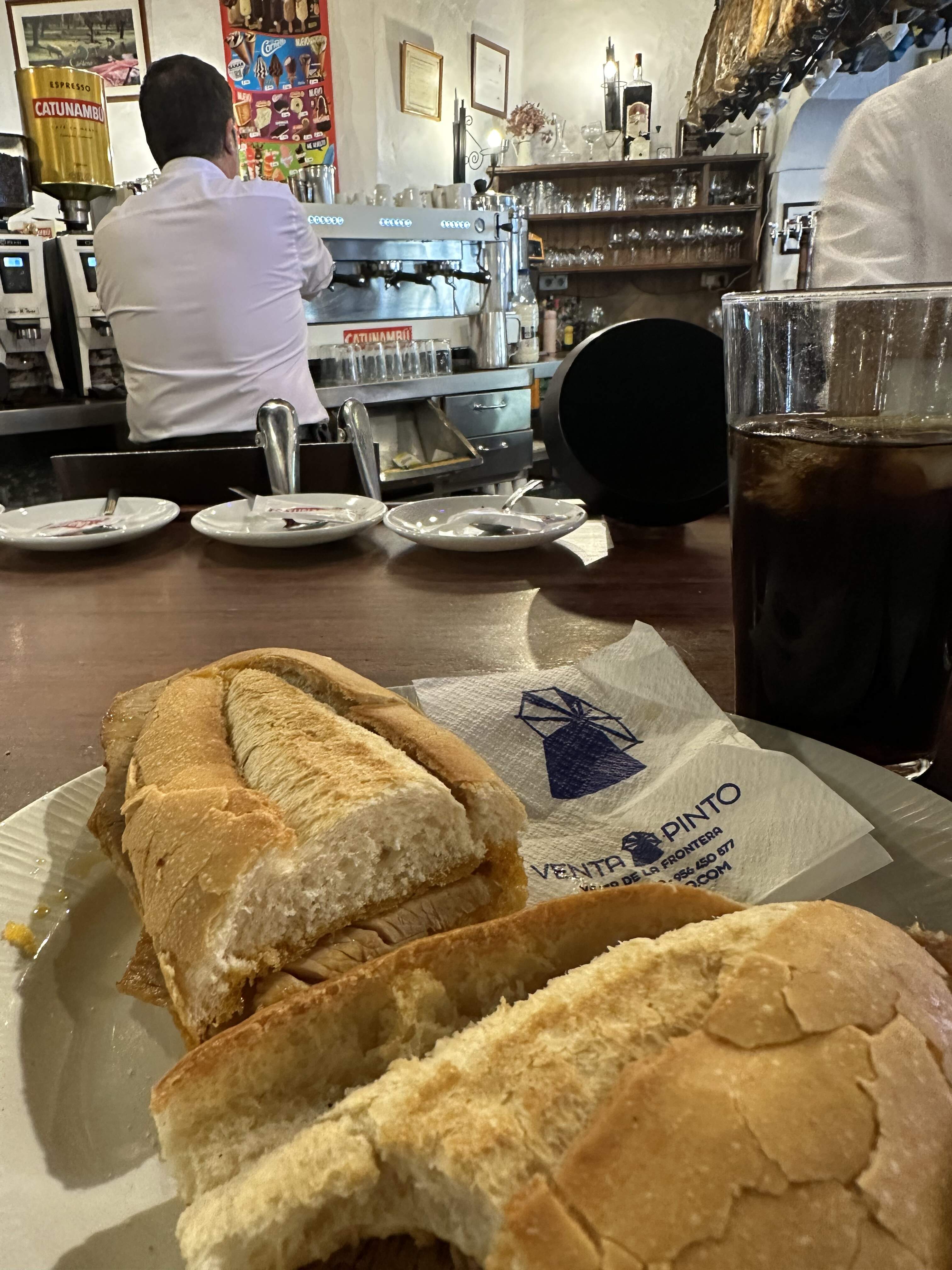
Now that I’ve figured out how to hook up my music to the car’s system, the drive from the airport (via Medina Sidonia, not Cadiz) flew by and about an hour after leaving the airport, I was approaching Vejer. Late afternoon and I was tired, so before even checking into my hotel, I stopped at VENTA PINTO, in La Barca de Vejer (bus stop) for their iconic bocadillo of pork loin with red lard…one taste of this juicy marvel and I knew I was home!!! Could be the best 5 euro sandwich in Andalucia.

The following afternoon I was at my usual high-top table in the gleaming white bar area of EL CAMPERO in the rather nondescript port town and tuna capital of Barbate. This venerable eatery, to which blue fin lovers flock from as far away as Japan, had recently been sold to a restaurant group from Madrid but I was thrilled that nothing seemed to have changed..there are my pretty young ladies at the front door, here is my usual waiter, Manuel, offering hugs…all was well in Barbate, at least on this first visit.

I had but three dishes, each one impeccable:

Amuse of Salmorejo (cold Andalusia soup blending almonds and bread) topped with bits of tuna

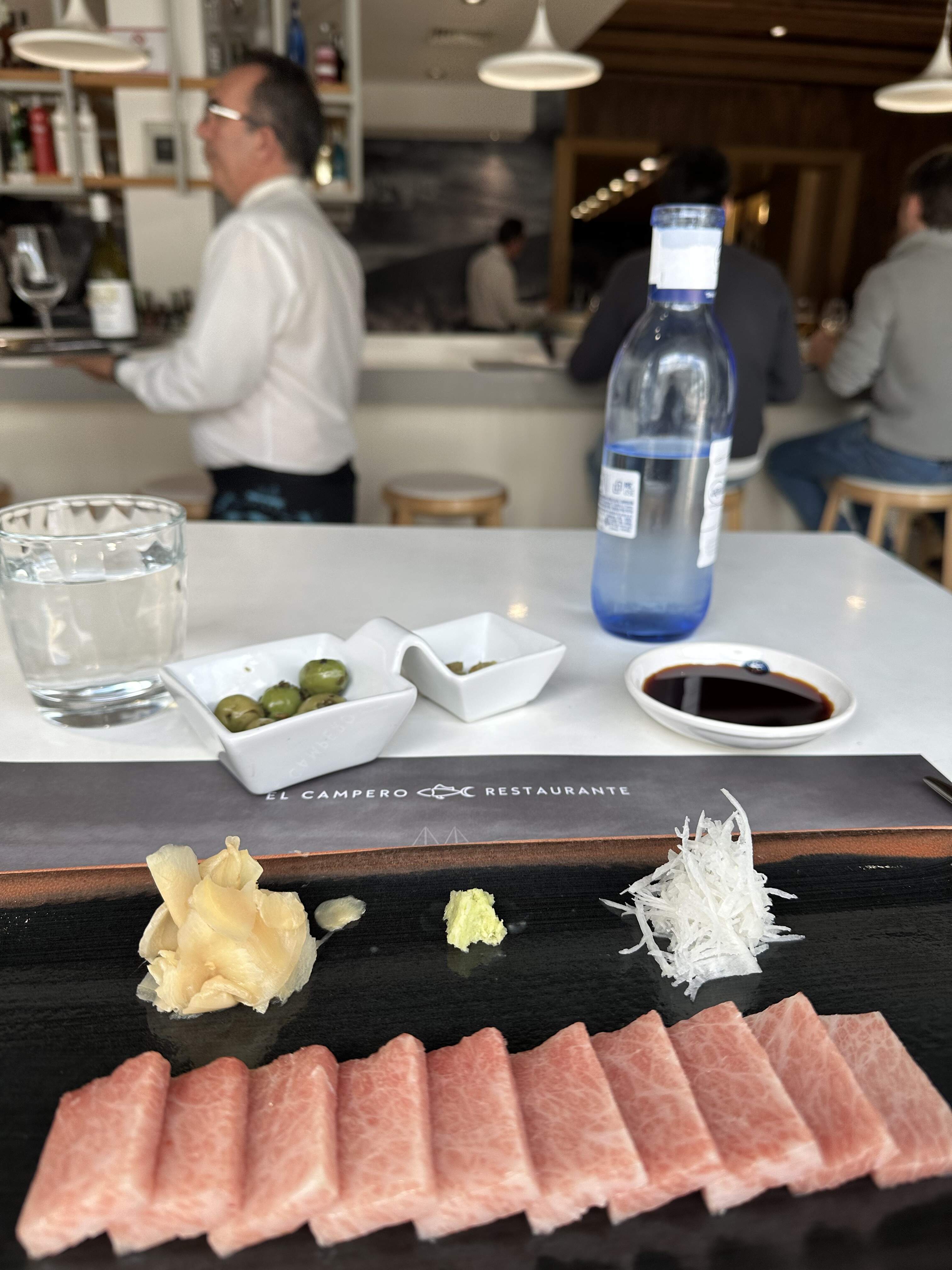
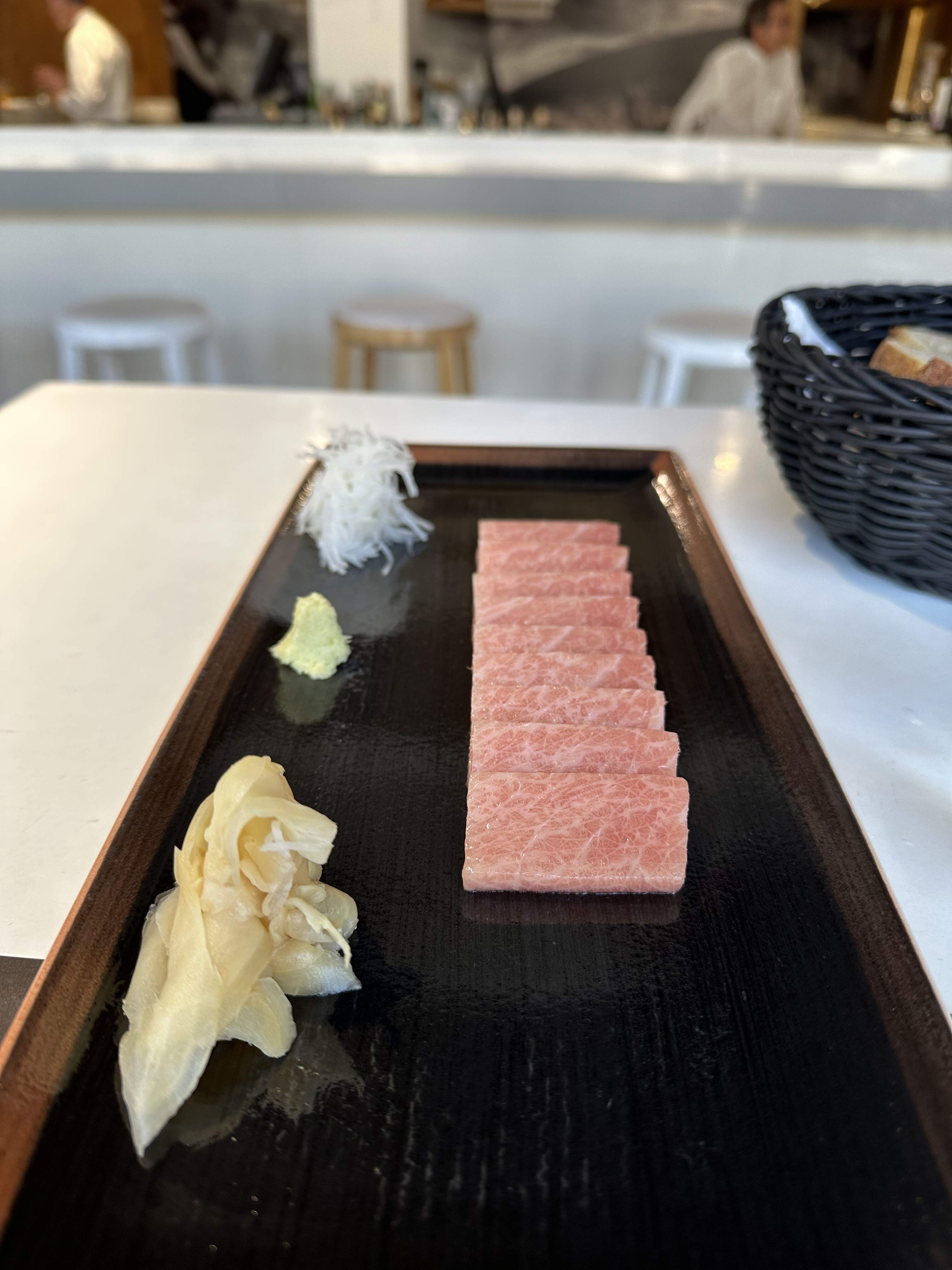
If I had to confine myself with one dish during my entire stay, this would be the one: Sashimii of blue-fin tuna belly (toro) served with wasabi, soy, ginger, etc…this is a half order@30 euro:

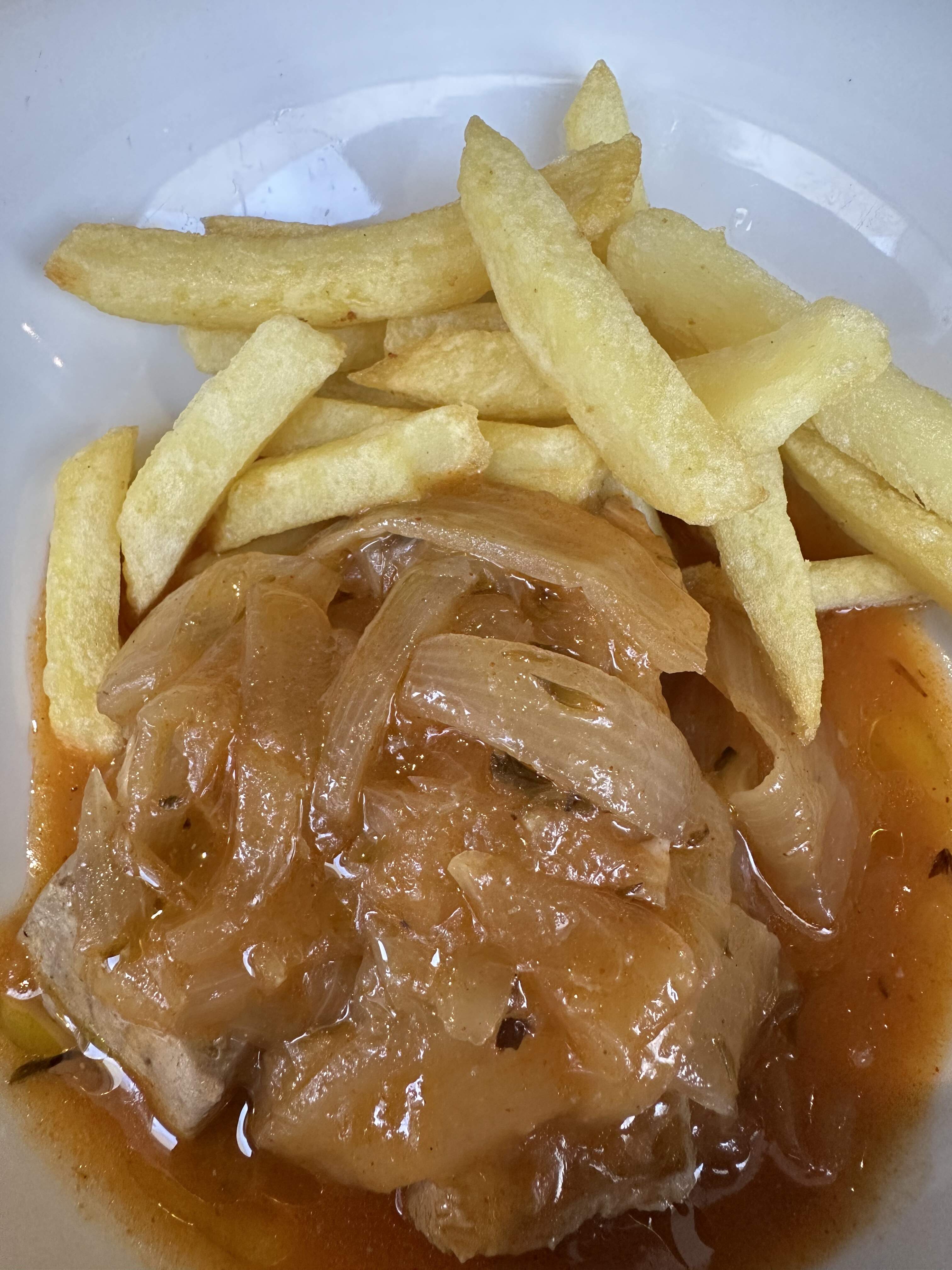
Classic atún encebollado, chunks of the fish in a tomato-ey onion sauce…signature dish found on menus across the coastline, done to perfection.
Fries were mediocre but good bread sopped up the sauce:

Total: 46.25 euro

2 Likes

While internet is strong, here is lunch at LA CASTILLERIA on a Monday afternoon.
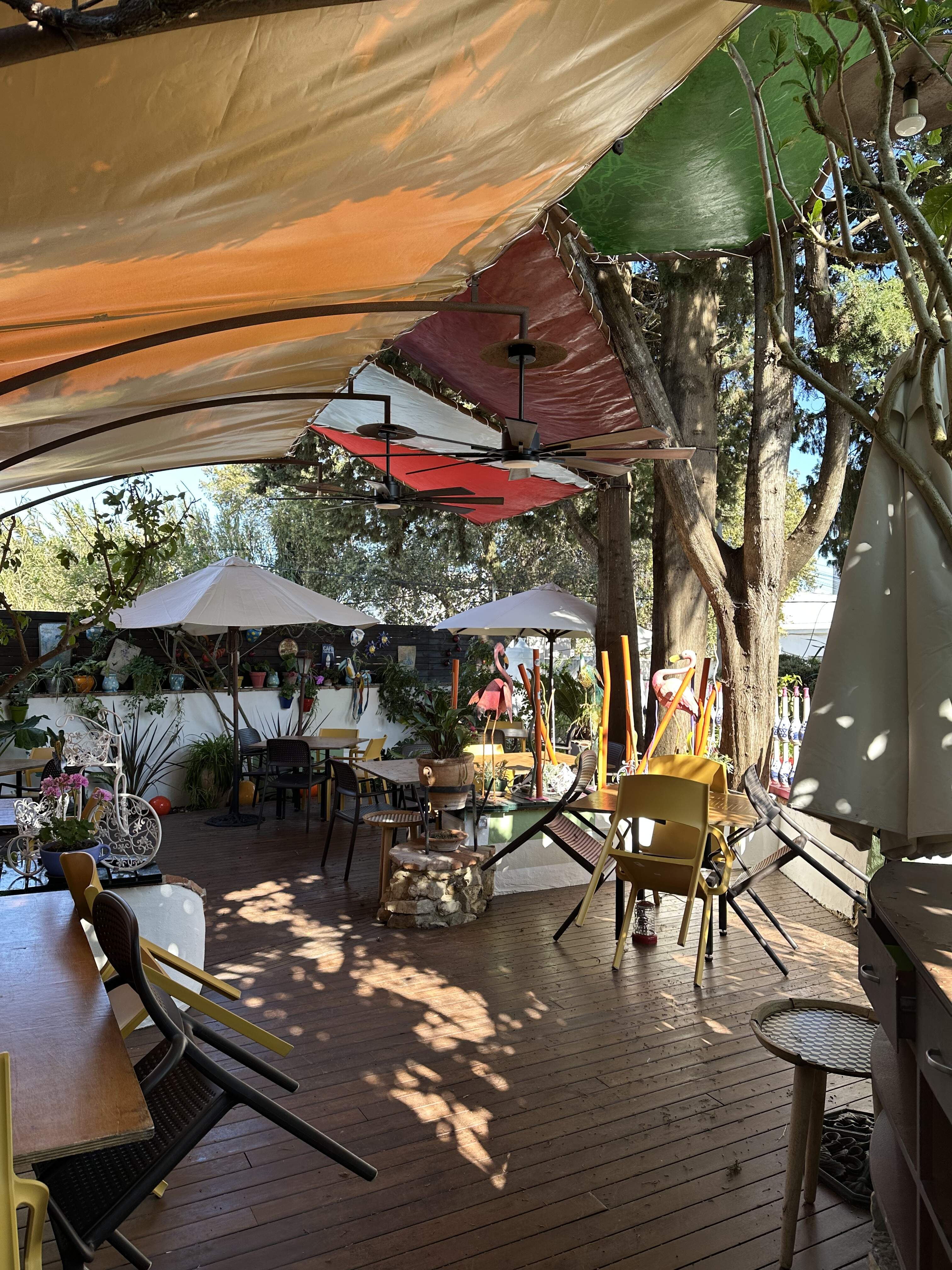
Wonderful open-air but covered dining area, bursting with plants and trees reaching high through spaces in the roof. I could bring a book and lounge around here, between bites, all afternoon. Open daily until later int he season, but only for lunch, with last seating at 15:00. Turn off the N-340 and creep slowly down the little lane leading to the restaurant, passing VENTA TORO before you reach LA CASTILLELRIA; there is a lot for parking (3 euro) but only once in my visits has an attendant been in sight. The place is so unobtrusive that the first time I visited, I was surprised–this is one of the most revered meat restaurants in Andalucia?? The relaxed, natural setting is unique, and charming, as is Ani, the owner and her lovely, warm staff.

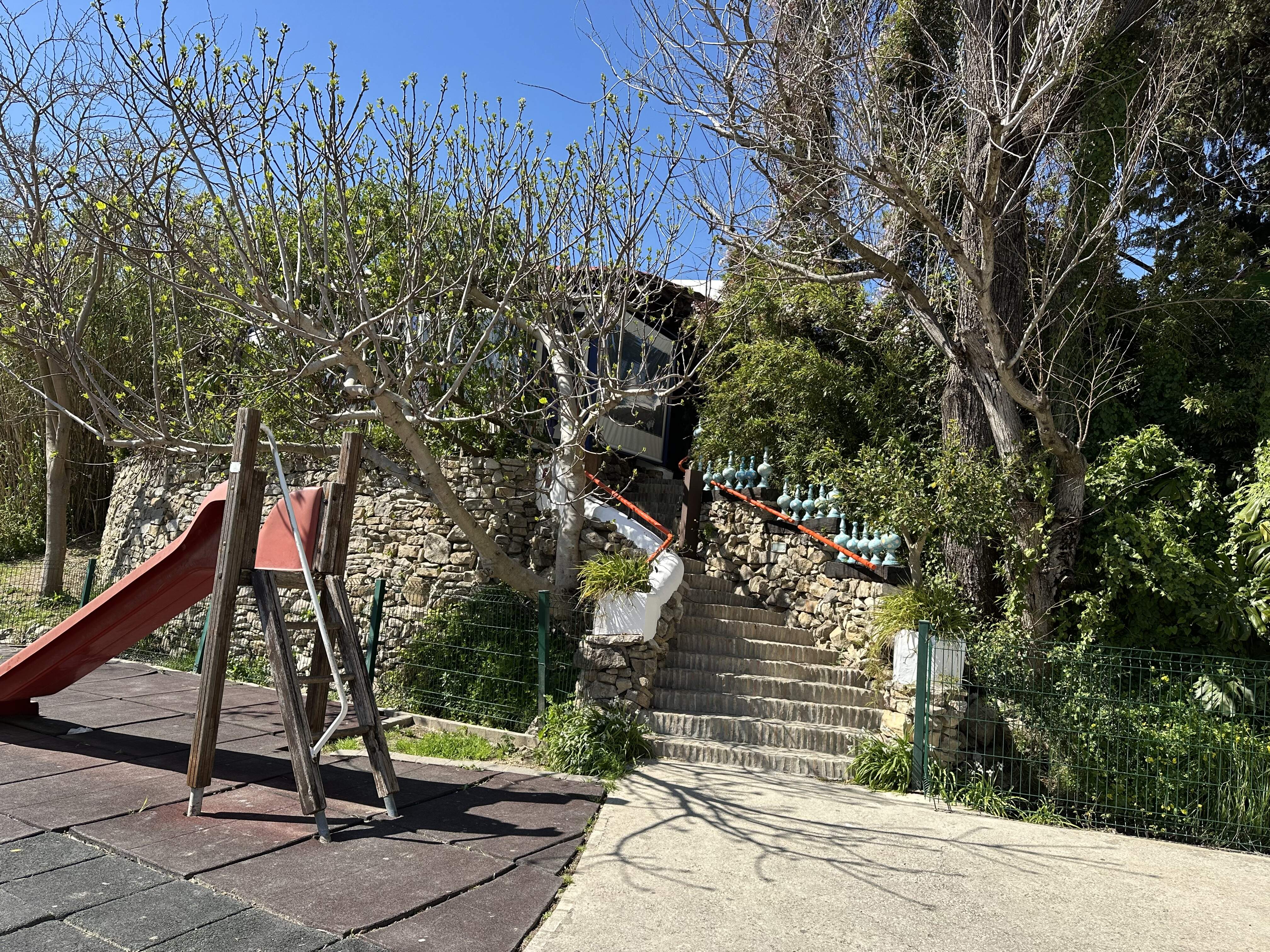
Unassuming entrance, behind the playground:


Front area of open-air dining room, near the grill room:

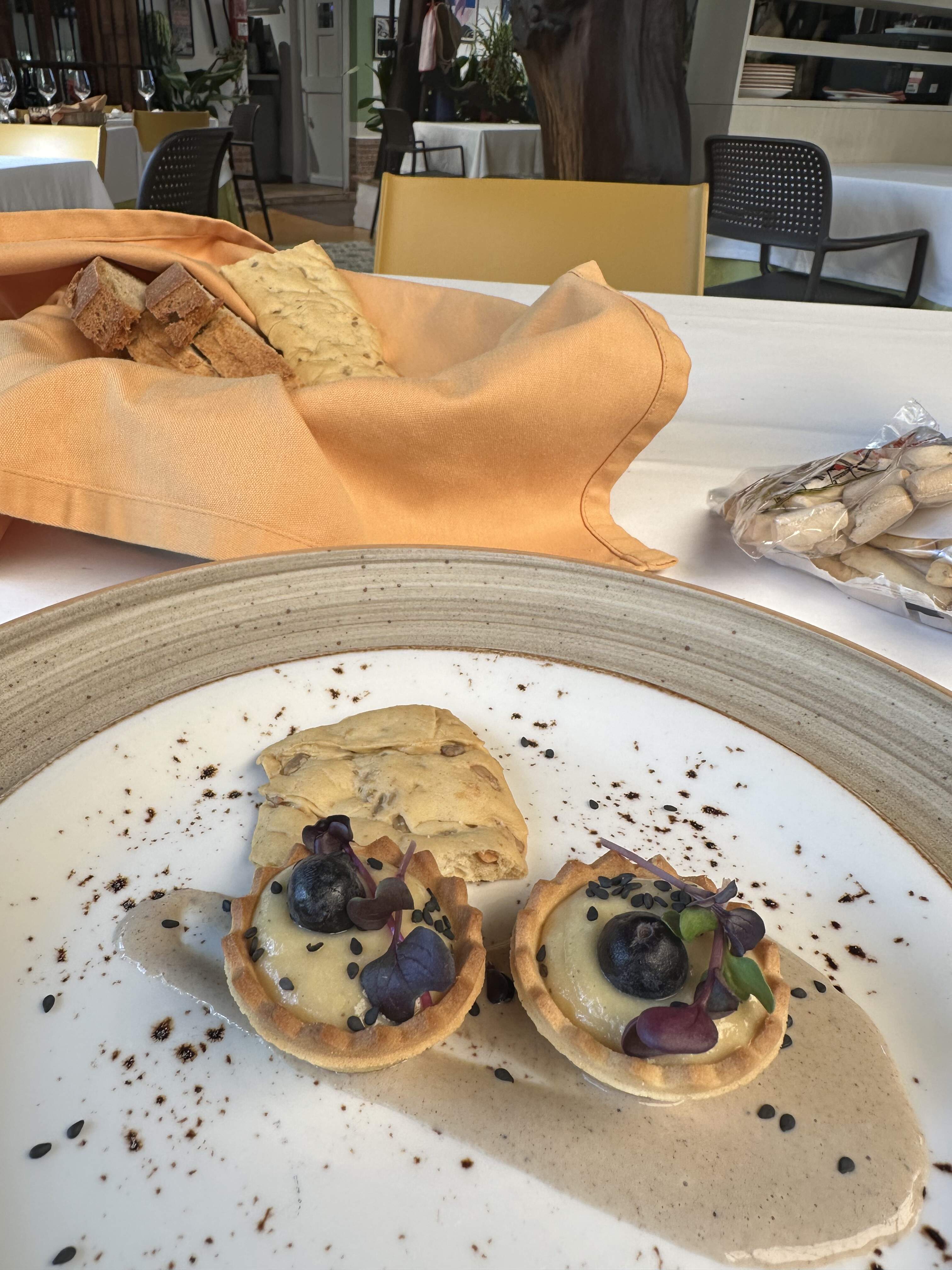
Courtesy starter of hummus in pastry cups I love how the Aran tenure finds its way into many dishes tin this region:

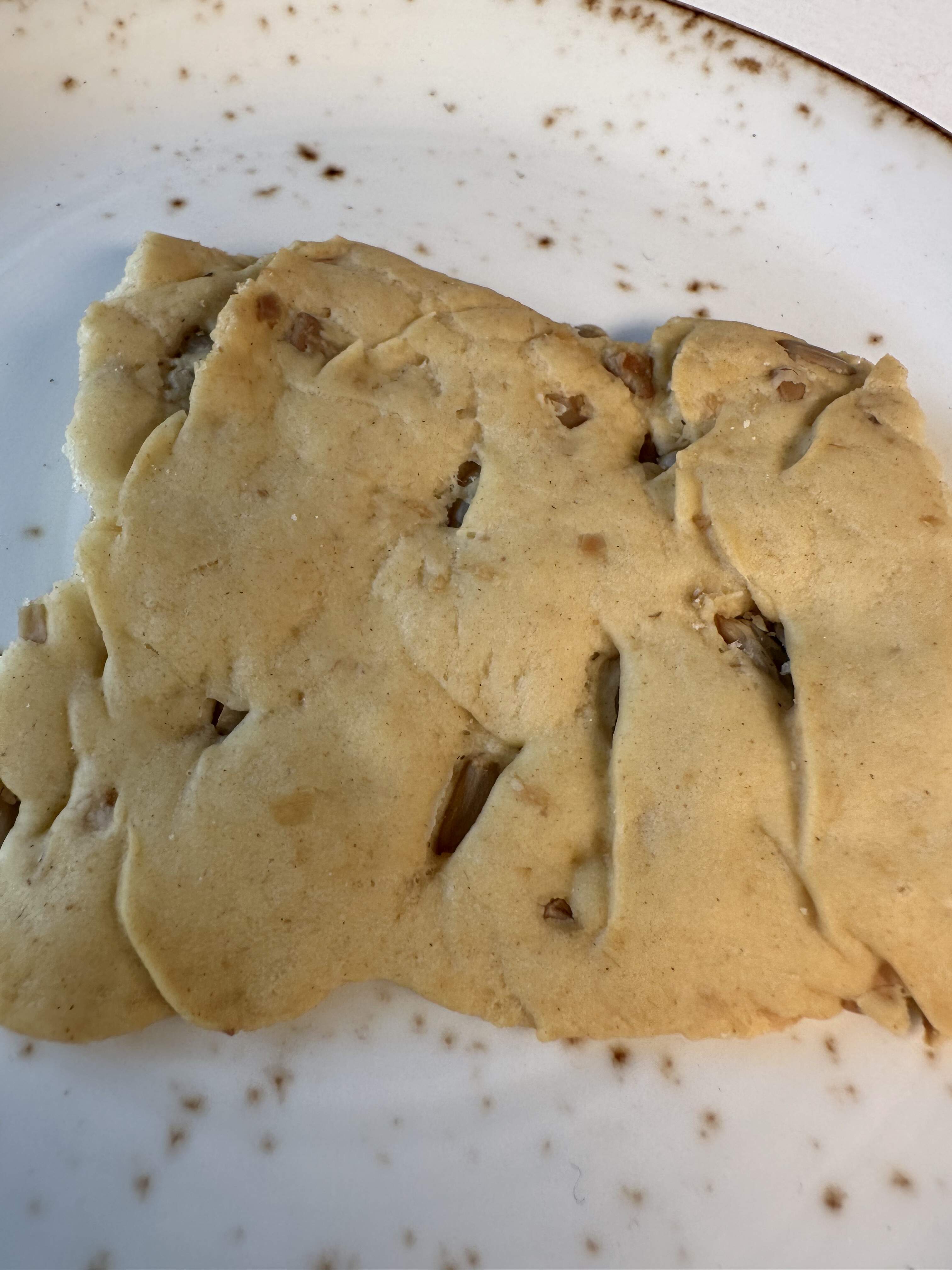
Unusual (for me) cracker bread----must learn details…

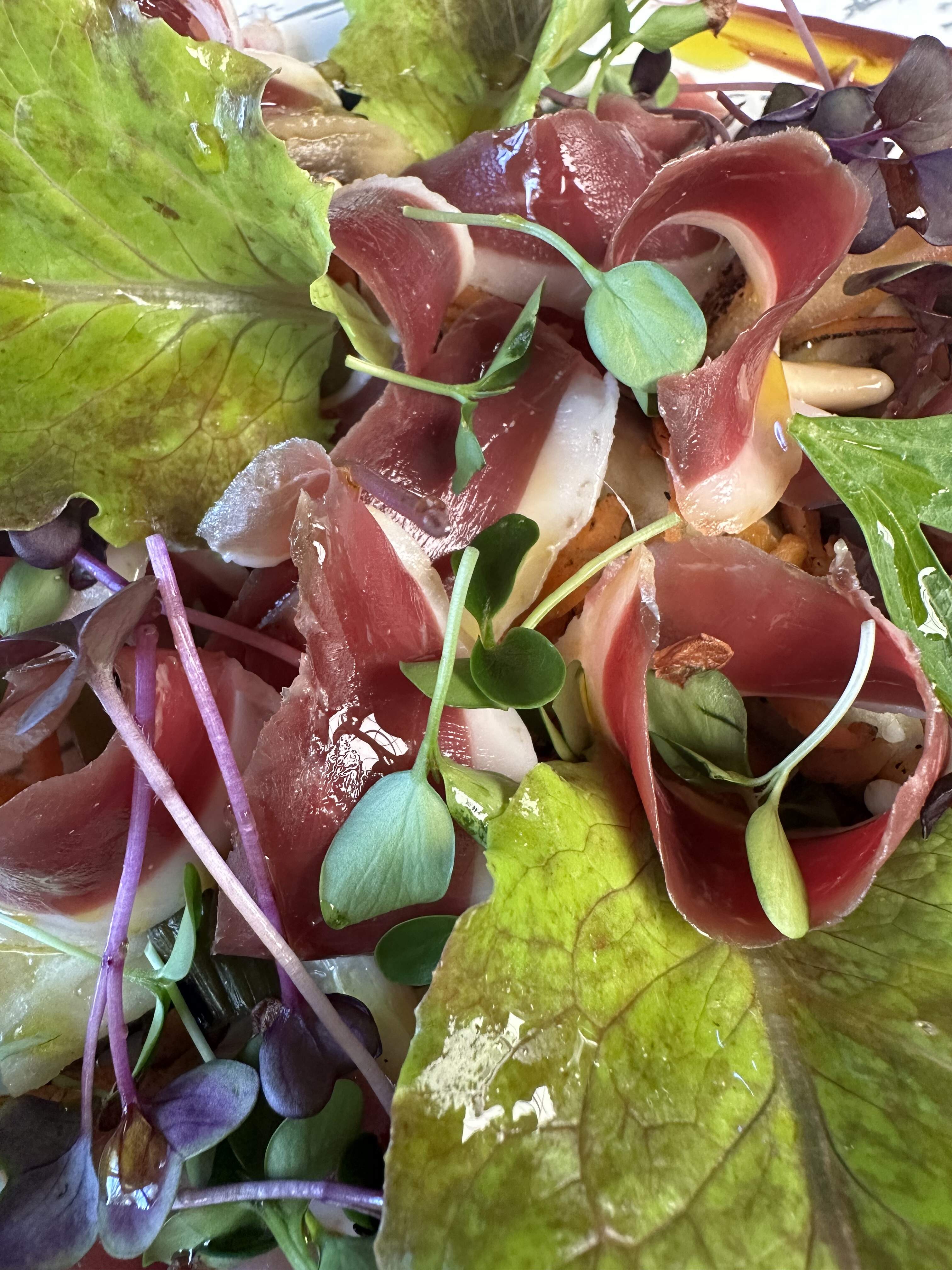
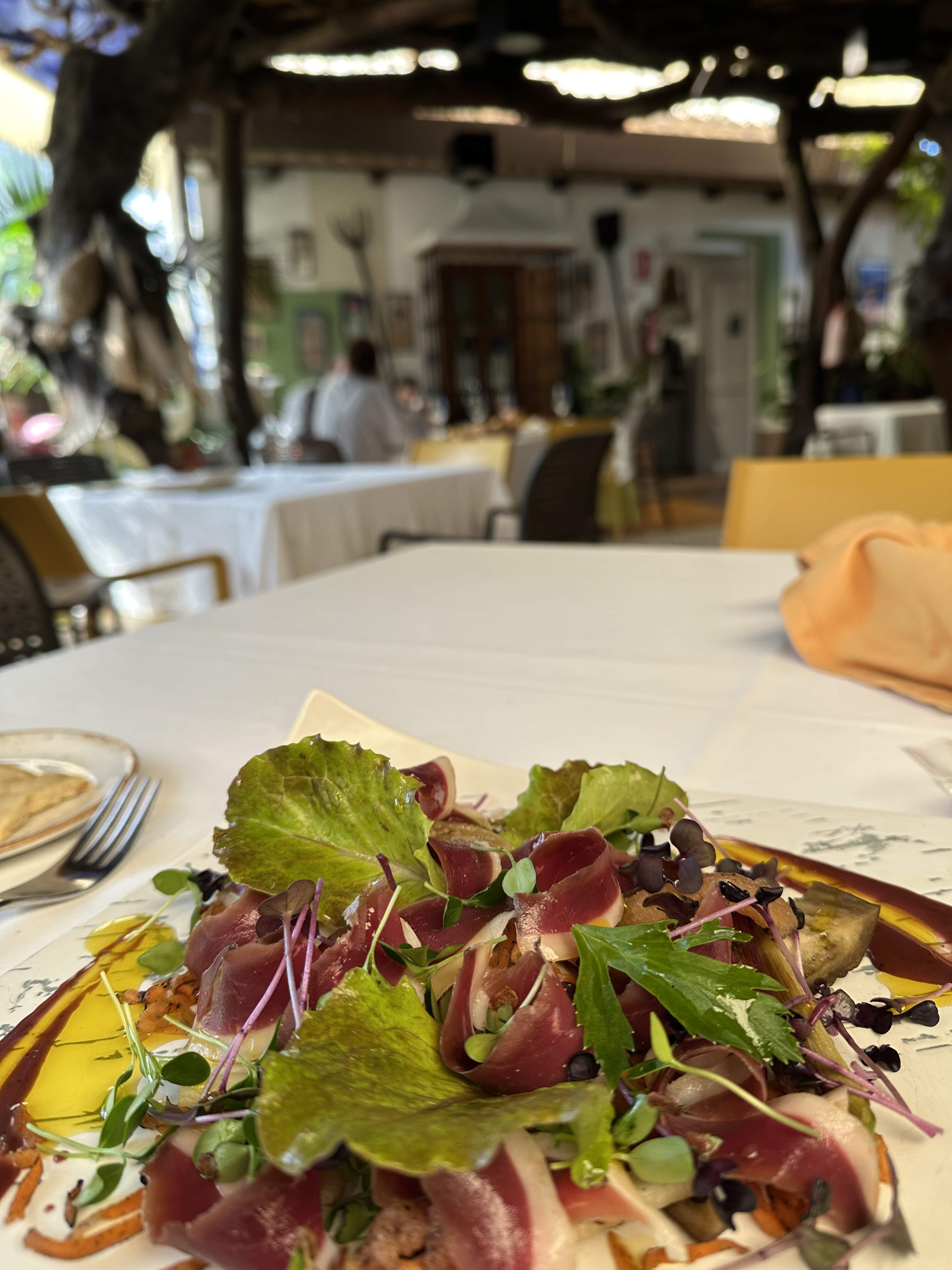
Who says all salads in Spain are boring lettuce with tomatoes and tuna?
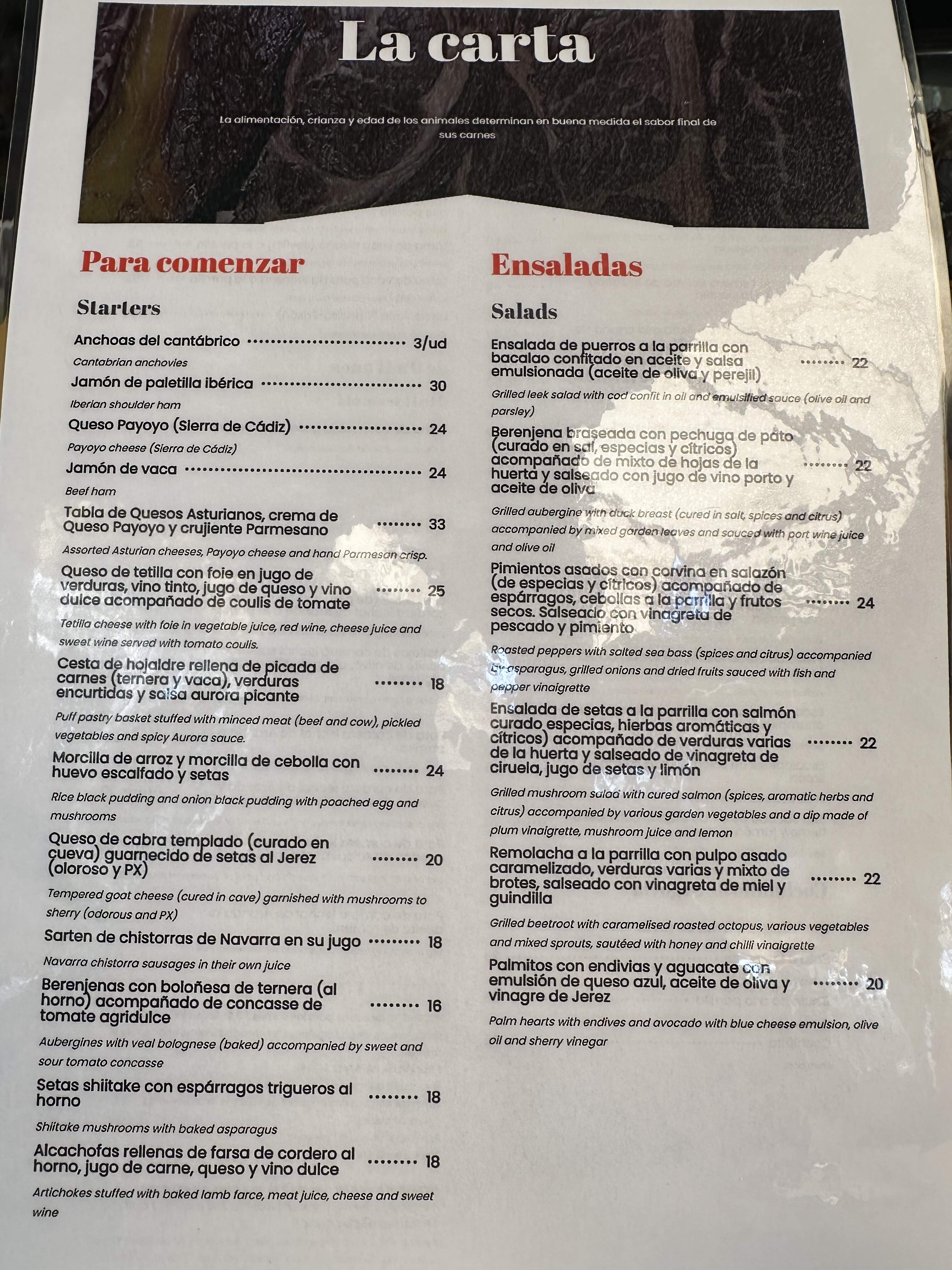
LA CASTILLERIA is famous for their grilled meats, but their salads are unusual and always stellar; this is cured duck breast with spring greens in a dressing of olive oil and Port. I recommend always taking a salad here; this is a half order:


1 Like

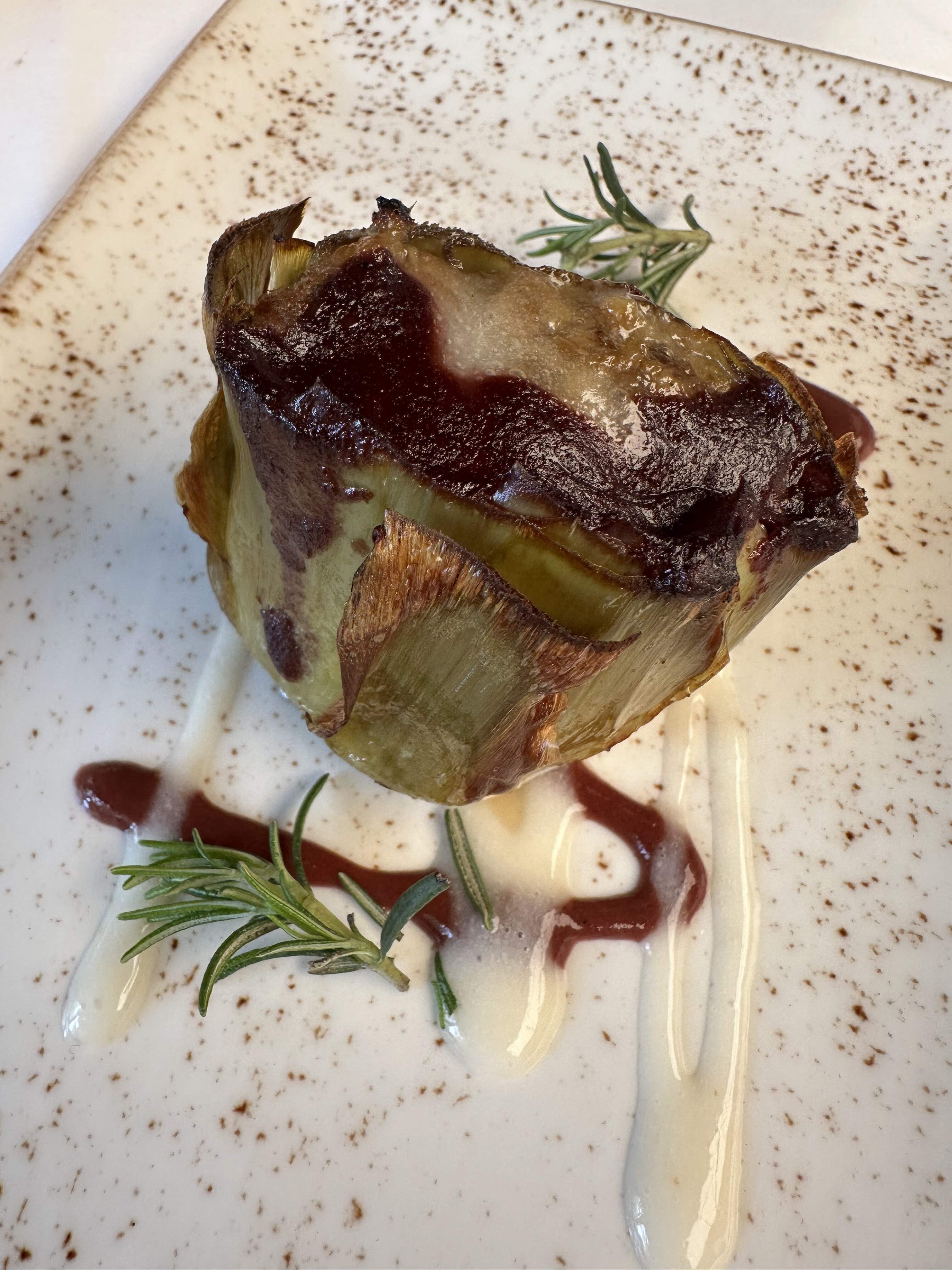
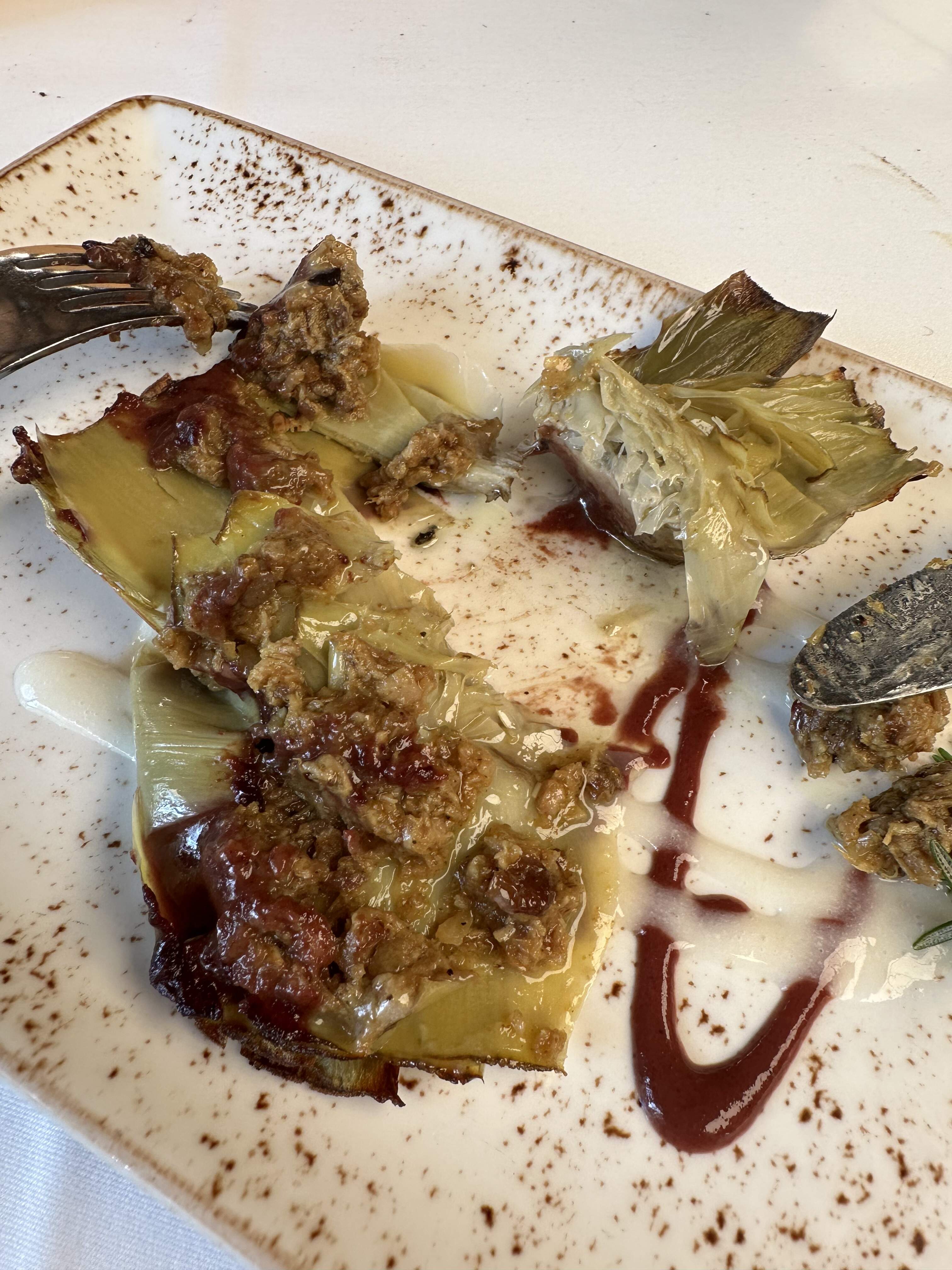
When the competition is announced for the “best artichoke dish in Southern Spain,” this lamb-stuffed heart of the vegetable will be in the running; a half order:


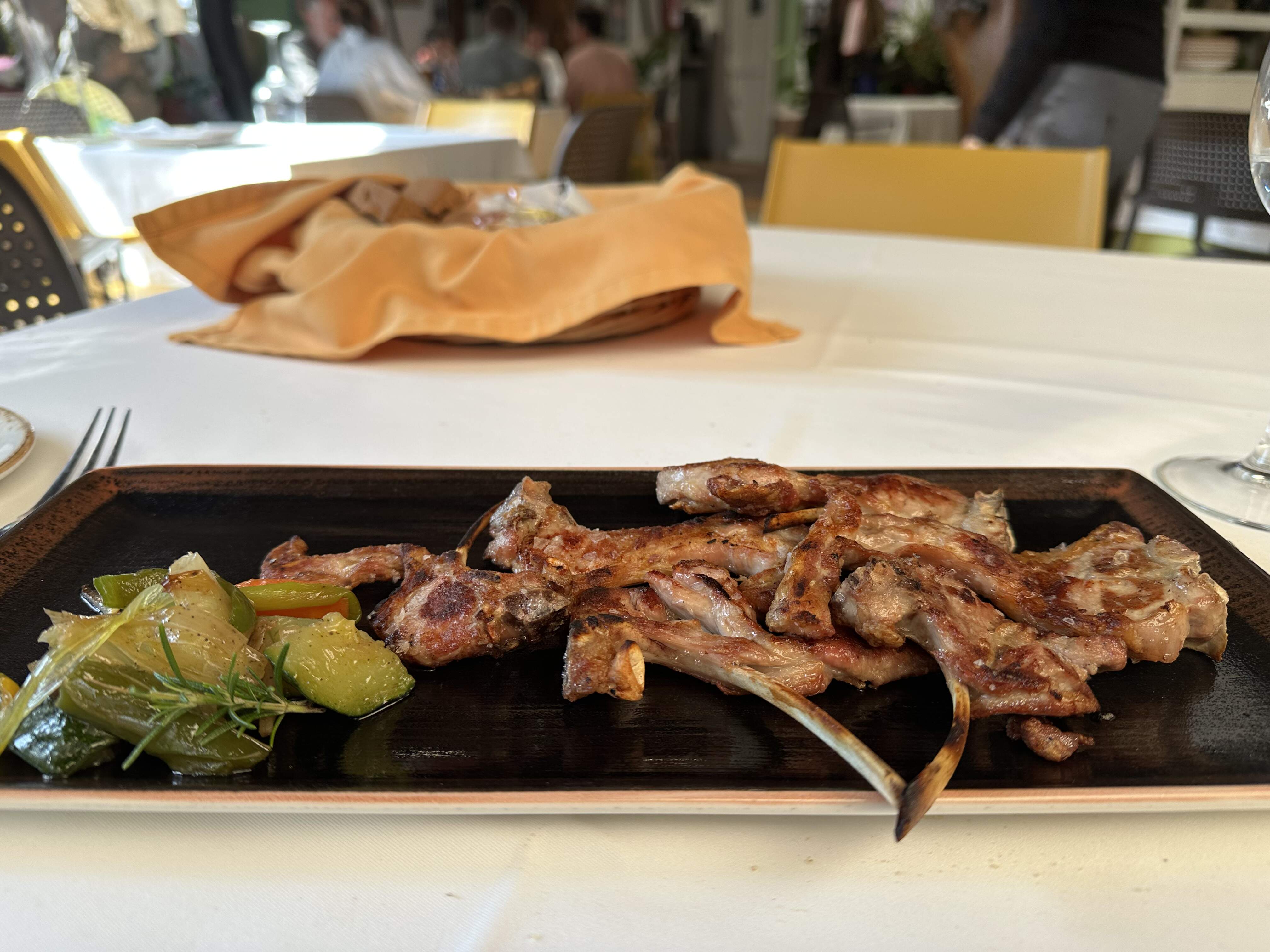
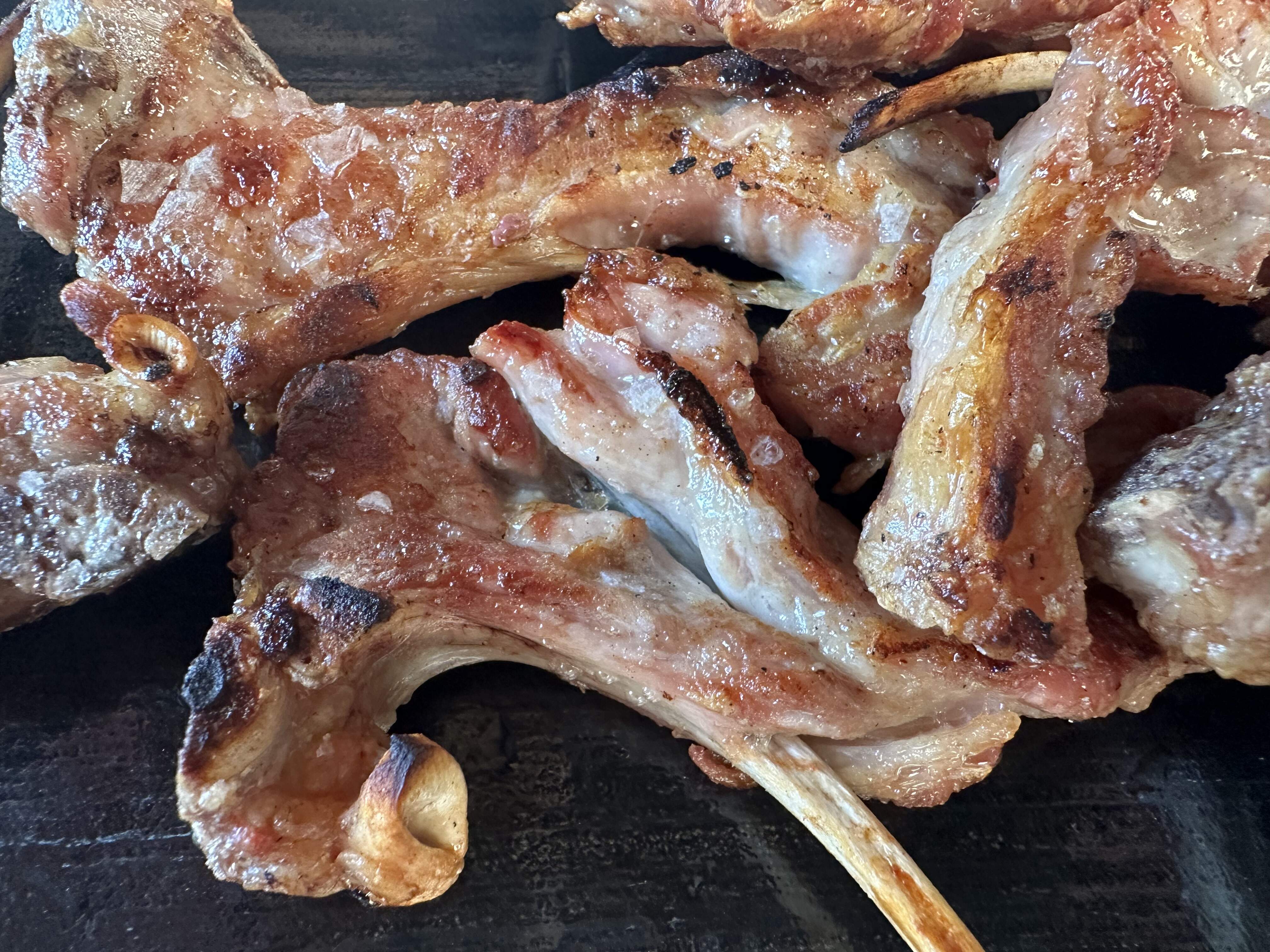
Main course, tiny suckling lamb chops:


Final bill: 49.50 euro

2 Likes

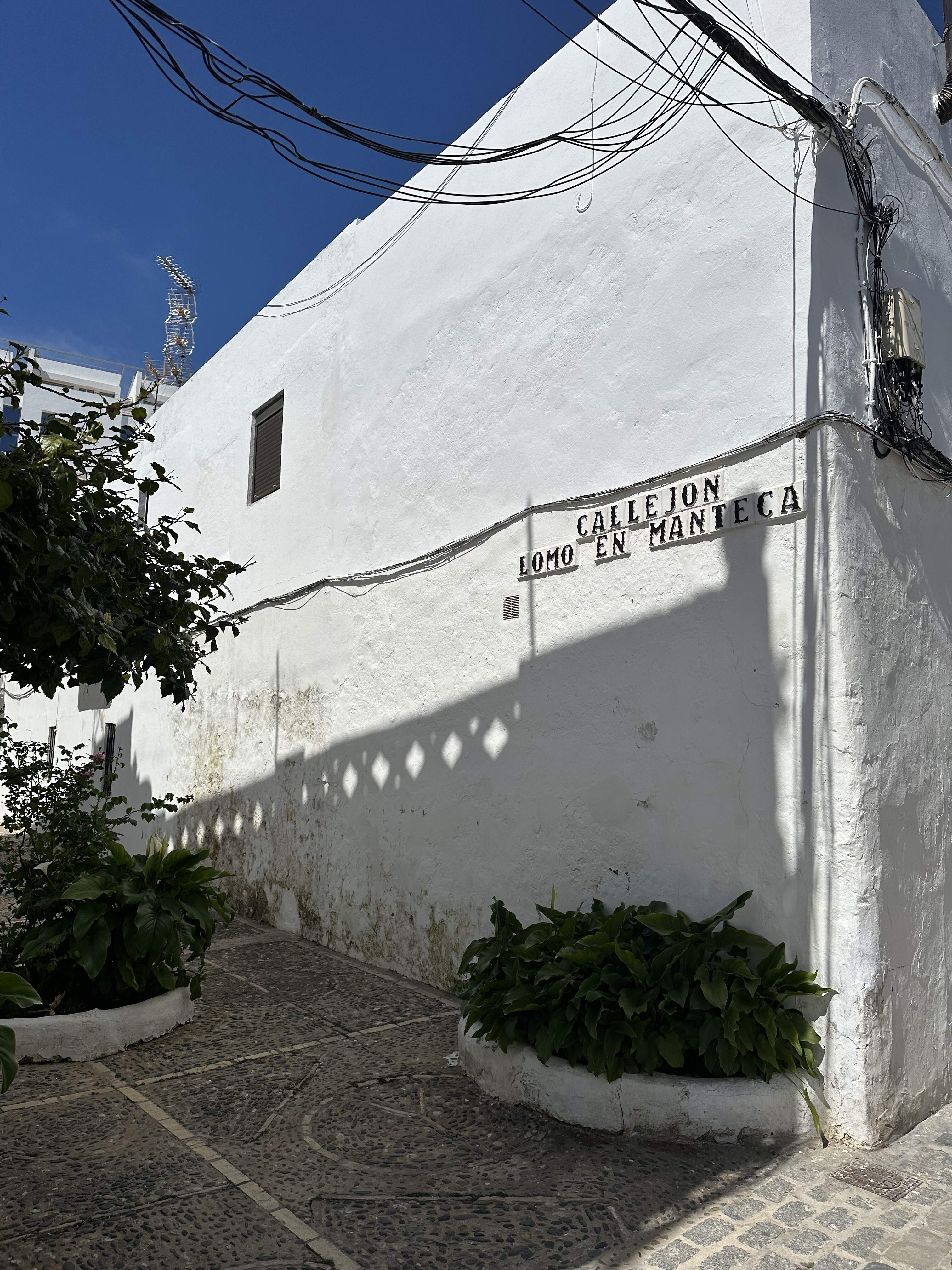
Before I proceed, apropos of the current thread by Maribel about Vejer and its legendary “red lard,” or "Manteca colorá, I offer these:

Dates for this year’s Festival:

1 Like

While this thread is still focused on the town of Vejer, here is an account of my lunch yesterday. The Califa group owns ten properties in Vejer and their Crown Jewels are the Hotel La Casa de Califa and its’ restaurant, EL JARDIN DE CALIFA.

Up until now, I’d avoided these places, probably for no better reason than that fact that the restaurant always seemed to top the ratings on TripAdvisor–reverse snobbery guilty as charged.

Apart from the fact that this might be the least accessible (handicapped unfriendly) restaurant I’ve ever visited–down and down you go from street level, descending on a series of dark narrow sets of stairs, until you finally see the light at the end of the tunnel, daylight in the form of the restaurant’s patio.

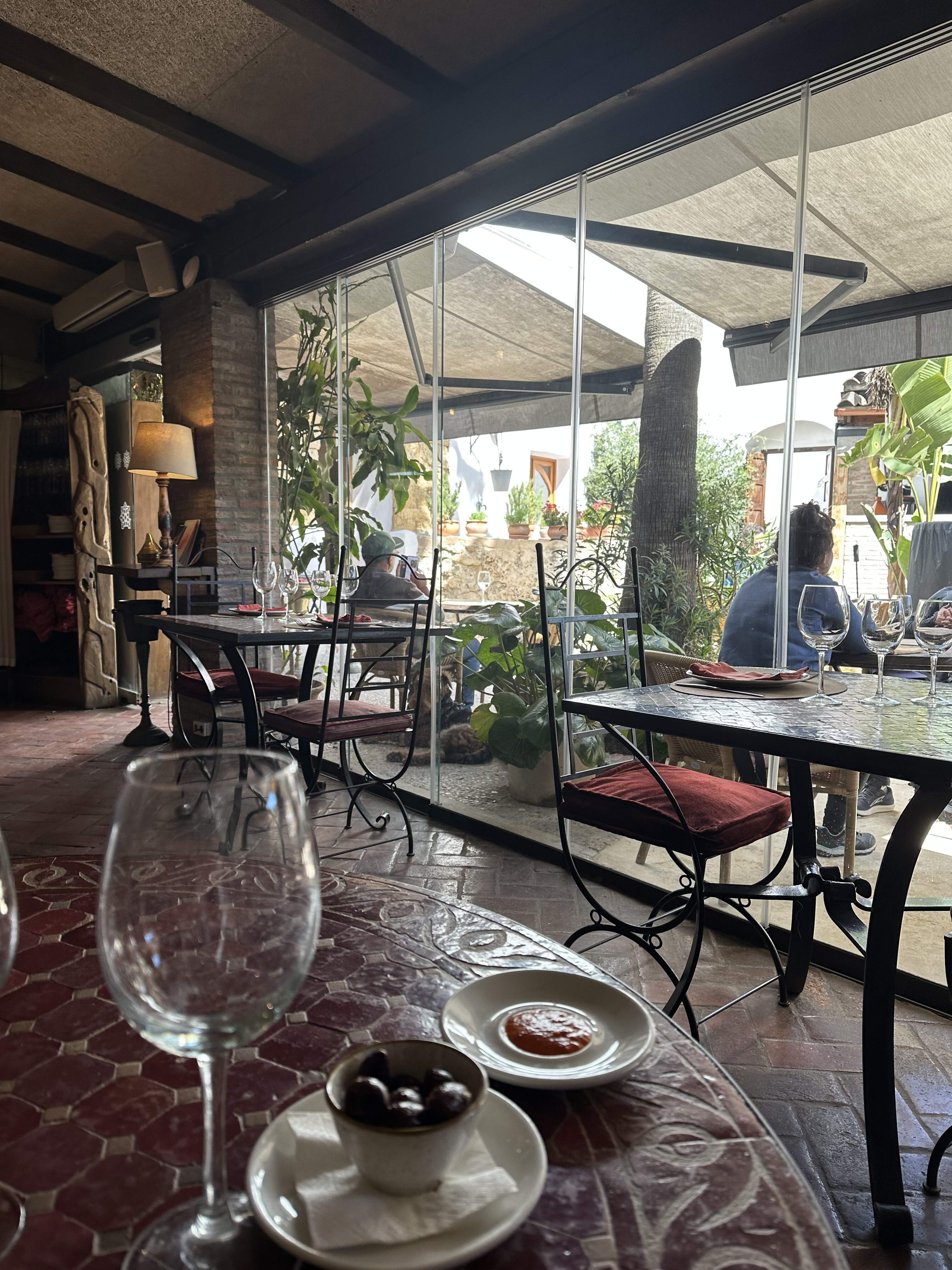
I opted to sit inside, adjacent to the pretty patio and I began to like this place almost immediately. Menu a blend of North African and Andalusia dishes, with a few Moroccan classics… Service lovely, diners a mix of what appeared to be locals and a few tourists… Just a really pretty space where you could imagine lingering over tea and dessert.

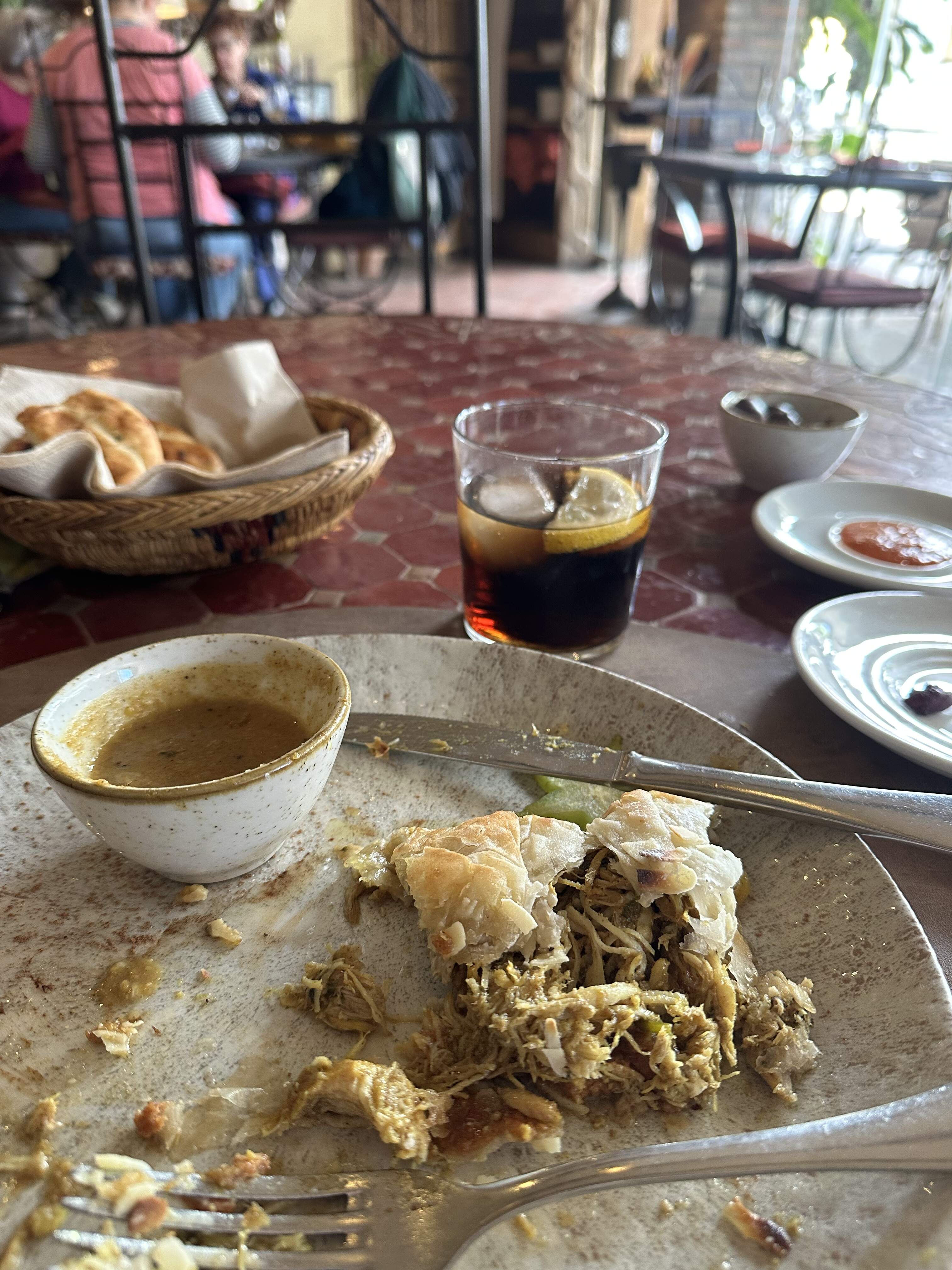
Hummuses, salads, grilled halloumi and vegetables, tajines…long menu that I suspect holds quite a few treasures. I know immediately that I wanted the pastilla, made here with chicken and not the traditional pigeon, and accompanied by a muddy-colored but delicious, slightly sweet sauce.

Lunch proved to be a delicious surprise; the bisteeya was wonderful–I’d not had this dish in decades and was reminded of how much I loved that sweet/savory combo typical of some North African dishes… I remember being thrilled by the “pastel Moruno” at a the PASTELERIA LOPEZ MESQUITA bakery in Granada recommended by Maribel on Chowhound quite a long time ago..one of my best memories of that stay in Granada were the treasures in that bakery.

I did not have much time to linger over dessert, but I hope to return, either here or to one of their other eateries in Vejer (FEZ is tempting me; must check out that menu soon)

View from my inside table:

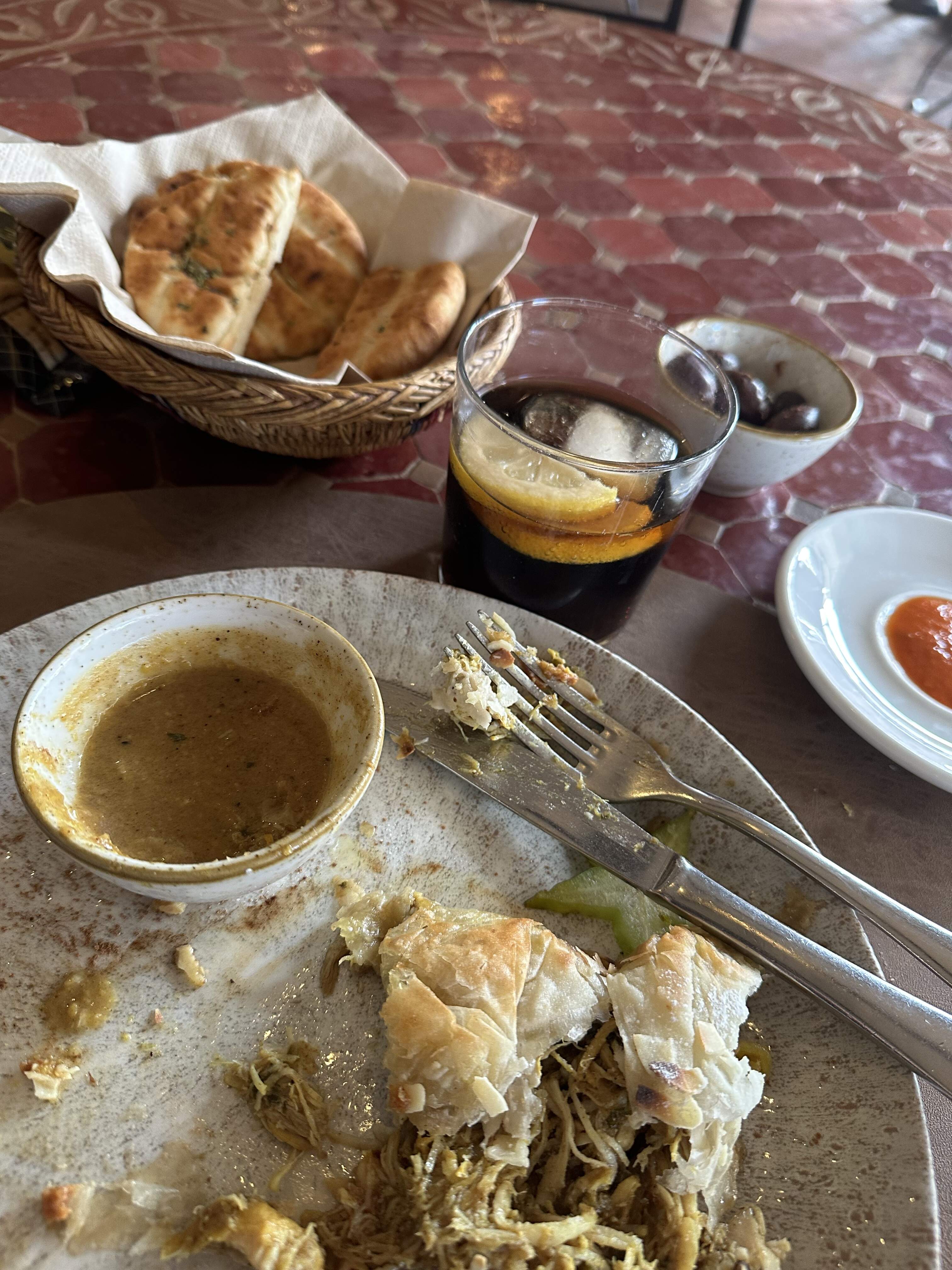
I demolished most of the dish before I remembered to snap a photo:

Remnants, including interesting pita-ish flat bread, of which I took home the leftovers:

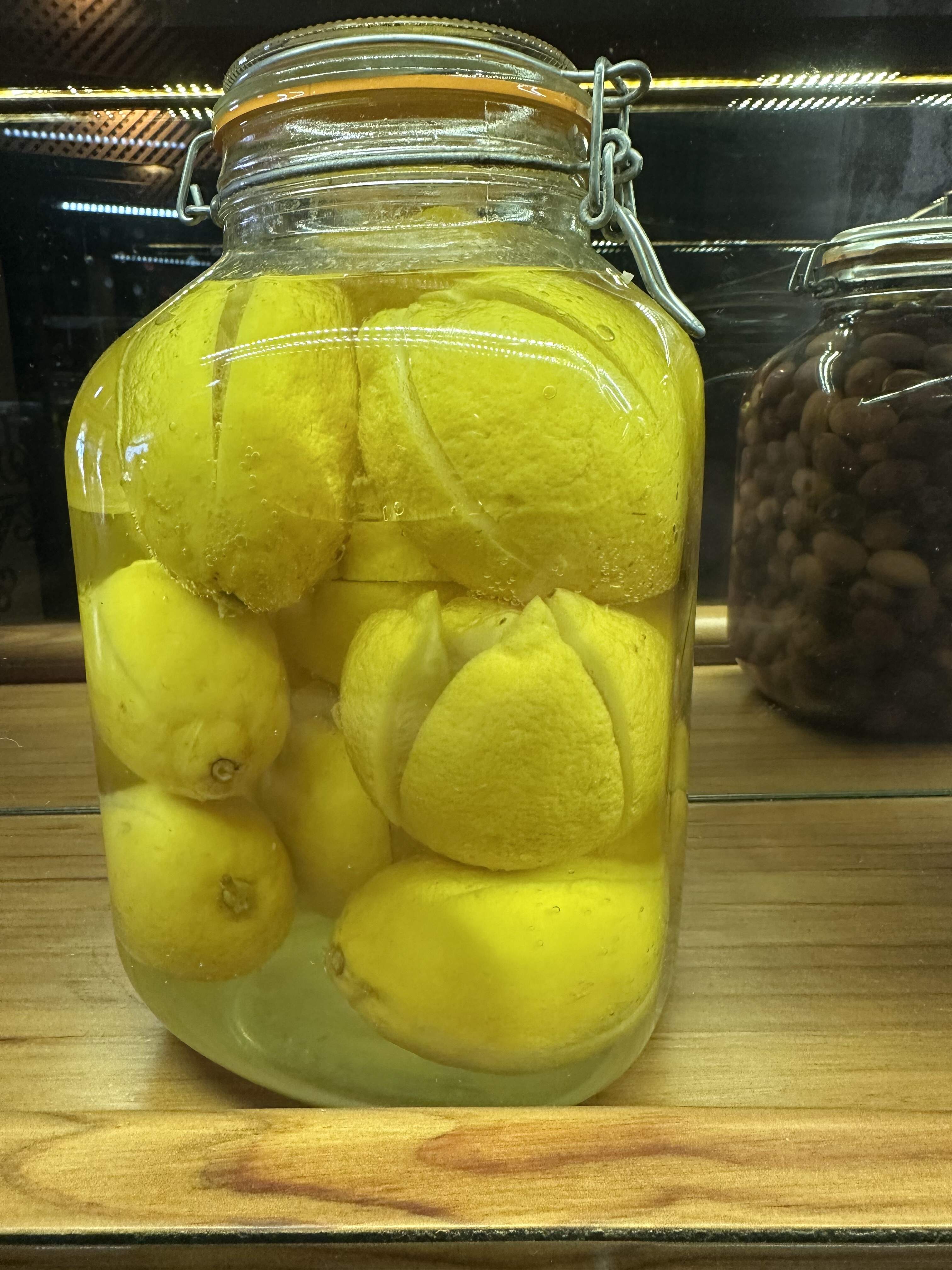
Preserved lemons at the counter:

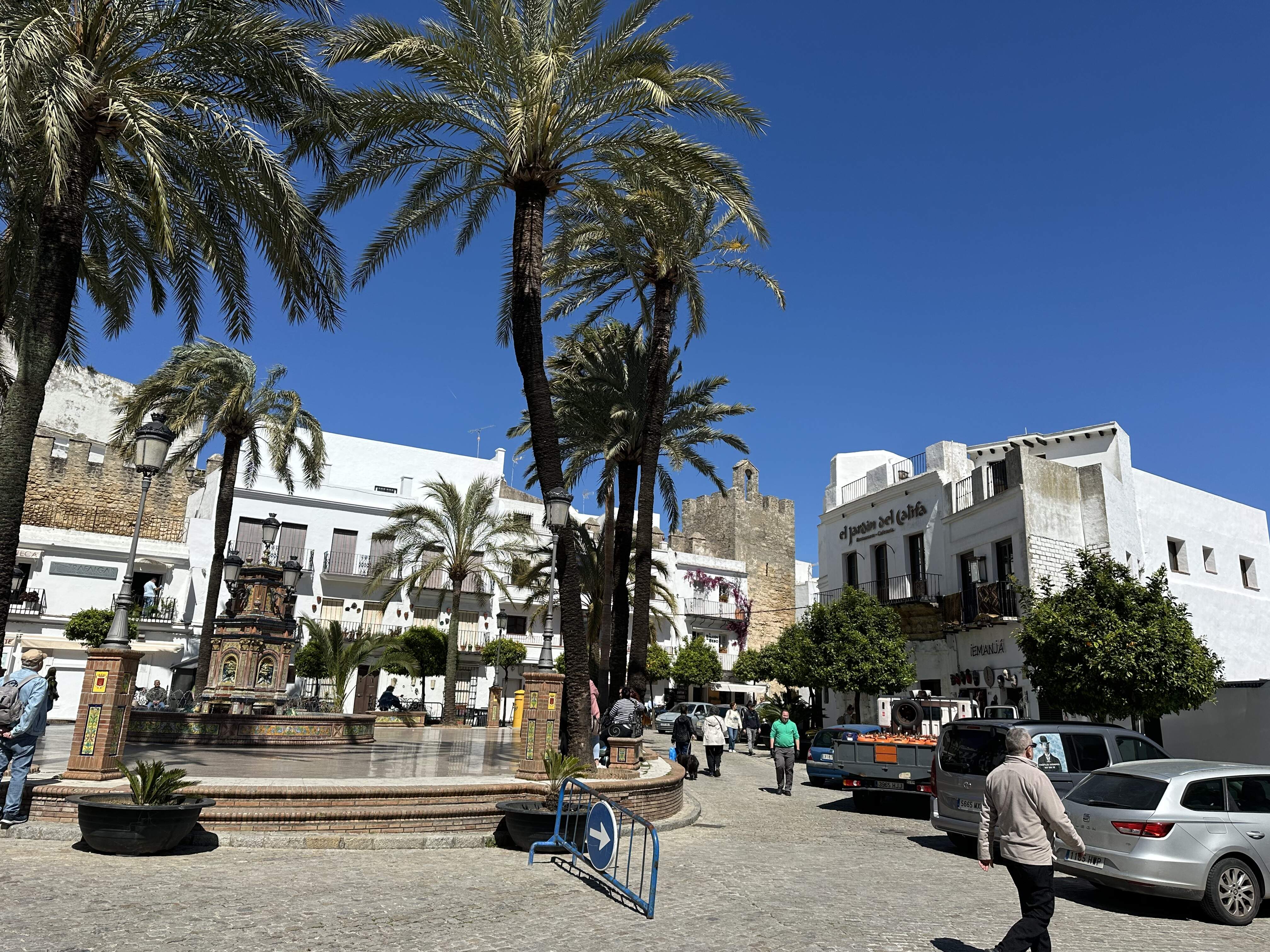
Restaurant faces the main square of the town, the Plaza de Espana; notice there are no crowds, unlike other of the more famous “white towns.”

2 Likes

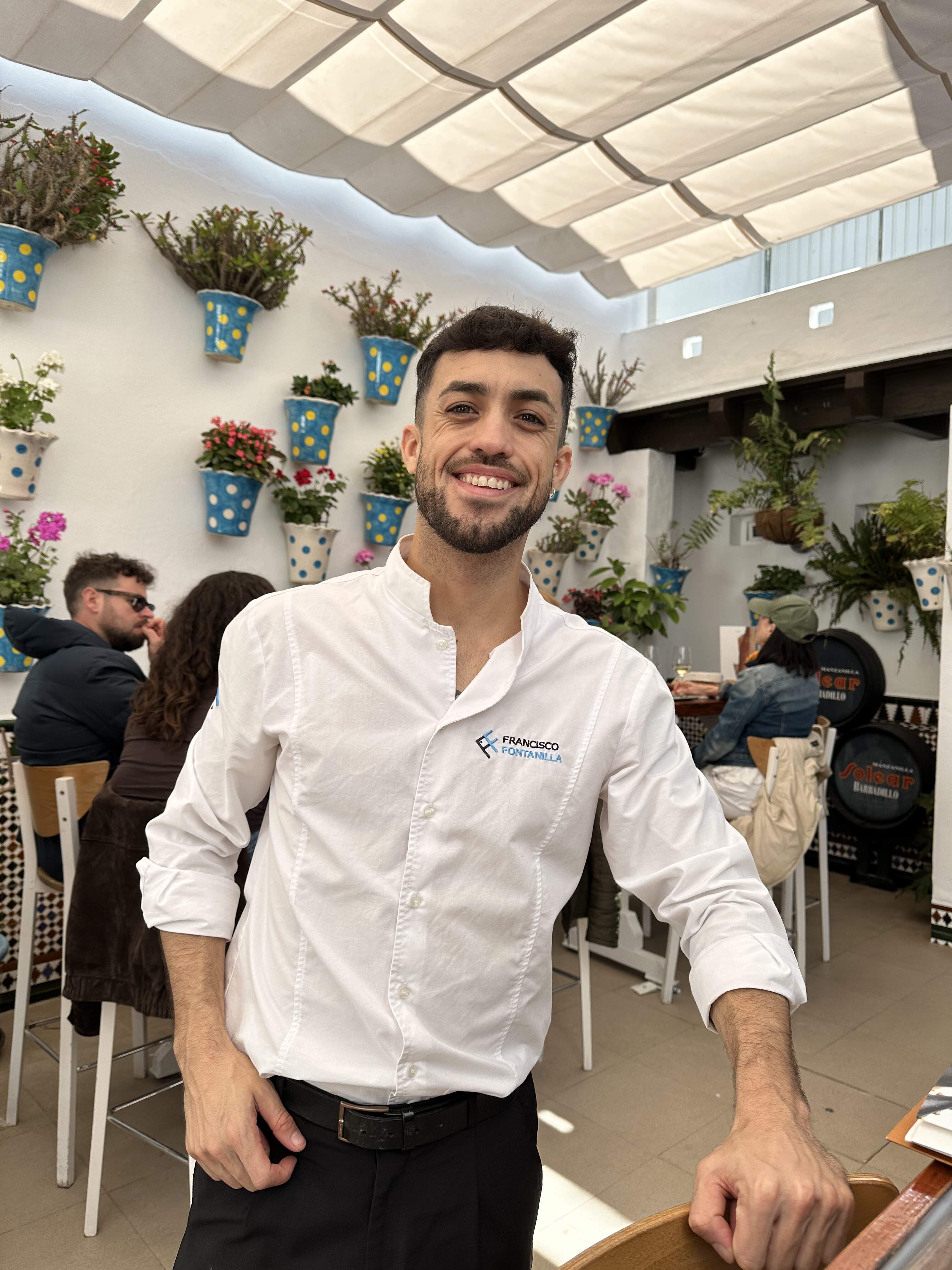
RESTAURANTE FRANCISCO FONTANILLA, on the beach outside the town of Conil de la Frontera

There are probably dozens of seafood restaurants along the coastal strips close to Vejer, but this one was new to me, and recommended by Maribel. I believe that my bar is set very high after many meals at ANTONIO and EL CAMPERO, but this is a solid restaurant, heaving with local families on a Sunday afternoon, and I had a lovely meal and would return.

Even though I had reserved, the table I was given might have been one of the worst in the restaurant–just outside the rest rooms in the area between the front bar area and the main dining room. I took my seat at the high-top table with no complaint but within a minute or two, the sweet male waiter must have taken pity on me, because he moved me to a better perch in the front room.

The great thing about dining alone in Spain is that restaurants are willing to split orders in half. The not-so-great thing is that by dining alone, you are still limited in the amount of dishes you can try unless, unlike me, you have. a large appetite.

No matter at all. I enjoyed myself very much and, after lunch, I took a small walk along the beach by the side of the restaurant. I don’t think this is what most people imagine when they think off beaches in Spain–this is a wide, long beach of soft white sand…fit for a travel poster–and there are many similar up and down the Costa de la Luz.

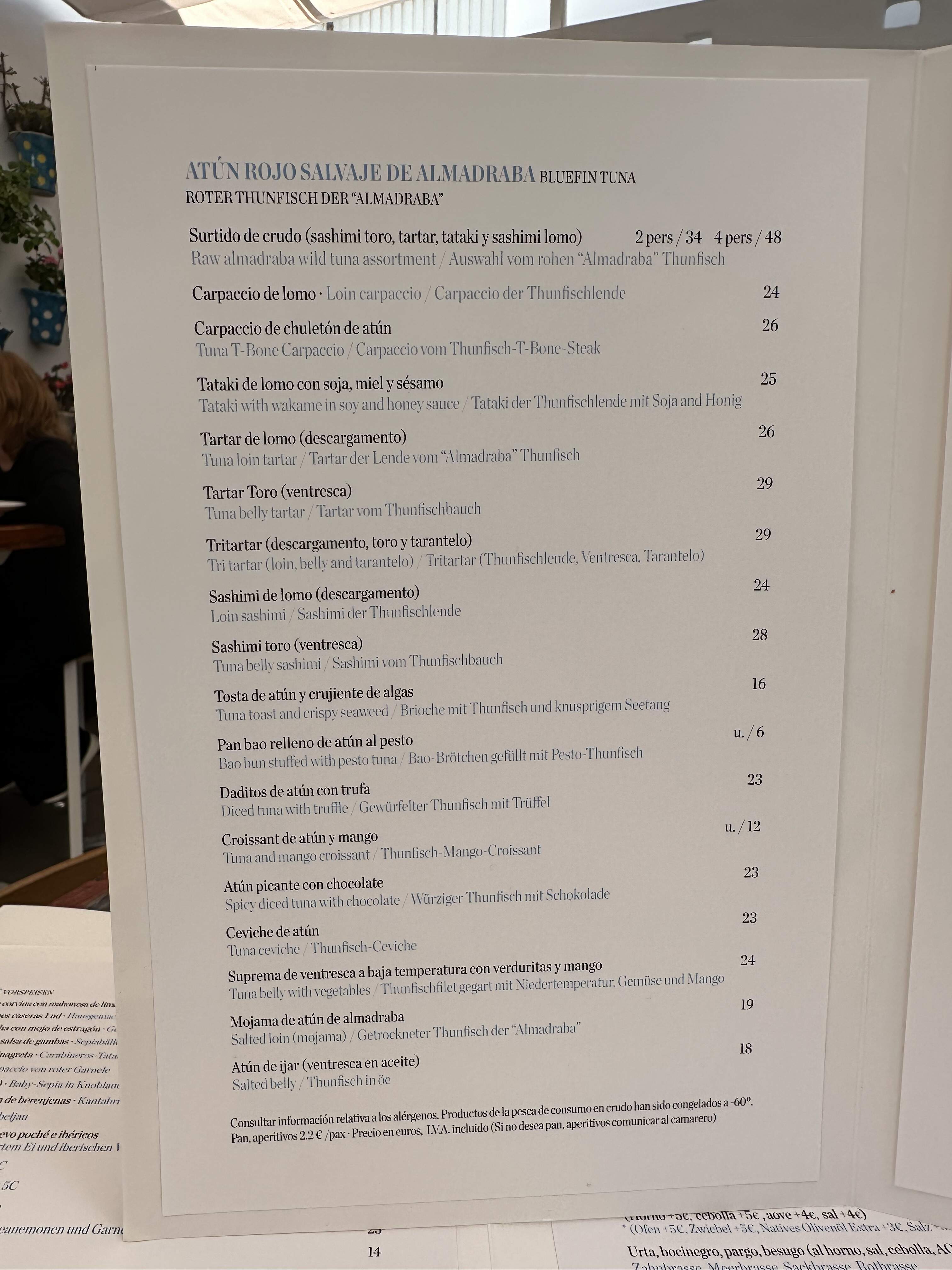
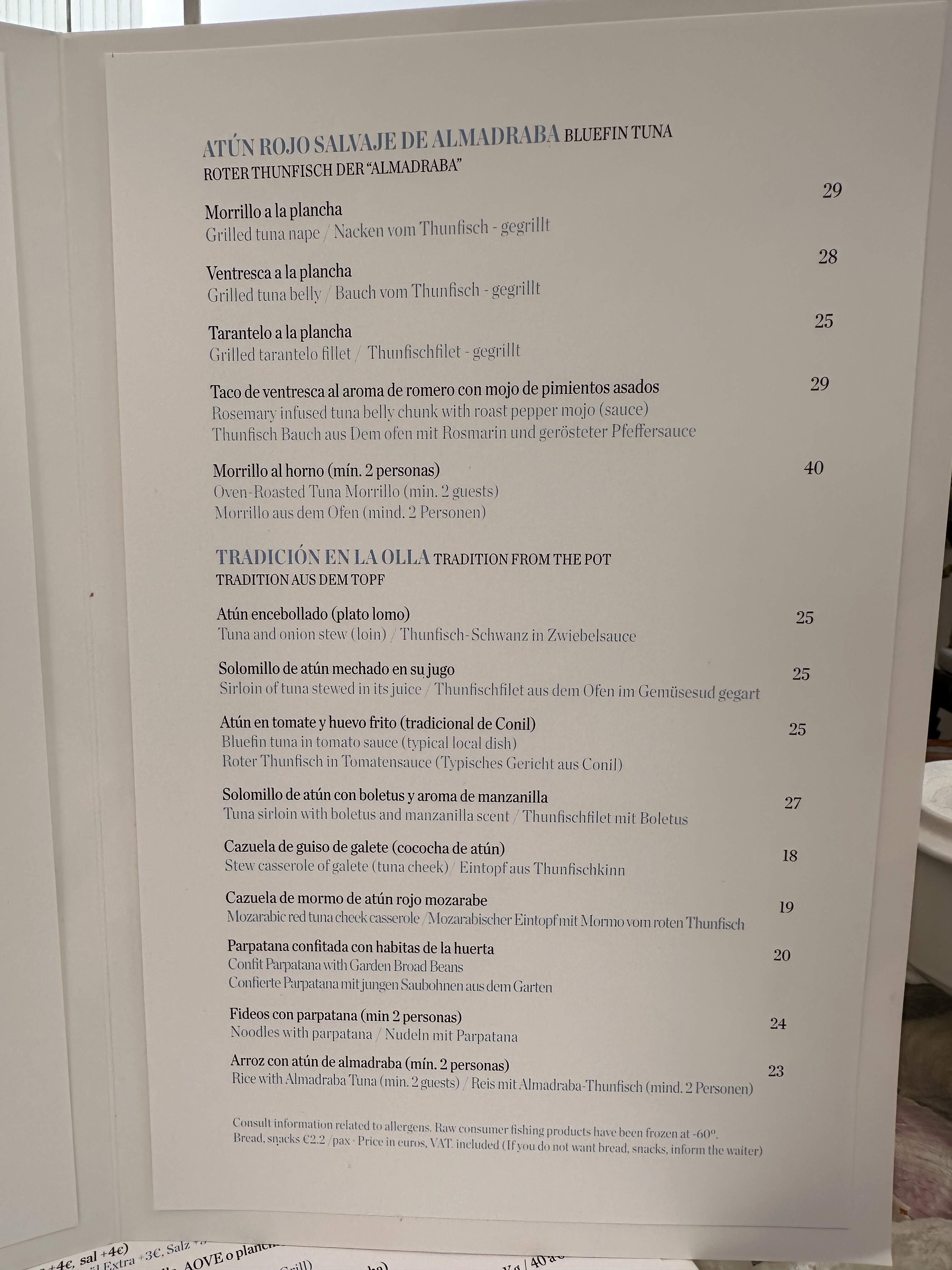
The shorter of the menus has two full pages of blue fin tuna dishes:


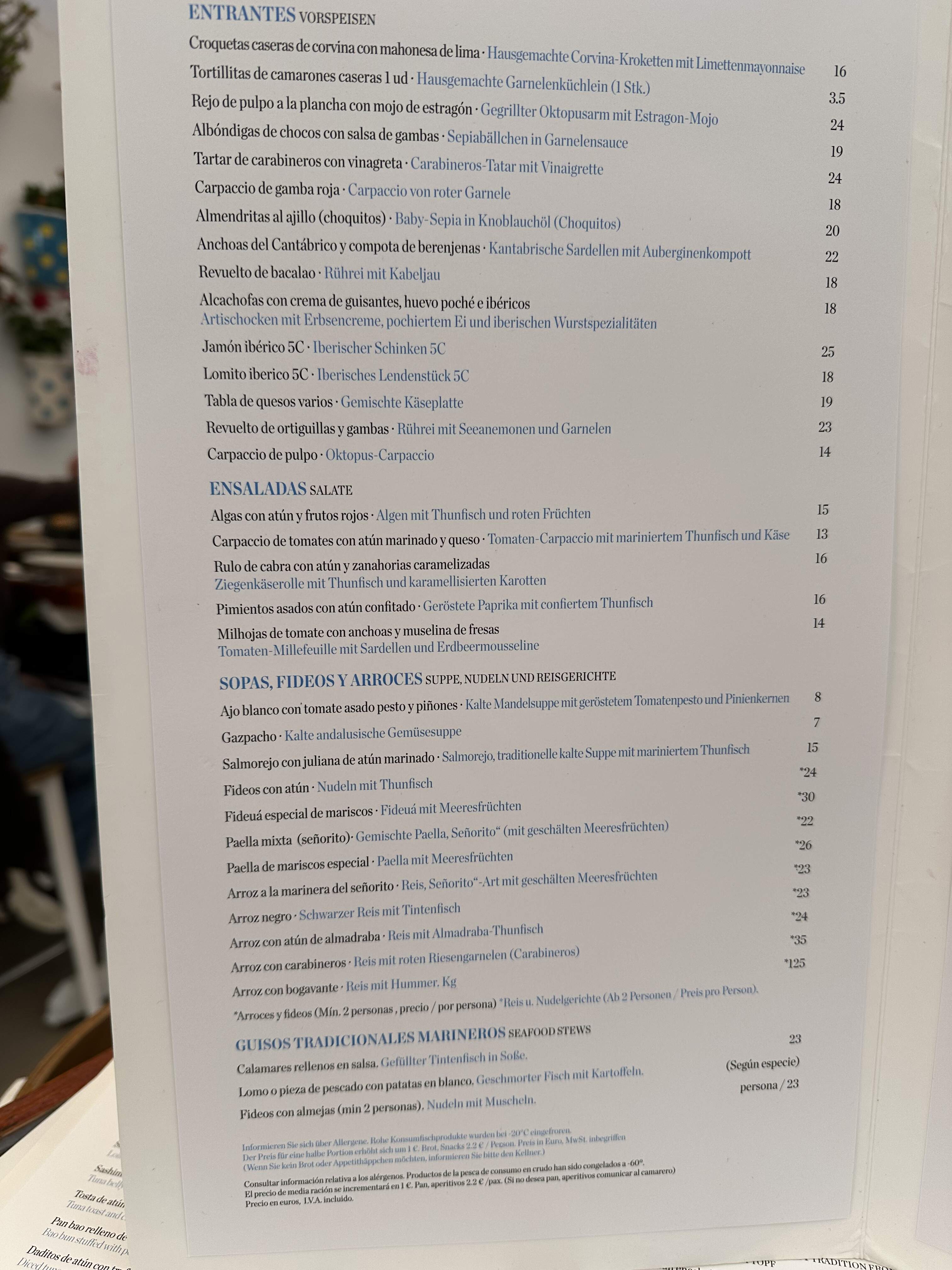
Plus at least two additional pages of various plates:


And there was an entire, larger carta that I did not even bother to open, plus a long wine card.

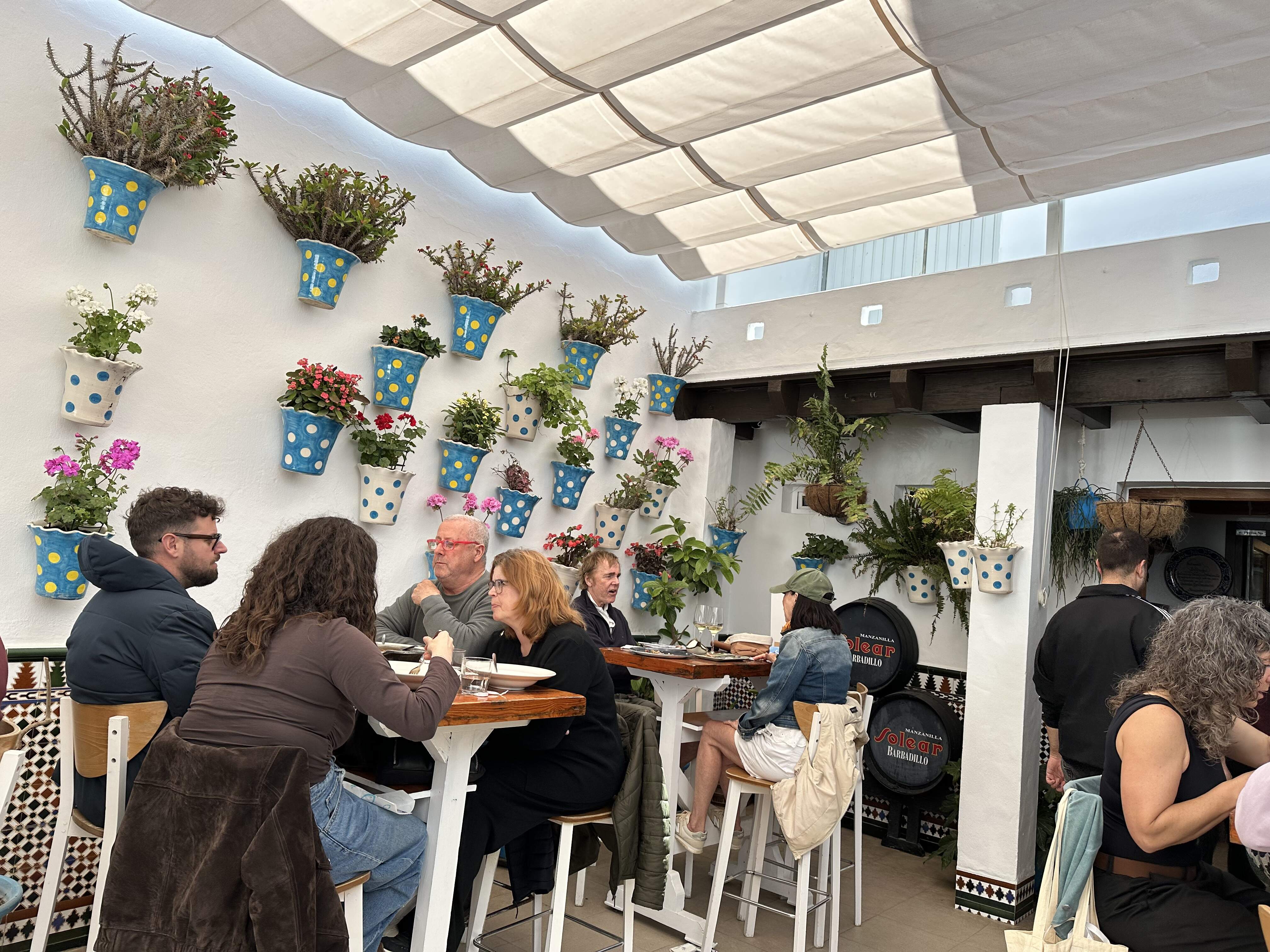
Interior photos of the front room:


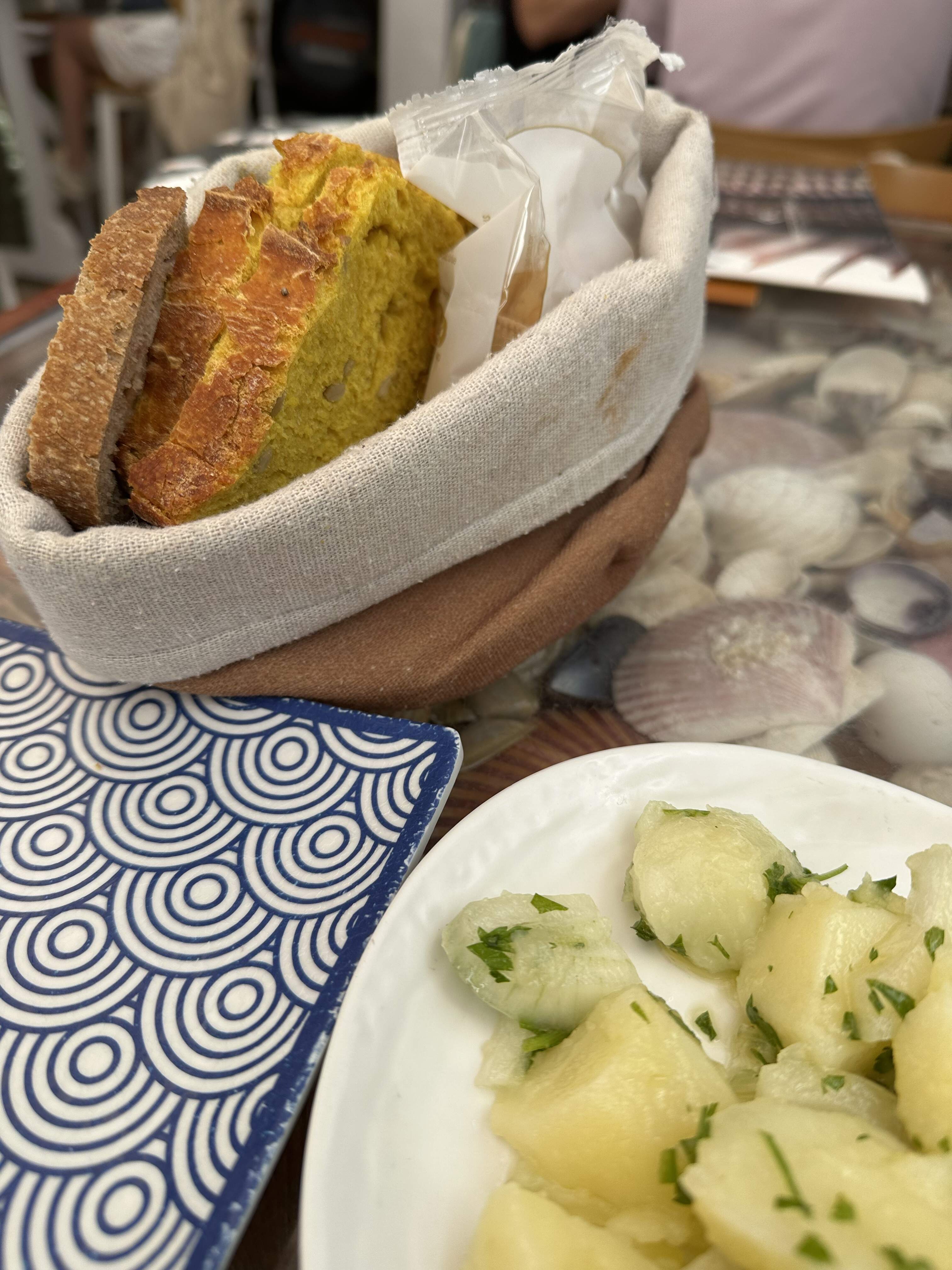
Lovely cold potato salad, rife with onions (compliments of the chef)…so delicious! The golden-yellow bread (pan de curcuma) is infused with turmeric; not sure if this is a new invention, but I see it very often in Spain. I’m not sure if I’ve ever seen it in the US (?)

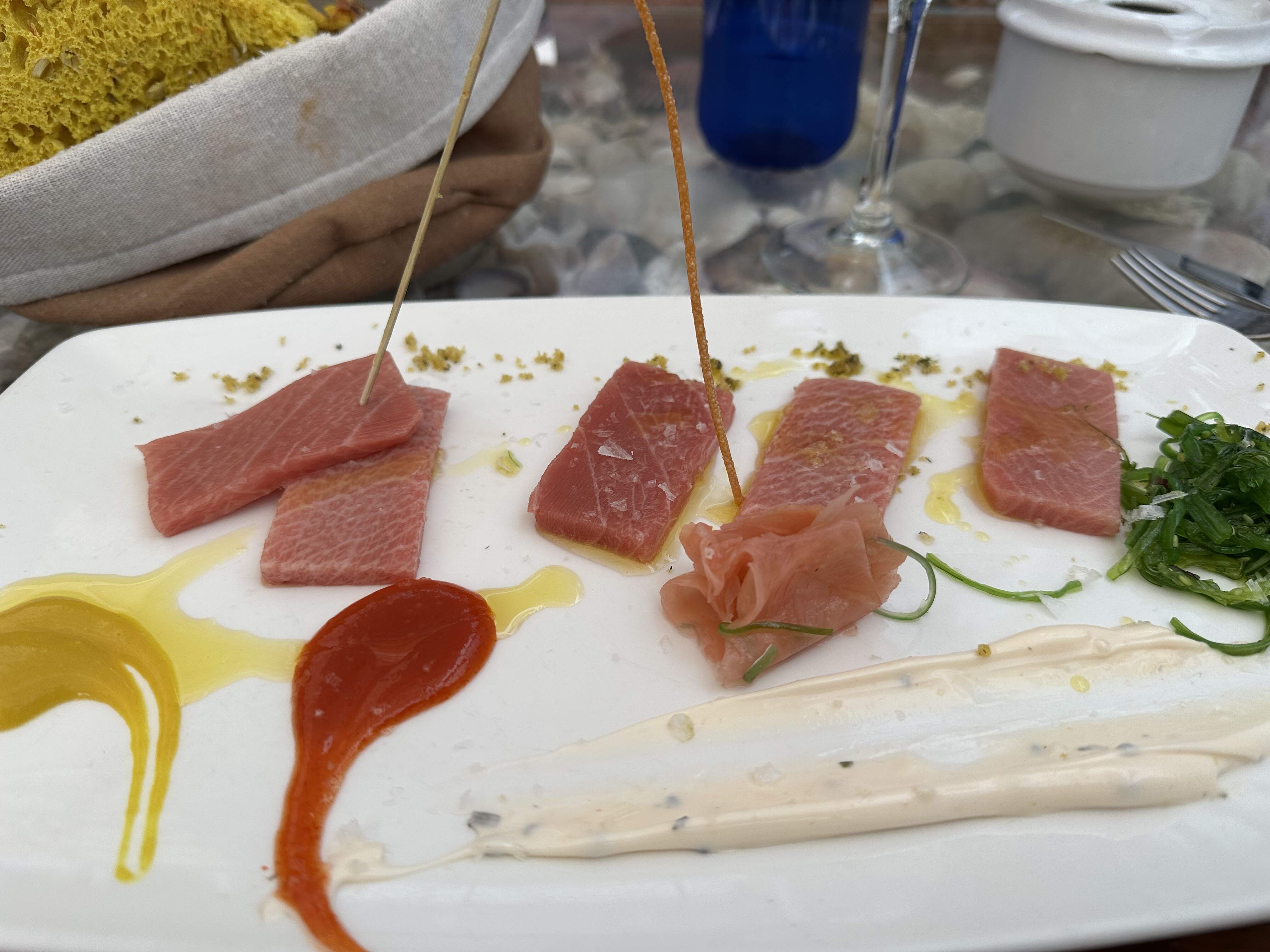
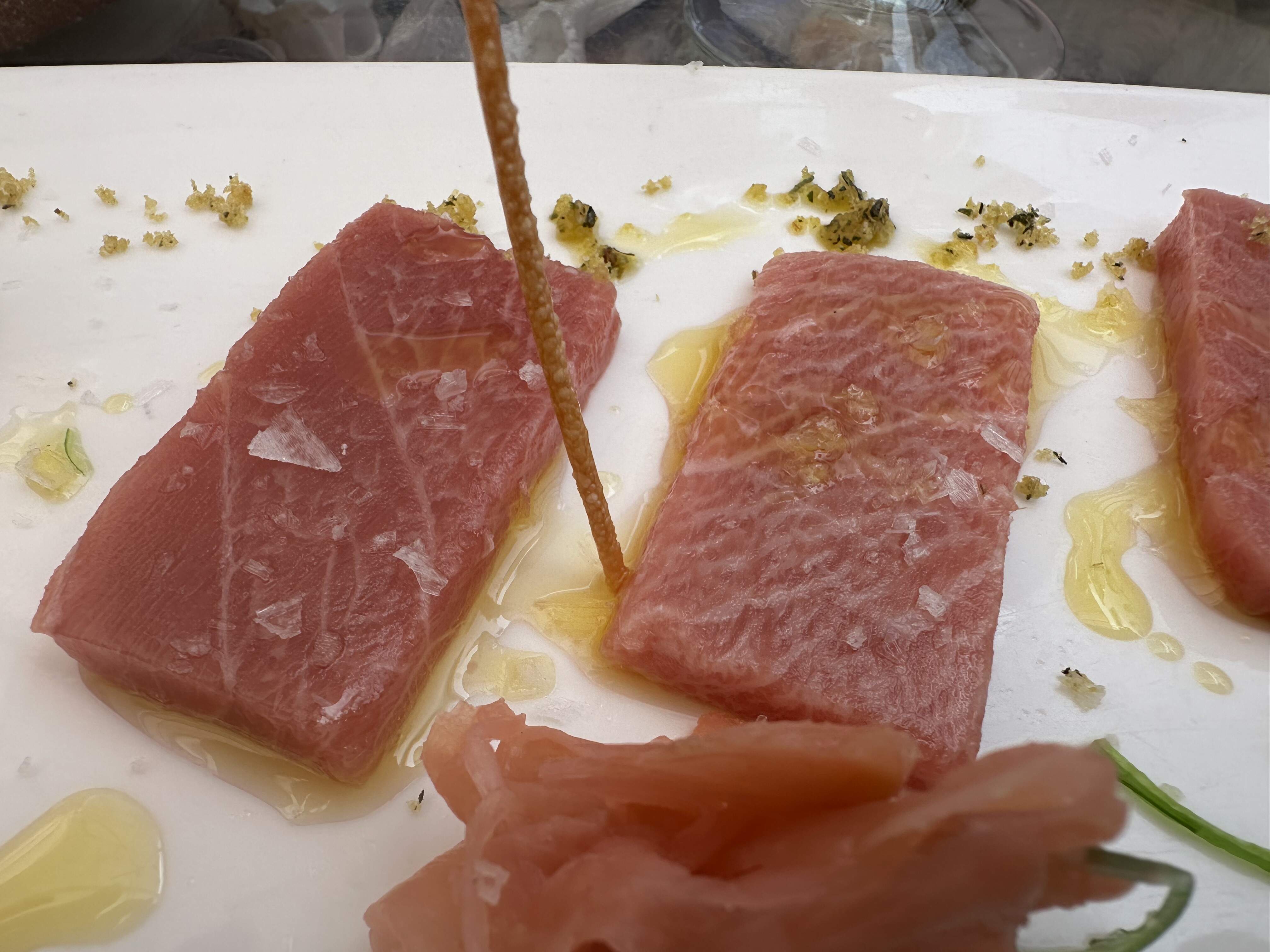
Sashimi of ventresca, blue fin belly tuna (toro) half order (14 euro)


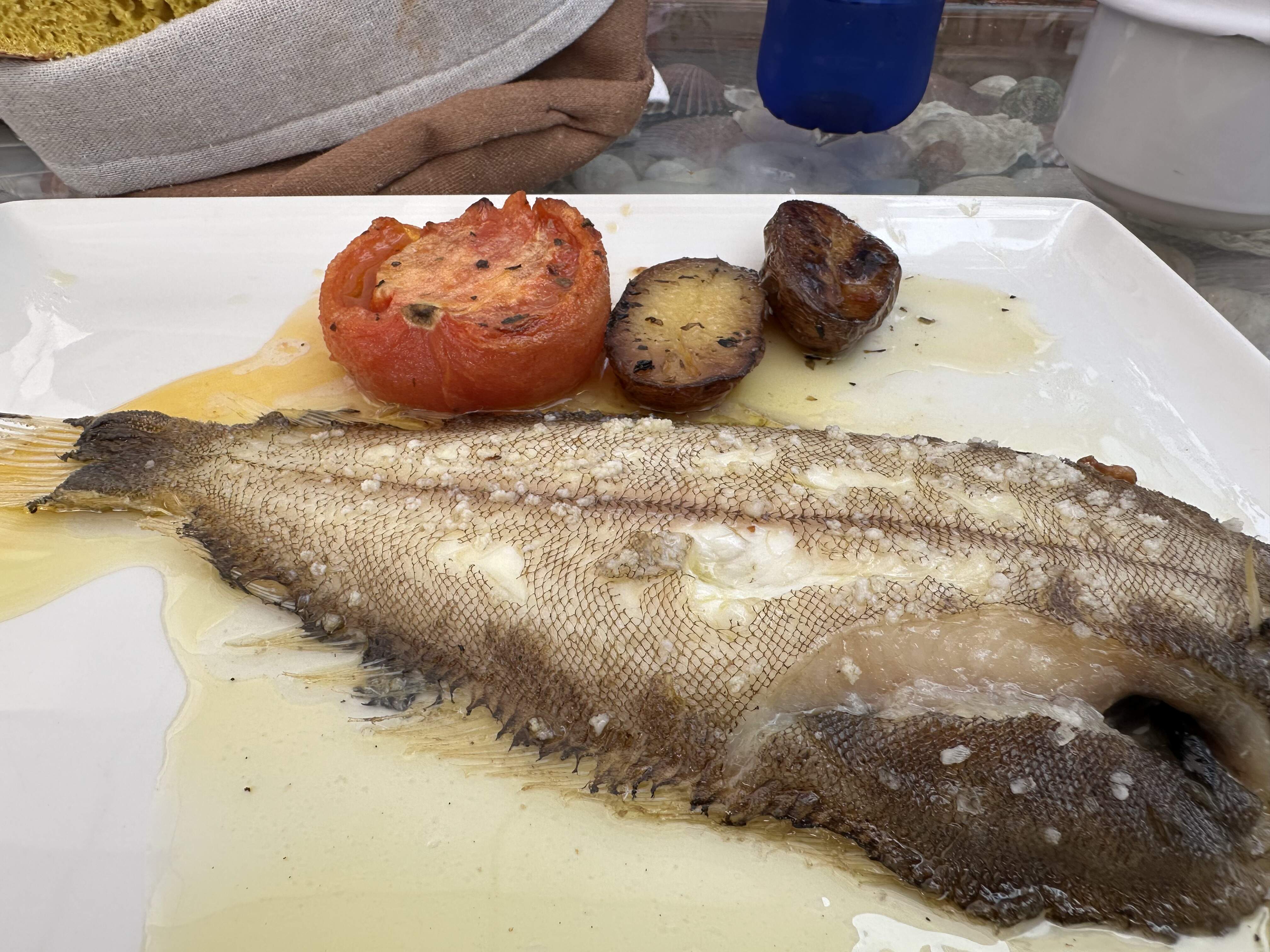
I wanted a whole fish and they had a lenguado of a perfect size–0.3 kilo.
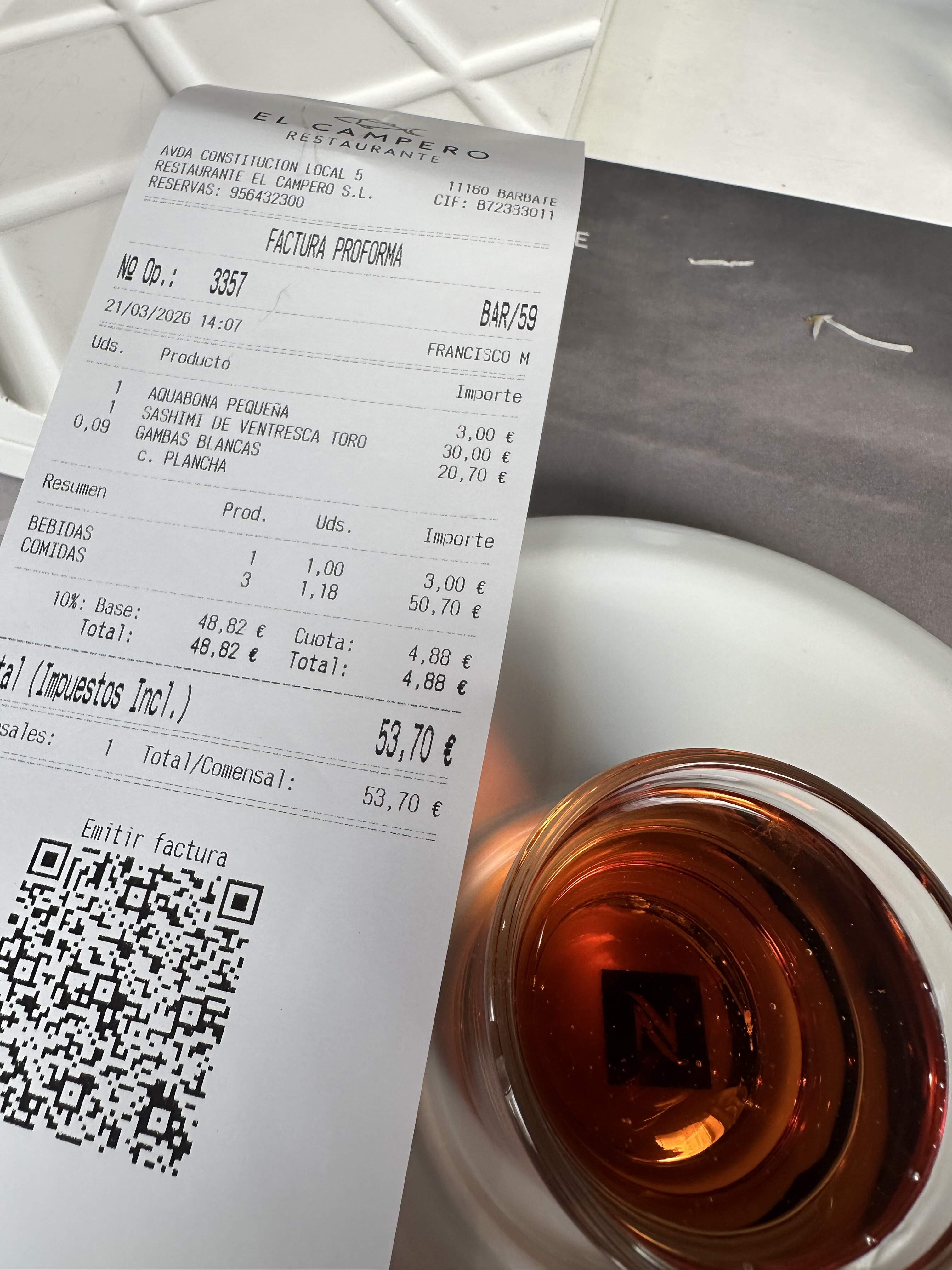
Prices here are a tad lower than those of ANTONIO and EL CAMPERO; the sole was priced at 69 euro per kilo, and my order cost 20.70 euro–astounding as compared to US prices for what we would call “Dover sole.” Here they do not filet it for you at the table (although I’m sure he would have if I had asked, but I wanted to try myself, which I did, overseen by my kind and smiling waiter:

My lunch cost 39.90 euro.

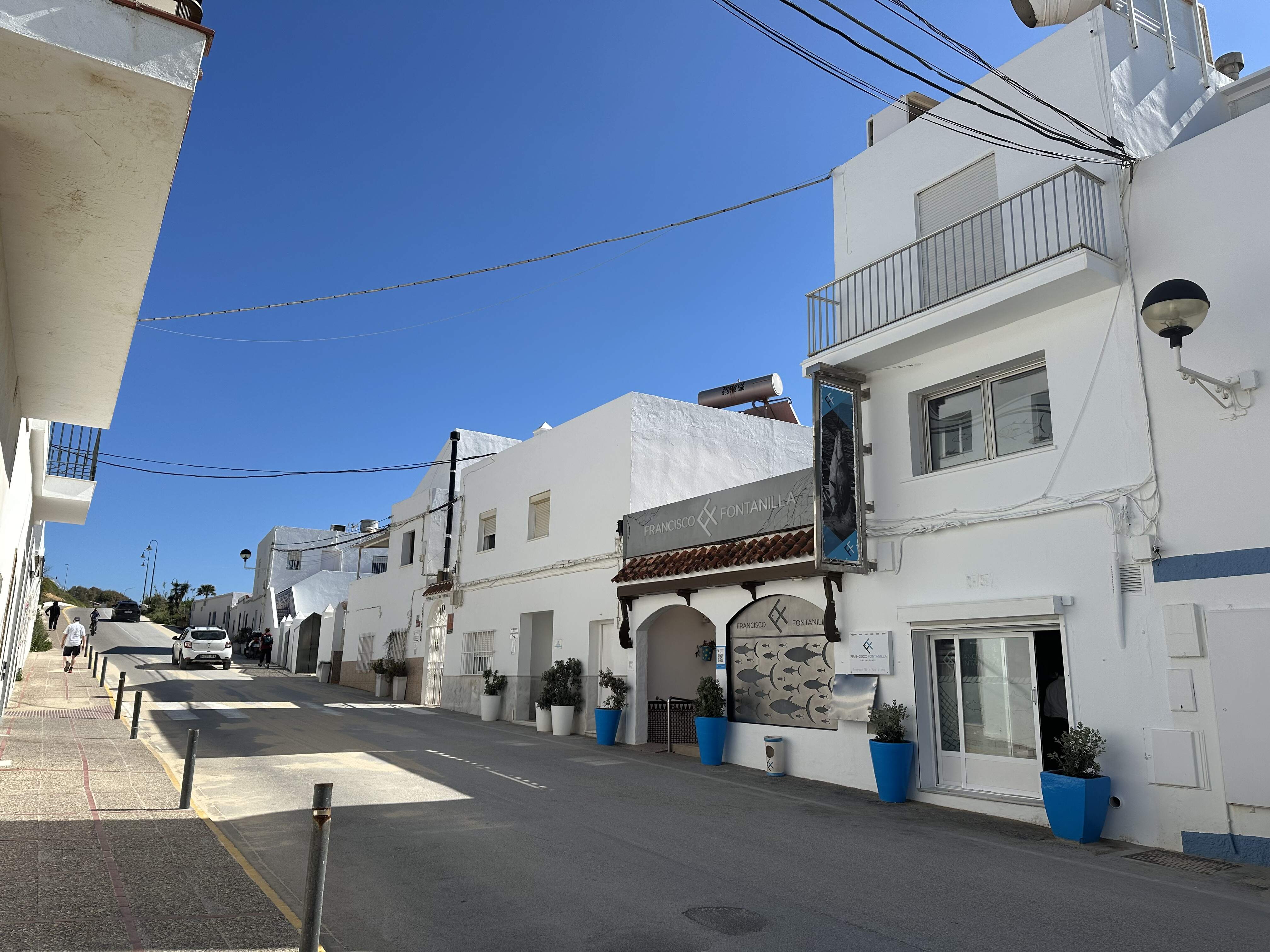
Front of the restaurant, and Fontanilla beach beside it:


I drove to the town of Conil on a hunt for ice cream. The ice cream was only decent but I did find an incredible lair of sweet and savory treats on the Main Street leading up from the beach. The shop is SABOR A ESPAÑA and I brought back a good-sized haul of everything from soft egg-yolk turrón to candied violets (no longer made with actual violets, sadly) to roasted Marcona almonds..and an Ines Rosales “torta de chocolate blanco”… I really need to keep away from these sorts of shops but it’s lovely to have some "supplies’ in my room for late-night snacking. Great shop to buy gifts to bring home to “golosas” like me!

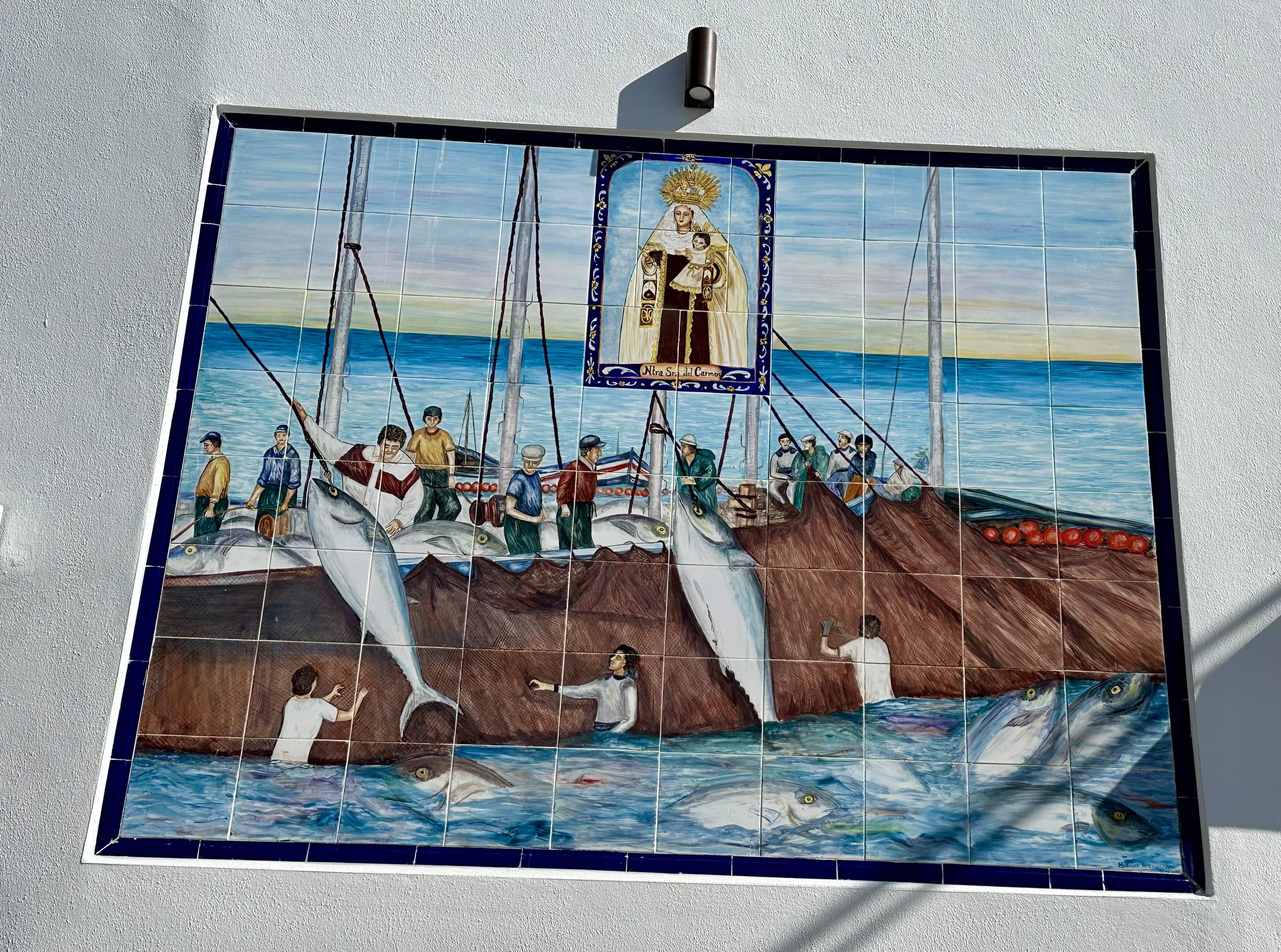
Main pedestrian street in Conil de la Frontera with a tiled mural depicting the almadraba.


Conil de la Frontera is one of the four locations along the coast of Cadiz province where the almadraba has taken place each spring over the past three thousand years. The others are Barbate, Zahara de los Atunes, and Tarifa.

3 Likes

RESTAURANTE DUQUE

I won’t go into the “parking drama” that unfolded yesterday, in the front lot of this Medina Sidonia landmark. But I give heaps of thanks to Ivan for helping to wedge my car out of the spot I left it, in frustration, before I entered the restaurant for lunch. The kindest of people around here never fails to surprise.

This is a large, traditional restaurant just at the edge of the white hill town of Medina Sidonia, a town whose name is synonymous with a unique style of pastry whose origins date back to the. Arab occupation of the region. Medina is the quintessential “white town,” complete with looming castle, narrow streets lined with whitewashed wrought-iron embellished details, and very few tourists.

Last year I had a good lunch at LA DUQUESA, just outside town (simple parking in their lot!)

This year, DUQUE was on my list, and I had a very good lunch surrounded by tables filled with family groups. What always impresses me in Spain (and in Italy as well) is the variation in the cuisine of places just a few miles distant from one another, especially the you detour away from the pan-Spanish menus of places more popular with tourists than locals.

It’s probably a half an hour drive from Medina to the coast near Vejer, but instead of the seafood/tuna devotion on menus we see there and along the Costa de la Luz, here, we have a different slant.

While DUQUE offers plenty of fish and shellfish, the stars here are the products “del campo,” of the rolling landscape of La Janda. that stretches in all directions from the town’s hilltop perch. So while you can order all the usual suspects, the house specialties include partridge, wild rabbit, venison, wild boar, kid, and (obviously free range) chicken, all available in various preparations.

RESTAURANTE DUQUE

I won’t go into the “parking drama” that unfolded yesterday, in the front lot of this Medina Sidonia landmark. But I give heaps of thanks to Proprietor Ivan for sniggling my car backwards out of steep incline where I’d left it, in frustration, before I entered the restaurant for lunch. The kindest of people around here never fails to surprise.

This is a large, traditional restaurant just at the edge of the white hill town of Medina Sidonia, a town whose name is synonymous with a unique style of pastry whose origins date back to the. Arab occupation of the region. Medina is the quintessential “white town,” complete with looming castle, narrow streets lined with whitewashed wrought-iron embellished details, and very few tourists.

Last year I had a good lunch at LA DUQUESA, just outside town (simple parking in their lot!)

This year, DUQUE was on my list, and I had a very good lunch surrounded by tables filled with family groups. What always impresses me in Spain (and in Italy as well) is the variation in the cuisine of places just a few miles distant from one another, especially the you detour away from the pan-Spanish menus of places more popular with tourists than locals.

It’s probably a half an hour drive from Medina to the coast near Vejer, but instead of the seafood/tuna devotion on menus we see there and along the Costa de la Luz, here, we have a different slant.

While DUQUE, family owned since its opening in 1975, offers plenty of fish and shellfish, the stars here are the “carnes de la caza,” (“meats and game of the hunt”) of the rolling landscape of La Janda. that stretches in all directions from the town’s hilltop perch.

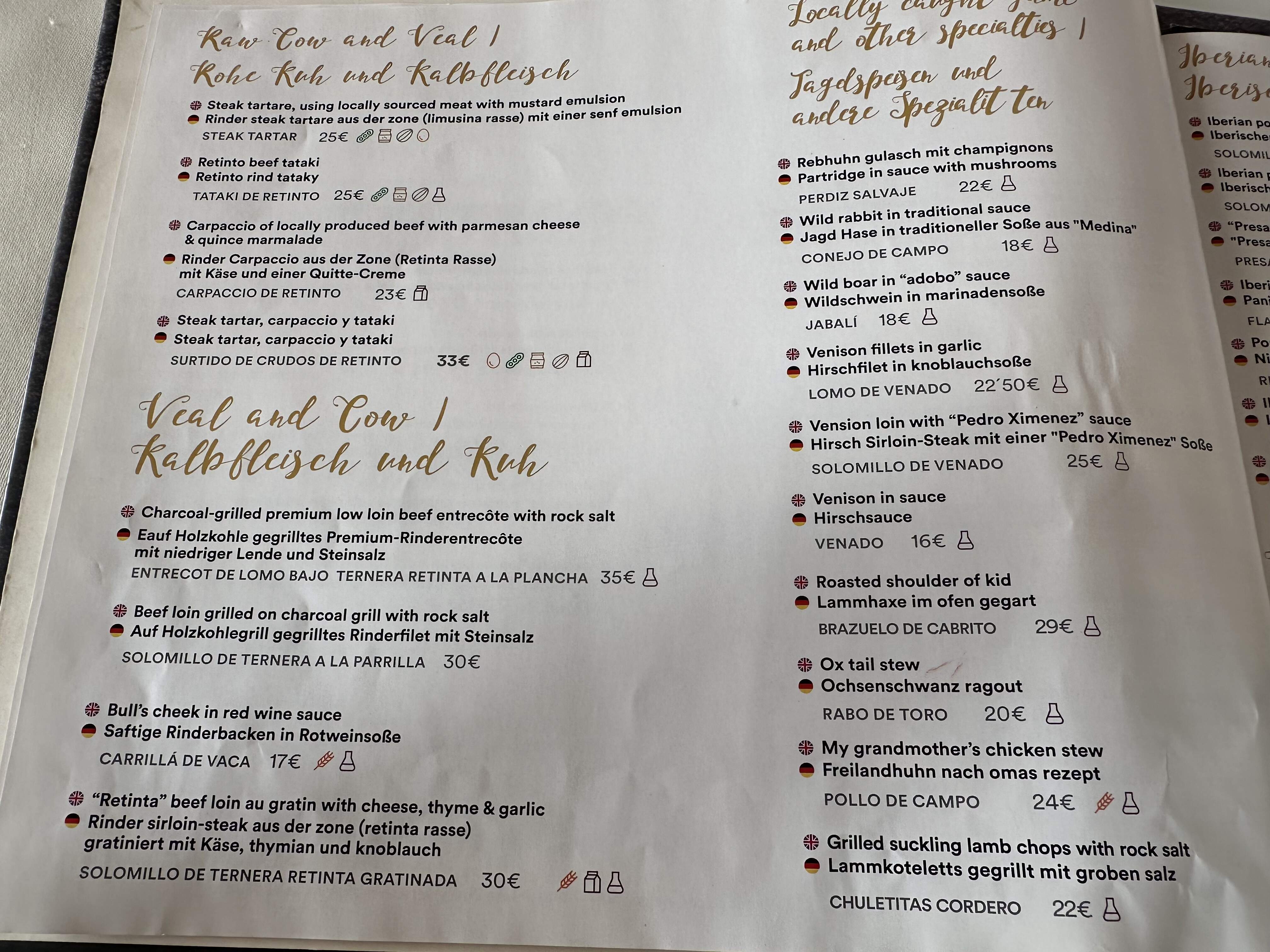
So while fish and seafood from the nearby coastlines of Cadiz are plentiful, , the house specialties of this traditional Andaluz eatery include partridge, wild rabbit, venison, wild boar, kid, and (obviously free range) chicken, all available in various preparations; here is one section of the extensive carta:

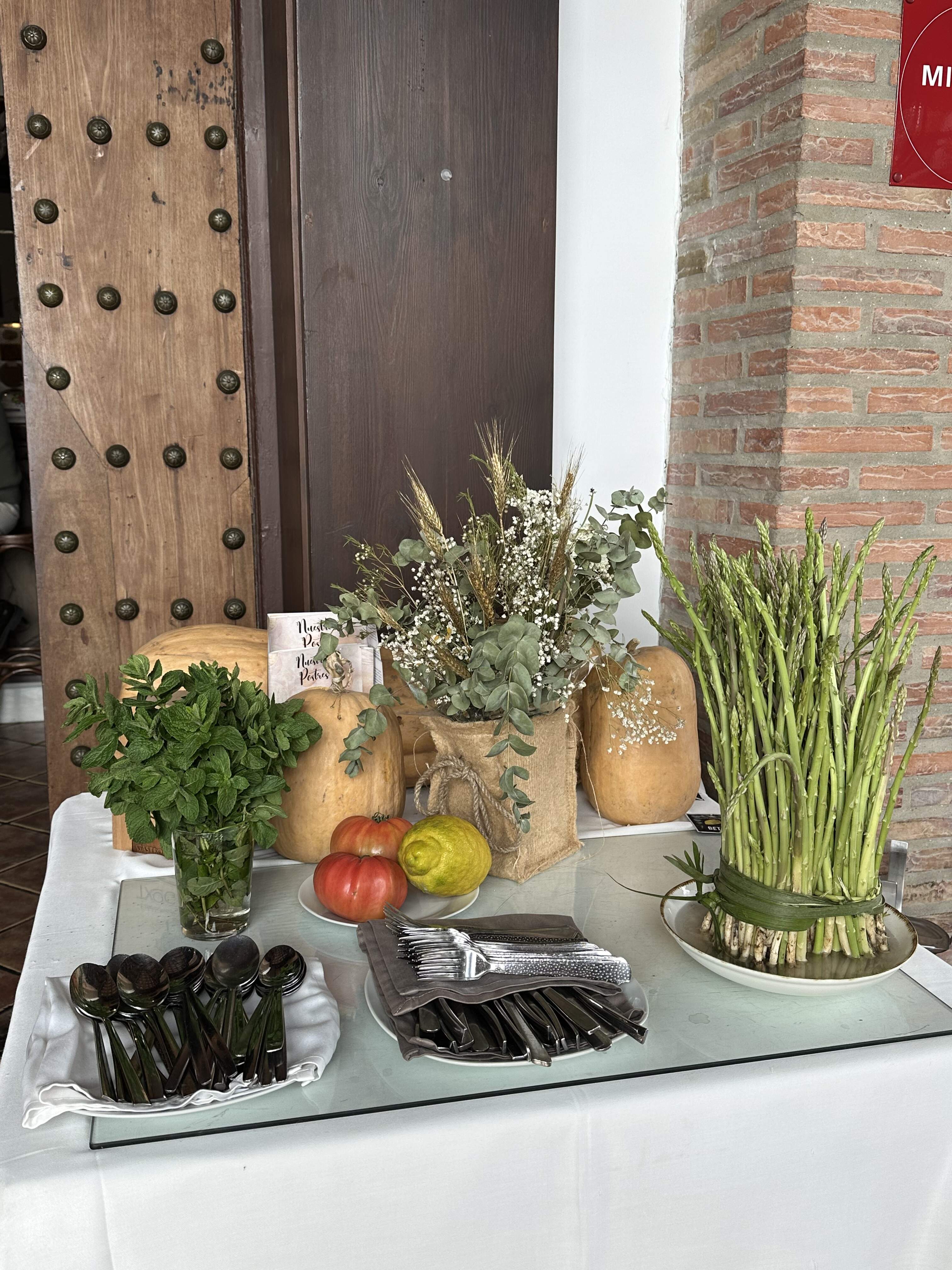
Display of seasonal spring asparagus at entry to DUQUE; you can see a sliver of the red Michelin plaque. The restaurant was a Michelin BibGourmand until as late as 2024.

Lunch began with two complimentary plates-- ensalada of potatoes and onions and a really delicious warm peeled and roasted tomato in a basil oil. Best tomato I’ve had on this trip so far!

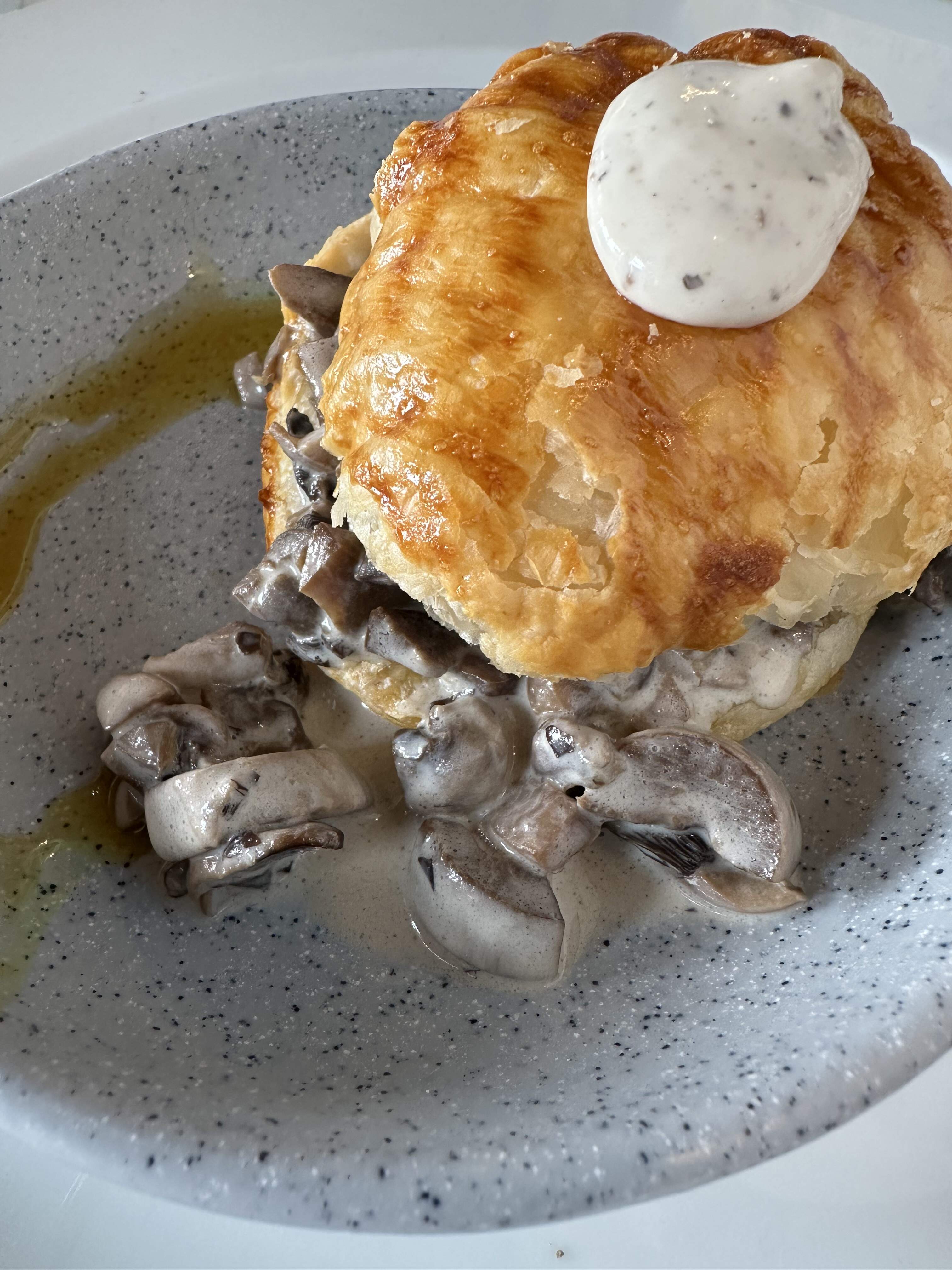
“Tartita de setas,” mushroom tart within flaky pastry, recommended by Ivan. Nice but a bit too rich with cream:

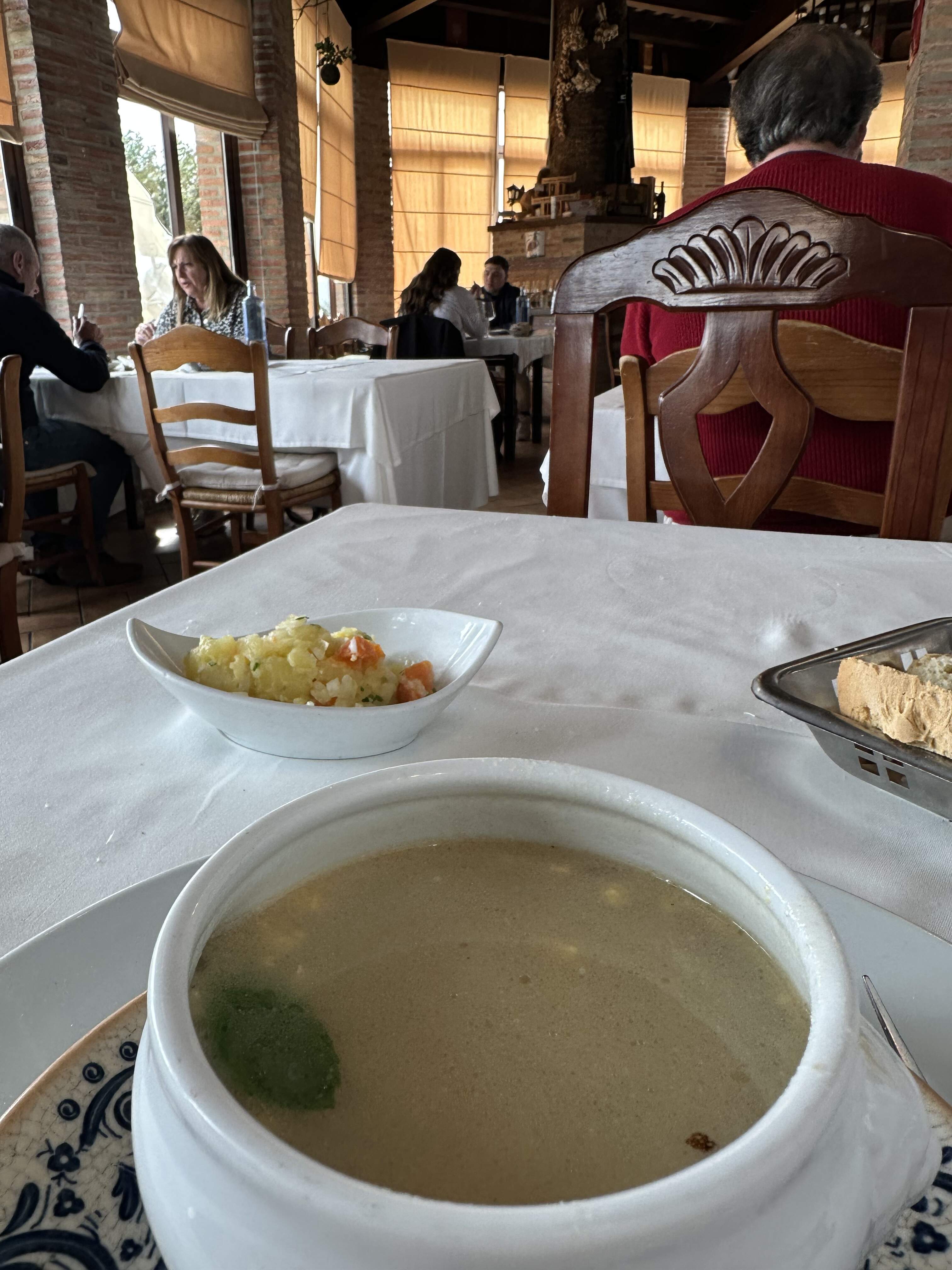
The soups on these inland, traditional restaurants always tempt me; this consommé with bits egg white and jamon Iberico was welcome on this damp and windy afternoon:

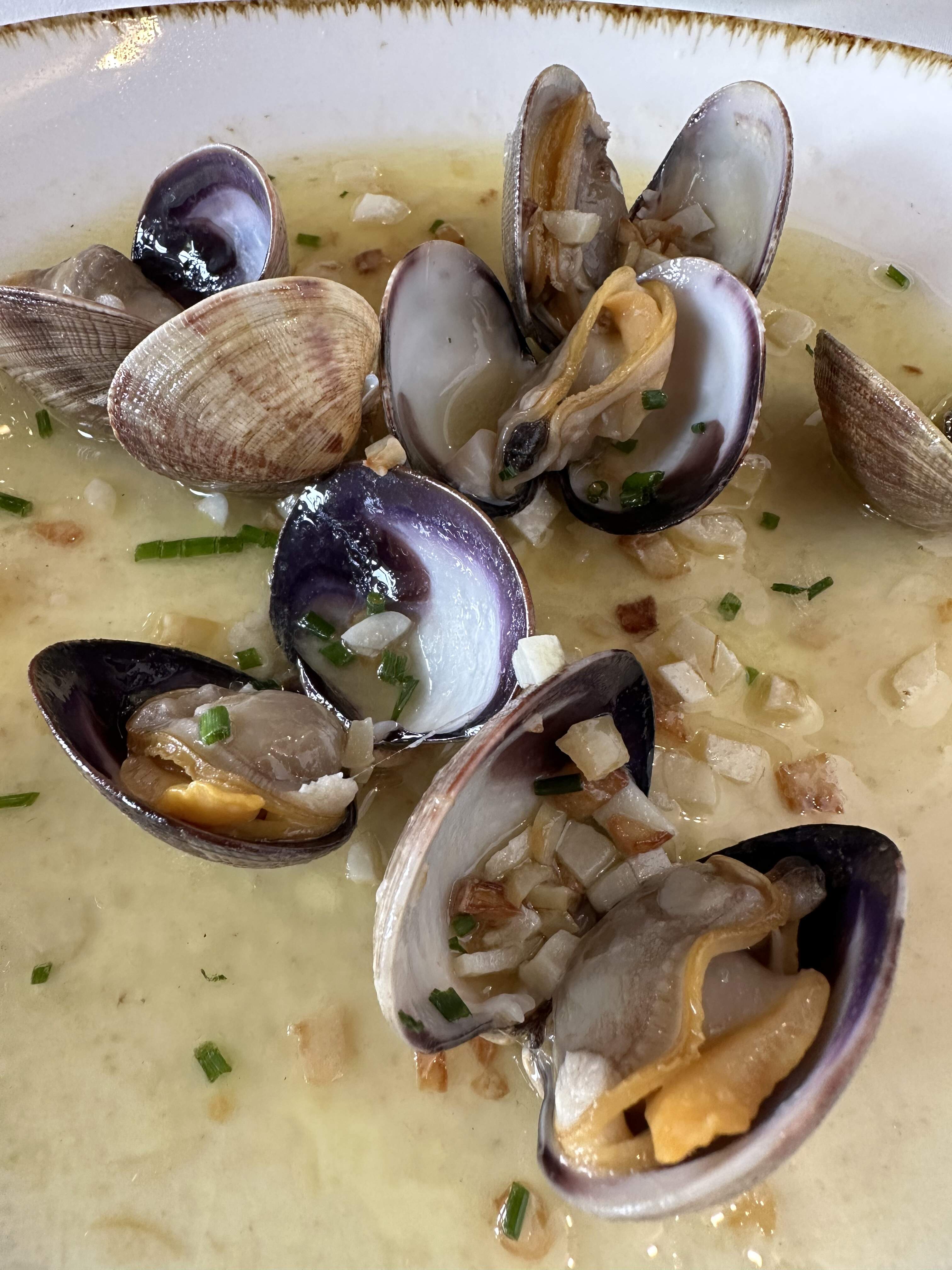
It’s hard for me to pass up clams; I prefer the very tiny ones but can never remember the names for the various types, which might differ from region to region. these were called, simply, “almejas al ajillo.,” clams with garlic. I thought the portion was on the small side for 24 euro but they were tasty. Would skip next time, though:

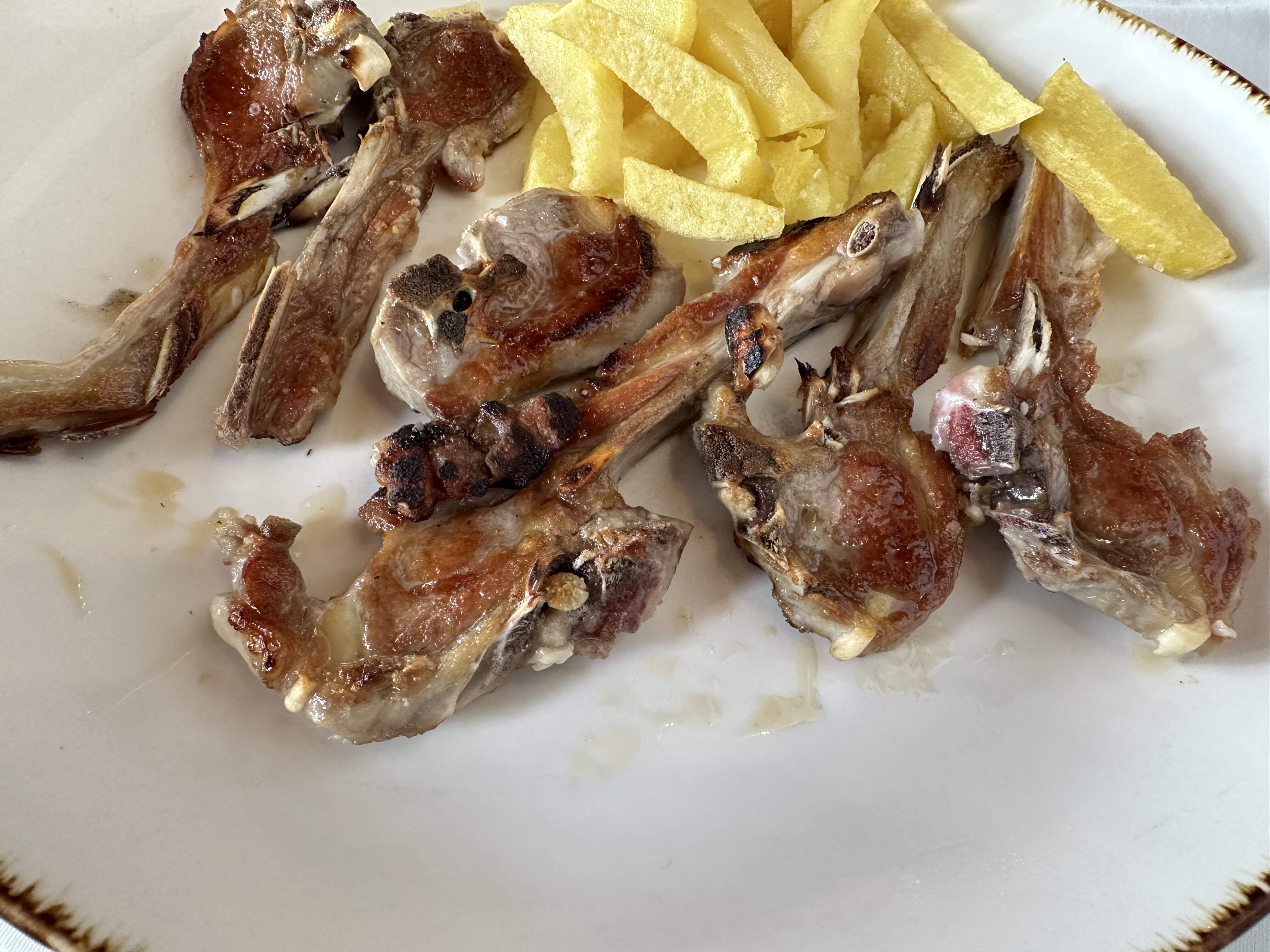
The final course was a plate of tiny suckling lamb chops that left me gnawing every last bit of meat from the little bones; they needed more of the promised “rock salt,” though. Fried potatoes did, too.

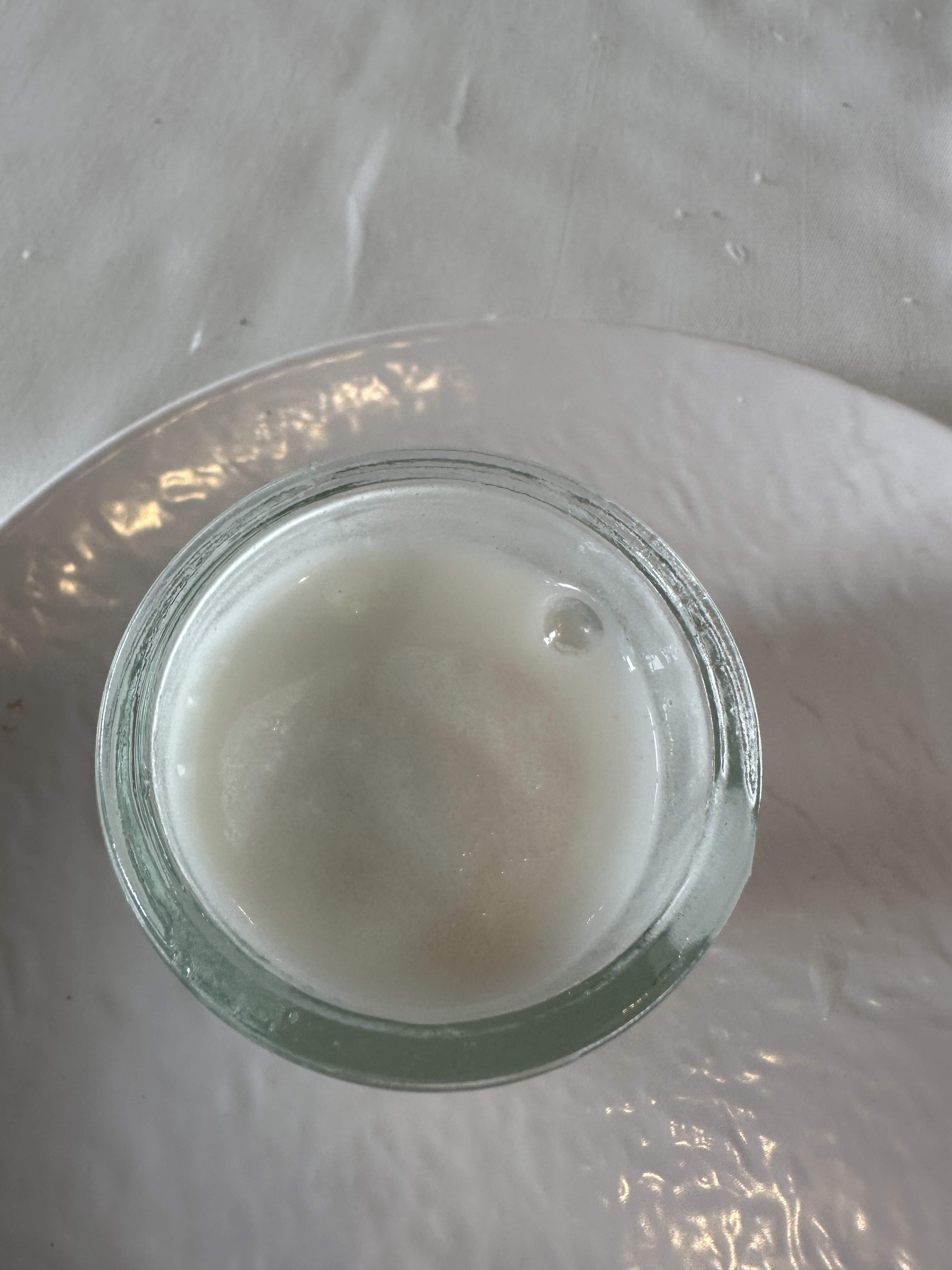
I declined dessert, from the very tempting selection of local sweets, but was presented with a little cup of lemon sorbet which was superb.

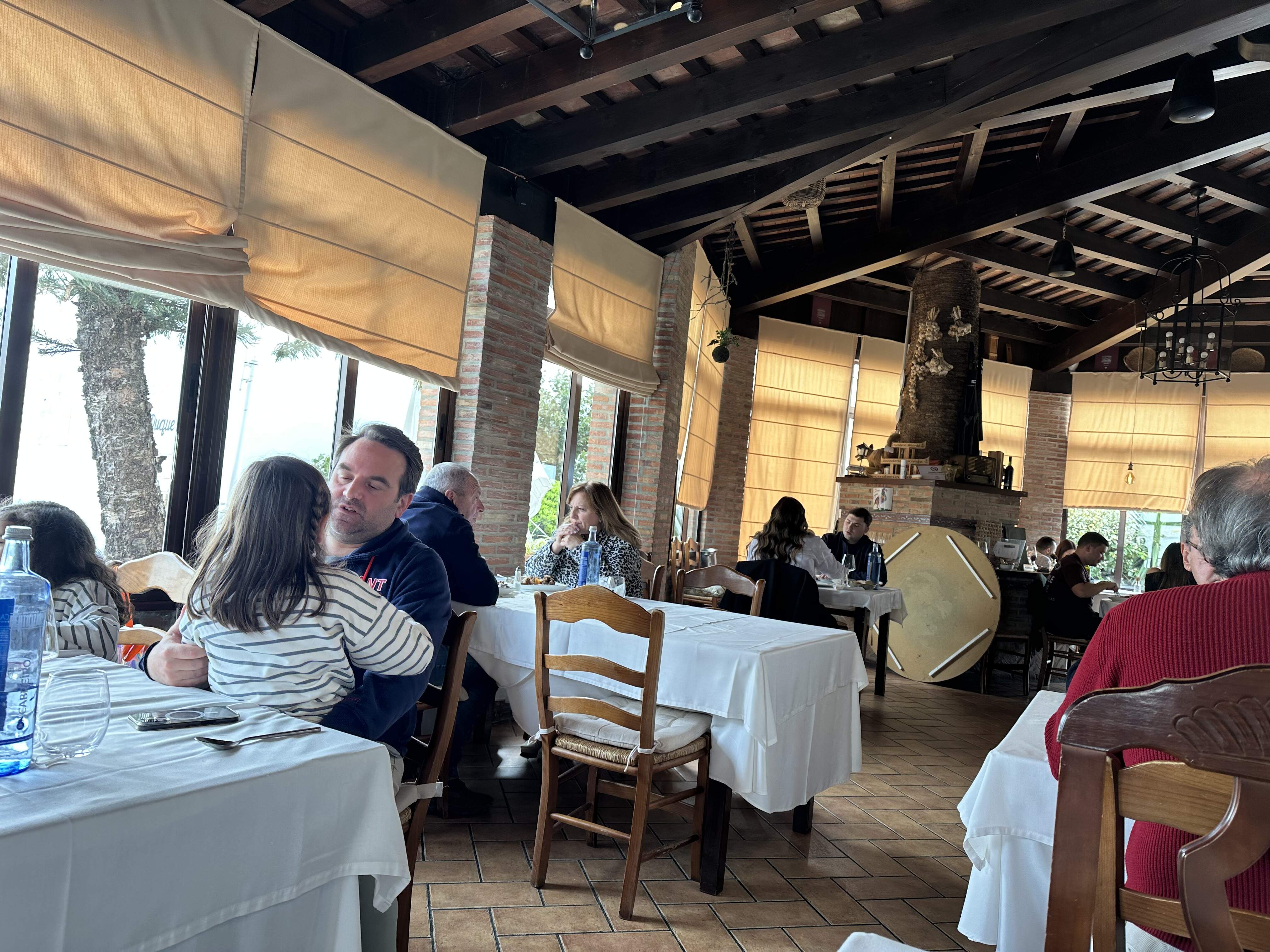
Front dining room:

Lunch cost 64.50euro. (A little more than my usual tab for a meal not focused on seafood)

I would like to return here to try the rabbit in “traditional” sauce, partridge (stewed, roast, and turned into paté) and some of the other lamb dishes.

I liked DUQUE a lot and next time I won’t even try to park myself, but hand over that task to Ivan. That space between those to cars to the rear of mine was a lot narrower than it looked but it was a piece of cake for Ivan:
RESTAURANTE DUQUE

I won’t go into the “parking drama” that unfolded yesterday, in the front lot of this Medina Sidonia landmark. But I give heaps of thanks to Proprietor Ivan for sniggling my car backwards out of steep incline where I’d left it, in frustration, before I entered the restaurant for lunch. The kindest of people around here never fails to surprise.

This is a large, traditional restaurant just at the edge of the white hill town of Medina Sidonia, a town whose name is synonymous with a unique style of pastry whose origins date back to the. Arab occupation of the region. Medina is the quintessential “white town,” complete with looming castle, narrow streets lined with whitewashed wrought-iron embellished details, and very few tourists.

Last year I had a good lunch at LA DUQUESA, just outside town (simple parking in their lot!)

This year, DUQUE was on my list, and I had a very good lunch surrounded by tables filled with family groups. What always impresses me in Spain (and in Italy as well) is the variation in the cuisine of places just a few miles distant from one another, especially the you detour away from the pan-Spanish menus of places more popular with tourists than locals.

It’s probably a half an hour drive from Medina to the coast near Vejer, but instead of the seafood/tuna devotion on menus we see there and along the Costa de la Luz, here, we have a different slant.

While DUQUE, family owned since its opening in 1975, offers plenty of fish and shellfish, the stars here are the “carnes de la caza,” (“meats and game of the hunt”) of the rolling landscape of La Janda. that stretches in all directions from the town’s hilltop perch.

So while fish and seafood from the nearby coastlines of Cadiz are plentiful, , the house specialties of this traditional Andaluz eatery include partridge, wild rabbit, venison, wild boar, kid, and (obviously free range) chicken, all available in various preparations; here is one section of the extensive carta:

Display of seasonal spring asparagus at entry to DUQUE; you can see a sliver of the red Michelin plaque. The restaurant was a Michelin BibGourmand until as late as 2024.

Lunch began with two complimentary plates-- ensalada of potatoes and onions and a really delicious warm peeled and roasted tomato in a basil oil. Best tomato I’ve had on this trip so far!

“Tartita de setas,” mushroom tart within flaky pastry, recommended by Ivan. Nice but a bit too rich with cream:

The soups on these inland, traditional restaurants always tempt me; this consommé with bits egg white and jamon Iberico was welcome on this damp and windy afternoon:

It’s hard for me to pass up clams; I prefer the very tiny ones but can never remember the names for the various types, which might differ from region to region. these were called, simply, “almejas al ajillo.,” clams with garlic. I thought the portion was on the small side for 24 euro but they were tasty. Would skip next time, though:

The final course was a plate of tiny suckling lamb chops that left me gnawing every last bit of meat from the little bones; they needed more of the promised “rock salt,” though. Fried potatoes did, too.

I declined dessert, from the very tempting selection of local sweets, but was presented with a little cup of lemon sorbet which was superb.

Front dining room:

Lunch cost 64.50euro. (A little more than my usual tab for a meal not focused on seafood)

I would like to return here to try the rabbit in “traditional” sauce, partridge (stewed, roast, and turned into paté) and some of the other lamb dishes.

I liked DUQUE a lot and next time I won’t even try to park myself, but hand over that task to Ivan. That space between those to cars to the rear of mine was a lot narrower than it looked but it was a piece of cake for Ivan:
RESTAURANTE DUQUE

I won’t go into the “parking drama” that unfolded yesterday, in the front lot of this Medina Sidonia landmark. But I give heaps of thanks to Proprietor Ivan for sniggling my car backwards out of steep incline where I’d left it, in frustration, before I entered the restaurant for lunch. The kindest of people around here never fails to surprise.

This is a large, traditional restaurant just at the edge of the white hill town of Medina Sidonia, a town whose name is synonymous with a unique style of pastry whose origins date back to the. Arab occupation of the region. Medina is the quintessential “white town,” complete with looming castle, narrow streets lined with whitewashed wrought-iron embellished details, and very few tourists.

Last year I had a good lunch at LA DUQUESA, just outside town (simple parking in their lot!)

This year, DUQUE was on my list, and I had a very good lunch surrounded by tables filled with family groups. What always impresses me in Spain (and in Italy as well) is the variation in the cuisine of places just a few miles distant from one another, especially the you detour away from the pan-Spanish menus of places more popular with tourists than locals.

It’s probably a half an hour drive from Medina to the coast near Vejer, but instead of the seafood/tuna devotion on menus we see there and along the Costa de la Luz, here, we have a different slant.

While DUQUE, family owned since its opening in 1975, offers plenty of fish and shellfish, the stars here are the “carnes de la caza,” (“meats and game of the hunt”) of the rolling landscape of La Janda. that stretches in all directions from the town’s hilltop perch.

So while fish and seafood from the nearby coastlines of Cadiz are plentiful, , the house specialties of this traditional Andaluz eatery include partridge, wild rabbit, venison, wild boar, kid, and (obviously free range) chicken, all available in various preparations; here is one section of the extensive carta:

Display of seasonal spring asparagus at entry to DUQUE; you can see a sliver of the red Michelin plaque. The restaurant was a Michelin BibGourmand until as late as 2024.

Lunch began with two complimentary plates-- ensalada of potatoes and onions and a really delicious warm peeled and roasted tomato in a basil oil. Best tomato I’ve had on this trip so far!

“Tartita de setas,” mushroom tart within flaky pastry, recommended by Ivan. Nice but a bit too rich with cream:

The soups on these inland, traditional restaurants always tempt me; this consommé with bits egg white and jamon Iberico was welcome on this damp and windy afternoon:

It’s hard for me to pass up clams; I prefer the very tiny ones but can never remember the names for the various types, which might differ from region to region. these were called, simply, “almejas al ajillo.,” clams with garlic. I thought the portion was on the small side for 24 euro but they were tasty. Would skip next time, though:

The final course was a plate of tiny suckling lamb chops that left me gnawing every last bit of meat from the little bones; they needed more of the promised “rock salt,” though. Fried potatoes did, too.

I declined dessert, from the very tempting selection of local sweets, but was presented with a little cup of lemon sorbet which was superb.

Front dining room:

Lunch cost 64.50euro. (A little more than my usual tab for a meal not focused on seafood)

I would like to return here to try the rabbit in “traditional” sauce, partridge (stewed, roast, and turned into paté) and some of the other lamb dishes.

I liked DUQUE a lot and next time I won’t even try to park myself, but hand over that task to Ivan. That space between those to cars to the rear of mine was a lot narrower than it looked but it was a piece of cake for Ivan:

1 Like

I had trouble with editing and was afraid to lose it all, so please skip the duplication..I didn’t re-post because I loved the restaurant so very much!!

1 Like

EL CAMPERO (Barbate) second lunch

Lovely Saturday in Barbate, with lots of the smaller bars packed with people spilling onto the street. This town gets mentioned internationally mostly in relation to EL CAMPERO but it’s pretty interesting; might be a good place to rent an inexpensive apartment for a beach/food visit…lacks the charm, but probably also the price, of nearby and more well-known beach towns.

As always, I begin with.a half order of toro; I’m always swooning with eery bite; I may need to up my game to a full order from now on. Is it my imagination or are the squares of ventresca smaller than they were last year? In any case, this is just the ultimate, although extra wasabi is always called for.

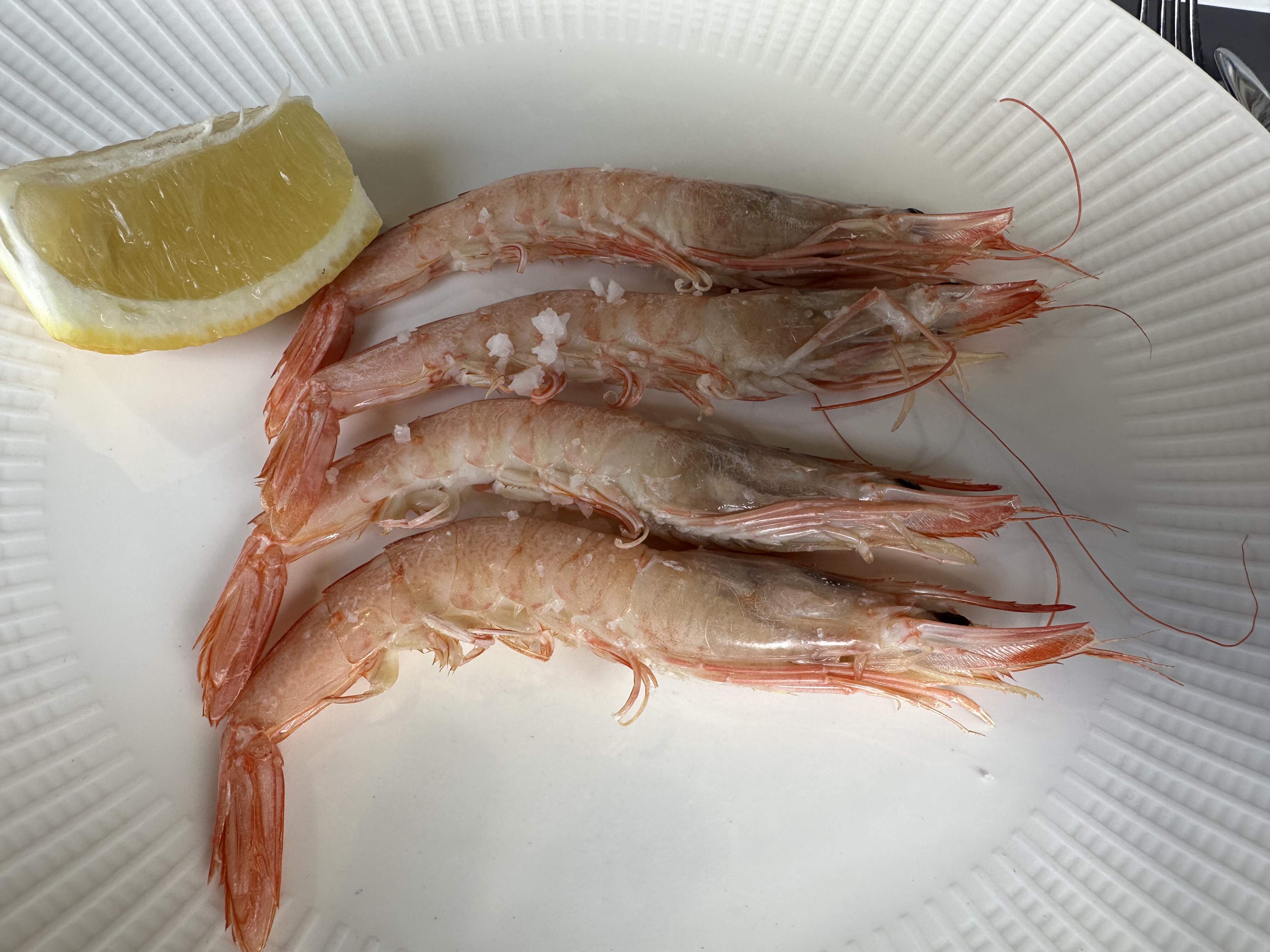
Quartet of white shrimp (priced by weight) with escamas–flake salt–so sweet!!!

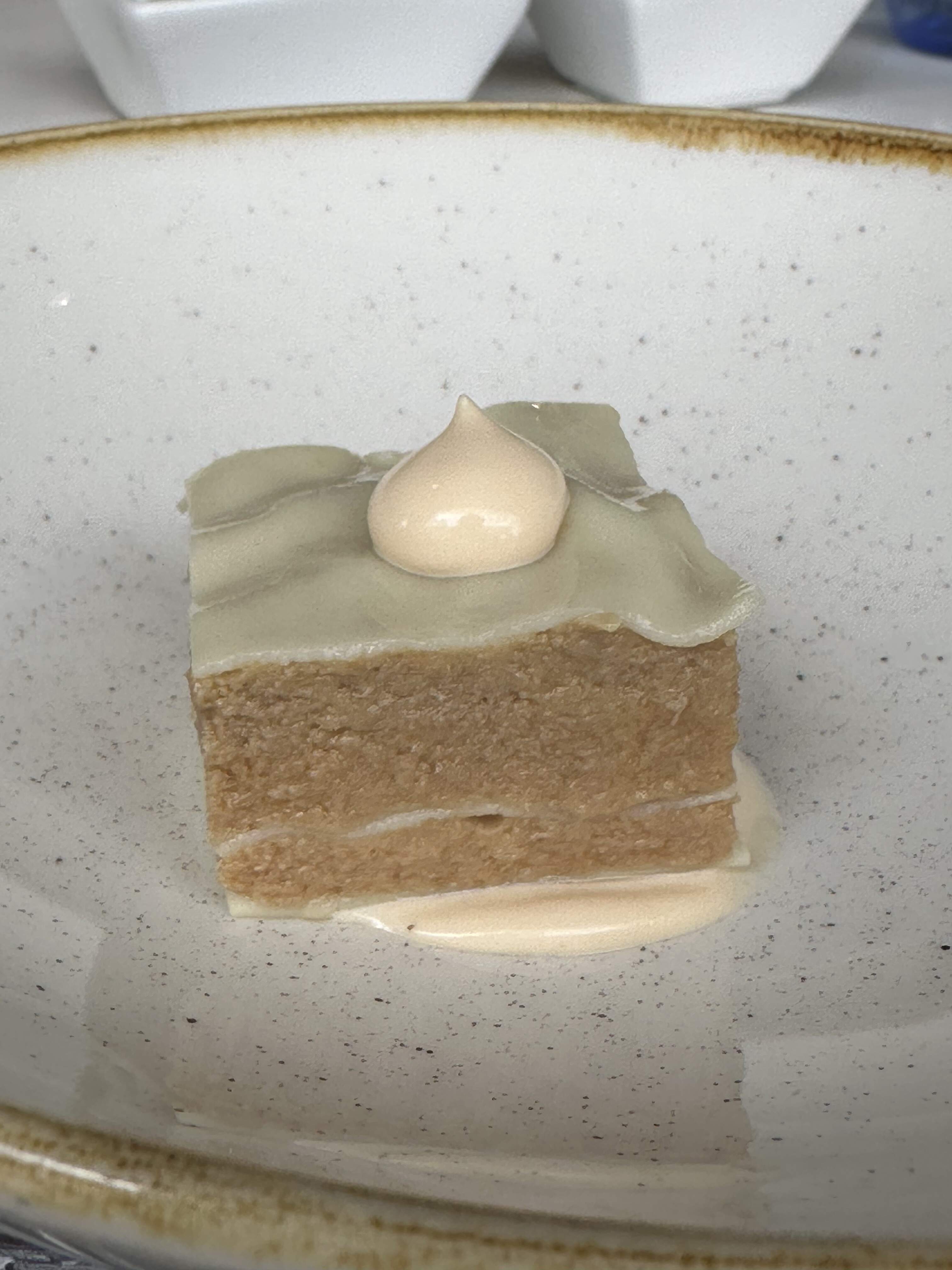
I had asked for the tuna meatballs but my waiter told me to hold off, and he was right, I was pretty full, having had a big breakfast a couple of hours before. But I did spy the lasagna of tuna on another table and realized that this was the comp dish provided with the bread. I had waved off the offer of bread, not realizing that I was waving off the little amuse that comes with it. So Manuel brought me a little gift; lasagna de atun, served (too) cold:

Their desserts have a great reputation but I never have room, so topped off the lunch with a chupito of Pacharan; this, along with the bill:

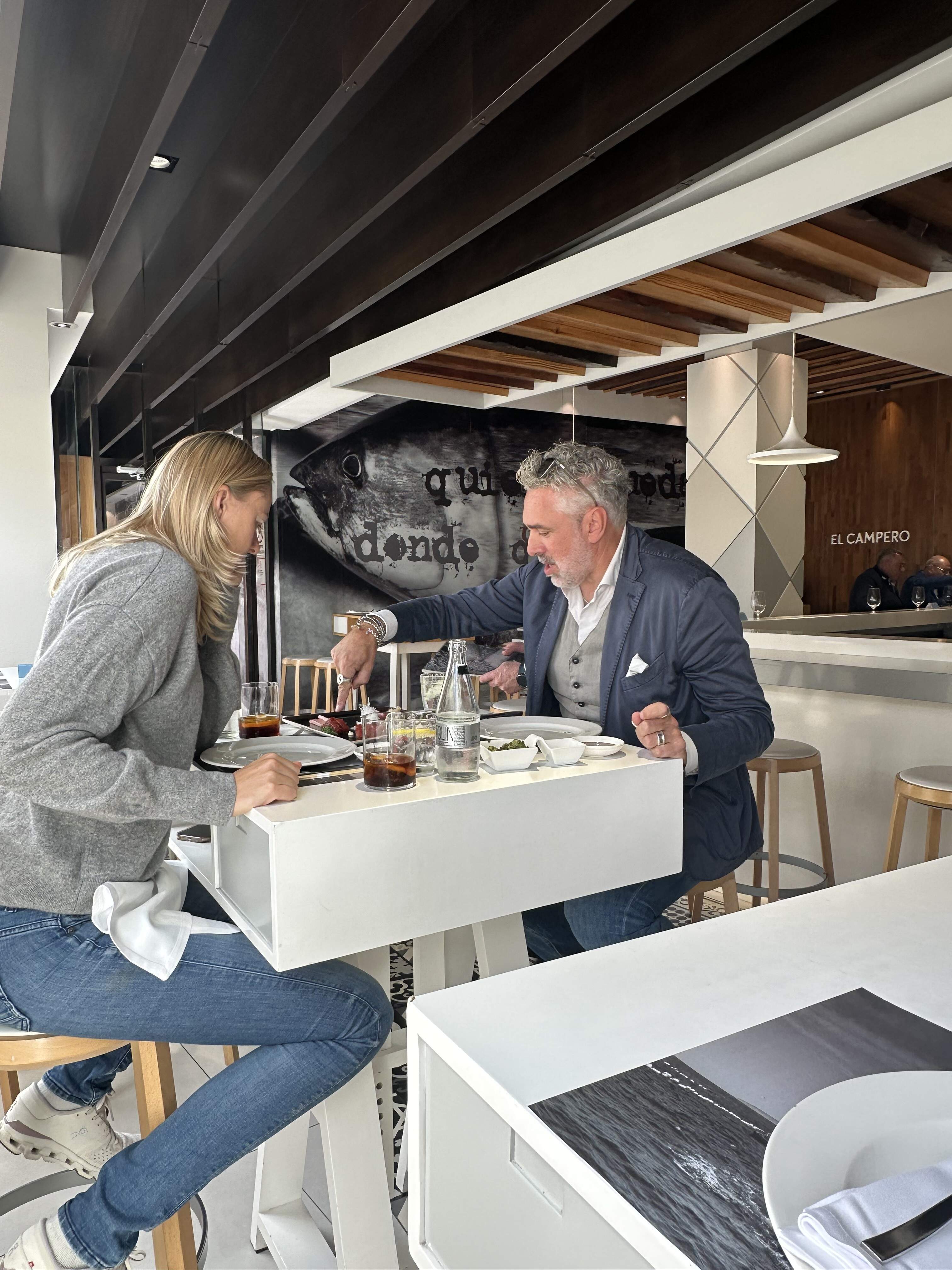
My dapper (?) German neighbor and his companion:
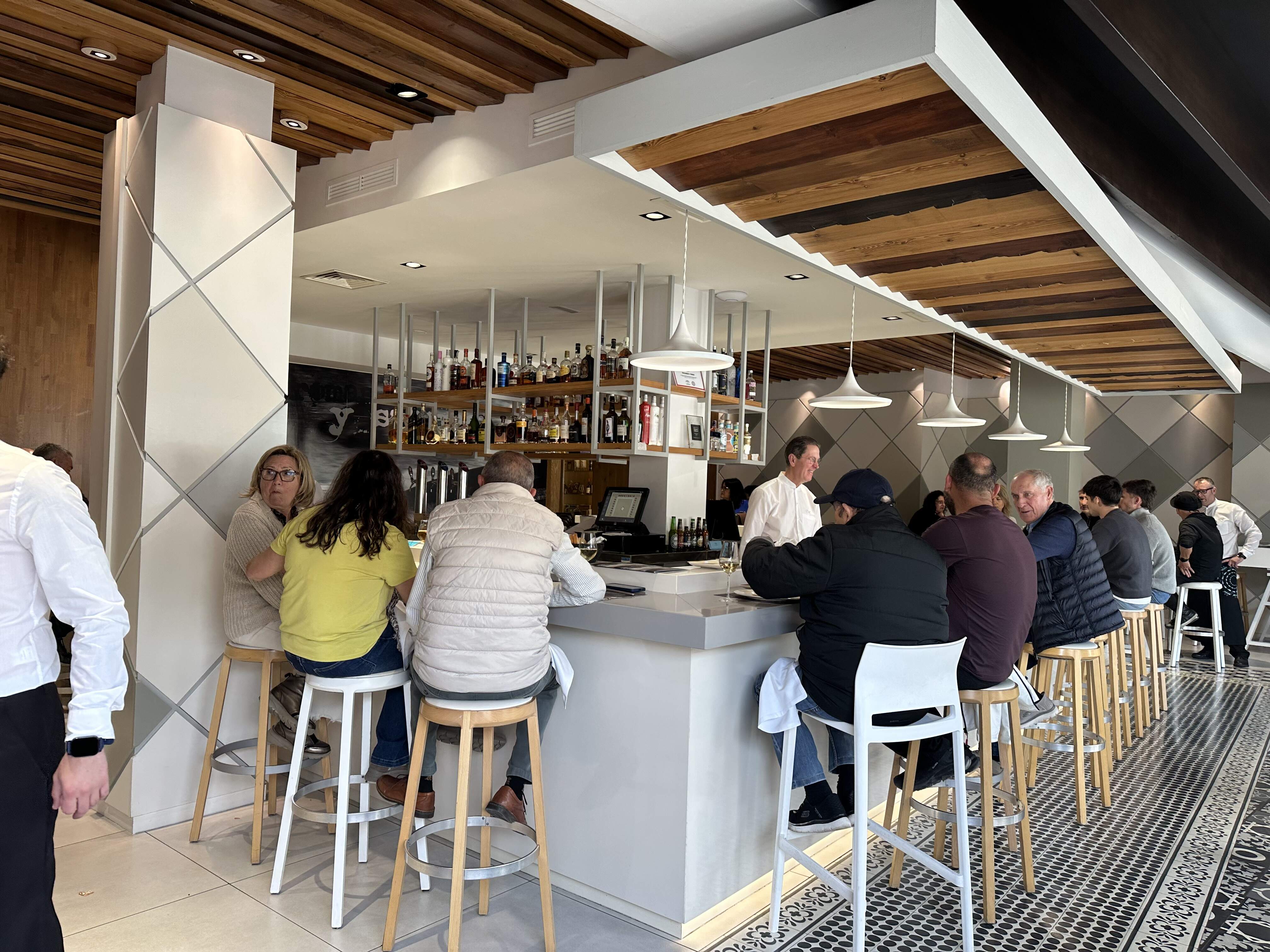
Lively bar at EL CAMPERO on a Saturday afternoon–many very well-dressed “older” gentlemen seem to know each other, and all the staff..lots of hugs and chatter that was great to be near. I think every last diner was wearing sneakers.

2 Likes

Snack I prepared in the kitchen here: Toasted home-made bread smeared with the hyper-local Manteca colorá, red lard, produced in and around Vejer and used most often as a spread on toast, or to preserve pork loin. This lard was made at a farm adjacent to where I am staying.
Next weekend, the farmers who made this lard will have a “matanza,” to kill a pig and render its fat for Manteca, and its meat for embutidos (salumi) and various pork dishes.

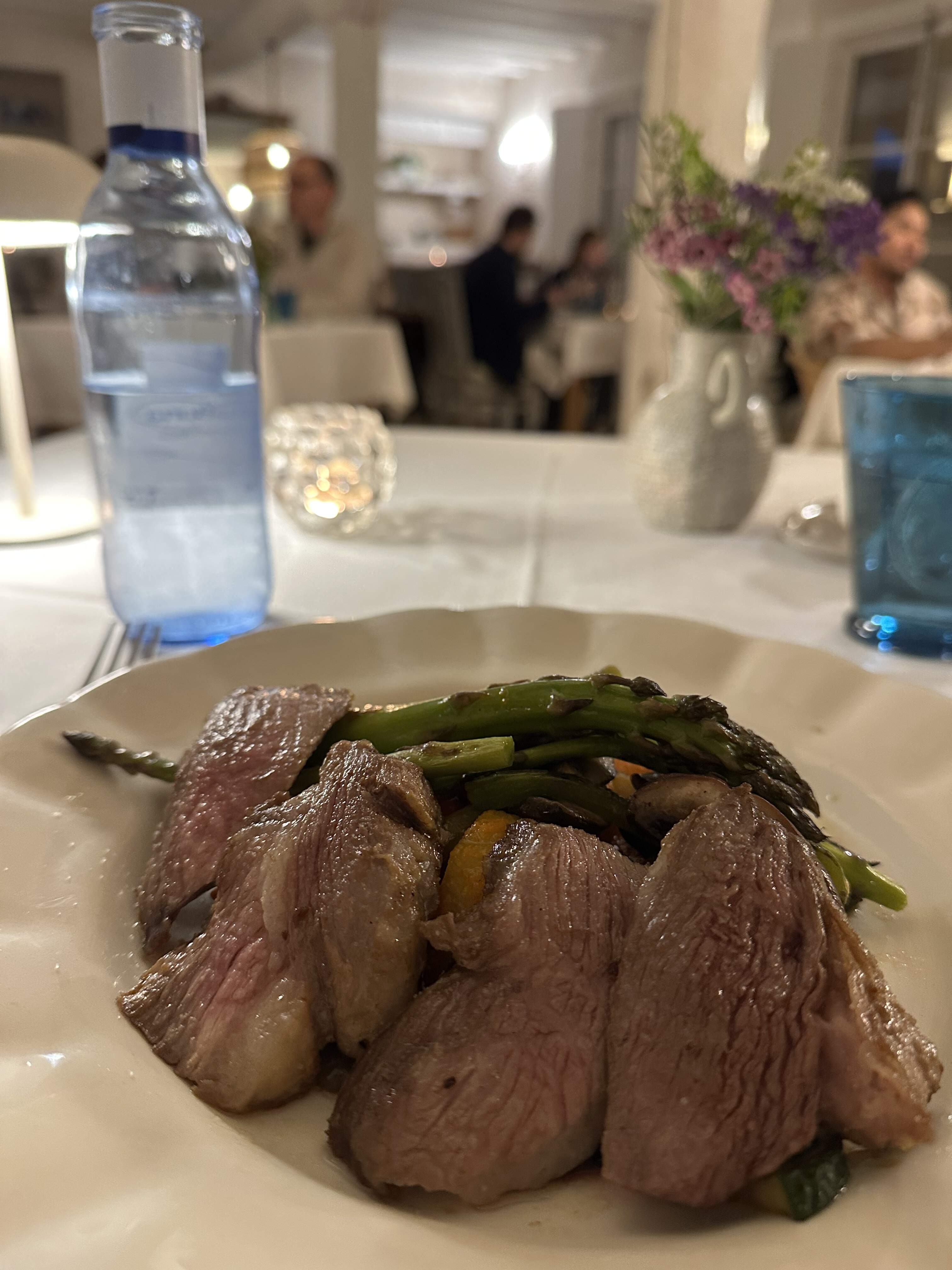
Main course at dinner last night, prepared in the same kitchen but not by me. Apart from the tiny lamb chops I’ve had outside, this was the best meat dish I’ve had so far on this visit to Andalucia. The cut is “secreto” of Iberian pork; on the side, local asparagus, potatoes and a great romesco-like sauce:

1 Like

Maribel I have a question:

This Sunday is Domingo de Ramos/Palm Sunday.
There are processions in Conil de la Frontera and in Medina Sidonia, but none in Vejer, according to my local hosts.

I’ve been told that Conil would be the better of the two for me to witness on my last vacation day.

I must try to find a map of the procession route in Conil. I believe that I should be somewhere along the route for the salida, about 4pm but I have never attended anything of this kind and have little idea of the way to plan.

My thought was to make a reservation to dine somewhere near the route, and therefore, park my car in the vicinity, have a late lunch, and be able to walk to a prime position either at the church or along the route.

I have never been to FEDUCHY in Conil but it appears to one of landmark eateries along this coast. I have to look into parking which is the issue that makes me most anxious at a time when many visitors will surely descend on the town from parts near and far.

Would you advise booking a table there for Sunday lunch?

My cadre of ladies in my hotel are always more than willing to help, but because none of them live in Conil, they are not familiar with the town, especially with parking.

Details of the procession in Conil here.; the salida is said to occur at 17:00.

  • Inicio: La procesión suele salir de la Parroquia de Santa Catalina de Alejandría, en el centro histórico, o realizar la salida desde la Capilla de Jesús Nazareno, junto a la Torre de Guzmán.
  • Recorrido: El cortejo recorre las calles más céntricas de Conil, pasando por la Plaza de la Torre de Guzmán y las inmediaciones de la Iglesia de Santa Catalina.

I’m not sure where the best place would be to stand–at the church, along the route and where, at the end??? This will be my first-ever Holy Week experience anywhere in the world (I am not counting Fifth Avenue’s Easter Parade)

I will post about this topic on the travel forum that we both frequent, as that is a more appropriate spot for this topic.

I wanted here mainly to get your opinion of FEDUCHY CONIL and perhaps some general tips on where to place myself for the procession. The FEDUCHY menu is not the product-focused type that I prefer–I see no options for fish or shellfish sold by weight.

Returning to FRANCISCO FONTANILLA is an option; their menu is more my style. The walk from there to the church takes 18 minutes, according to Google. I imagine that parking will still be pretty difficult, as it was on the non-holiday Sunday last week.

Tellingly, FEDUCHY has a carta in German but not in English that I could find:

FEDUCHY, has been awarded a Repsol “solete,” a “little sun.”
(This info is for those who are unfamiliar with Spain’s established gastronomic guide, the “Michelin of Spain,” if you will). I think that a “solete” might be similar to a Michelin bib Gourmand, but I’m unsure about that.

Feduchy, ime, is more of a trendy, cocktail-ish place. There are 2 Feduchys, one in the center of town that was closed when I was there in February and another on the beach, a chiringuito, Feduchy Playa, that opens seasonally.
I would not call Feduchy a landmark eatery. And it’s not product focused. La Venta de Melchor is a landmark eatery in that area and very product focused.

I imagine that parking will be extremely difficult in Conil for the processions.

It could be easier in Medina Sidonia, as it’s smaller, off the beaten path more than Conil and there is a municipal lot, where the weekly market is held, but to reach the Plaza de España, you’ll have quite a climb, if that matters. Are the ladies at C la S not familiar with the Holy Week processions in Medina Sidonia?
There are several Youtube videos of the processions that may give you an idea of the crowds.

You could contact the Hotel/Restaurante Duque to see if you could park there.

We parked at the bottom of the town in that parking lot initially, then realized what a climb it would constitute, then moved the car to the very top of this very steep whitewashed town, typically so. As I mentioned, we parked in an open “free” lot, just behind the Plaza de España. There we found the ubiquitous, self-appointed “parking attendant” whom we ignored.

The “salida” means the time when the “Paso” or “Pasos” (floats) leave their church.

As to where to stand, it doesn’t matter. It’s a question of where you can find a place to squeeze in to photograph, whether it be at the church where the procession begins, in the middle or at the end. These processions last for several hours. If it rains, the procession will be cancelled.

In Vejer, there aren´t processions. On Easter Sunday, Domingo de Resurección/Domingo de Gloria on April 5, Vejer holds its "Toro Embolao, which one should avoid, actually. But I assume you won’t be in the area on Easter Sunday.

About the Repsol “solete”----There are literally hundreds of places now that have been awarded a “solete”–primarily casual places such as cafés, ice cream parlors, chiringuitos, like beachside bars, hamburger joints, pizzerias, market stands, tascas, tabancos and at Christmas time, Repsol gave out soletes to convents all over the country that produces those wonderful convent sweets, dulces de clausura

The “soletes” come out in the spring, summer, fall and winter usually.

The solete is not in any way, shape of form, similar to the Michelin Bib Gourmand

As to parking…
That’s the trouble with going to the processions or the local fiestas, driving from afar.
When we attend the Holy Week processions or local fiestas we always stay in the towns/cities where they’ll held.
This Sunday we’ll be driving the short distance to Avila for their Holy Week procession but will spend 2 nights at the Avila Parador, the first Parador I ever experienced as a child.

1 Like

The Palm Sunday, Domingo de Ramos, procession in Medina Sidonia starts at 6 pm and ends at midnight.
Could you go to the Hotel Restaurante Duque for a very late lunch/very early dinner? Their last reservation is taken at 4:30 pm.

Thanks you so very much, Maribel. I will ask again about why my friend here, who is a native of Medina, advised that I go to Conil, instead.

I have crossed Feduchy off my list; it did not sound appealing at all.
VENTA MELCHOR had been my first choice if I were to eat and then go to the processions but again, I thought about having to find a parking spot AFTER lunch and this seems daunting.

I could certainly call Ivan at DUQUE and ask about dining there and parking in their lot. Their lot was jammed last Friday when I ate there, but maybe he will have an idea for me. He was so helpful in removing my car from the tangle in the lot the other day.

I have to depart here by car, early on Monday, as my flight from Jerez leaves in the very early afternoon…

I will do more investigation; Medina sounds like a much more intriguing spot for the processions than Conil.

I’ll report my findings back later; thank you for the correction on my solete/BibGourtmand error. I am off now for my next lesson at Pilates Vejer!

I forgot all about your parking woes at Duque, but maybe ask Ivan if someone can park the car safely for you?
Does Duque have an employee lot?
BTW on Youtube there is a video from 5 days ago of the Semana Santa Medina Sidonia procession.
I can’t post it here.

In Conil next Sunday there is one procession, known locally as La Borriquita, as are several of these are called in Spain on Palm Sunday. The procession starts at 5:15 pm and ends at 10:15 pm

I believe the most famous of the processions occur on Thursday night, as is the case in Sevilla and Jerez.

It’s supposed to be nice weather this weekend in your neck of the woods, so I imagine that the parking at Fontanilla Beach on Sunday will be jammed. I’ll try to think of another idea.

I thought of booking at Venta Melchor and have them order you a taxi to Conil, about a 12-minute ride, but there’s the issue on Palm Sunday finding a taxi working and another to drive you back to the Venta, or get a card and use the same taxi that takes you to Conil to drive you back, if he/she is willing.

I looked through the list of soletes in my Comunidad de Madrid, and there are indeed family restaurants that do have a solete, in addition to the places I listed above.

In La Janda, Venta Pinto has a solete in La Barca and El Soldao in Medina Sidonia.

La Montería has a solete, probably for its bar, while the restaurant sports a Bib Gourmand, so in this particular case they are indeed similar.
The bar of La Castela, also in the Retiro district has a solete and its restaurant a Michelin recommendation.

Maybe I should start a thread on Repsol Guide soletes–what they are, where they are, how to search them out on the Repsol web page.

In short,
For 2026 there are 808 restaurants in Spain that have Repsol suns or soles. (The Repsol guide Portugal has separate awards)

For 2026 there are 291 Michelin starred restaurants in Spain and I don’t know how many Bib Gourmands or Michelin recommendations
(Portugal has its own awards)

There are too many Repsol casual soletes now to count, in 2023 there were 3,300!!, as more come out in each season, but you can see them by regions here:

@erica1
I’m in the Holy Week mood as we head to Avila for Palm Sunday and have been watching YouTube videos. The videos of La Borriquita in Conil from last year (there are several) show that the crowds aren’t that heavy on that very sunny day.
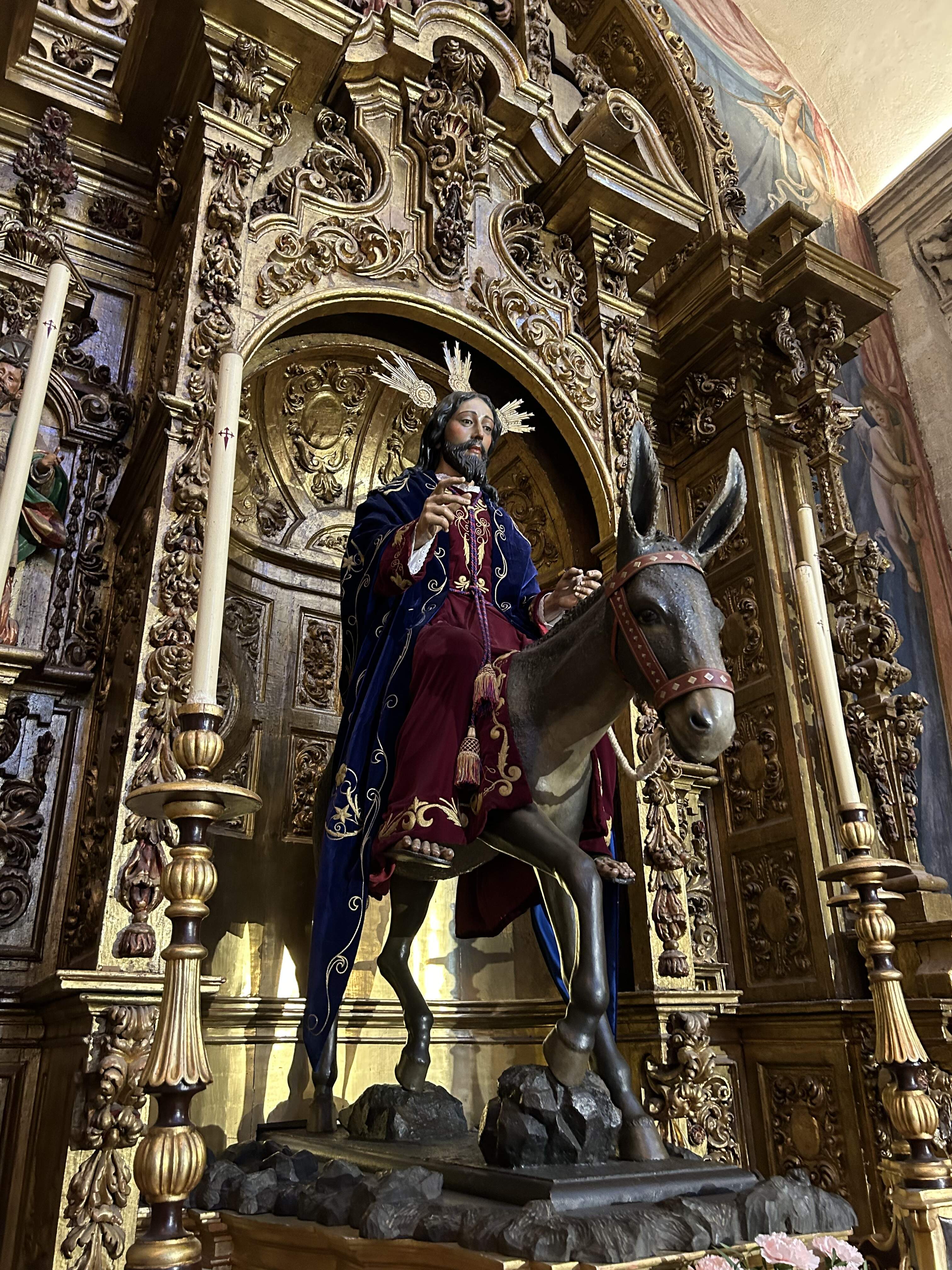
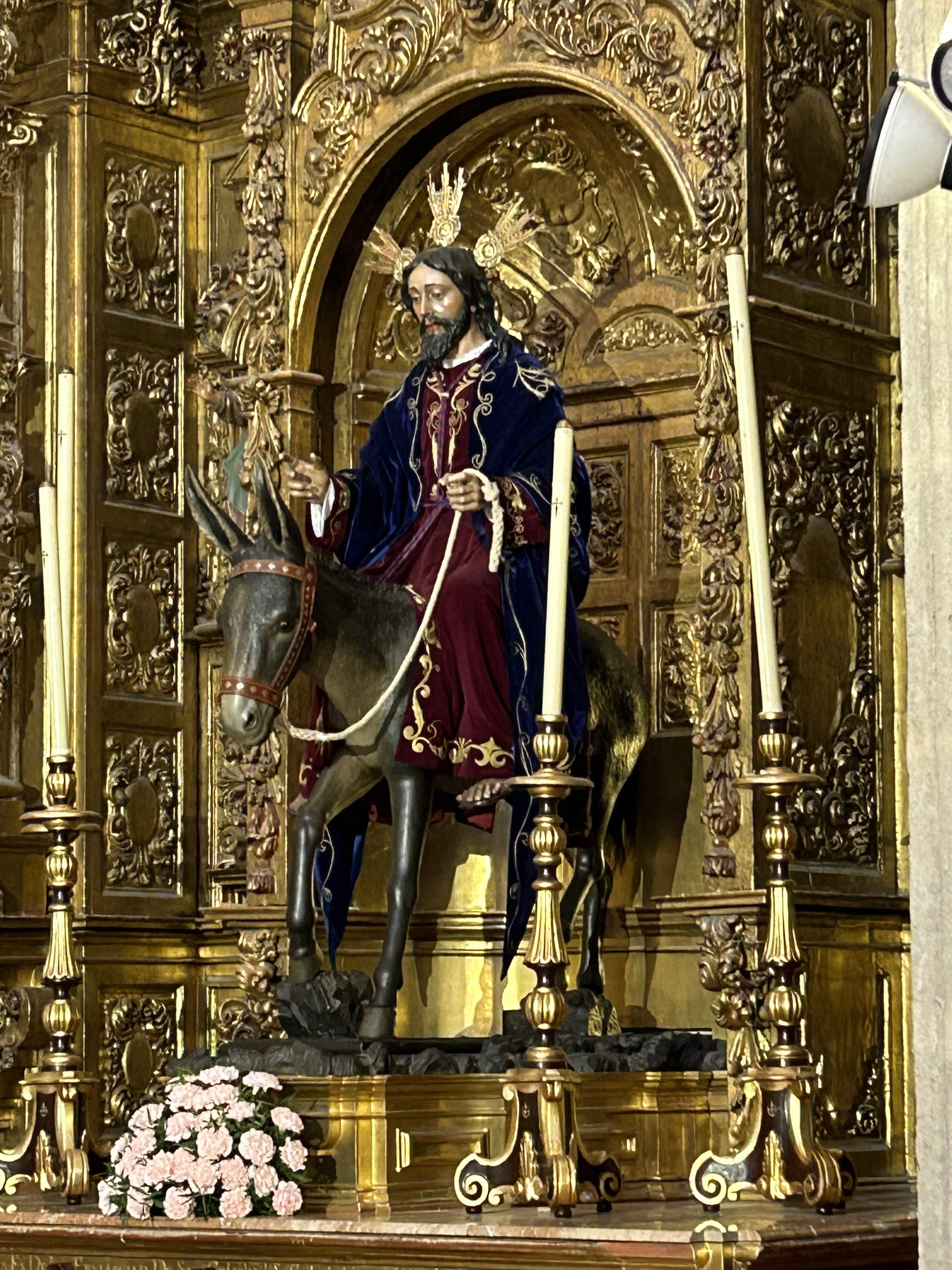
La Borriquita is one float or Paso of Christ on a donkey (la borriquita) and the Paso is carried by the members of the brotherhood (costaleros) lifting the hugely heavy Paso from underneath, as they do in Jerez and Sevilla, the most difficult way.

This may be one of the reasons your friend suggested you go to Conil rather than MS.

You might want to place yourself at the church when the float departs (la salida) to witness how difficult and time consuming this process is of getting the Paso out of its temple. These processions are very, very slow moving.

Maribel thanks so much. I watched the videos last night. The procession in Medina seemed very low key as compared to Conil, and I loved the orchestra in Conil. To be on the safe side, I booked lunch at FRANCISO FONTANILLA.

Yes, the Conil procession, from what I saw, is far more memorable. What I love most about Holy Week everywhere is actually the music. Before you go, listen to my favorite, La Saeta, the version by India Martínez. Joan Manuel Serrat also has a great version from my early days of Semana Santa. “No eres tú mi cantar, no puedo cantar ni quiero…” I know this one by heart

Image of La borriquita before leaving Sevilla’s cathedral—this procession, always on Palm Sunday, Domingo de Ramos, during Holy Week in most all cities,


is the most beloved by the children

1 Like