[Bukit Tambun, Penang, Malaysia] Lunch at Jetty Seafood Restaurant

Bukit Tambun is a tiny sleepy fishing village on the mainland part of Penang. What catches one’s attention when one drives into the village are its rainbow-coloured rows of traditional Chinese shophouses, most built circa 1920s.
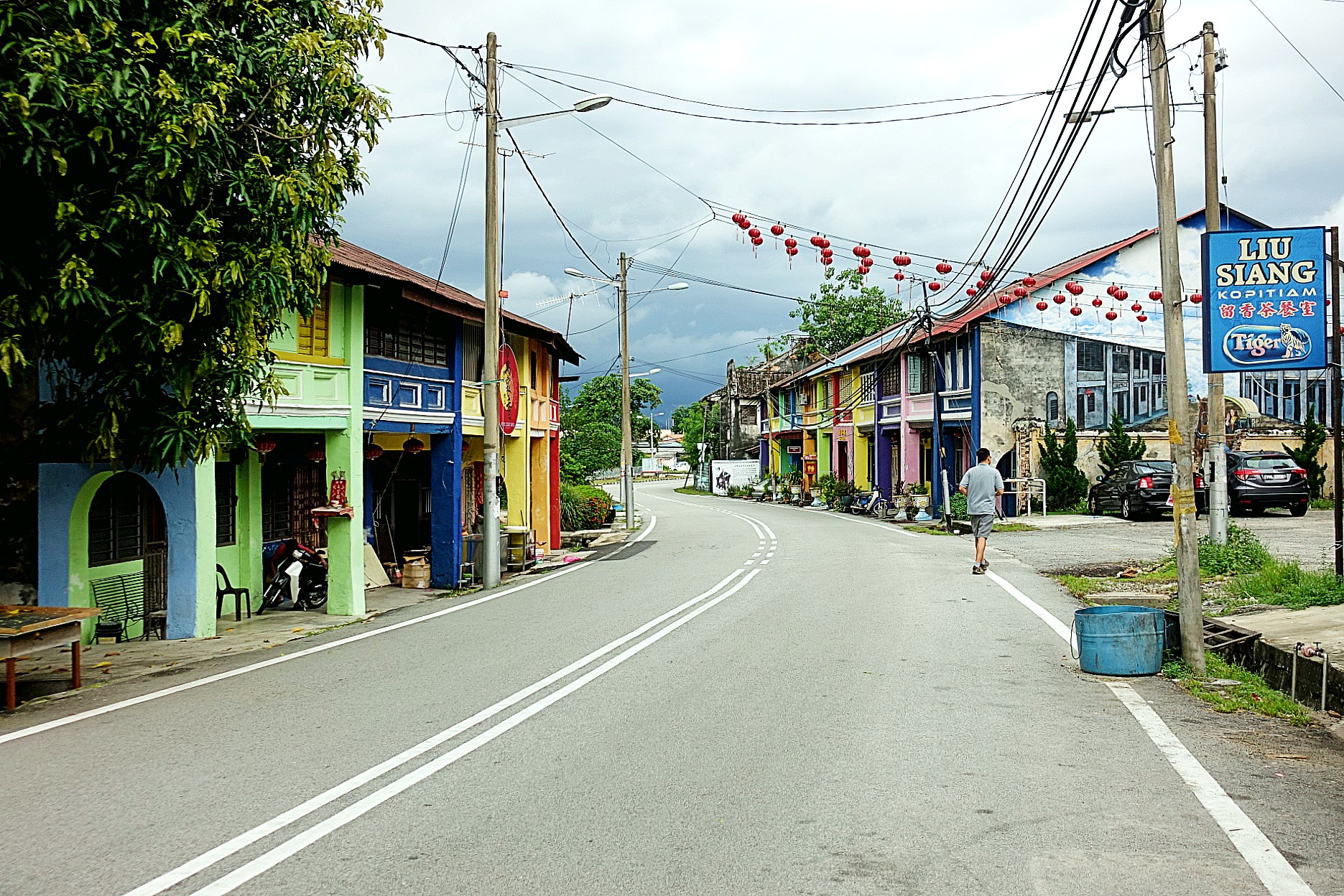
Life flowed at a languid pace here, as the fisherfolk go out to sea before the break of dawn, coming back in the early afternoon and, after sorting out their catch and loading them onto transports that bring them out to Butterworth, or to the main city of George Town on the island across the Penang Straits, would laze around in the coffeeshops or small rest areas dotting the village.

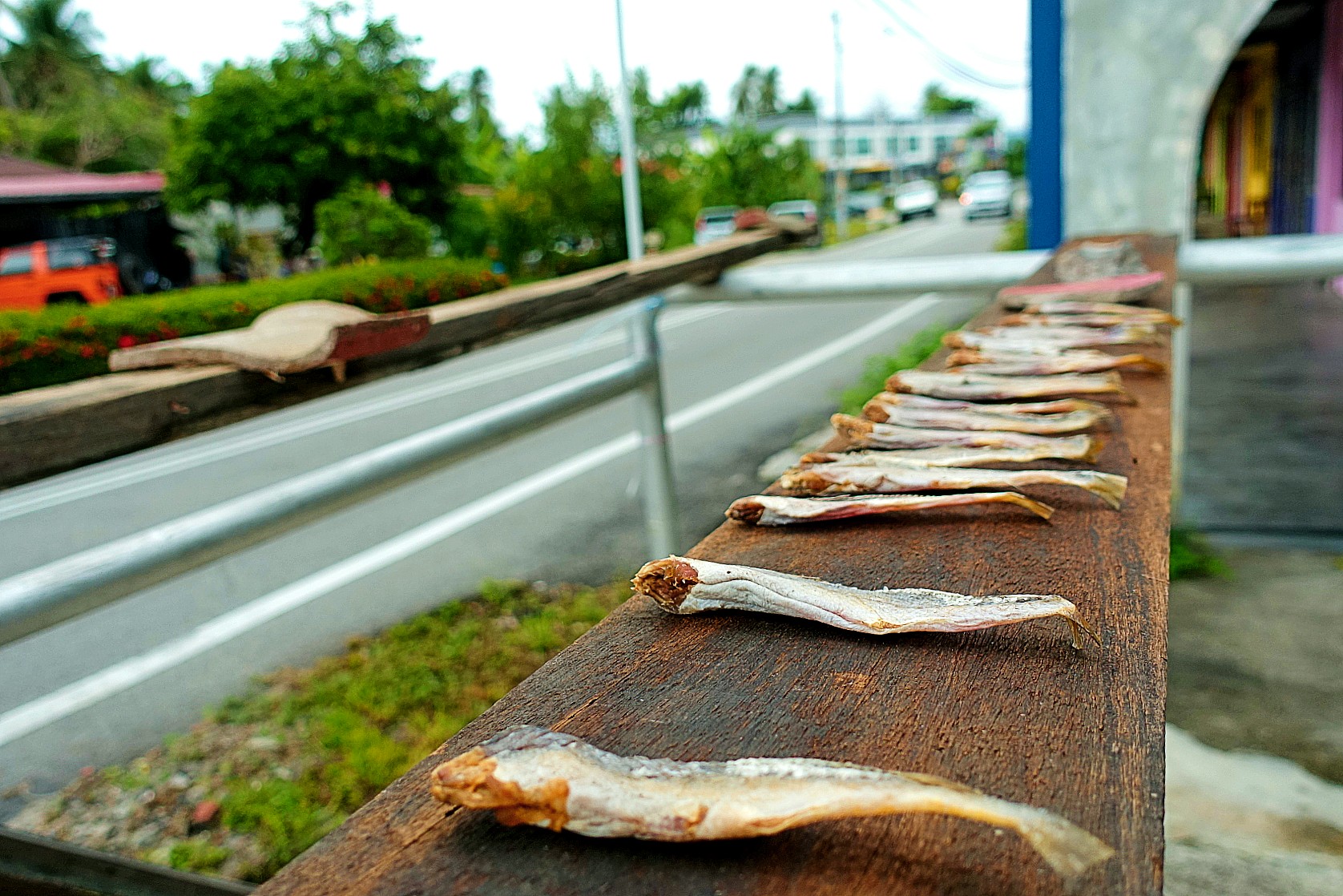
Salted fish laid out to dry by the quiet road cutting through the village centre.
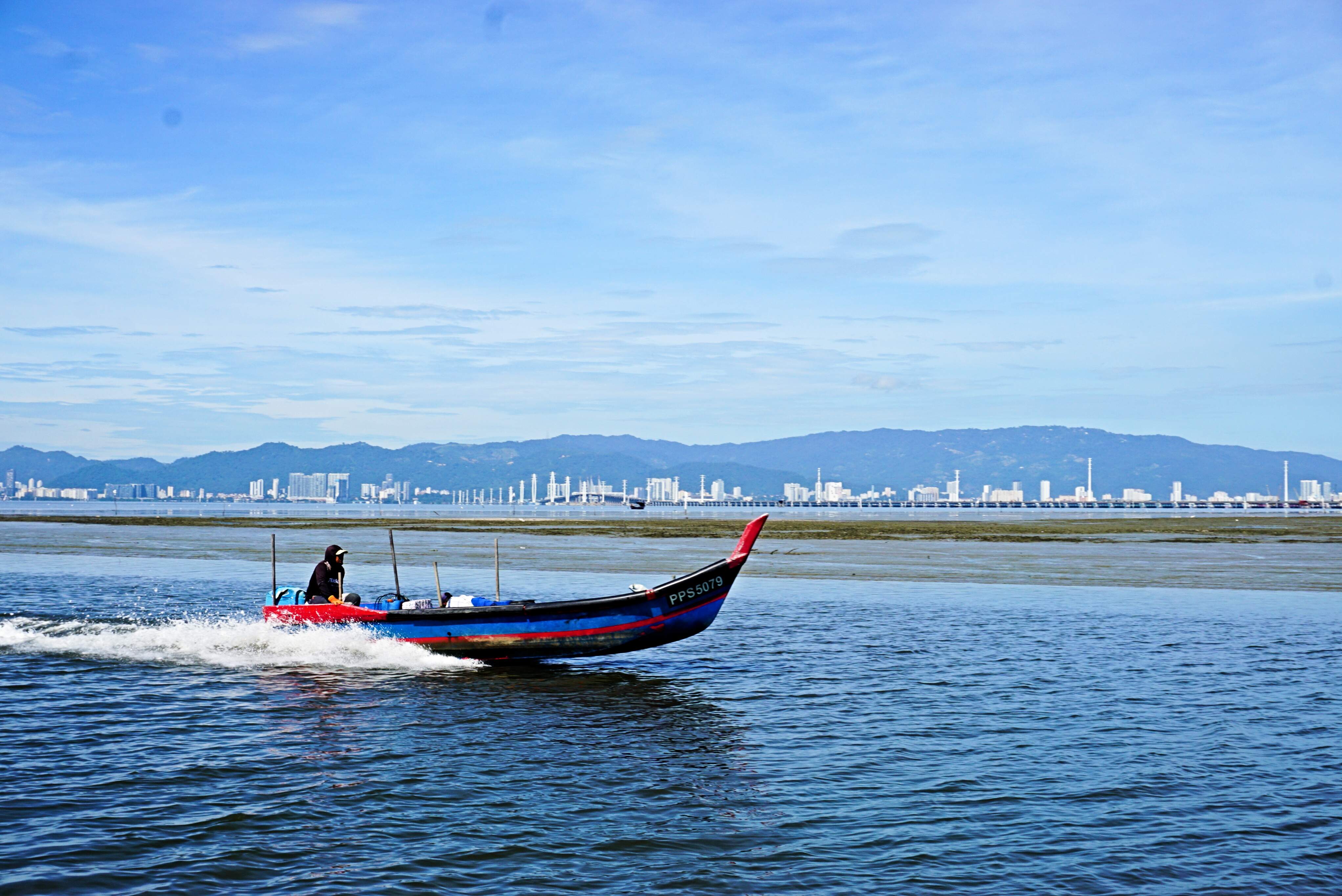
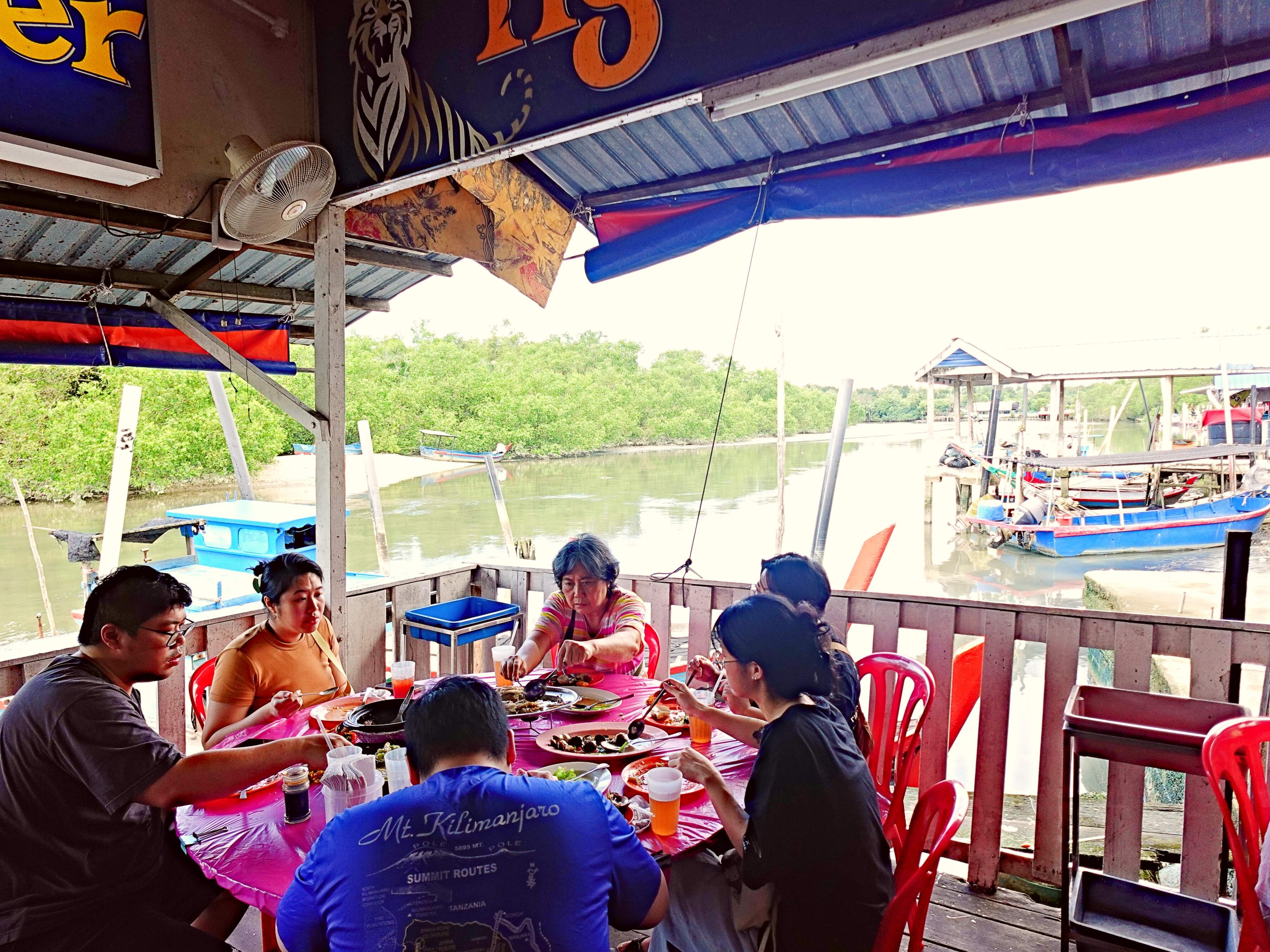
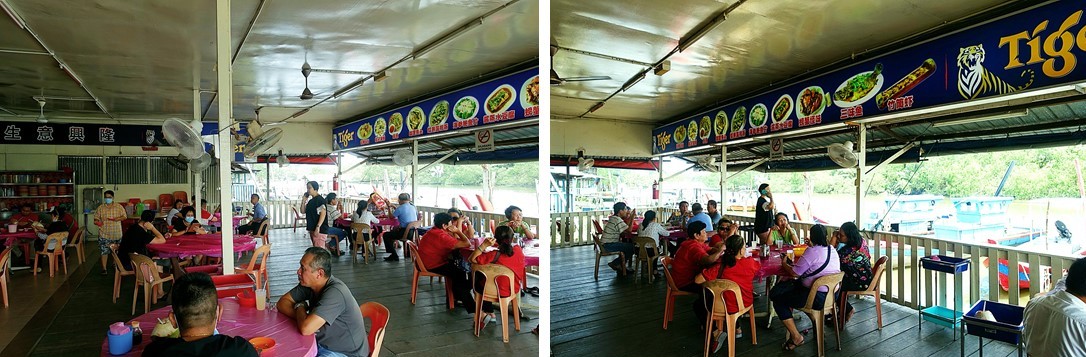
The village’s fortunes actually changed some time in the 1990s when an enterprising villager decided to open a seafood restaurant by the river-front, offering fresh-off-the-boat catch cooked anyway one desired. First, the Mainlanders came - from Bukit Mertajam and Butterworth. Then, as news got around, Penang islanders started driving across the bridge from George Town to check out this place which “charges unbelievably low prices” for their seafood dinners. Business went through the roof, more villagers joined in and opened rival dining establishments - all pretty rustic set-ups: wooden constructions on stilts perched atop the Jawi River that meandered lazily through the village.

Today, there is a clutch of seafood restaurants that still pulled in the crowds, mainly in the evenings, to this quiet little hamlet.

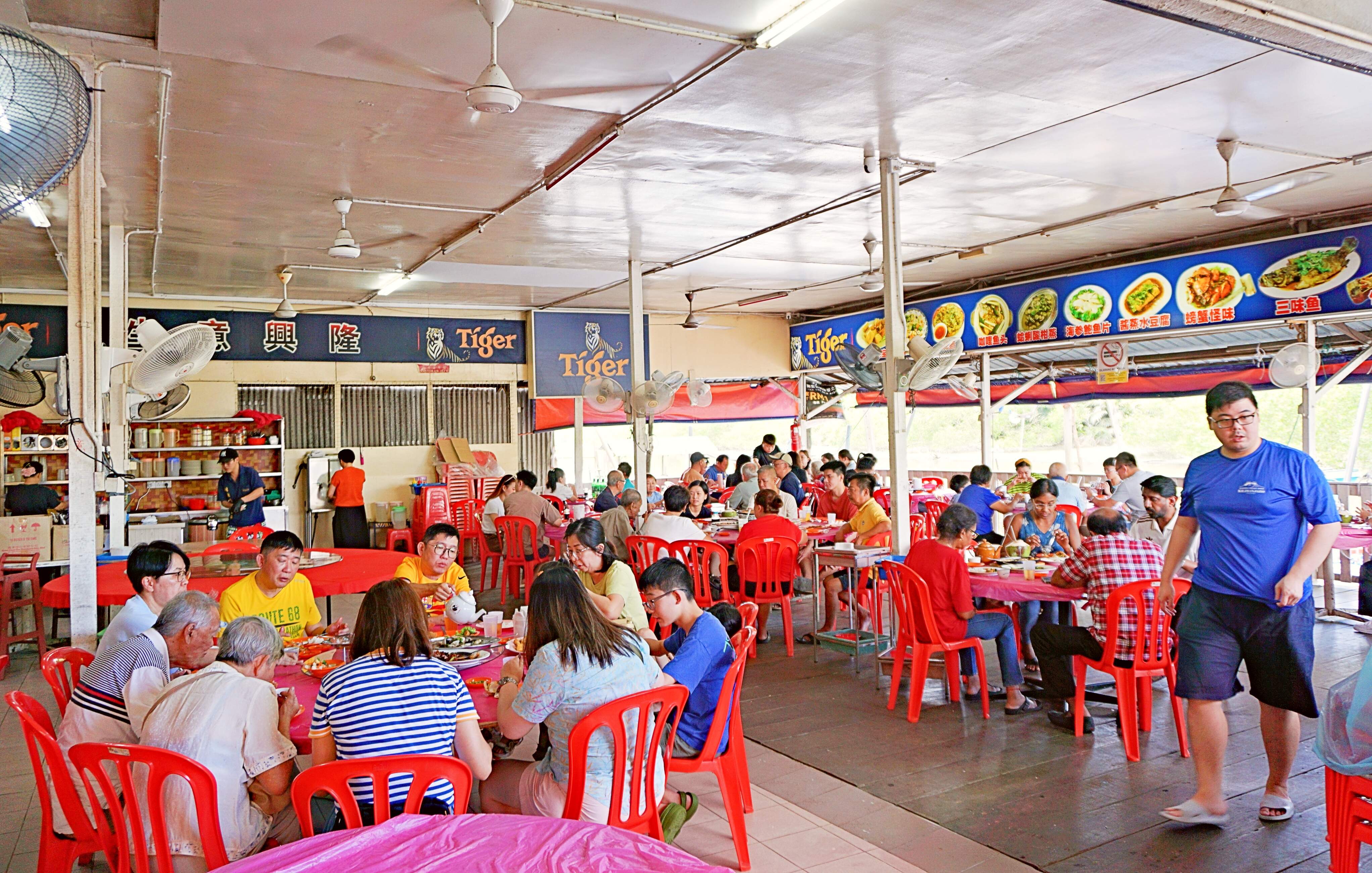
We decided to lunch at Jetty Seafood Restaurant today. It’s supposedly the most popular one, ahead of its other two most well-established rivals, Prawn Village Restaurant and Floating Seafood Paradise, plus at least half a dozen other similar set-ups.

Our lunch today consisted of:

  1. Chili crabs, served with Chinese fried mantou buns. No one, but no one, does chili crabs as well as the Singaporeans do. But the ones here came pretty close to what one gets back in Singapore: tomatoey, sweet-sour sauce with the minutest hint of chili-heat, streaked through with egg-white ribbons. One don’t get the humongous Sri Lankan crabs here as in Singapore, but the smallish Penang mud-crabs here were ultra-fresh, which more than made up for their lack of size.
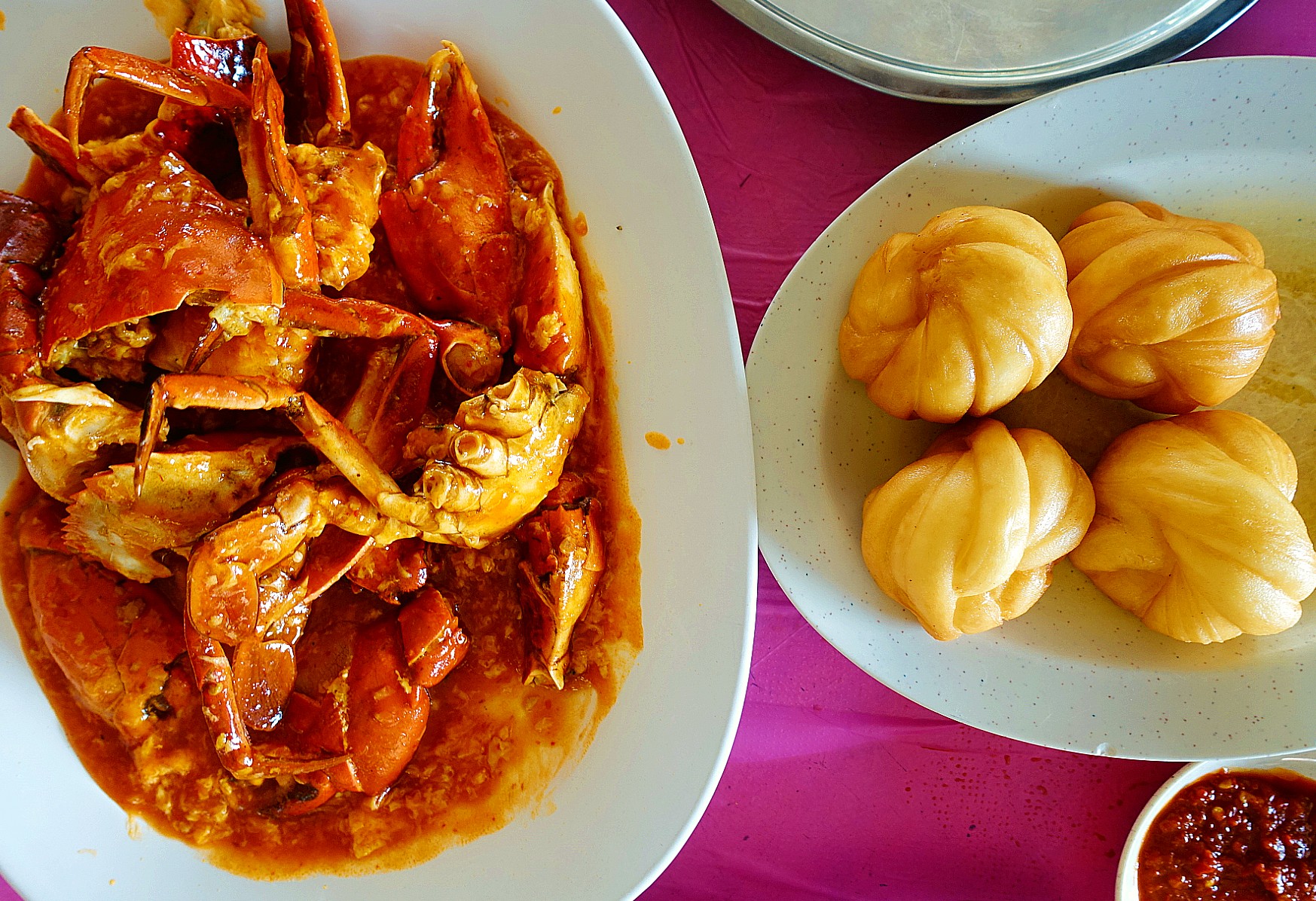
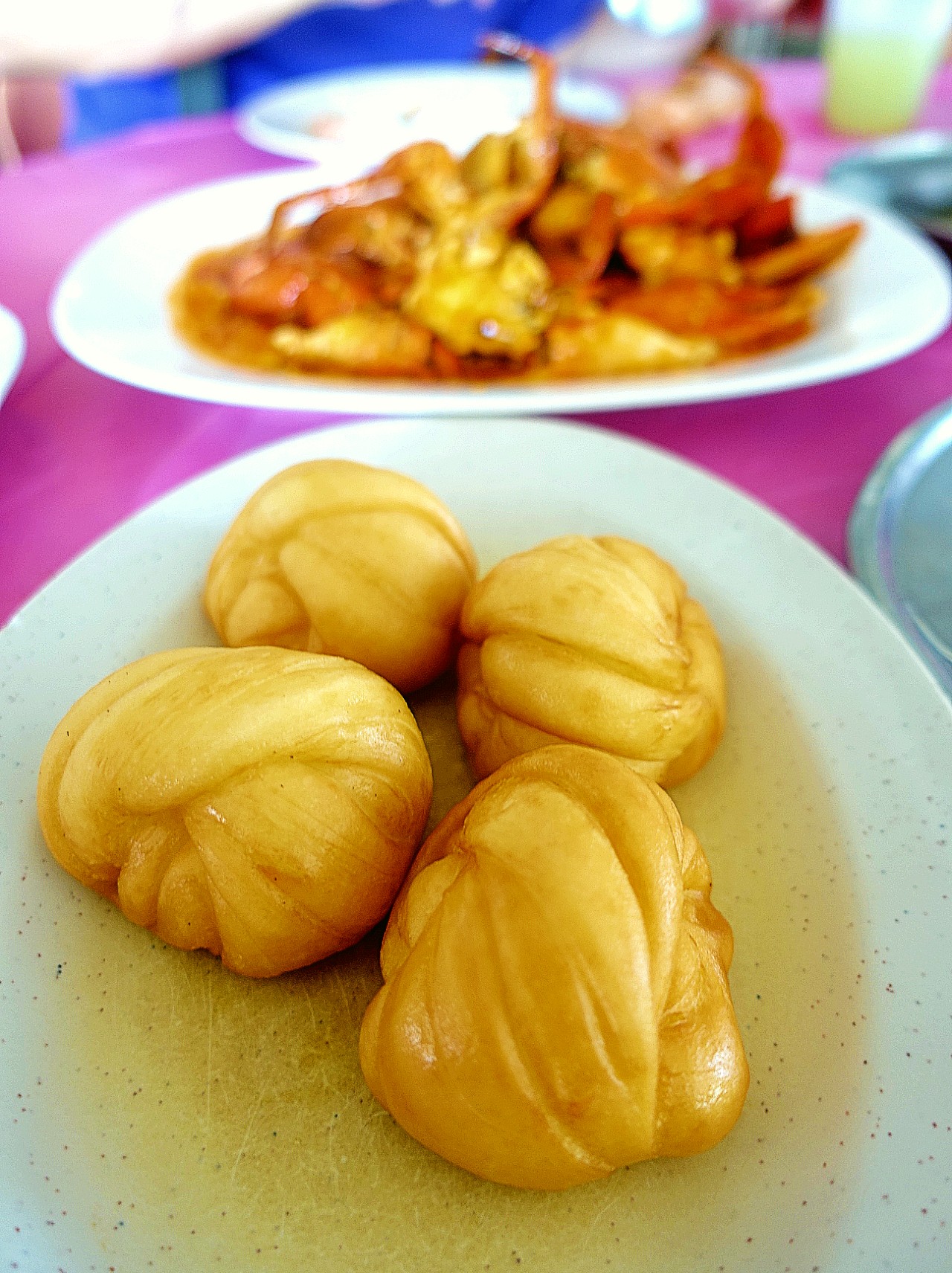
The lightly-fried knots of mantou buns were pleasantly light and fluffy, with a slightly sweetish tinge. They were perfect to dip into the chili crab gravy.
  1. Deep-fried whole snapper with “kam heong” sauce - the fish was amazingly fresh and, flash-fried, was crisp on the outside, but flaky and moist inside. I never liked “kam heong” sauce which I first came across in Kuala Lumpur, when I moved there in 2011. I found the sauce - “kam heong" (金香) is a Cantonese term which translates to "golden fragrance” - too pungent for my taste. The KL Cantonese chefs combined Chinese fermented beanpaste (“taucheo”), oyster sauce, dried shrimps and Shaoxing wine with Indian curry spices, curry leaves and, in many places, lemongrass and even Malay “belacan” (fermented shrimp paste) and explosive birds’ eye chilis (50,000-100,000 Scoville units).

It was something alien for anyone growing up in Singapore, or even Penang. But, somehow, this style of cooking has slowly seeped into Penang’s culinary repertoire in the past decade or so. Thankfully, the version here is pretty mild, with none of the obnoxious, in-your-face, flavour sledgehammer which KL-style Chinese cooking is known for. I actually enjoyed the gentle rendition here.

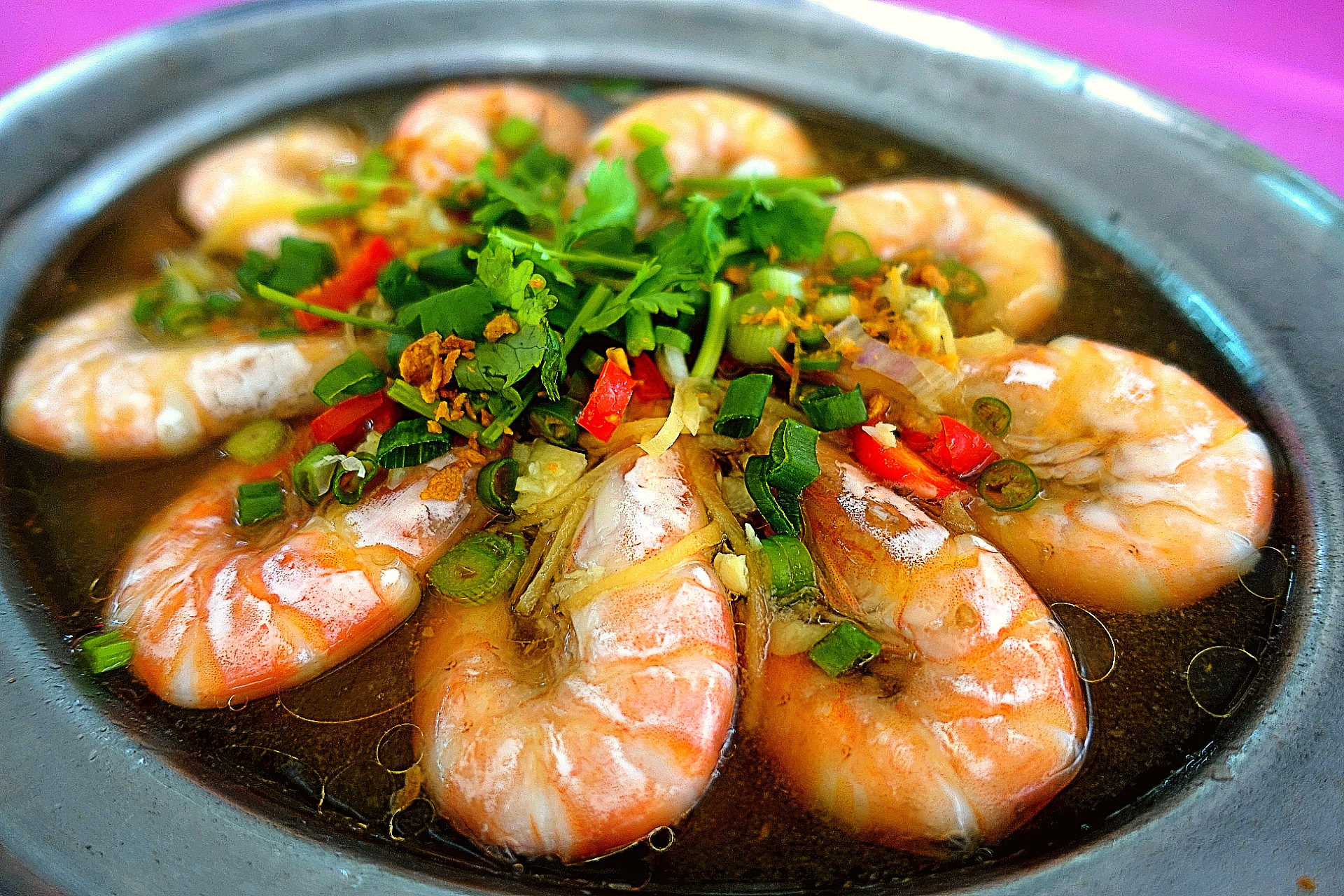
  1. Steamed prawns with Shaoxing wine-soy sauce - these huge thin-shelled prawns were the best I’d had in a long time. Steamed gently with a drizzle of Shaoxing rice wine, good quality soy sauce, julienned strips of ginger, and a sprinkling of chopped scallions, red chilis and coriander leaves, they were delicious.

  2. Bitter gourd omelette - our obligatory vegetable dish was bitter gourd and eggs, saltier than we’d have liked, but perfect to go with the other richer dishes.
Prices here have doubled, nay, tripled since the early days of Bukit Tambun’s foray into the seafood restaurant business. But it remained very reasonable - the total bill for this meal for the two of us, plus some beers, was MYR120 (US$28)!

Address
Jetty Seafood Restaurant
860, Bagan Bukit Tambun, 14100 Simpang Ampat,
Penang, Malaysia
Tel: +604-588 0949
Opening hours: 12 noon to 10pm daily


9 Likes

My kind of town. Great food! Not to mention the prices (even if they have doubled or trebled).

I’ll take the smaller Penang crabs. Price-performance ratio is better. They don’t cost 50 dollars each like in Singapore :+1:

2 Likes

Yes, I do find Singapore to have become frustratingly expensive, especially in the past decade.

2 Likes

Thanks for sharing the background to the meal, Peter. Always appreciate it when you tell us a story as well as telling us about the food.

4 Likes

We were back in the neighborhood yesterday (Sunday, 28 Dec), to check out the newly-launched Penang River Cruise at nearby Juru.

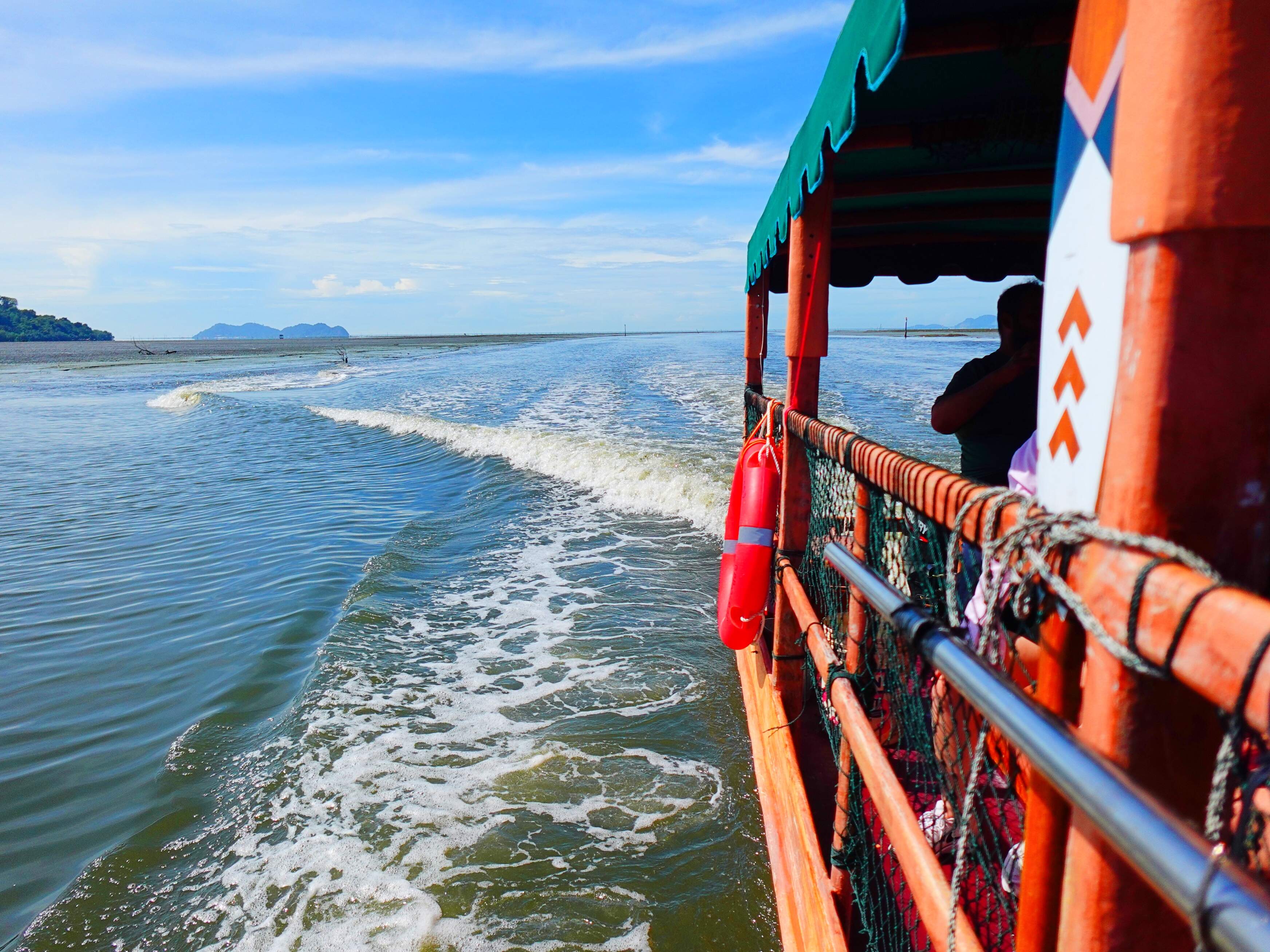
Following the 2-hour boat cruise (10.30am to 12.30pm) through the languid waters of the Juru River, running through mangrove swamps and out to the blue seas of the Straits of Penang, it was off to Jetty Seafood Restaurant for lunch right after.

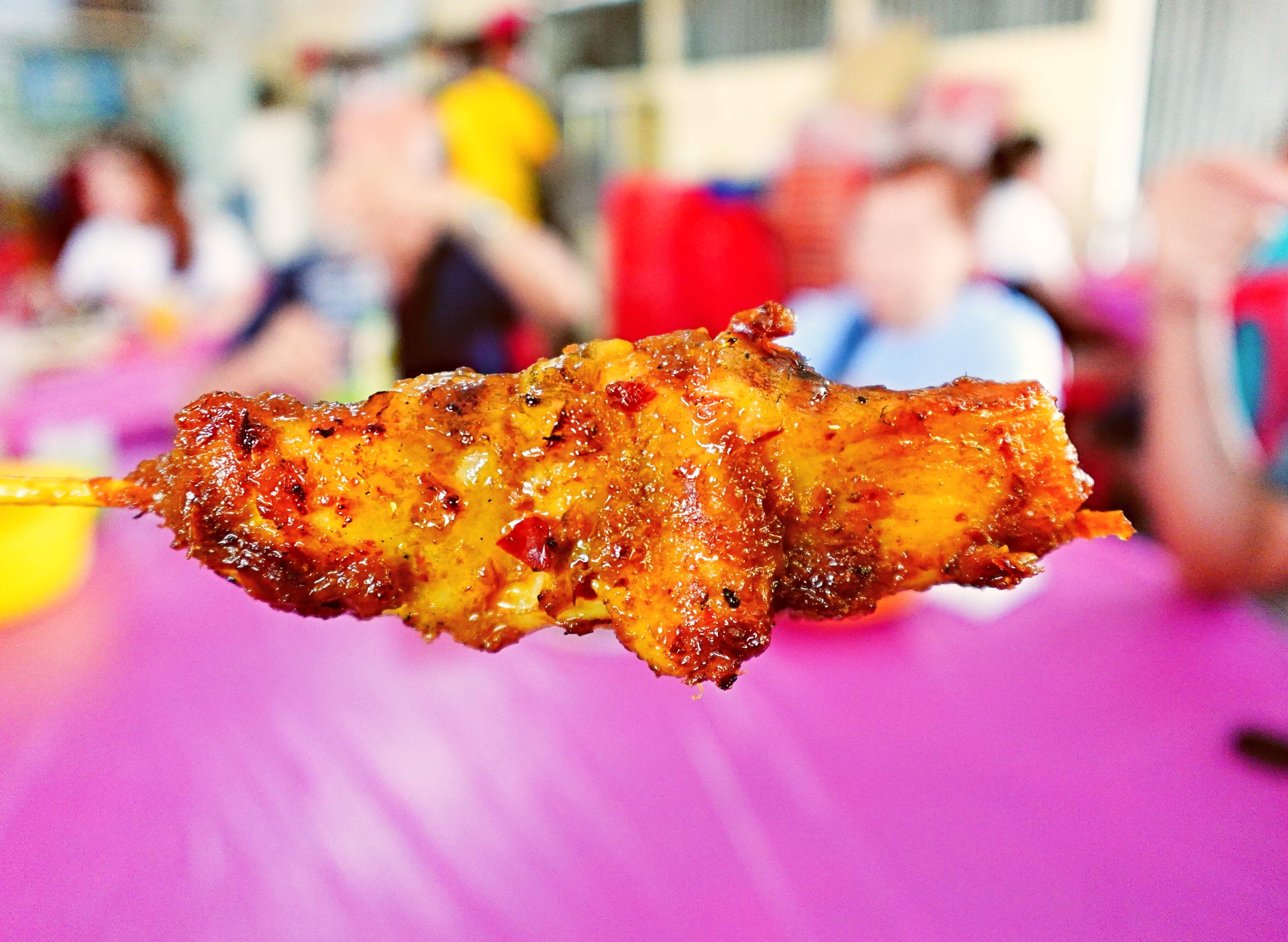
  1. Chicken satay - skewers of plump, spice-turmeric-marinated chicken were absolutely delish. Instead of serving a peanut dipping sauce on the side, the satay skewers were lightl glazed with the sauce just before serving.

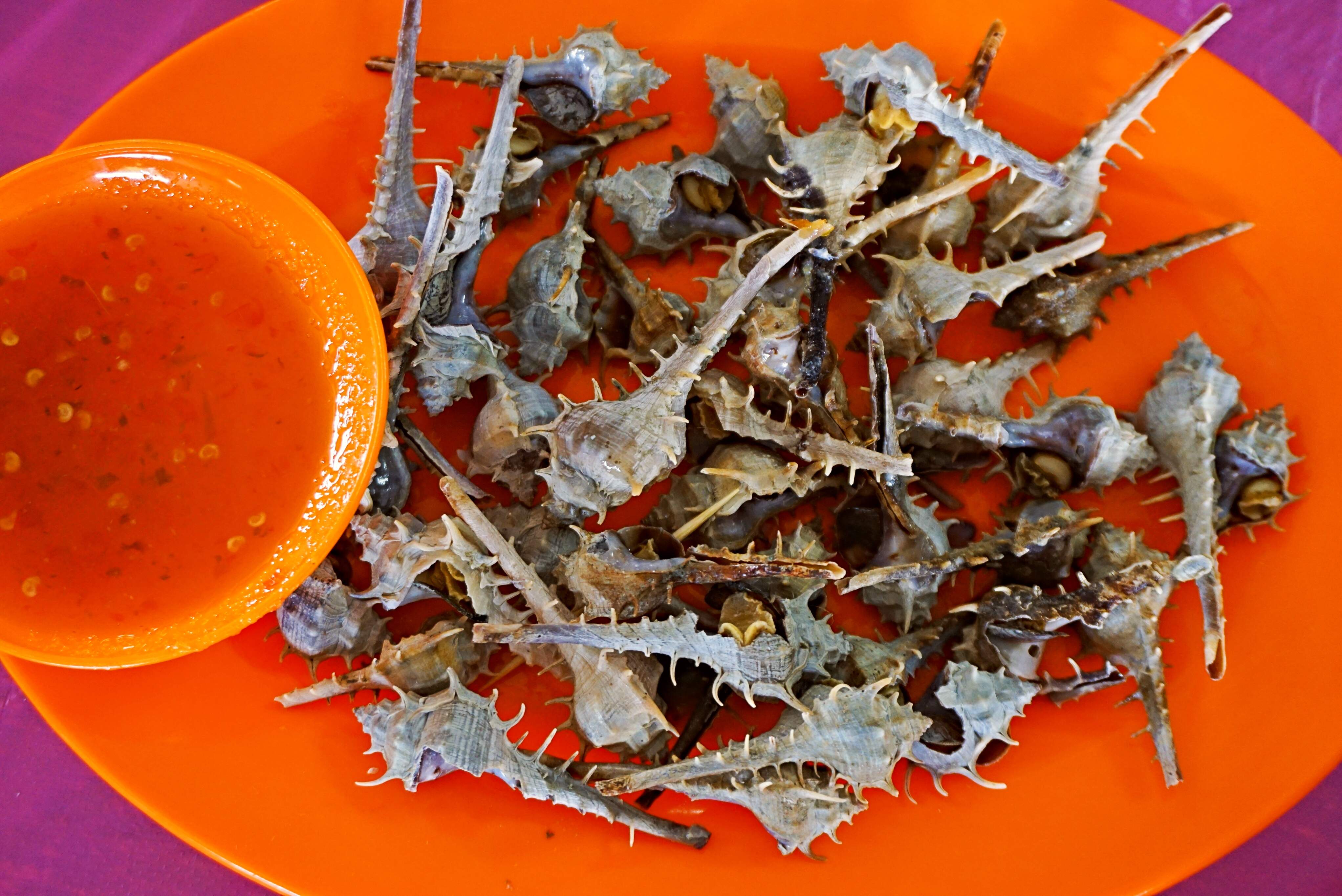
  1. *Spike-shelled sea snails, known to the local Chinese here (mainly Teochews/Chaozhou) as “chi lea”, and to the Malays as “siput duri”. Simply parboiled, the sea snails were served with a very good spicy-sweet red chili dip. Toothpicks were provided for diners too pick and spear the flesh out of the narrow shells.

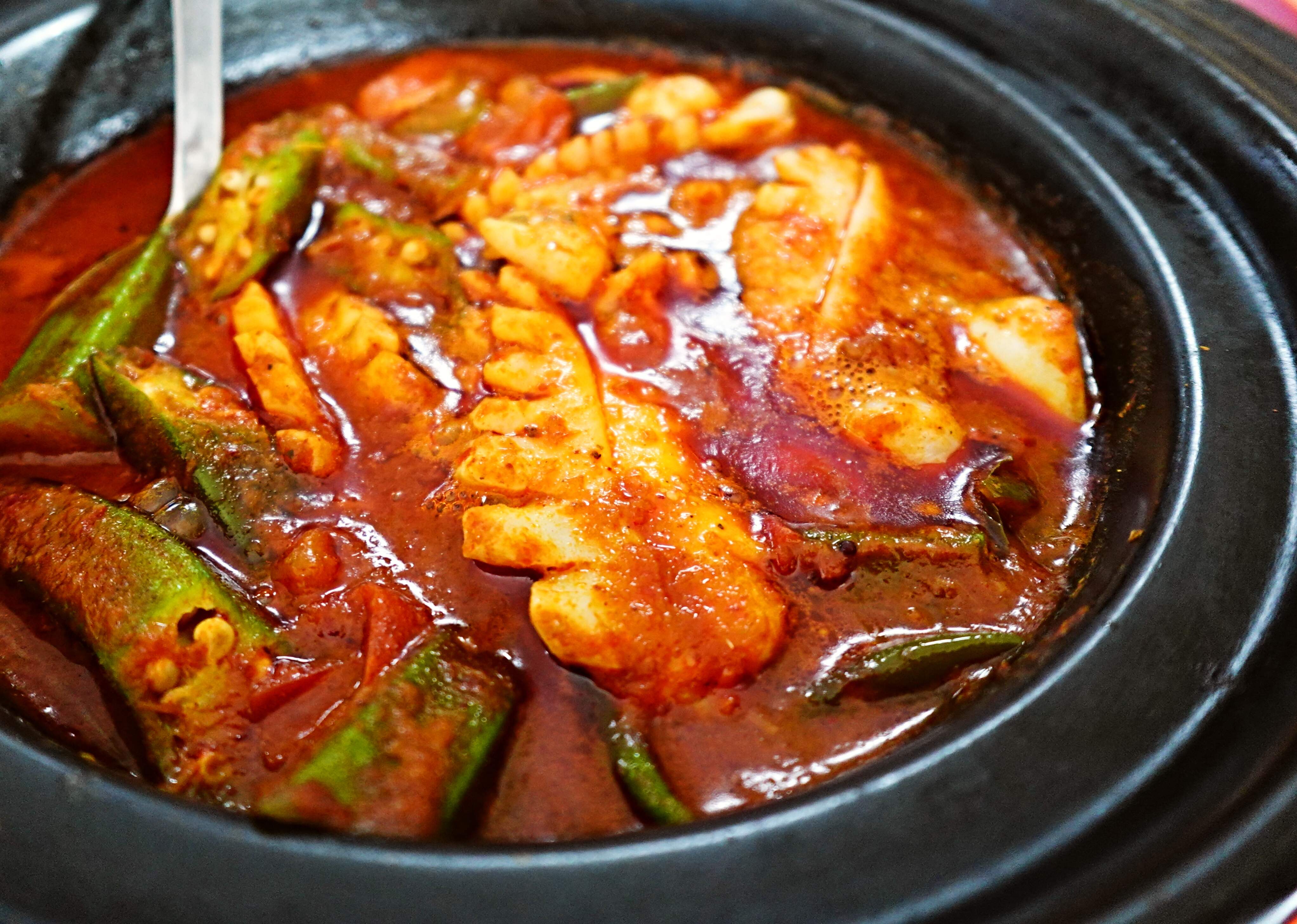
  1. Squid curry - a piquant dish of large squid, butterflied and cut into large strips then cooked with ladyfingers and tomatoes in a spicy-sweet-sour curry.

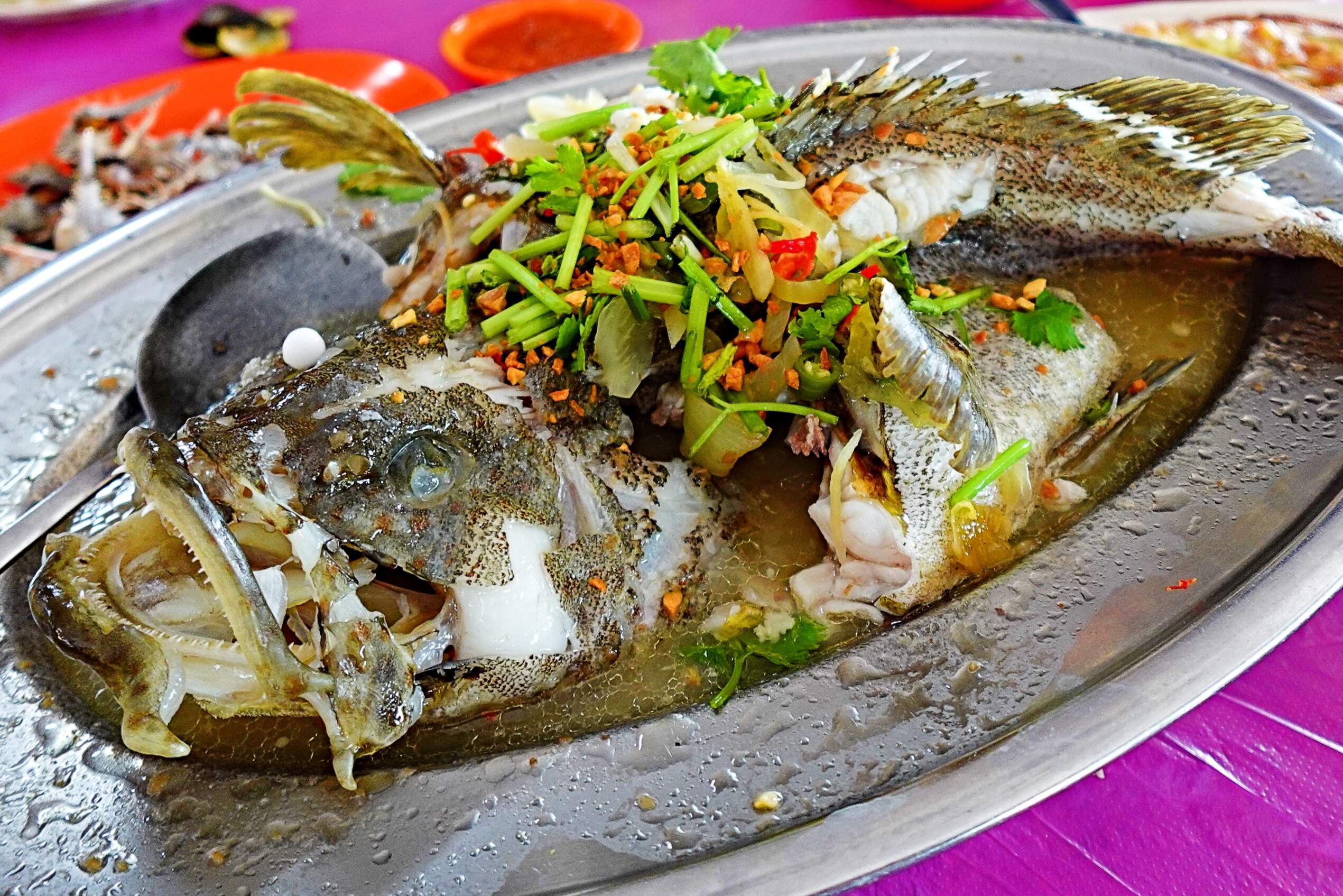
  2. Teochew-style steamed grouper - the Chinese love a whole steamed fish, only made possible using super-fresh fish, preferably live just before cooking. The Cantonese love steaming their whole fish plain, before giving the cooked fish a light drizzle of soy sauce, and scalding it ever so lightly with smoking-hot vegetable oil.
    The Teochews, on the other hand, like their steamed fish to have a pronounced sourish tinge, achieved through garnishing the whole fish with salted mustard vegetable strips, sour plum and/or tomatoes, besides strips of ginger and pork lard, before steaming it.
    The cooked fish will be topped with fresh coriander leaves before serving. Over here at Jetty Seafood Restaurant, the topping also includes golden-fried chopped garlic and chopped red chilis.

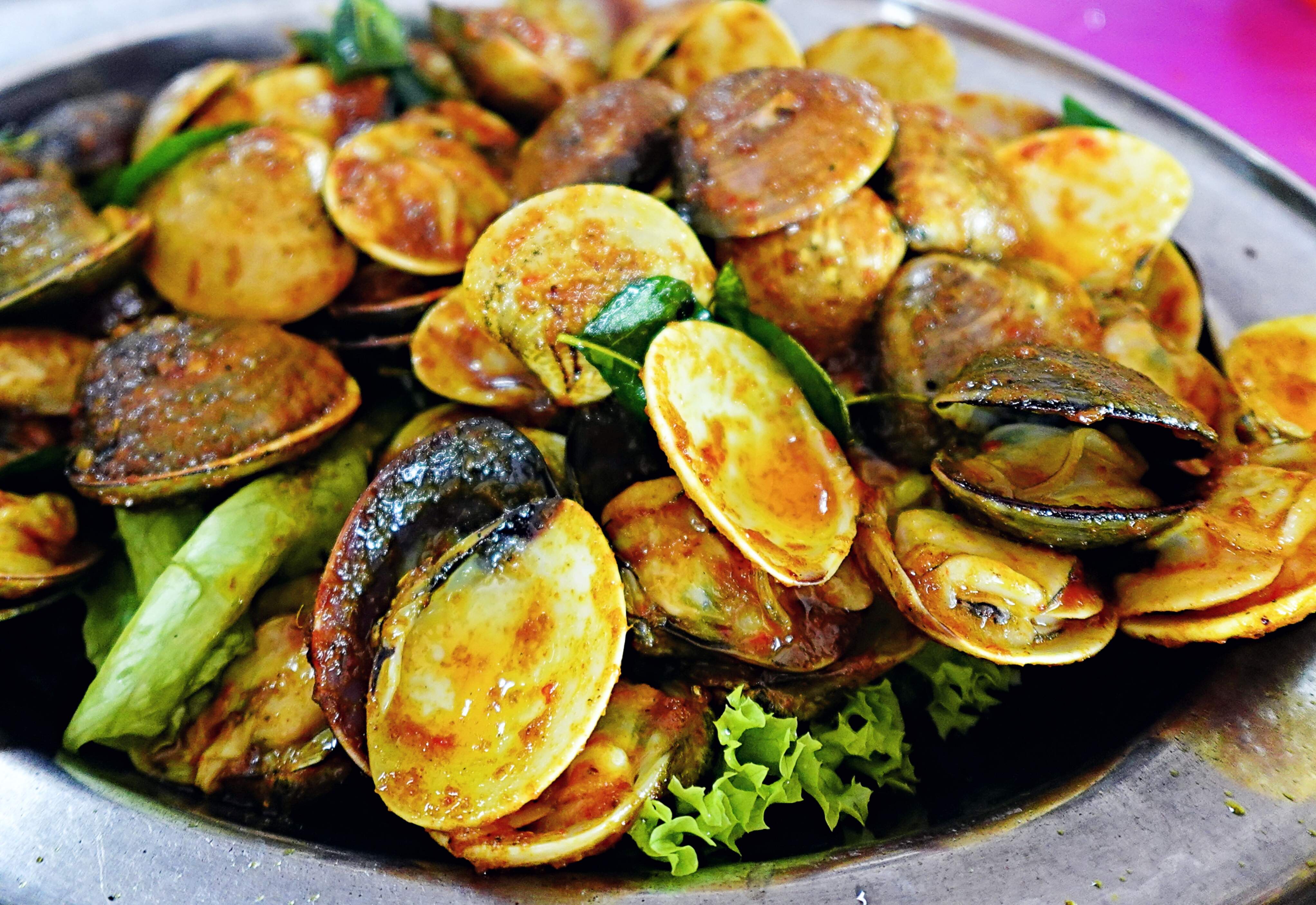
  1. Stir-fried “Kam Heong” mangrove clams (Malay: “kepah”) - “kam heong” means “golden fragrance” in Cantonese, and is a very Malaysian way of cooking seafood, yielding a very intensely-flavored dish with sharp aromas. Cooking a dish “kam heong” basically involves an aggressive, pureed mix with lots of chilis (including explosive bird’s eye chilis), dried shrimps, Indian curry leaves, lemongrass, shallots and garlic, plus curry powder, and an assortment of Chinese condiments like light- and dark- soy sauces, oyster sauce, etc.
    The rendition here, much lighter because of obvious Teochew influences here on Mainland Penang, is very good. I find “Kam Heong” dishes in Kuala Lumpur, perhaps where the cooking technique started, to be too overwhelming.

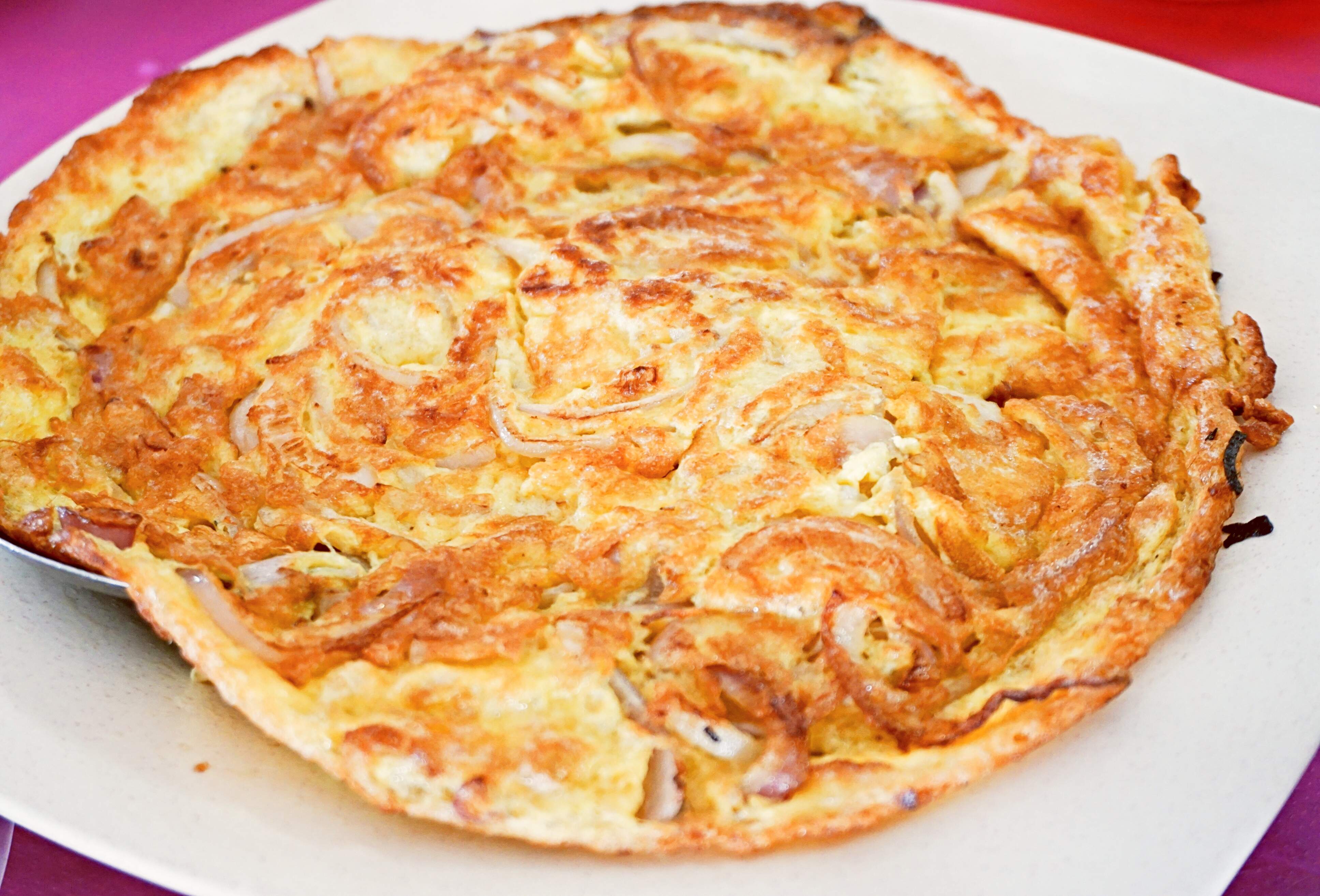
  2. Onion omelette - this is a light side-dish, and perfect for accompanying the more heavily-spiced dishes.

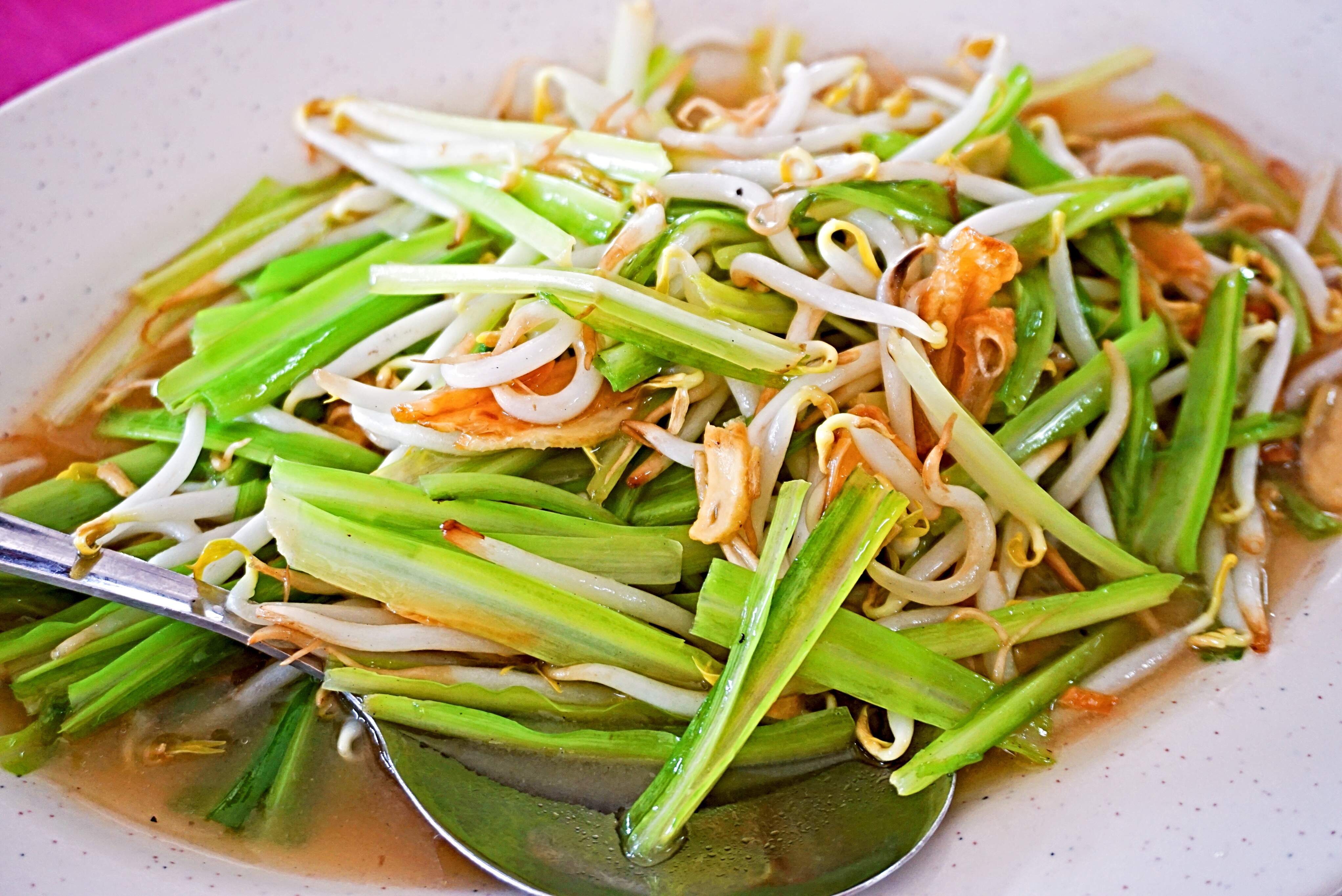
  3. Stir-fried royal chives or [qing long chai and beansprouts* - another lightly-flavored side-dish: crisp, crunchy vegetables lightly sauteed in vegetable oil with garlic.

Very good meal - dishes all have the right balance of flavors and perfectly textured. Its Teochew co-owners, Yen Ling Lam and Shirley Yoong, ensure quick, efficient service, with a steady stream of well-cooked fresh seafood dishes.

10 Likes

Looks really good @klyeoh - just curious since you described the prices 5 years ago, how are they today ?

By co-incidence, I’m making pork satay for dinner. I’d usually have the peanut dipping sauce but I think I’ll try some skewers glazed as you had here

2 Likes

We spent MYR250 (US$62) for 5 persons yesterday. But the items we ordered yesterday weren’t the pricier menu items like back in 2020.
Overall, I think the prices are about 20% more expensive now.

3 Likes

Sounds great, John! Do share what you think of the eventual result.

2 Likes

Peter - the glazed ones were fine but, generally, we preferred the unglazed ones to just slather in the peanut sauce

Peter, this is more of the best from you. You are the best seafood writer I know of, and your photographs are just as good as the writing. Thank you for posting on Hungry Onion so frequently!
That squid curry looks delicious and the whole grouper as well. I would love to try the chicken satay, it is a little redder than the browner versions I have tried in Thailand and would like to see how they differ and how they resemble each other. One of my first “faves” in Thailand was a combo of chicken skewers and som tam from a cart vendor on Bophut Beach (Ko Samui) way back in the day.
But I just have to say that whoever was the first person to eat spike shelled sea shells must have been rather hungry! They look pretty daunting on the outside, though they look delicious on the inside.

4 Likes

Thanks for your kind comments, @ZivBnd . Always a pleasure to share with fellow food-lovers.

Malay satays are close cousins of Thai ones. In fact, I think the Thais adapted their satays from the Malays.

Thailand, or rather Siam as it’s previously known, was the overlord over much of the northern half of what is Peninsula Malaysia today. The Anglo-Siamese Treaty of 1909 forced the Siamese to relinquish control over their 4 southernmost states to the British: Kedah (Thai: ไทรบุรี, romanized: Saiburi), Kelantan (กลันตัน, Kalantan), Perlis (ปะลิส, Palit) and Terengganu (ตรังกานู, Trangkanu). The four states became part of modern-day Malaysia when the British subsequently granted independence to what was British Malaya in 1957.

But those 4 northern states still have significant Siamese/Thai traits today, including cuisine. Satay is a Javanese/Indonesian food item which was adopted by the Malays, then spread to Southern Thailand.

Malay satay consists of meat (usually chicken) marinated in a spice mix consisting of cumin, coriander, lemongrass, shallots, ginger and fresh turmeric.
The marinated meat is then skewered, then grilled over open flames whilst being basted with a mixture of coconut cream-vegetable oil to achieve a glossy finish.
The accompanying peanut sauce will consist of coarsely-ground peanuts, tamarind juice, turmeric, the spice mix from the marinade, plus pureed/ground red chilis, plus sugar/salt to taste.

Thai satay uses a more Thai-slanted marinade for the chicken meat, blending cumin, coriander, lemongrass, shallots, ginger, fresh turmeric, dried chilis, galangal, fermented shrimp paste or “kapi” (Thai: กะปิ) plus curry powder. Coconut milk is also added to the marinade.
The satay dip will include the spice mix as for the marinade, plus smooth-blended peanut paste (or peanut butter), vinegar and dark soy sauce.

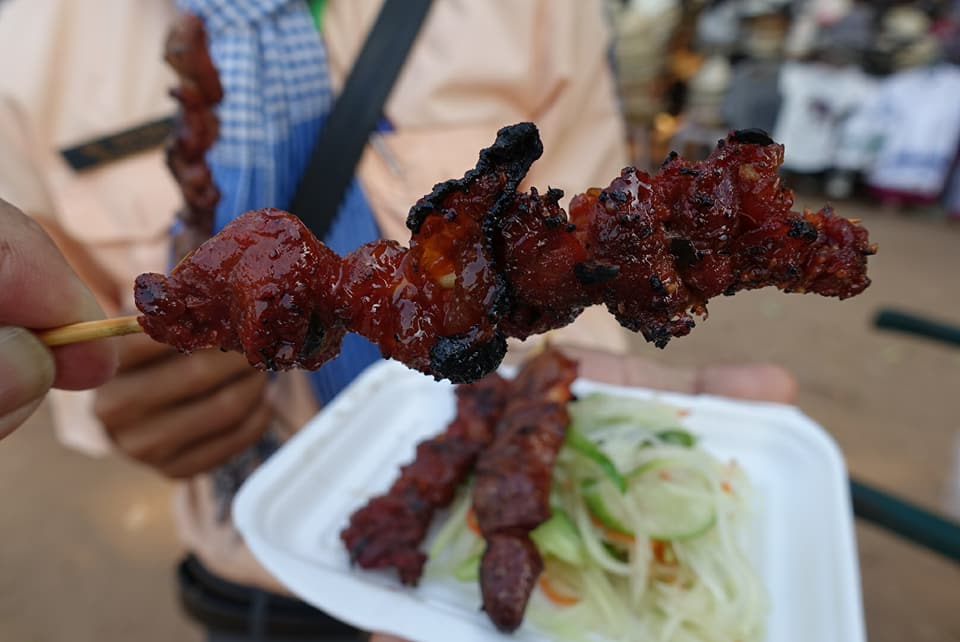
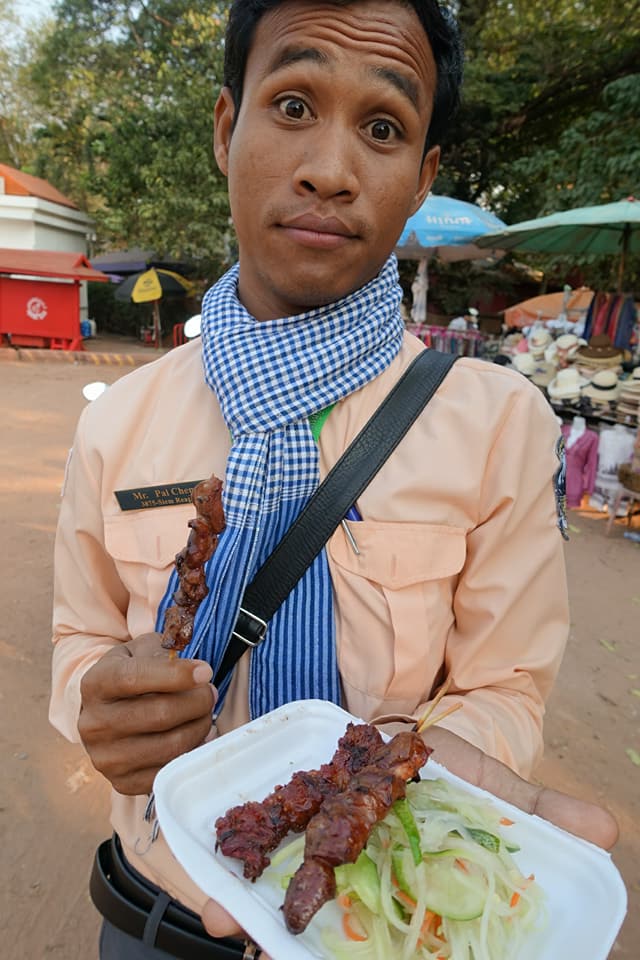
When I was in Siem Reap, Cambodia, a few years ago, I tried the Cambodian version of “satay”: called “sach ko ang” - these were skewers of grilled beef, served with a green-papaya-and-carrot pickle called “chruck”.

Our Cambodian tour guide:

@ZivBnd One of my Michelin Guide articles earlier this year: on seafood dishes and where to get them in Kuala Lumpur and Penang:

6 Likes