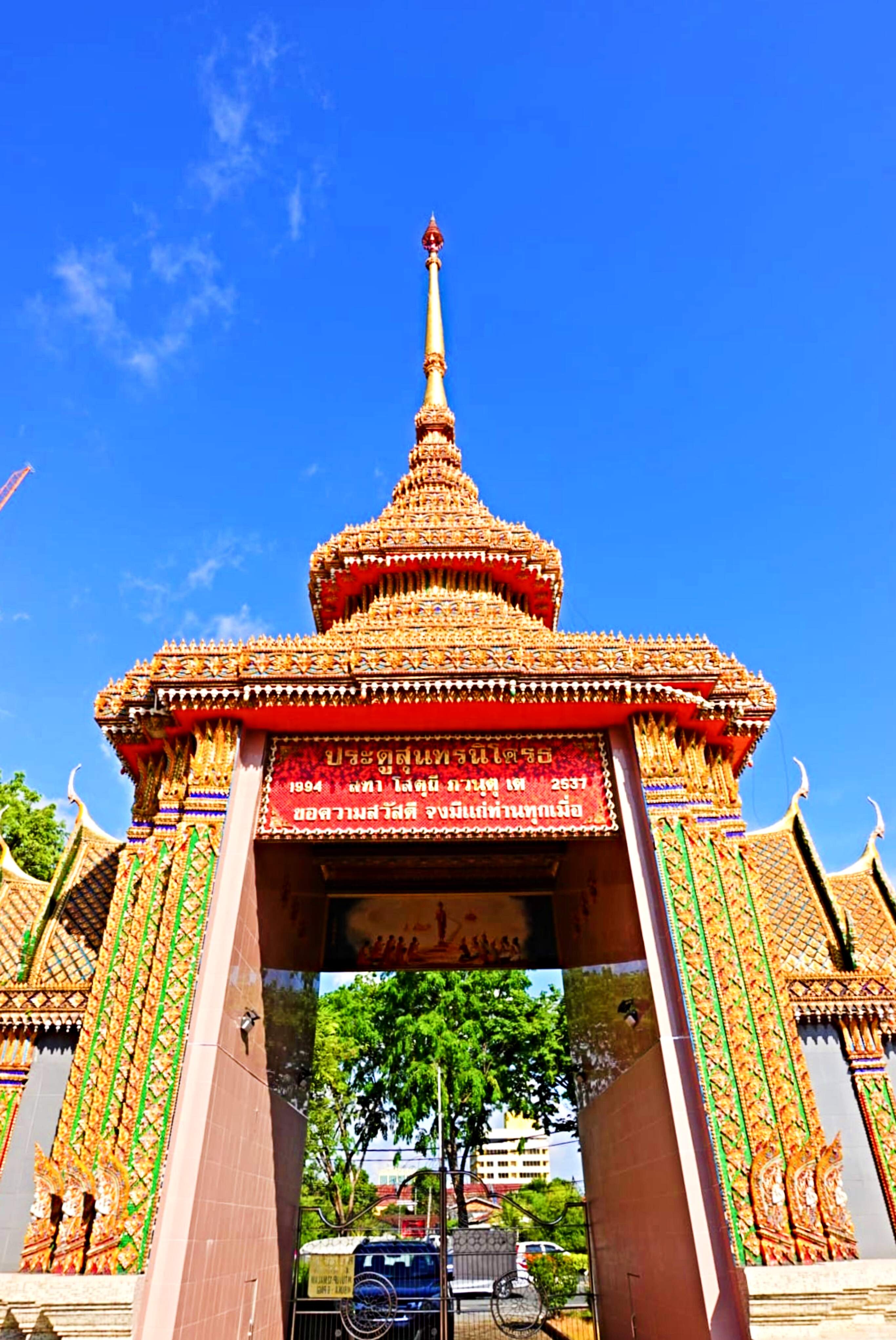
Kedah is an ancient Malay sultanate (founded 1136AD) bordering Penang to its south. Both are separate states which are part of the Federation of Malaysia. Kedah shares a long border with Thailand to its north.
I’d lived in Penang since 2017, but I haven’t visited Alor Setar, the sleepy little state capital of Kedah since 1988. Many tourists bypass Alor Setar as they make their way to Kedah’s premier tourist destination - the resort island of Langkawi with its pristine beaches.
So, we decided to make day-trip to Alor Setar early this week, to see what we might have been missing the past few decades. Quite surprisingly for me, at least, the town hasn’t actually changed much since I was last there 34 years ago!

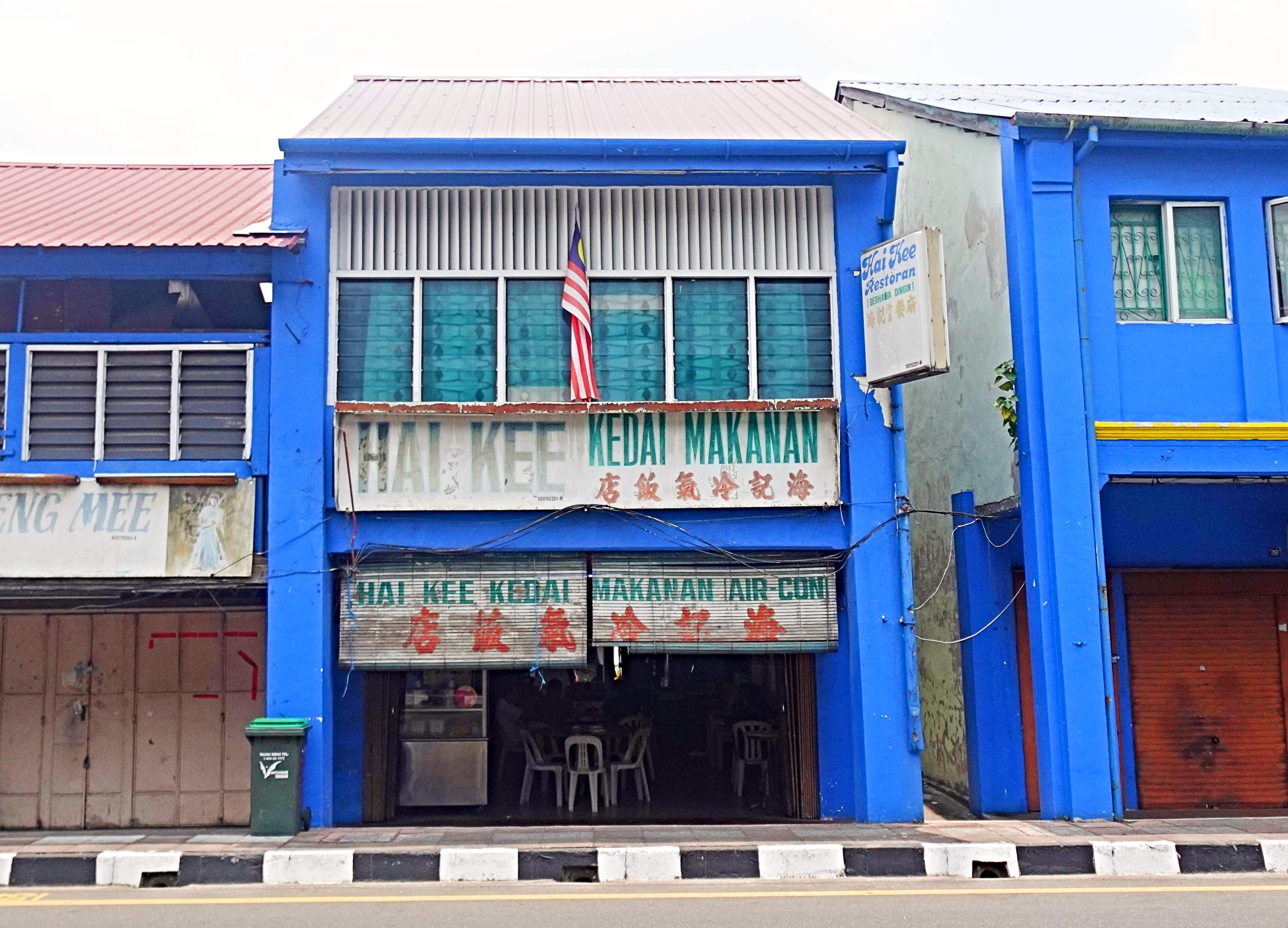
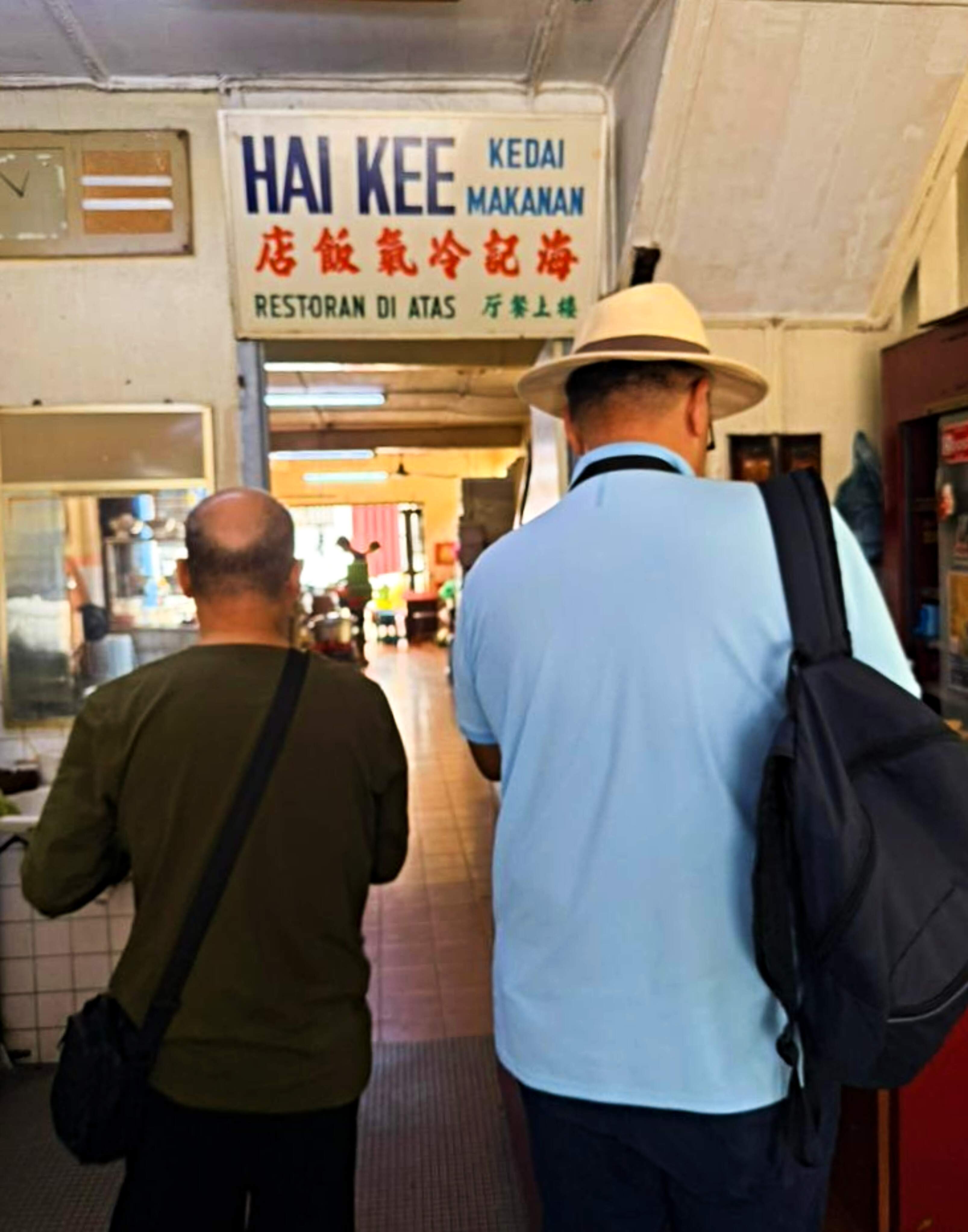
We had dinner at one of the town’s iconic eateries: Hai Kee, a wonky-looking 52-year-old family-run Hainanese restaurant on Jalan Sultan Mohamed Jiwa, Alor Setar’s 𝘥𝘦 𝘧𝘢𝘤𝘵𝘰 Chinatown.


Three generations of the Cheah family has been churning out tasty Hainanese-Nyonya fare here since 1970, when Grandpa Cheah, who emigrated from Ban Ning (Mandarin: Wanning/萬寧), Hainan, started the restaurant after settling down in Alor Setar.
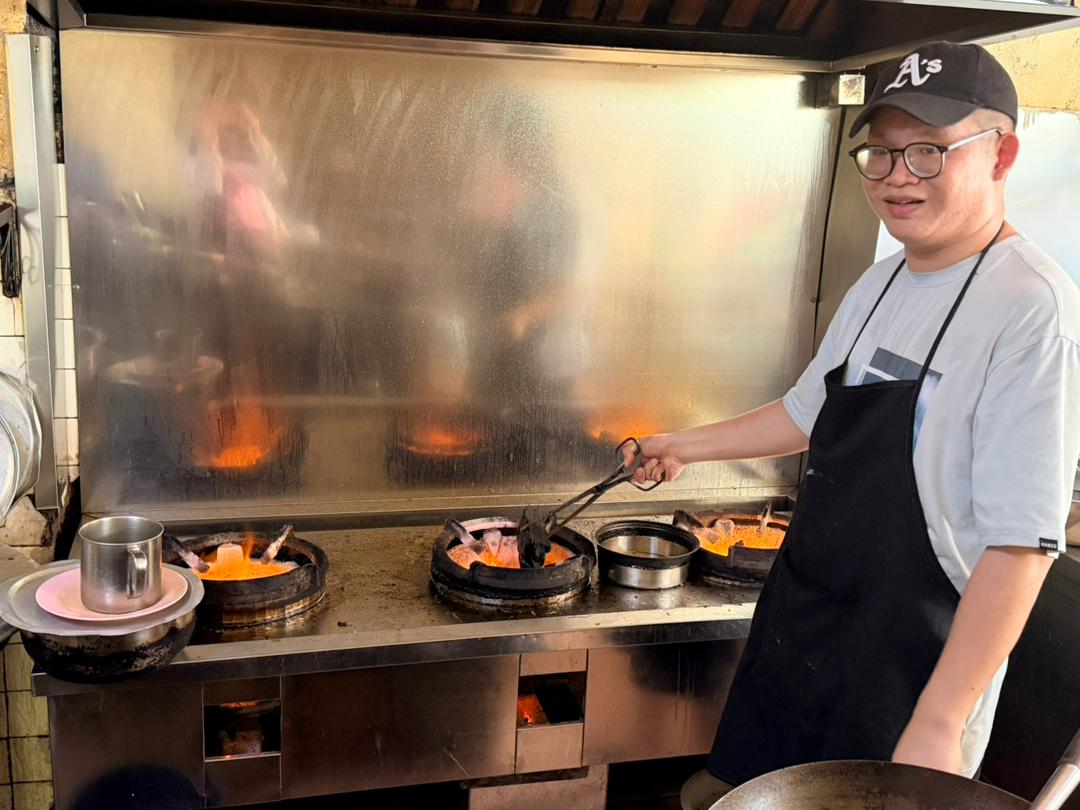
Heading the kitchen this evening was Son No. 2, Cheah Yit Leng
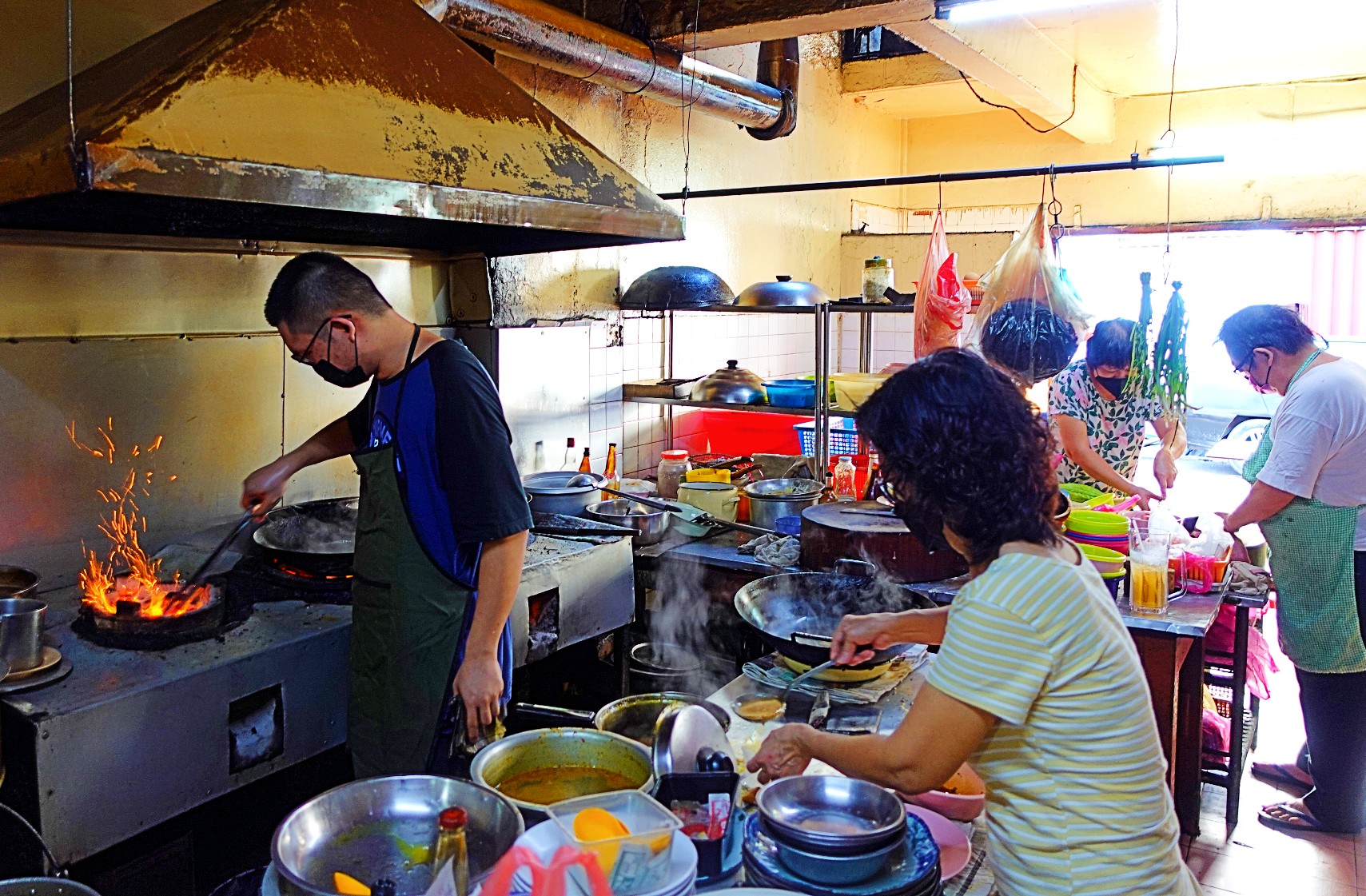
Some rather ancient-looking, traditional charcoal-fired stoves are used for cooking here

The Kitchen God’s altar overlooked the kitchen stove

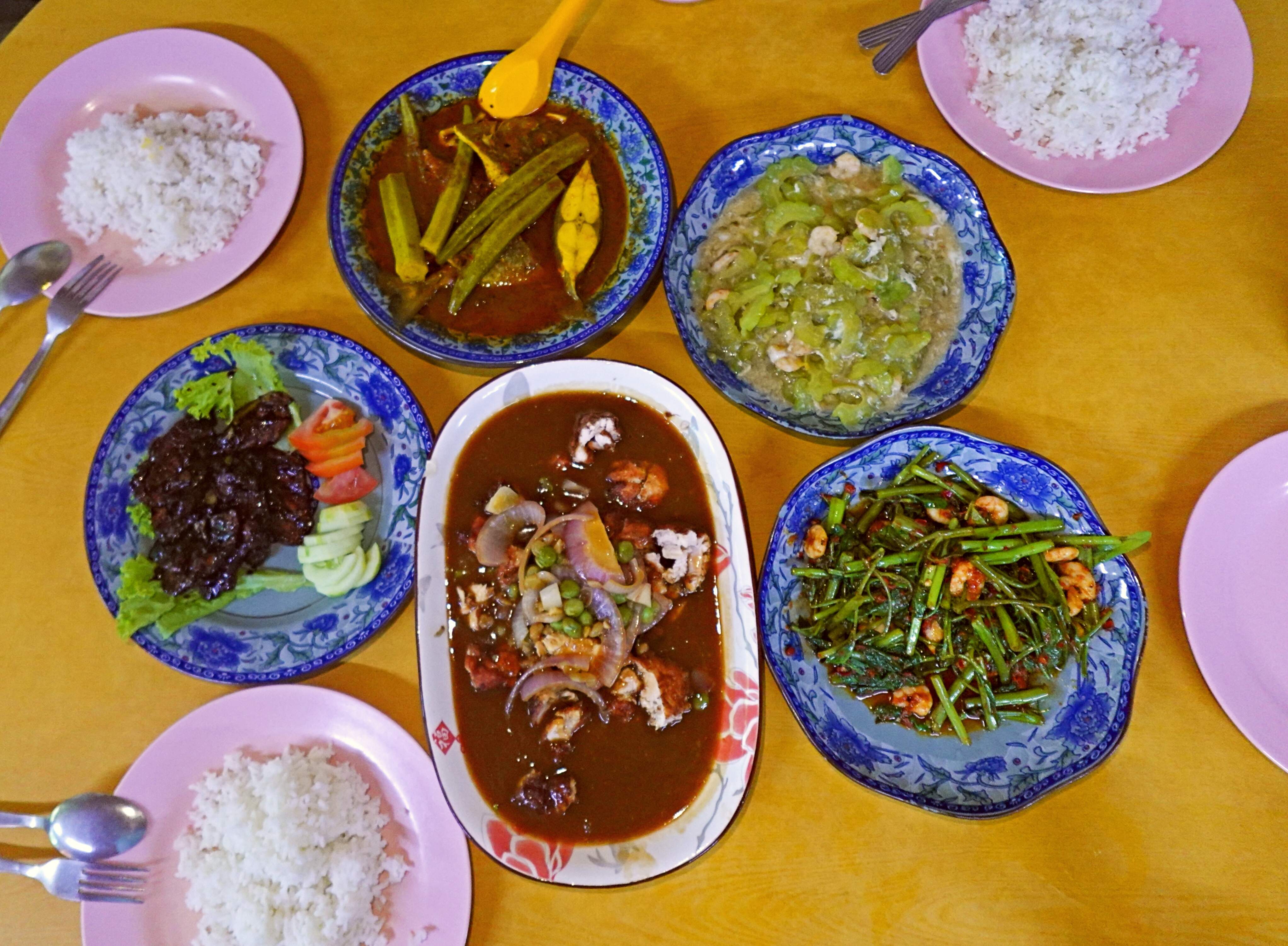
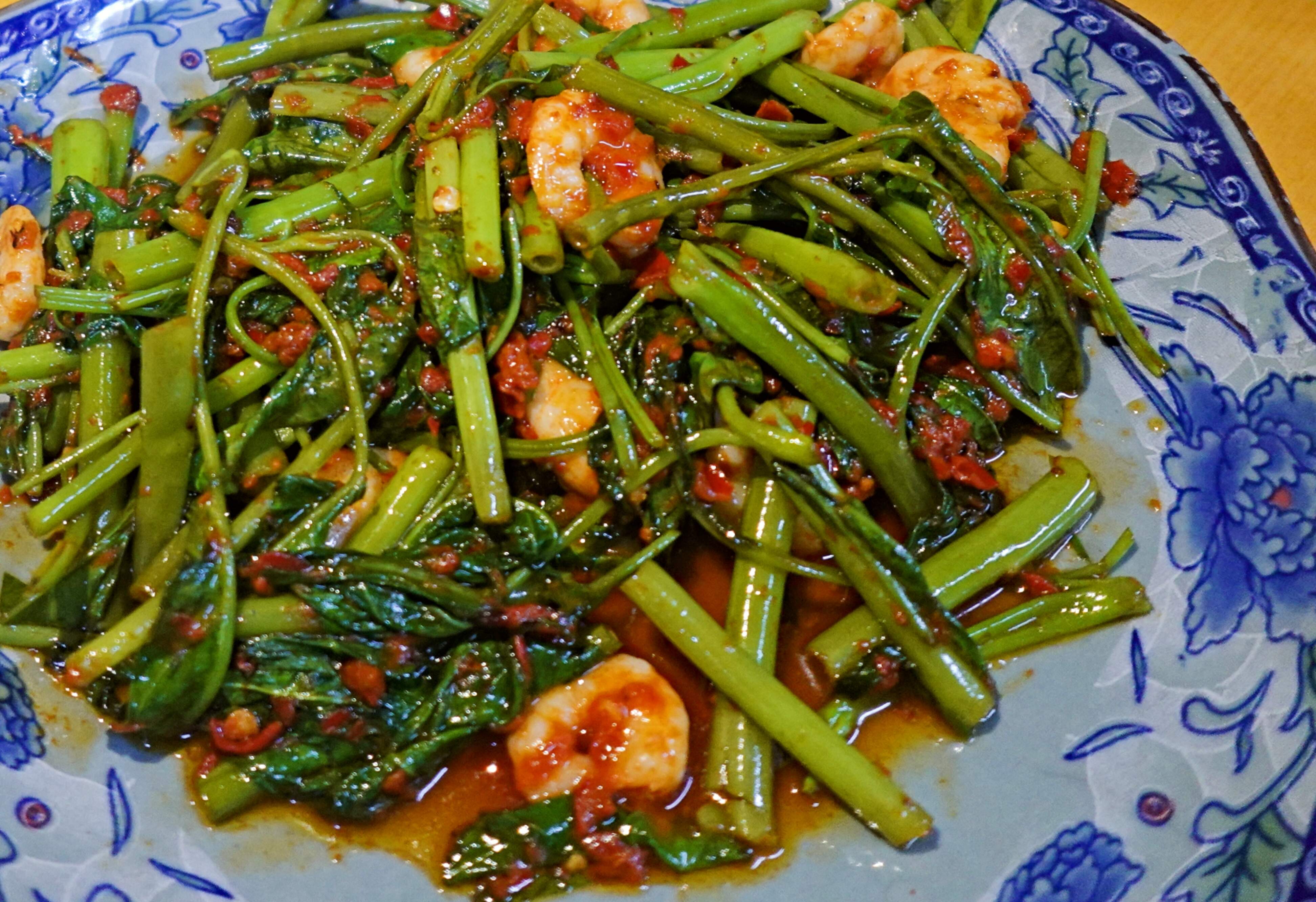
Our dinner this evening consisted of:
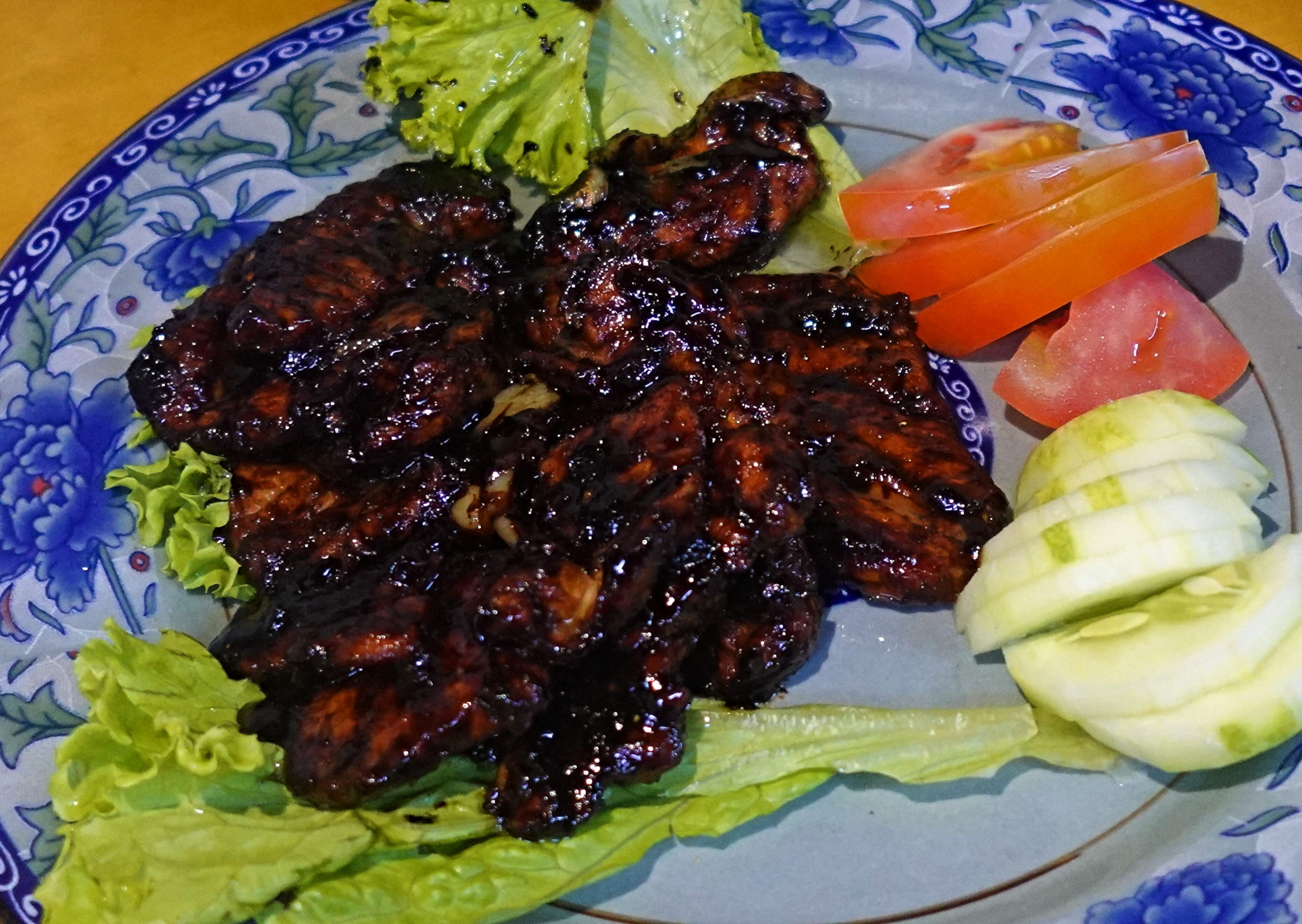
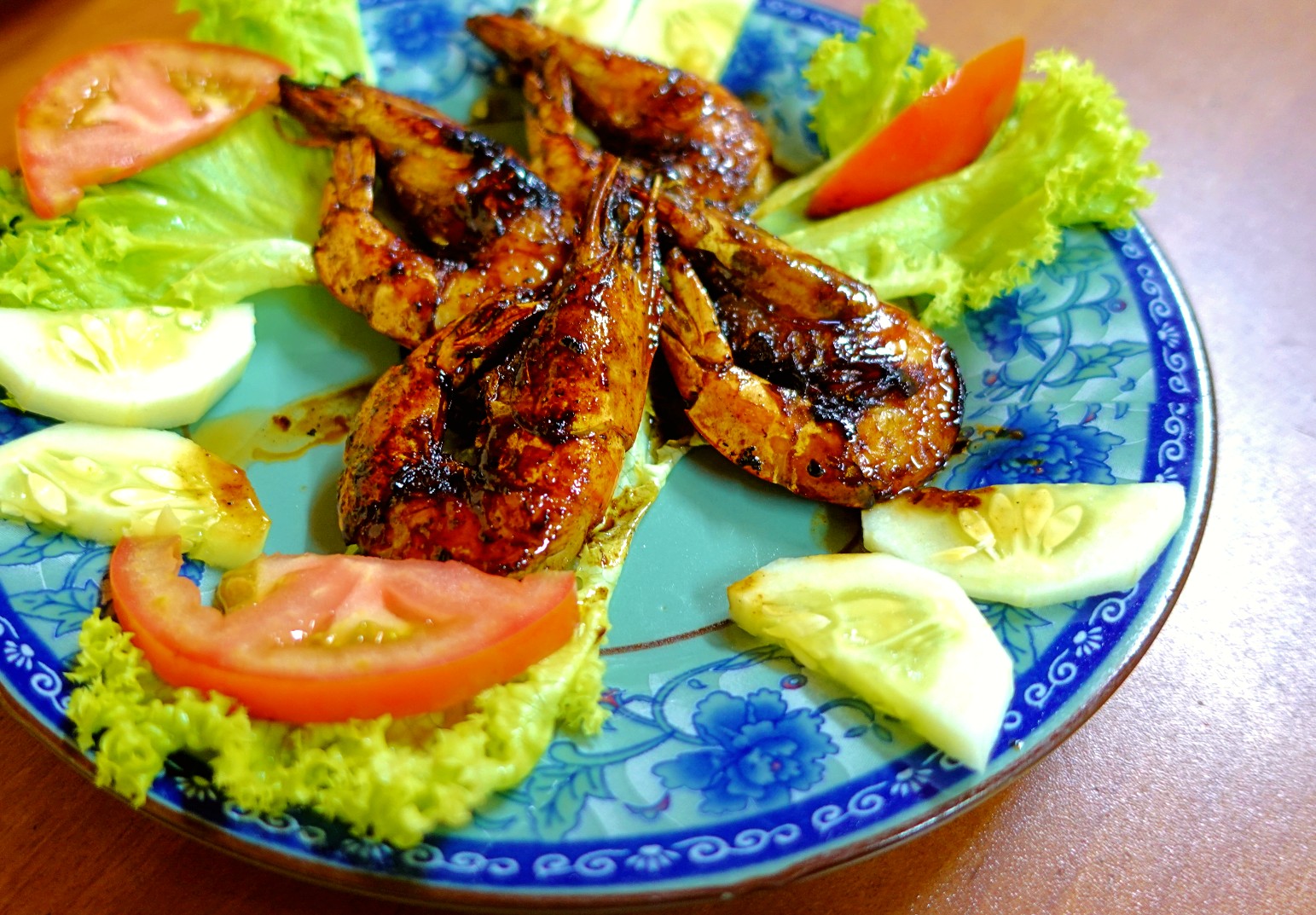
 Nyonya-style assam prawns - this is a popular Nyonya dish commonly found in Penang as well, but this little-eatery-that-could actually produced an amazing rendition: more of the home-cooked than restaurant version - shell-on prawns marinated in tamarind, salt, sugar & soy sauce, then pan-fried till the prawns were caramelized over, dark, glossy & lip-smackingly delicious.
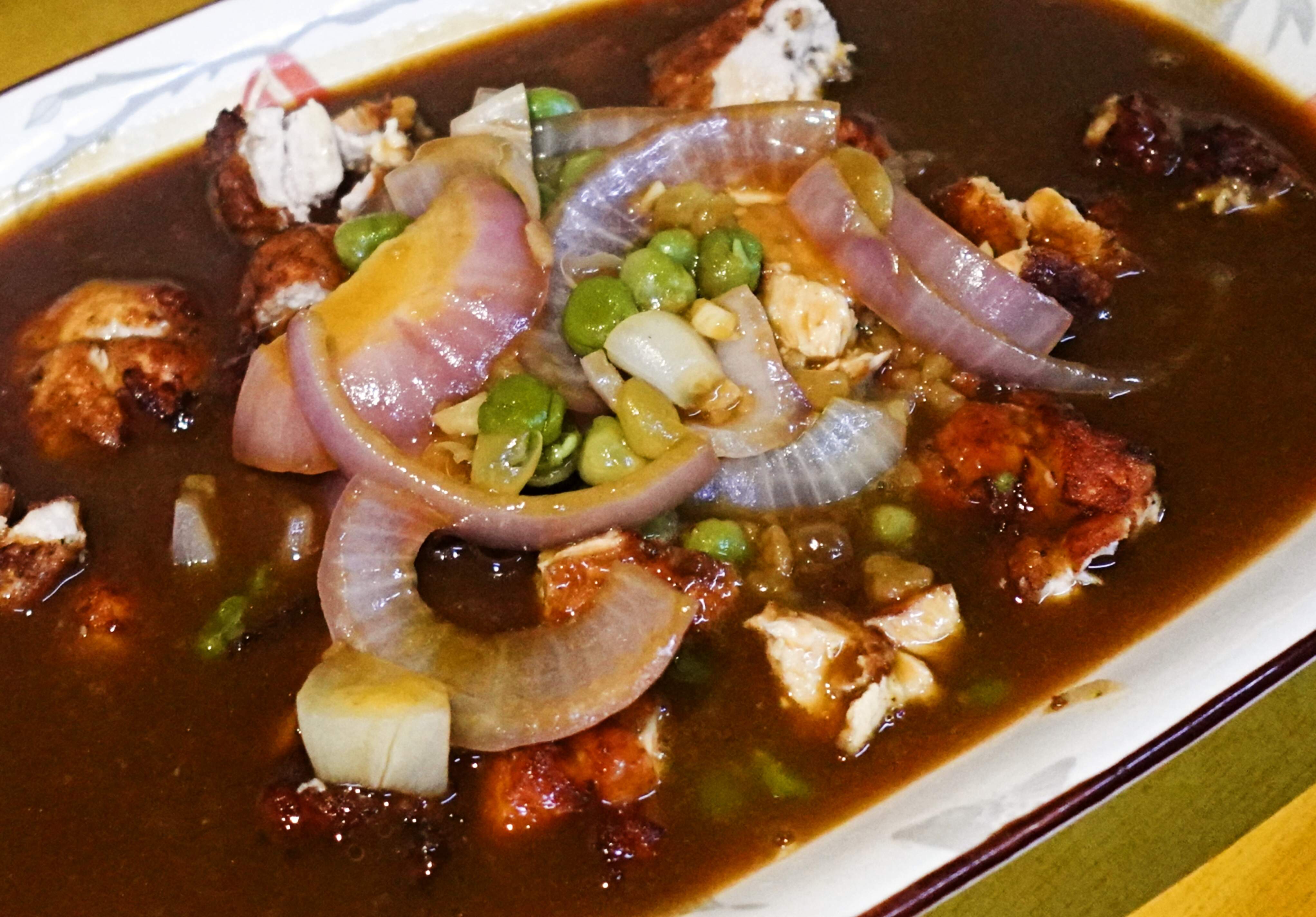
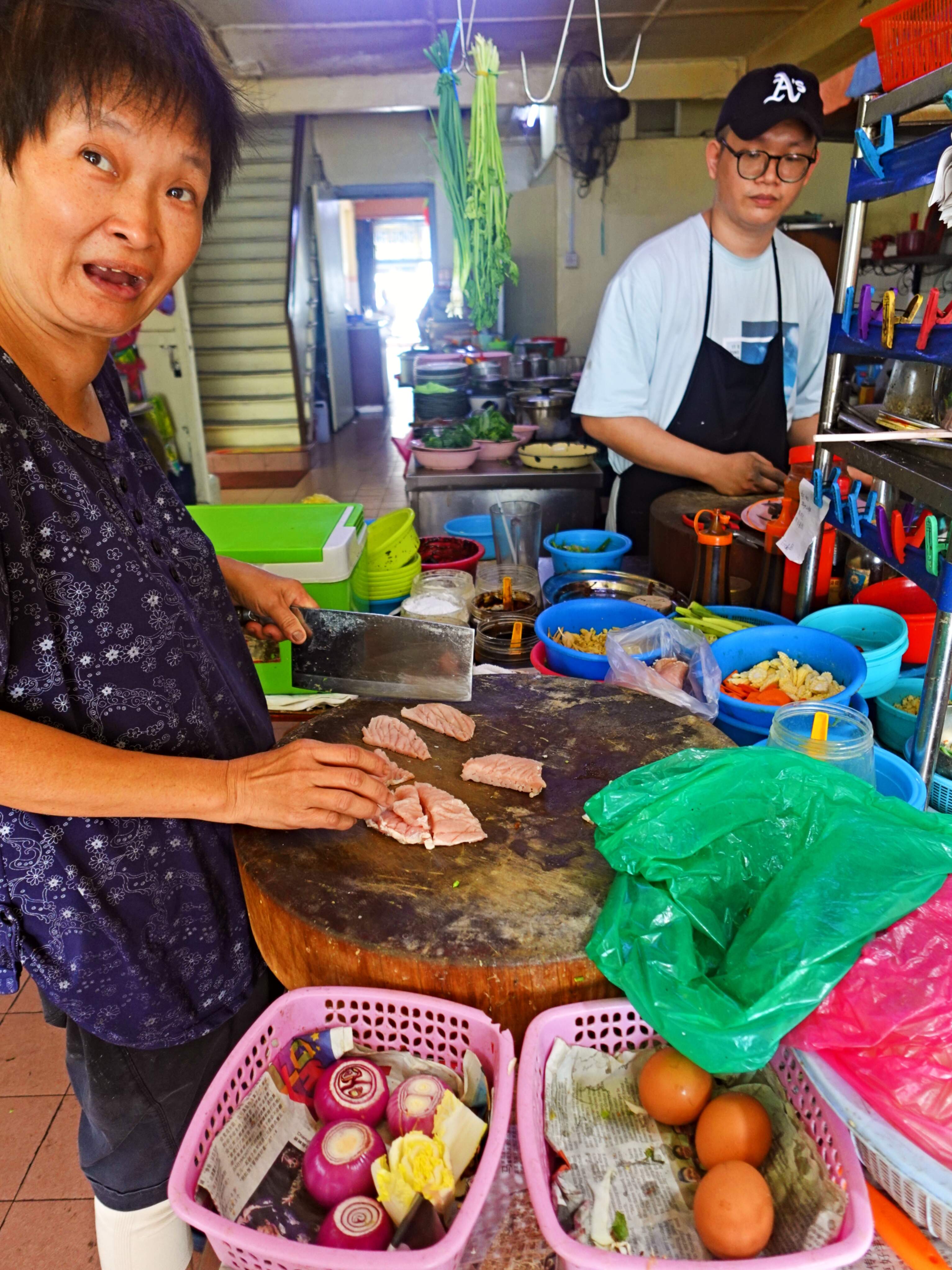
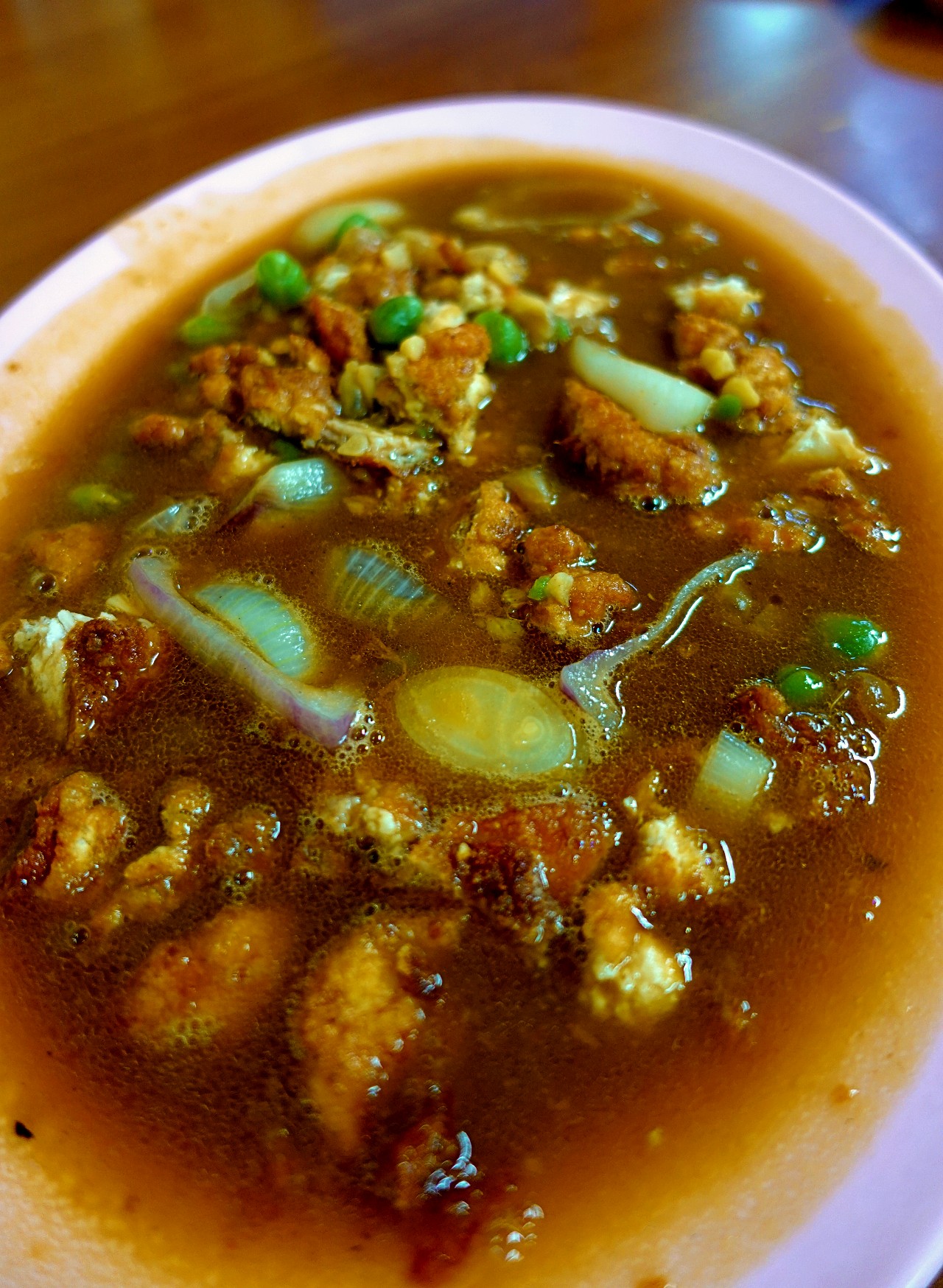
Hainanese chicken chop, with onions & peas - the rendition here wasn’t something we’d normally recognize: a typical Hainanese chicken chop usually resembled a wiener schnitzel, blanketed with a light-brown gravy, garnished with potato wedges, peas, tomato & round discs of sliced onions.
The version here looked like small pieces batter-fried chicken, with onions and peas, covered with a thin brown (but quite tasty) gravy. No potatoes - but that’s perhaps because this version was supposed to be served alongside steamed white rice.
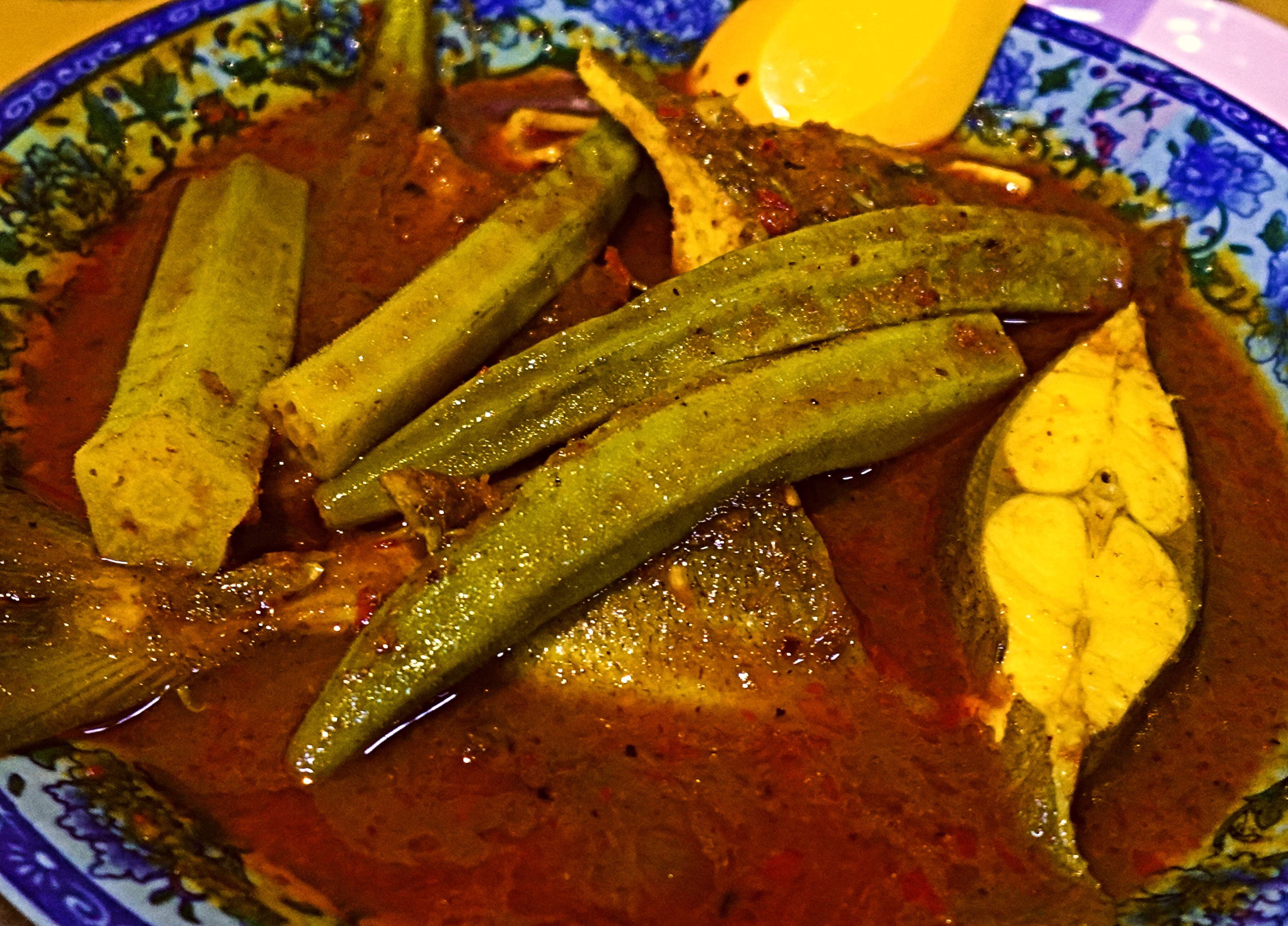
The house signature dish: Hainanese fish curry, using black pomfret - not too sure why the Cheahs called it “Hainanese curry” but it closely resembled the Penang/Northern Nyonya “gulai tumis” - a spicy-sweet-sour fish stew with flavors that danced on one’s palate. Even the garnish was similar: ladyfingers/okra, but the tomatoes were conspicuously absent.
The taste profile was familiar to Penangites - not a surprise since Penang used to be part of Kedah, until the wily, if somewhat over-ambitious Captain Francis Light of the British East India Company, managed to get the-then Sultan of Kedah to transfer dominion of the island over to the British in 1786, in return for supposed British “protection” of Kedah from any Siam invasion.
Penang and Kedah have been separate states ever since, despite their linguistic, cultural and culinary similarities.
The dish here was very well-conceived, with the whole, supple-fleshed black pomfret perfectly-cooked, carefully cut up and plated like an edible, articulated fish sculpture.

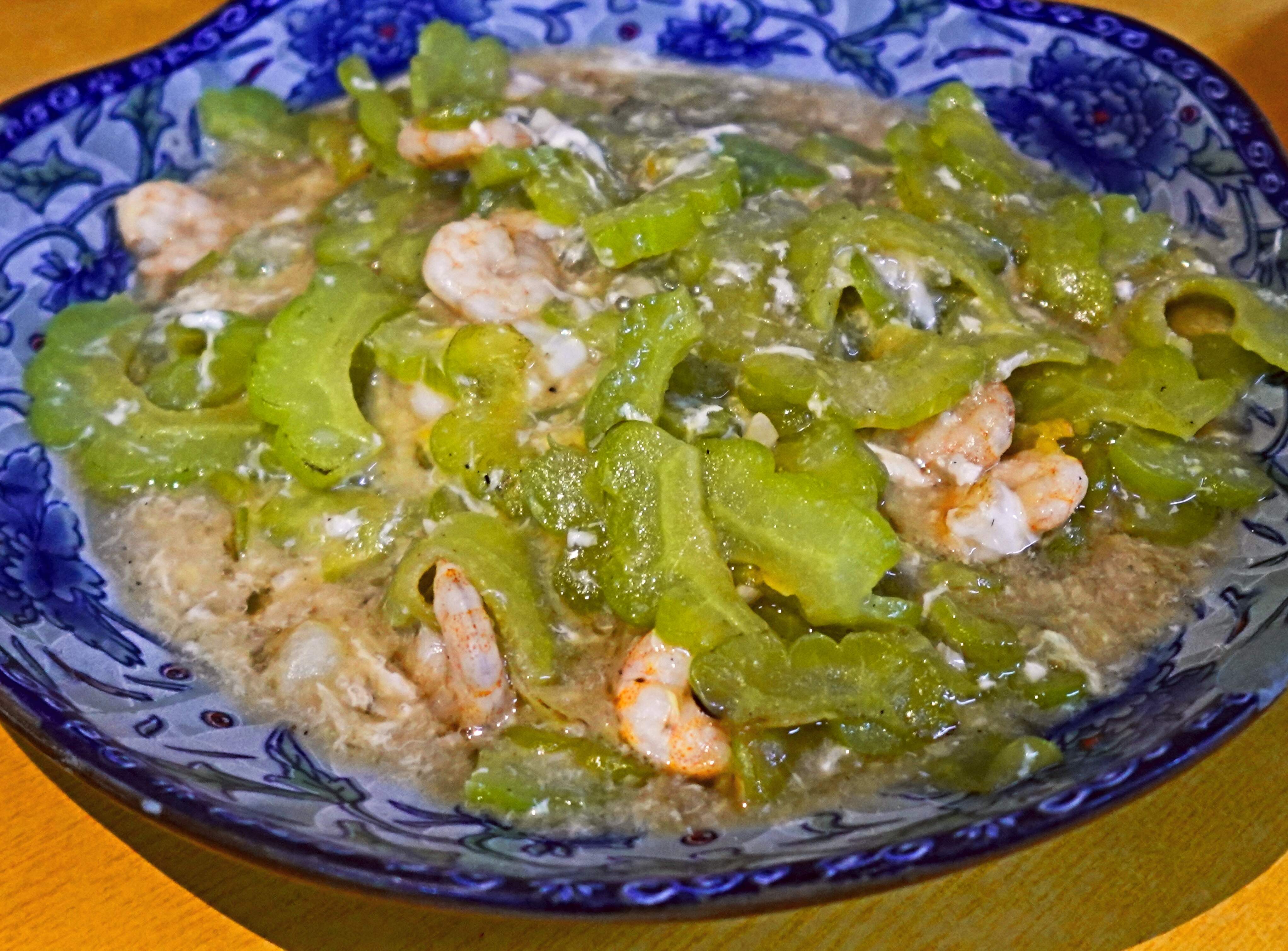
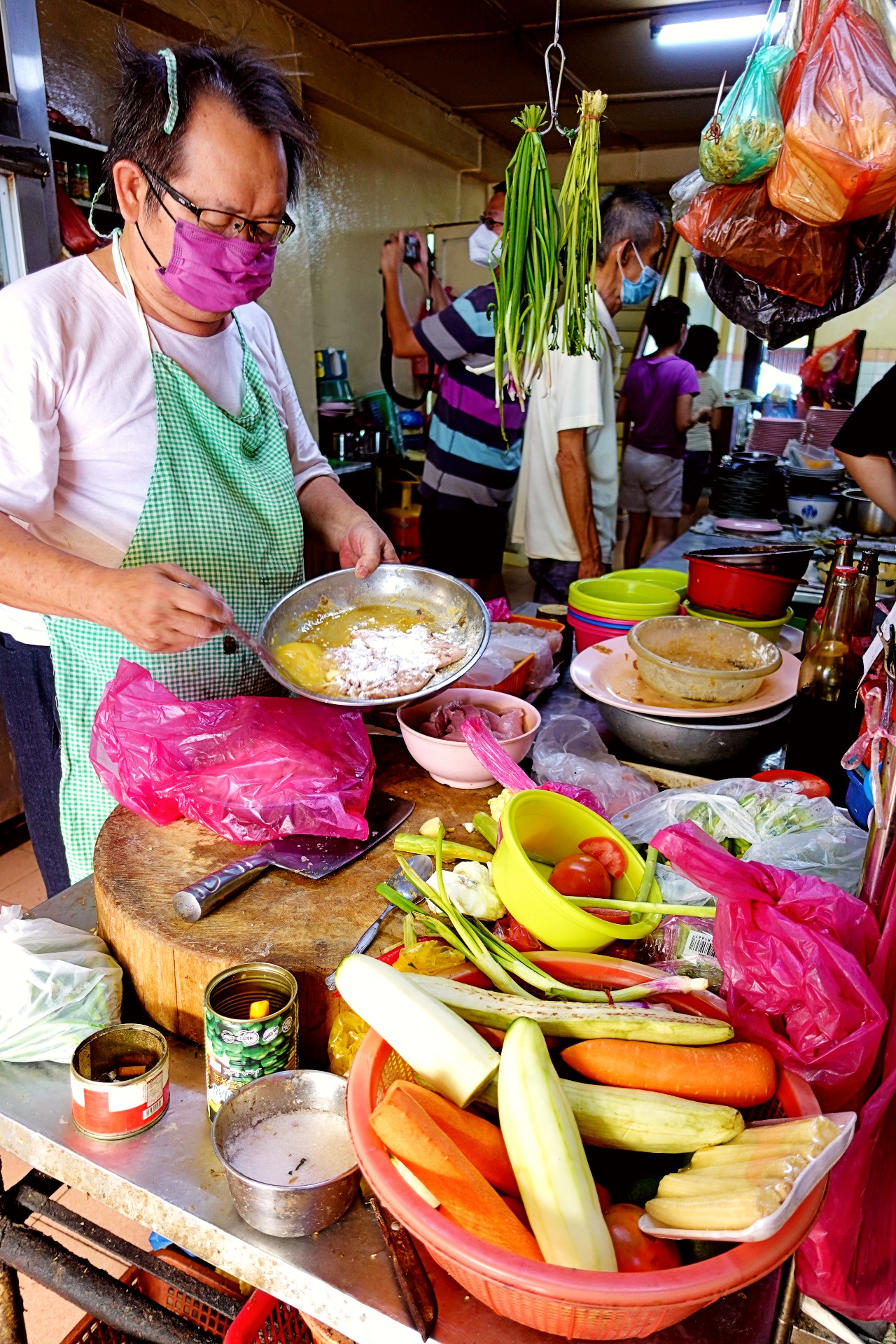
Stir-fried bitter-gourd with shrimps & eggs - this was the simplest dish for the evening but, again, carefully-prepared: the bitter-gourd having been sliced then salted, to drain away its bitter juices (many eateries skipped this step), then sautéed with garlic & shrimps, before being braised with chicken stock, beaten eggs drizzled in to form ribbons, then slightly thickened with cornstarch.

Very rustic fare, as we’d expected from this small town eatery. People actually drove from miles around to eat here, I’d say for the dishes’ retro taste & feel.


Address
Hai Kee Restaurant
80, Jalan Sultan Muhammad Jiwa, 05000 Alor Setar, Kedah, Malaysia
Tel: +604-732 3722
Opening hours: 12.30pm-3pm, 6pm-9pm Mon-Wed, Fri-Sun. Closed every Thursday.