indeed.
they talk a good game - and fail rather resoundingly.
Yeah, well, glass ain’t part of the discussion.
Interesting. I have tended to ignore the products w an organic label because they tend to considerably more expensive and frequently appear less fresh.
I know, appearances may lie and there is a value in organic products vs traditional products, but it just got to the point in Northern Virginia and Maryland where i just stopped looking at organic goods. And that habit was reinforced when i moved to Montana.
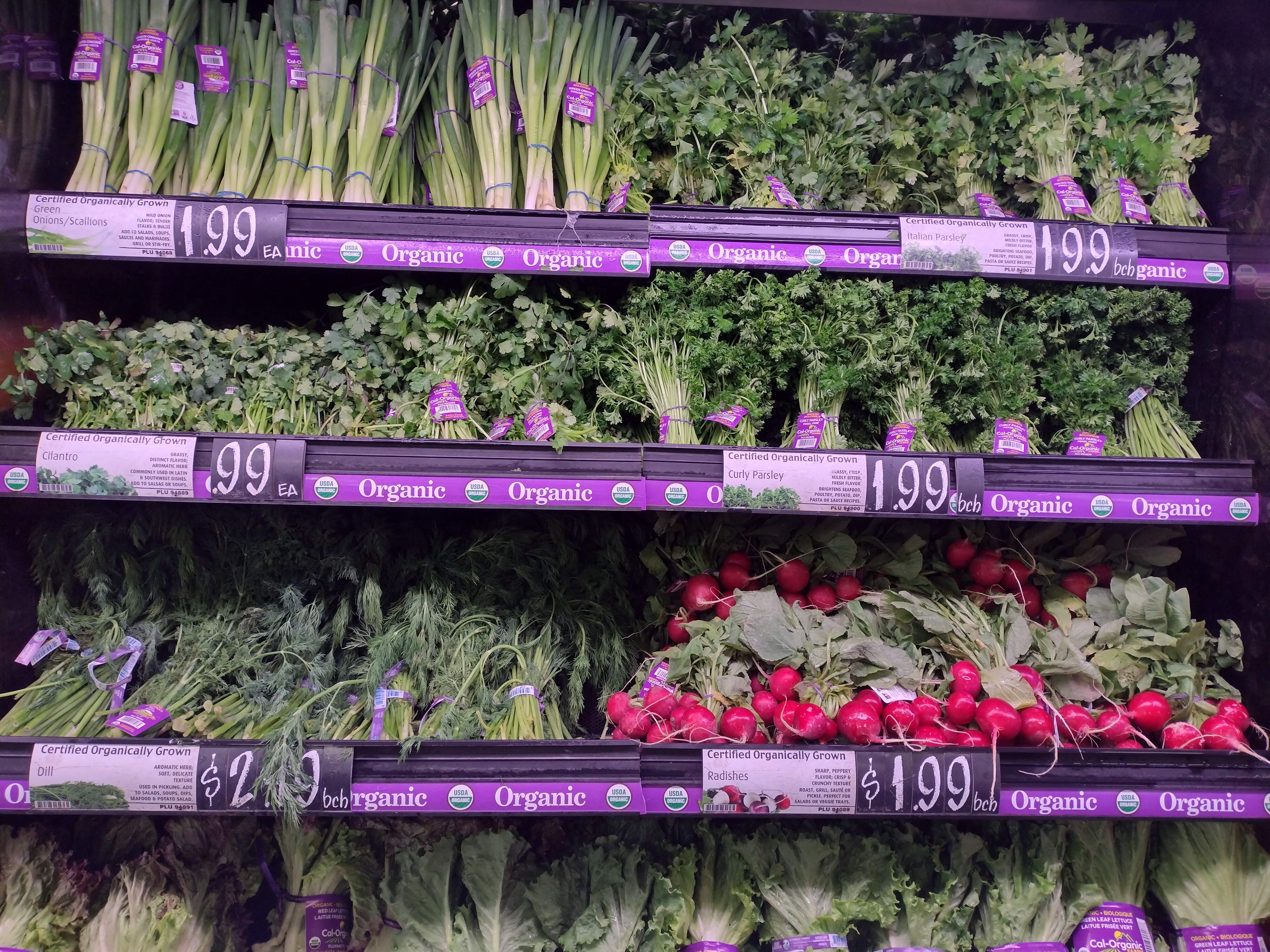
In the eight years since I posted, a lot has changed. For example, my ShopRite seems to have some produce only as organic: scallions, parsley, cilantro, and dill. If they have non-organic (or as I like to say, “inorganic”) versions, I couldn’t find them this morning.
Here’s a photo of part of the organic section:
1 Like
one is well advised to research/investigate exactly what is contained in the label of “organic”
many ‘crops’ are not biggie targets for ‘pests’ that the ‘organic-freaks’ go bonkers about - they not not attractive to the pests that the ‘kill everything pesticides’ are used for.
2 Likes
If a product is organic and it’s labeled correctly, it shouldn’t have stuff like HFCS. For me that’s an easy one since I do NOT want HFCS. Generally speaking organic label also means NO ultra-processed ingredients. Given there’s medical research linking ultra-processed foods consumption to the rise of colon cancer (other illnesses) to people under 40, I find the organic label helpful. It’s about information and using it for your needs.
I always thought the real baddies were lettuce, cabbage and kale, but last years “dirty dozen” were:
“This year, the list featured avocados, sweet corn, pineapple, onions, papaya, sweet peas (frozen), asparagus, honeydew melon, kiwi, cabbage, watermelon, mushrooms, mangos, sweet potatoes, and carrots.”
Which burns because sweet corn, peas, asparagus and carrots are some of my favorite vegetables.
I had not even considered HFCS in vegetables. I avoid it when I can and did not know that it was added to any veg. Rats.
I was in my local (SF Bay Area) Costco last week, and there was the usual selection of nuts, including peanuts in shell and out, walnuts, pecans, almonds, and pistachios, plus of course mixed nuts. The only common type I don’t recall ever seeing there is hazelnuts.
As far as packaging goes, I don’t have space for those plastic jars anyway.
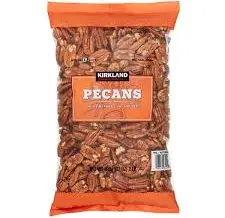
I go there seasonally (I like to think “new crop”) for these pecans, which I keep in the freezer until I need them.
Mea culpa. I was talking about “snacking nuts”; the walnuts and pecans are still in the main food section. But I didn’t see as many varieties of “snacking nuts”–they used to have salted, unsalted, mixed nuts with and without peanuts, etc. It just seemed like less now.
FWIW, the walnuts, pecans, and possibly almonds in the main food section were always in bags, while the snacking nuts had been in jars. And yes, the jars were re-usable, but I accumulated way more than I needed, and then couldn’t even Freecycle the excess.
Pretty sure the days of glass jars for most items are gone. For starters, the transportation costs are higher because glass is heavier than a plastic bag. There is also more loss due to breakage.

